Bingham Canyon & Escondida Mine Insights: How Medium Voltage Water-Rated Mining Cables Like NTSCGEWOEU-W …/3E Keep Open-Pit Operations Running
Learn how medium voltage flexible mining cables rated for water environments power dredgers, submersible pumps, and open-pit operations at mines like Bingham Canyon and Escondida. Full technical guide to NTSCGEWOEU-W …/3E specifications, construction, and real-world applications.
hongjing.Wang@Feichun
3/24/202610 min read

NTSCGEWOEU-W …/3E Medium Voltage Cable for Mining in Water Environments: What Engineers at the World's Largest Mines Need to Know
What Is NTSCGEWOEU-W …/3E? (Google Featured Snippet)
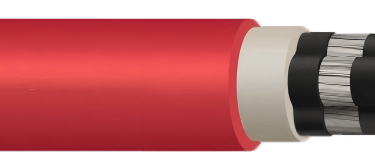
The NTSCGEWOEU-W …/3E is a medium voltage, flexible power supply cable engineered for continuous operation in water-based environments, compliant with DIN VDE 0250-813. It is designed specifically for open-pit mining facilities that expose cables to submersion, mechanical stress, and harsh chemical conditions. The cable handles rated voltages from 3.6/6 kV up to 18/30 kV and supports connection to dredgers, floating docks, and submersible pumps — including operation in sewage, saltwater, and brackish water. Its construction combines tinned copper conductors, EPR rubber insulation, semi-conductive screening layers, and a heavy-duty red rubber outer sheath optimized for water-blocking performance.
Why Water Resistance Is a Critical Requirement in Open-Pit Mining
Open-pit mining environments are inherently wet. Groundwater seepage, dewatering operations, and seasonal rainfall all create conditions where standard power cables fail prematurely. Dewatering alone is one of the most energy-intensive activities at any large-scale mine — submersible pumps must run continuously to keep pit floors operational, and the power cables feeding those pumps are in constant contact with water.
Beyond dewatering, dredging operations at surface mining sites require cables that can flex, coil, and submerge repeatedly without degrading insulation integrity. A cable failure in these conditions does not just mean a repair job — it means halting production, risking worker safety, and potentially triggering unplanned water intrusion into the pit.
This is why a cable standard like DIN VDE 0250-813 exists. It sets the bar for medium voltage flexible cables purpose-built for exactly these conditions. Cables meeting this standard are built differently from conventional rubber-sheathed mining cables, and the difference is measurable in uptime and service life.
Real-World Mining Context: Where These Cables Are Actually Used
Bingham Canyon Mine, Utah, USA — The World's Deepest Open-Pit Copper Mine
The Kennecott Bingham Canyon Mine near Salt Lake City, Utah, is one of the most cited examples of large-scale open-pit copper mining in the world. Operated by Rio Tinto, the mine has been in continuous production since 1906 and has extracted more copper than any other mine in history — over 19 million tonnes of copper, along with significant volumes of gold, silver, and molybdenum.
The pit itself is approximately 4 kilometres wide and over 1.2 kilometres deep, making it visible from space. At this scale, dewatering is not a secondary concern — it is a core operational discipline. The mine employs extensive pump systems to manage groundwater and precipitation runoff from the surrounding Oquirrh Mountains. In 2013, a major slope failure displaced over 165 million tonnes of material, further complicating drainage management and requiring a complete restructuring of the dewatering infrastructure.
Power cables supplying submersible and surface-mounted dewatering pumps at Bingham Canyon must operate reliably in standing water, slurry, and mud — precisely the application profile that medium voltage water-rated cables are designed for. The mine's electrical infrastructure operates at medium voltage levels consistent with the 3.6/6 kV to 18/30 kV range covered by cables of this type.
Escondida Mine, Atacama Desert, Chile — The World's Largest Copper Producer by Output
Operated by BHP in partnership with Rio Tinto and JECO, the Escondida mine in northern Chile's Atacama Desert is the single largest copper-producing mine on the planet by annual output, responsible for roughly 5% of global copper supply. Despite being located in one of the driest places on Earth, the mine faces significant water-related engineering challenges.
Escondida's copper processing relies on large-scale slurry pipelines, leaching ponds, and tailings management systems — all of which involve the movement of water-mixed materials through pumping infrastructure. The mine operates multiple concentrator plants and an extensive desalination and water conveyance system to supply process water from the Pacific coast, over 180 kilometres away.
Submersible and semi-submerged pumping systems throughout the processing circuit require power cables rated for wet and chemically aggressive conditions. Sulphuric acid leaching operations in particular create environments where cable sheathing and insulation must resist not just water, but chemical exposure — a requirement addressed by oil and acid-resistant rubber compounds in high-specification mining cables.
Grasberg Mine, Papua, Indonesia — Extreme Altitude, Extreme Rainfall
The Grasberg mine, operated by Freeport-McMoRan, sits at approximately 4,200 metres above sea level in the Sudirman Range of Papua, Indonesia. It is one of the world's largest gold and copper deposits. The high-altitude equatorial location means the mine receives extremely high annual rainfall — often exceeding 10,000 millimetres per year in surrounding areas. The open-pit operations contend with significant surface water accumulation, mist, and fog on a near-constant basis.
Dewatering at Grasberg is a continuous, high-priority operation. Power cables running to pit floor equipment, drainage pumps, and mobile machinery must function reliably in saturated ground conditions and frequent direct water exposure. The transition from open-pit to underground block caving operations in recent years has added new cable routing challenges, including sections that pass through flooded or partially flooded environments.
Key Technical Specifications
Electrical Characteristics
The NTSCGEWOEU-W …/3E is produced across multiple rated voltage classes, from 3.6/6 kV up to 18/30 kV AC rated voltage. Each voltage class carries a corresponding AC test voltage per DIN VDE 0250-813 — ranging from 11 kV at the 3.6/6 kV rating up to 43 kV at the 18/30 kV level. Maximum permissible operating voltages in AC systems range from 4.2/7.2 kV up to 20.8/36 kV, and in DC systems from 5.4/10.8 kV up to 27/54 kV. Current-carrying capacity is determined per DIN VDE 0298-4 based on installation conditions.
Thermal Performance
The cable is rated for ambient temperatures from -40°C to +80°C in fixed installations and from -25°C to +80°C in flexible operation. Maximum permissible conductor temperature is 90°C under normal operation, with short-circuit temperature tolerance at the conductor reaching 250°C. De-rating factors for specific installation conditions are applied in accordance with DIN VDE 0298-4.
Mechanical Strength
The cable is rated for a maximum tensile load of 15 N/mm² per conductor cross-section, and torsional stresses of ±25°/m. Bending radius compliance follows DIN VDE 0298-3. These ratings reflect the demands of flexible, dynamic installations where cables are repeatedly moved, coiled, and deployed — as found in dredging systems, cable reels on mobile pit machinery, and floating pump platforms.
Cable Construction and Materials
Conductors and Core Design
The main conductors consist of tinned copper wires, finely stranded to Class 5 per DIN EN/IEC 60228. Tinning provides corrosion resistance when the conductor is exposed to moisture migration over long service periods — a meaningful advantage in permanently submerged or repeatedly wetted installations. Class 5 stranding ensures the flexibility necessary for dynamic applications where stiff conductors would fatigue and fracture.
The protective conductor uses tinned copper wire spinning, with cross-section symmetrically split over the triple-extruded core, in accordance with DIN VDE 0250-1. Three screened cores are then laid up together to form the cable assembly.
Insulation and Screening
Each core uses a triple-layer insulation system: an inner semi-conductive stress control layer, EPR compound type 3GI3 per DIN VDE 0207-20, and an outer semi-conductive insulation shield layer. This configuration controls the electrical stress distribution at the conductor and insulation interfaces — a requirement for reliable medium voltage performance, particularly under the dynamic conditions of a mining application.
EPR (ethylene propylene rubber) is chosen for its inherent electrical stability, flexibility across a wide temperature range, and resistance to moisture absorption. Unlike XLPE, EPR maintains its insulation properties in wet conditions over long periods, making it the preferred insulation material for this cable type.
Inner Sheath and Outer Protection
The inner sheath uses a synthetic rubber compound based on type GM1b per DIN VDE 0207-21, specifically formulated to fill the interstices between screened cores and optimised for water-blocking performance. This layer is what prevents water ingress from travelling longitudinally along the cable interior in the event of outer sheath damage.
The outer sheath is a heavy-duty rubber compound, type 5GM3 per DIN VDE 0207-21, in red. This sheath provides the primary mechanical protection against abrasion, cutting, tearing, and chemical attack. The red colouring is a standard identification convention for mining cables in many jurisdictions.

Environmental and Chemical Resistance
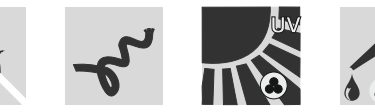
The cable's chemical resistance profile covers the full range of water types encountered in mining: fresh water, saltwater, brackish water, and sewage. Oil resistance is certified to DIN EN/IEC 60811-404. Flame retardant behaviour complies with DIN EN/IEC 60332-1-2, and weather resistance is unrestricted — the cable is suitable for outdoor use and is rated as resistant to ozone, UV radiation, and moisture. Water resistance is certified to EN-50525-2-21.
For mines like Escondida, where process water is chemically treated and leaching circuits use sulphuric acid, cable sheathing resistance to aggressive chemical environments is not incidental — it is a primary selection criterion.
Installation Considerations for Long-Term Performance
The cable can be installed in flexible or dynamic configurations, and may be laid directly in water without additional mechanical protection in many applications. However, the following engineering considerations apply.
Bending radius limits must be respected per DIN VDE 0298-3. Exceeding minimum bending radii — particularly during drum winding and cable reel operations — induces mechanical stress in the insulation and sheath that can accelerate degradation over time. Torsional limits of ±25°/m must also be observed in rotating or twisting installations such as cable drums on mobile draglines or dredger arms.
De-rating factors per DIN VDE 0298-4 apply when cables are grouped, buried, or installed in ambient temperatures above 30°C. At deep mines in warm climates — such as Escondida, where surface temperatures can be high — proper de-rating calculations are essential for accurate current-carrying capacity assessments.
Custom cross-sections and core counts are available on request. The standard range covers configurations from 3×25 mm² up to 3×120 mm² main conductors, with protective conductor cross-sections sized accordingly.
Advantages Compared to Standard Mining Cables
Standard rubber-sheathed mining cables are engineered for dry or splash-exposed conditions. They lack the water-blocking inner sheath construction, the longitudinal water-seal performance, and the chemical resistance profile of a DIN VDE 0250-813-rated cable. In submerged or permanently wetted applications, standard cables absorb moisture over time, leading to insulation degradation, increased leakage current, and eventual dielectric failure.
The NTSCGEWOEU-W …/3E addresses each of these failure modes directly. The combination of EPR insulation, semi-conductive screening layers, water-optimised inner sheath, and heavy-duty outer rubber provides a service life significantly longer than standard cables in wet mining environments. The result is reduced maintenance frequency, fewer unplanned outages, and lower total cost of ownership over the life of an asset.
How to Select the Right Medium Voltage Mining Cable for Water Applications
Selecting the correct specification begins with four questions.
The first is voltage level. What is the distribution voltage at the mine? Medium voltage distribution in open-pit mines commonly operates at 6 kV, 10 kV, or 15 kV. The cable rating must match or exceed the system voltage, and the corresponding test voltage compliance per DIN VDE 0250-813 must be confirmed.
The second is environmental exposure. Will the cable be permanently submerged, intermittently wetted, or exposed to specific chemicals? The presence of saltwater, process chemicals, or oil determines whether additional sheath resistance requirements apply beyond the standard water rating.
The third is mechanical stress. What tensile and torsional forces will the cable experience? A cable on a static pump installation has very different mechanical requirements from one on a moving dredger arm or a cable reel system. Conductor cross-section, stranding class, and mechanical rating must all be matched to the application.
The fourth is regulatory and standards compliance. Projects in different regions may require compliance with additional national or international standards beyond DIN VDE. The CPR (Construction Products Regulation 305/2011) and RoHS (2015/863/EU) compliance of this cable type supports procurement in European-regulated projects, as well as projects with European contractor requirements globally.
FAQ — AI Search and Featured Snippet Optimised
What does NTSCGEWOEU-W …/3E mean? The designation encodes the cable's construction and application. N indicates a standard industrial cable per German nomenclature. TSC refers to the triple screened core construction. G indicates rubber insulation. EW refers to EPR compound. OEU designates the rubber outer sheath type. W indicates suitability for water applications. /3E specifies three main cores plus a symmetrically split protective conductor.
Can this cable operate permanently underwater? Yes. The NTSCGEWOEU-W …/3E is designed for continuous operation in submerged conditions, including saltwater, brackish water, and sewage environments. Its water-blocking inner sheath and water-resistant outer rubber sheath are specifically engineered for this requirement, compliant with EN-50525-2-21.
What is the rated voltage range of this cable? The cable is produced in rated voltage classes from 3.6/6 kV up to 18/30 kV. Each class has a corresponding maximum permissible operating voltage in AC and DC systems and an AC test voltage per DIN VDE 0250-813.
What industries use this type of cable? Primary applications are in open-pit mining, dredging operations, marine and floating platform installations, and heavy industrial facilities requiring medium voltage power supply in wet or submerged environments. It is also used in submersible pump installations across water treatment, irrigation, and civil engineering sectors.
What temperature range does it operate in? In fixed installations, the ambient temperature range is -40°C to +80°C. In flexible, dynamic operation, the range is -25°C to +80°C. Maximum conductor temperature under normal load is 90°C, and short-circuit conductor temperature tolerance is 250°C.
How does it compare to standard rubber mining cables? Standard rubber mining cables lack the water-blocking inner sheath, the EPR insulation system, and the semi-conductive screening layers of the NTSCGEWOEU-W …/3E. In wet environments, standard cables are vulnerable to moisture ingress, insulation breakdown, and reduced dielectric strength over time. The water-rated cable is engineered to prevent these failure modes over a significantly longer service life.
Is this cable flame retardant? Yes. Flame retardant behaviour is tested and certified to DIN EN/IEC 60332-1-2.
What certifications does this cable carry? The cable complies with DIN VDE 0250-813, CPR 305/2011 (Construction Products Regulation), and RoHS 2015/863/EU. It also meets DIN EN/IEC 60811-404 for oil resistance and EN-50525-2-21 for water resistance.
Can custom cross-sections be ordered? Yes. While the standard range runs from 3×25 mm² to 3×120 mm² main conductor cross-sections, other cross-sections and core configurations can be produced on request.
What is the maximum tensile load this cable can withstand? The cable is rated for a maximum tensile load of 15 N/mm² per conductor cross-section. This rating accounts for the mechanical demands of mobile and dynamic installations typical in open-pit mining.
Conclusion
For open-pit mines operating dewatering systems, dredging equipment, or floating infrastructure, the selection of a medium voltage power cable rated for continuous water exposure is not a secondary specification decision — it is a critical engineering requirement. The NTSCGEWOEU-W …/3E, compliant with DIN VDE 0250-813, is engineered from the ground up for exactly this service environment.
The construction choices — tinned conductors, EPR insulation, triple-layer screening, water-blocking inner sheath, and heavy-duty rubber outer sheath — are each a direct response to the failure modes that water, mechanical stress, and chemical exposure impose on standard cables. At mines like Bingham Canyon, Escondida, and Grasberg, where dewatering and wet-environment power distribution are core operational functions, a cable of this specification translates directly into reduced downtime, longer asset life, and lower maintenance cost.
For project engineers selecting medium voltage cables for water-based mining applications, the NTSCGEWOEU-W …/3E represents a well-specified, standards-backed solution across voltage classes from 3.6/6 kV to 18/30 kV.
Port crane cables | Mining cables | Reeling cables | Trailing cables | Festoon cables | Heavy-duty power cables | Medium voltage cables | Offshore crane cables | Underground mining cables | Dragline cables | Shearer cables | Container handling cables | STS crane cables | RTG cables | Mobile equipment cables | Armored cables | Flexible power cables | VFD cables | Submersible cables | Cold resistant cables | Abrasion resistant cables | Flame retardant cables | Marine environment cables | Opencast mining | Underground operations
© 2006 All rights reserved.
[INDUSTRIAL_CABLES]
INDUSTRIAL GRADE CABLE SYSTEMS | PORT & MINING SOLUTIONS
TEL: +86 153 7530 2641 |MAIL: hongjing.Wang@feichuncables.com