BS 5467 vs BS 6724: When to Specify LSZH Armoured Cables for Industrial Sites
Learn the differences between BS 5467 PVC armoured cables and BS 6724 LSZH armoured cables, and find out when LSZH should be specified for industrial sites.
hongjing.Wang@Feichun
7/14/202618 min read
In the world of industrial electrical engineering, power distribution infrastructure forms the very nervous system of any heavy facility. Whether you are designing a massive petrochemical plant in the industrial zones of the Middle East, a state-of-the-art data centre in a bustling metropolitan hub, or a standard manufacturing factory, selecting the right cable construction is a foundational decision.
Among the various options available under international engineering standards, British Standard armoured cables remain highly popular across global markets, particularly in regions executing major infrastructure projects. However, project engineers, procurement managers, and consultants frequently encounter a common and critical selection dilemma: choosing between cost-effective Polyvinyl Chloride (PVC) armoured cables and safer, high-performance Low Smoke Zero Halogen (LSZH) armoured cables.
This choice is typically represented by two major standards: BS 5467 and BS 6724.
1. Introduction
At a glance, these two cable types look remarkably similar. Both are heavy-duty, robust power cables designed to withstand mechanical stress, impact, and harsh environments. Both feature identical copper or aluminium conductors, high-temperature resistant cross-linked polyethylene (XLPE) insulation, and a formidable layer of Steel Wire Armour (SWA) or Aluminium Wire Armour (AWA). The engineering divergence does not lie in how they carry electricity or how they resist being crushed by heavy machinery. Instead, the profound difference lies entirely in their fire performance—specifically, how their outer sheathing materials behave when exposed to extreme heat and open flames.
The core question that every industrial project team must answer is this: when is the standard, highly economical BS 5467 cable completely sufficient for your engineering needs, and at what precise threshold does the project risk profile require an upgrade to BS 6724?
Making this decision purely based on upfront material cost is a dangerous oversimplification. In modern industrial engineering, specifying the correct cable jacket is a multi-layered process. It requires a deep understanding of fire safety dynamics, human evacuation risks, asset protection strategies, and international regulatory compliance. Selecting the wrong cable can lead to catastrophic consequences. If a fire breaks out, the choice of compounding material could mean the difference between a controlled incident with minimal downtime and a toxic, smoke-filled disaster that compromises human life and permanently destroys millions of dollars worth of sensitive electronics.
This comprehensive guide will break down the engineering details of both BS 5467 and BS 6724, compare their material performance under fire conditions, outline their typical industrial use cases, and provide a clear, risk-based decision framework to ensure your next industrial installation is both safe and cost-effective.
2. What Is BS 5467?
To understand the debate, we must first examine the industry workhorse. BS 5467 is the British Standard specification for thermosetting insulated, armoured cables intended for fixed electrical installations. For decades, it has served as the baseline standard for low-voltage power distribution in conventional industrial plants, utility networks, and heavy engineering projects.
The primary defining characteristic of a BS 5467 cable is its reliance on Polyvinyl Chloride (PVC) for its non-metallic protective layers, specifically the inner bedding and the outer jacket. PVC is a synthetic plastic polymer that has been utilized in the wire and cable industry for over half a century. It is highly valued for its exceptional physical toughness, chemical resistance, and ease of processing during manufacturing.
When a consultant or contractor refers to a standard "XLPE/SWA/PVC" cable, they are almost universally describing a cable manufactured in accordance with BS 5467. These cables are designed to operate reliably under tough conditions, offering continuous conductor operating temperatures of 90°C and a short-circuit temperature tolerance of up to 250°C, thanks to the thermal stability of the cross-linked polyethylene insulation.
In terms of voltage ratings, BS 5467 covers the standard low-voltage distribution spectrum. The most common variants are rated at 0.6/1 kV, which covers almost all standard industrial motor controls, main feeder circuits, sub-distribution boards, and plant lighting systems. The standard also extends to medium-voltage categories, such as 1.9/3.3 kV, which are frequently used for specialized industrial machinery, larger pumping stations, and localized generation networks.
Because it combines excellent mechanical protection, long-term environmental durability, and superb cost efficiency, BS 5467 has established itself as the default, proven choice for standard industrial power distribution worldwide.
2.1 Typical Construction of BS 5467
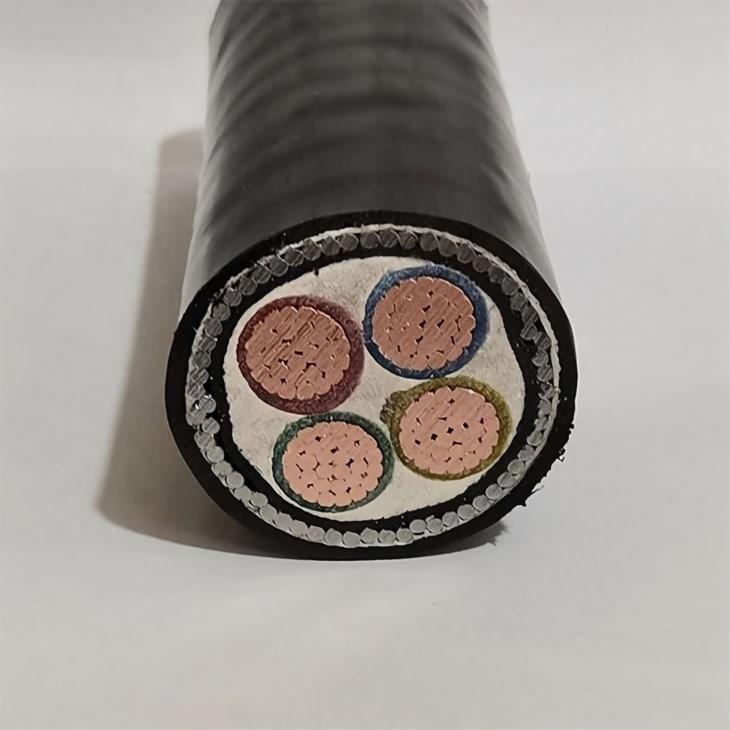
The internal architecture of a standard BS 5467 cable is built in distinct, functional layers, each engineered to fulfill a specific mechanical or electrical role:
Copper Conductor: The core electrical pathway, typically utilizing high-purity, plain annealed stranded copper (Class 2) to ensure optimal conductivity, flexibility, and minimal resistance loss over long distances. (Aluminium conductors are also permitted under the standard for larger cross-sections to save weight and material cost).
XLPE Insulation: Each individual conductor is wrapped in Cross-linked Polyethylene. This thermosetting material provides outstanding dielectric strength and allows the cable to operate continuously at high current loads without melting or degrading thermally.
Bedding Layer: A layer of extruded PVC that tightly binds the insulated cores together. The bedding acts as a protective cushion, creating a smooth, round profile that shields the inner cores from the sharp edges of the metallic armour applied over it.
Steel Wire Armour (SWA): A robust layer of galvanized steel wires wound helically around the bedding. For single-core cables, non-magnetic Aluminium Wire Armour (AWA) is used instead to prevent electromagnetic induction heating. The armour provides immense tensile strength, impact resistance, and protection against accidental mechanical punctures.
PVC Outer Sheath: The final external layer, made of heavy-duty, UV-stabilized PVC. This sheath protects the entire cable assembly from moisture ingress, atmospheric chemicals, soil acids, mechanical abrasion during installation, and direct sunlight.
2.2 Main Advantages of BS 5467
The enduring popularity of BS 5467 across industrial projects stems from a highly practical set of commercial and mechanical advantages:
Superior Mechanical Protection: The combination of SWA and a tough PVC outer jacket ensures the cable can withstand significant physical abuse, including high impact forces, heavy pulling tensions during installation, and crushing loads when buried.
Excellent Environmental Resilience: PVC is naturally resistant to a wide variety of industrial chemicals, oils, acids, alkalis, and moisture. This makes BS 5467 exceptionally well-suited for outdoor installations, exposed cable trays, and direct burial in underground trenches without additional conduit protection.
Outstanding Cost Efficiency: PVC is a mature, widely produced commodity material. Consequently, BS 5467 cables are highly cost-effective to manufacture and purchase, making them the most economical choice for projects with vast quantities of low-voltage cabling.
Proven and Familiar Choice: Because this standard has been utilized for decades, electrical contractors, site engineers, and cable jointers are deeply familiar with its handling characteristics. Terminating, stripping, and installing BS 5467 requires no specialized tools or unique training.
2.3 Main Limitations of BS 5467
Despite its exceptional mechanical and economic credentials, BS 5467 carries serious technical limitations that manifest exclusively during a fire emergency:
Generation of Dense Smoke: When PVC is ignited, the polymer breaks down and undergoes incomplete combustion, releasing an incredibly thick, pitch-black smoke. This dense smoke rapidly fills enclosed spaces, reducing visibility to near zero within minutes.
Release of Corrosive and Toxic Gases: The chemical structure of Polyvinyl Chloride contains chlorine atoms. When exposed to fire, it releases large volumes of Hydrogen Chloride (HCl) gas. When HCl gas comes into contact with moisture—such as the humidity in the air, the sweat on human skin, or the respiratory tract of workers—it forms highly corrosive hydrochloric acid.
High Risk in Evacuation Scenarios: The combination of zero visibility from dense smoke and the immediate toxicity of acid gas makes BS 5467 highly dangerous in environments where humans must navigate escape routes.
Unsuitable for Enclosed or Public Areas: Because of these smoke and chemical hazards, BS 5467 is fundamentally unsuitable for enclosed buildings, public infrastructure, or any facility with strict, modern fire safety expectations.
3. What Is BS 6724?
As modern building codes evolved and fire safety became a primary engineering priority, the vulnerabilities of PVC outer sheaths in enclosed spaces became unacceptable. To bridge the gap between high mechanical durability and advanced fire safety, the British Standards Institution developed BS 6724.
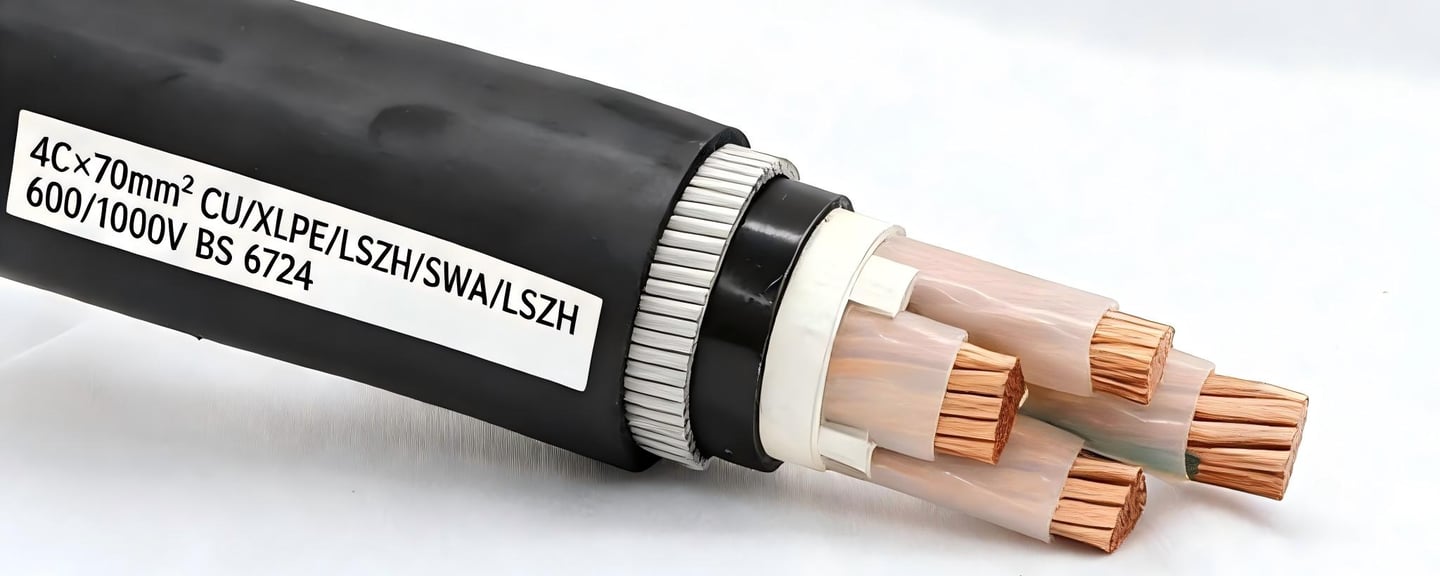
BS 6724 is the official standard for thermosetting insulated, armoured cables that feature Low Smoke Zero Halogen (LSZH) emission characteristics. In essence, BS 6724 is designed to be the direct, fire-safe alternative to BS 5467. It shares the identical core electrical specifications, conductor configurations, and mechanical armouring properties, but completely eliminates halogenated compounds from its chemical formulation.
The key engineering philosophy behind BS 6724 is the complete replacement of the standard PVC bedding and outer jacket with specialized thermoplastic or thermosetting compounds that emit minimal smoke and absolutely zero halogen gases (such as chlorine or fluorine) when exposed to intense heat or fire. These specialized compounds typically rely on heavy loading of inorganic flame retardants, such as Aluminum Trihydroxide (ATH) or Magnesium Dihydroxide (MDH), which release chemically bound water molecules when heated to suppress flames without creating toxic smoke.
Just like its PVC counterpart, BS 6724 operates flawlessly at continuous conductor temperatures of 90°C and maintains identical voltage ratings of 0.6/1 kV and 1.9/3.3 kV. It is explicitly engineered to deliver the same heavy-duty structural integrity and electrical reliability as a standard industrial armoured cable, while drastically reducing the secondary hazards associated with an electrical or structural fire.
3.1 Typical Construction of BS 6724
The physical architecture of a BS 6724 cable mirrors that of BS 5467, but incorporates radically different materials for its non-metallic layers:
Copper Conductor: High-purity, plain annealed stranded copper (Class 2), providing the exact same electrical performance and current-carrying capacities as BS 5467.
XLPE Insulation: Thermosetting cross-linked polyethylene insulation, ensuring the cable can safely handle high thermal loads and electrical stresses up to 90°C.
LSZH Bedding Layer: An extruded layer of Low Smoke Zero Halogen compound. This layer tightly binds the insulated cores together and provides the necessary physical cushion beneath the metallic wire armour, ensuring no halogens are trapped inside the cable core.
Steel Wire Armour (SWA): The identical layer of galvanized steel wires (or Aluminium Wire Armour for single-core variations) used in BS 5467. This guarantees that a BS 6724 cable provides the exact same resistance to impact, crushing, and tensile pulling forces.
LSZH Outer Sheath: The defining characteristic of the cable. An outer jacket composed of a specialized thermoplastic LSZH compound. This sheath is designed to resist flame spread while ensuring that if it does burn, the smoke generated is translucent and completely free of toxic acid gases.
3.2 Main Advantages of BS 6724
Specifying BS 6724 introduces profound safety and operational advantages that extend far beyond simple electrical performance:
Minimal Smoke Emission: In a fire, the specialized LSZH jacket burns with a clean, low-density flame. The smoke emitted is highly translucent, preventing the catastrophic loss of visibility that typically traps occupants inside a burning building.
Zero Corrosive Gas Release: Because the cable contains no halogens, it cannot generate hydrogen chloride gas or hydrochloric acid when exposed to heat. This completely eliminates the risk of toxic gas inhalation for building occupants and emergency responders.
Enhanced Visibility for Evacuation: By maintaining high visibility and air quality, BS 6724 significantly increases the time window available for safe human evacuation and allows emergency personnel to locate the source of a fire quickly.
Protection of Sensitive, High-Value Assets: In modern industrial facilities, the acidic smoke from burning PVC can migrate through ventilation ducts and permanently corrode sensitive electronics, control cards, servers, and instrumentation panels. BS 6724 eliminates this secondary chemical damage, protecting millions of dollars in equipment.
Ideal for Enclosed and Public Spaces: It perfectly satisfies the rigorous fire safety strategies, local building codes, and international safety regulations governing high-occupancy or poorly ventilated environments.
3.3 Main Limitations of BS 6724
While BS 6724 represents a massive leap forward in fire safety, it does come with practical engineering and commercial trade-offs that must be accounted for during project planning:
Higher Upfront Material Cost: LSZH compounding materials require highly complex chemical formulations and specialized manufacturing processes. As a result, BS 6724 cables carry a clear price premium over standard PVC cables, which can significantly impact the budget of large-scale projects.
Reduced Material Flexibility: The high concentration of inorganic mineral fillers required to make LSZH compounds flame-retardant makes the material naturally stiffer than flexible PVC. This makes BS 6724 cables slightly harder to bend and manipulate, requiring careful attention to minimum bending radiuses during installation in tight spaces.
Susceptibility to Harsh Chemical Environments: Standard LSZH compounds can be more vulnerable to continuous exposure to aggressive industrial chemicals, heavy oils, and prolonged moisture saturation compared to specialized PVC. While modern industrial LSZH sheaths have improved significantly, they require careful environmental vetting if they are to be buried directly in highly contaminated or acidic soil.
Unnecessary Specification in Low-Risk Areas: Specifying BS 6724 in wide-open, completely unoccupied outdoor areas provides virtually no added safety benefit, resulting in unnecessary project expenditure.
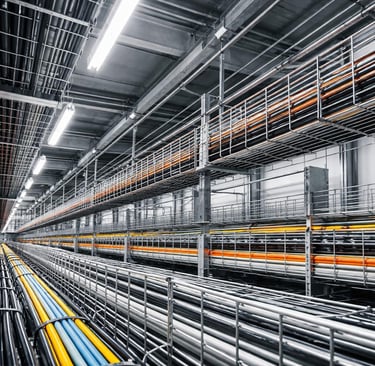
4. BS 5467 vs BS 6724 in Fire Conditions
To truly appreciate why engineers debate these two standards, we must look beyond their everyday performance and examine exactly what happens when these cables are exposed to a fully developed fire scenario. It cannot be stressed enough: the critical difference between BS 5467 and BS 6724 is not their mechanical strength, current-carrying capacity, or electrical insulation limits. Under normal operating conditions, they perform identically. The divergence is purely behavioral under thermal distress.
[Image demonstrating the fire performance difference: PVC cable burning with heavy, black smoke versus LSZH cable burning with minimal, clear smoke]
When a standard PVC-sheathed cable (BS 5467) catches fire, the intense heat breaks down the plasticizers and the polymer chain of the Polyvinyl Chloride jacket. As it burns, it undergoes a highly volatile chemical reaction. The immediate result is the release of a dense, opaque, black smoke consisting of carbon particles and unburned hydrocarbons. Simultaneously, the chlorine content within the PVC volatilizes to form Hydrogen Chloride (HCl) gas.
This HCl gas is an aggressive, pungent irritant. If a human inhales even a small concentration, it instantly attacks the respiratory tract, causing severe coughing, throat burning, and asphyxiation. Furthermore, this gas combines with atmospheric moisture to form airborne hydrochloric acid. This acid mist does not stay confined to the room where the fire started; it rises, enters HVAC ductwork, and spreads throughout a facility. When it settles on copper electrical contacts, delicate server motherboards, PLC control racks, or structural steel, it initiates an aggressive, rapid corrosion process. Often, the electronic equipment destroyed by this corrosive acid gas costs far more to replace than the physical structure damaged by the actual flames.
Conversely, a Low Smoke Zero Halogen cable (BS 6724) responds to fire through an entirely different chemical mechanism. When the LSZH jacket is exposed to intense heat, the mineral fillers (such as Aluminum Trihydroxide) undergo an endothermic decomposition. This reaction absorbs heat energy from the fire, cooling the cable surface. As the filler decomposes, it releases chemically bound water vapor, which helps to dilute oxygen around the flame and suppress the fire.
Instead of melting into a dripping fuel source and releasing thick black smoke, the LSZH jacket forms a stable, non-toxic char layer on the outside of the cable. The smoke emitted is extremely thin, white, and translucent, ensuring that emergency exit signs, floor paths, and doors remain clearly visible to anyone attempting to escape. Most importantly, the level of halogen acid gas evolved is virtually zero (less than 0.5% in standard testing), meaning the air remains free of lethal chemical irritants, and surrounding industrial automation equipment is completely safe from post-fire acid corrosion.
It is critical for engineers to understand that LSZH does not mean fireproof. A BS 6724 cable will eventually burn if exposed to a prolonged, high-intensity external fire. However, its primary engineering purpose is to dramatically improve the odds of human survivability and to radically minimize secondary, catastrophic chemical damage to the industrial infrastructure during an emergency.
5. When BS 5467 Is Usually Enough
With the immense safety benefits of LSZH cables, one might wonder why BS 5467 cables continue to be manufactured and widely specified. The answer is simple: engineering pragmatism and economic efficiency. In a vast array of industrial scenarios, the specific fire hazards that make PVC dangerous are either entirely absent or mitigated by the environment itself. Specifying expensive LSZH cables in these areas provides no tangible safety enhancement while needlessly inflating the project's capital expenditure.
BS 5467 remains the ideal, highly rational choice for ordinary industrial sites where fire smoke accumulation is not the primary design concern. The key factor here is the nature of the space. In wide-open, unconfined, or outdoor industrial environments, any smoke generated by a burning cable will immediately dissipate into the atmosphere. It cannot accumulate to block human vision, nor can it trap toxic concentrations of gas near workers.
Consider an industrial facility such as an open-air oil and gas refinery refinery layout, an outdoor petrochemical storage farm, an expansive water treatment plant, or a heavy mining site. These environments feature wide-open spaces, high ceilings, or completely outdoor cable runs supported on elevated steel gantries and outdoor cable trays. If a cable fault or external localized fire occurs on an outdoor tray, the wind and open air immediately disperse the smoke and gases safely upward into the sky. The risk to human life from smoke inhalation in these specific zones is negligible.
Furthermore, BS 5467 is exceptionally well-suited for underground distribution lines and direct burial applications. When a cable is embedded 1 meter deep in soil, surrounded by compacted sand and concrete cable tiles, it is completely isolated from the atmosphere. If an internal electrical fault causes the cable to burn underground, the fire is starved of oxygen and self-extinguishes within the trench. No smoke or gas can ever reach the surface or enter human occupied spaces.
Therefore, for underground main feeder lines running between outdoor substations and industrial plant buildings, the heavy-duty PVC jacket of BS 5467 offers superior resistance to soil acids and moisture at a fraction of the cost of LSZH alternatives.
5.1 Typical Use Cases
To provide clear guidance for project engineering, BS 5467 should be considered the default specification in the following standard industrial environments:
General Factory Power Distribution: In large, high-ceiling manufacturing halls, heavy machine shops, and fabrication plants where occupancy density is extremely low, ventilation is robust, and workers can easily see and access multiple large exit bays.
Outdoor Installations: All power distribution running on elevated outdoor cable ladders, pipe racks, and external structures connecting separate industrial modules.
Underground Cable Routes: Direct burial networks, underground duct banks, and draw pits running across the perimeter of industrial complexes, utility grids, or solar farms.
Mechanical Protection Zones with Low Occupancy: Unattended plant rooms, isolated water pumping stations, outdoor conveyor belt power runs, and unmanned electrical substations where human presence is limited to occasional maintenance walk-throughs.
6. When BS 6724 Should Be Specified
The transition from specifying standard BS 5467 to mandating BS 6724 is triggered the moment the engineering risk assessment shifts focus from the cable's physical surroundings to the consequences of smoke and gas accumulation. BS 6724 must be specified whenever fire safety, human evacuation conditions, and the protection of critical operational assets take absolute priority over upfront material costs.
The fundamental deciding factor is rarely the mathematical probability of a fire occurring; rather, it is the severity of the outcome if a fire does break out. In enclosed spaces, poorly ventilated structures, and high-occupancy environments, smoke is an immediate, ruthless killer. Statistical data from industrial and commercial fires consistently shows that the vast majority of fatalities are caused by smoke inhalation and toxic gas poisoning, long before the actual thermal flames ever reach the victims.
When an environment is enclosed, thick PVC smoke acts like a heavy blanket, quickly blacking out all overhead illumination and emergency exit signage. Panic sets in rapidly when people cannot see their hands in front of their faces, leading to disorientation and crushed crowds. If that smoke is laced with highly toxic hydrogen chloride gas, a few breaths can completely incapacitate an individual.
Furthermore, modern industrial facilities are increasingly reliant on high-density digital infrastructure. Control rooms, automated distribution hubs, and processing plants contain thousands of microprocessors, delicate fiber-optic switches, and gold-plated relay contacts. Introducing even a small amount of corrosive PVC acid gas into these clean environments can cause widespread, latent electronic failure. Even if the fire is put out within minutes, the acid residue continues to eat away at the circuits over the following days, forcing a complete, multi-million-dollar tear-out and replacement of the entire automation system, resulting in months of devastating operational downtime.
Therefore, many modern project specifications, international building codes (such as the British Standards, European CPR regulations, and local Civil Defence codes across the Middle East), and corporate risk management strategies explicitly mandate the use of LSZH cables like BS 6724 in any space deemed high-risk.
6.1 Typical Environments for BS 6724
BS 6724 should be considered mandatory and non-negotiable in the following high-risk, high-occupancy, and high-asset-value environments:
Airports and Transportation Hubs: Terminal buildings, baggage handling areas, and air traffic control towers where thousands of passengers pass through daily and evacuation is highly complex.
Hospitals and Healthcare Facilities: Intensive care units, operating theatres, and wards where patients are bedridden or immobile and require significant time and assistance to evacuate safely.
Data Centres and Server Farms: Facilities housing massive concentrations of high-value electronic infrastructure where even minor acid gas exposure could cause catastrophic global data loss and hardware destruction.
Underground Facilities, Metro, and Rail Systems: Subterranean train stations, rail tunnels, and underground pedestrian walkways where ventilation is naturally restricted and smoke accumulation is almost immediately lethal.
Tunnels and Confined Infrastructure: Vehicle and utility tunnels where smoke cannot escape easily and emergency access is severely constrained.
High-Rise Industrial and Commercial Buildings: Commercial towers, multi-story urban processing facilities, and high-rise structures where vertical evacuation down stairwells inherently takes an extended period.
Public Corridors and Designated Escape Routes: Any enclosed pathway, stairwell, or exit corridor specifically designed to serve as the primary emergency escape route for a facility’s workforce.
6.2 Why LSZH Is Preferred in These Places
The engineering rationale for enforcing BS 6724 in these specific zones comes down to five critical operational pillars:
Buying Critical Evacuation Time: Because LSZH cables maintain high visibility and breathable air, they provide building occupants with a significantly wider window of time to walk calmly to safety.
Preventing Exit Blinding: Keeping smoke thin ensures that illuminated "EXIT" signs, directional arrows, and structural barriers remain perfectly visible, preventing mass confusion.
Asset and Infrastructure Protection: Eliminating halogen gases ensures that high-value electronics, control rooms, and automated systems suffer zero secondary acid corrosion, allowing the plant to recover and resume operations rapidly post-incident.
Strict Regulatory and Insurance Compliance: Meeting the rigid safety requirements of local civil defence authorities, international fire engineering codes, and industrial insurance underwriters who often refuse to cover facilities utilizing high-volume PVC in enclosed spaces.
Ensuring Post-Fire Operational Continuity: Minimizing clean-up times and preventing structural degradation so that critical public infrastructure—like metros or hospitals—can be restored to service within hours rather than months.
7. How to Decide Between BS 5467 and BS 6724
Choosing between these two heavy-duty armoured cables should never be left to guesswork or personal habit. Instead, project engineers should employ a structured, highly logical decision framework based on the actual physical risk profile of the installation site.
To determine the correct cable specification, run your specific application through the following engineering matrix:
[ START: Cable Selection ] │ ▼ Is the cable route located within a designated human escape route, public space, or high-occupancy building? ├── YES ──► [ Specify BS 6724 (LSZH) ] └── NO │ ▼ Is the installation environment enclosed, underground, or poorly ventilated? ├── YES ──► [ Specify BS 6724 (LSZH) ] └── NO │ ▼ Are there high-value, sensitive electronic assets or critical automation controls nearby that could be destroyed by acid gas? ├── YES ──► [ Specify BS 6724 (LSZH) ] └── NO │ ▼ Is the cable route entirely outdoors, in a low-occupancy open factory floor, or buried directly underground? ├── YES ──► [ Specify BS 5467 (PVC) ] └── NO │ ▼ [ Re-evaluate Site Fire Strategy / Consult Civil Defence ]
By systematically evaluating the physical boundaries, ventilation capacities, human densities, and technological values of each cable pathway, you can map out a highly optimized, safe, and commercially responsible cable schedule for your entire project.
7.1 Decision Questions
When auditing your cable schedule or writing a project specification document, force your engineering team to answer these six fundamental qualifying questions for every major cable run:
Is the cable route located directly inside or immediately adjacent to a designated emergency escape path? If yes, the cable must be BS 6724 to prevent smoke blinding during evacuation.
Is the installation area enclosed, underground, or structurally restricted in terms of natural ventilation? If yes, smoke and gas cannot escape freely, mandating the use of BS 6724.
Are there high concentrations of human occupants present in this area during normal daily operations? If the area is a densely staffed control room, assembly floor, or public zone, prioritize human life by specifying BS 6724.
Is there sensitive, high-value, or mission-critical electronic equipment positioned within the same ventilation zone? If acid gas migration could permanently ruin millions of dollars in control circuitry or servers, protect your assets with BS 6724.
Does the master project specification, local building code, or regional Civil Defence regulation explicitly demand LSZH or low-smoke performance? If yes, compliance dictates BS 6724 regardless of external physical conditions.
Is the cable route situated entirely outdoors, on exposed external racks, or buried completely underground? If yes, and no local human or asset hazards exist, leverage the massive economic benefits of BS 5467.
8. Practical Selection Summary
To synthesize these two major standards into a direct engineering comparison, we must recognize that BS 5467 and BS 6724 are designed to solve entirely different sets of problems. Neither cable is universally "better" than the other; rather, each is optimized for a specific operational context.
BS 5467 represents the conventional, time-tested standard for industrial armoured cabling. It focuses heavily on material economy, structural robustness, and long-term environmental durability against moisture and industrial chemicals. It is the definitive engineering choice for standard factories, heavy outdoor processing plants, and underground power distribution where the risk of smoke entrapment is virtually non-existent.
BS 6724 represents the modern safety-critical standard for advanced industrial and public infrastructure cabling. It maintains the exact same mechanical and electrical toughness as BS 5467 but adds an invaluable layer of advanced fire performance, smoke control, and toxic gas elimination. It is the mandatory engineering choice for any environment where people gather, where evacuation routes are extended, or where high-value electronic assets must be fiercely protected from chemical corrosion.
Engineers must break the dangerous habit of specifying cables purely out of repetition or relying on whatever material happens to be cheapest or immediately available in local stock. Every project deserves a dedicated, risk-based material assessment.
9. Conclusion
The selection between BS 5467 and BS 6724 is a perfect case study in balanced engineering design. It requires balancing upfront procurement budgets against long-term operational safety and risk mitigation.
As a professional engineer or project manager, your guiding takeaway should be clear and uncompromising: always utilize BS 5467 for ordinary, open-air, low-occupancy, or buried industrial installations where the ruggedness of PVC delivers maximum value for money. However, the moment your design crosses the threshold into an enclosed facility, a public infrastructure asset, a human evacuation corridor, or a high-value control environment, you must specify BS 6724.
By aligning your cable selections precisely with the unique fire risk profile of each distinct zone within your facility, you ensure absolute regulatory compliance, deliver maximum protection for human life, safeguard your critical electronic infrastructure, and optimize your project’s financial investment. The right cable is never chosen by habit; it is chosen by rigorous, safety-driven design.
Port crane cables | Mining cables | Reeling cables | Trailing cables | Festoon cables | Heavy-duty power cables | Medium voltage cables | Offshore crane cables | Underground mining cables | Dragline cables | Shearer cables | Container handling cables | STS crane cables | RTG cables | Mobile equipment cables | Armored cables | Flexible power cables | VFD cables | Submersible cables | Cold resistant cables | Abrasion resistant cables | Flame retardant cables | Marine environment cables | Opencast mining | Underground operations
© 2006 All rights reserved.
[INDUSTRIAL_CABLES]
INDUSTRIAL GRADE CABLE SYSTEMS | PORT & MINING SOLUTIONS
TEL: +86 153 7530 2641 |MAIL: hongjing.Wang@feichuncables.com