BS 6387 and BS 7870 Compliance: Sourcing British Standard Approved Industrial Cables for Middle East Projects
Learn how BS 6387 and BS 7870 guide industrial cable sourcing for Middle East projects, including SWA, AWA, fire-resistant cables, and consultant-approved specifications.
hongjing.Wang@Feichun
7/6/202613 min read
1. Introduction
Within the complex engineering landscape of the United Arab Emirates and the wider Gulf Cooperation Council region, technical specifications dictate the pace of multi-billion-dollar infrastructure developments. From the expansion of major container terminals to downstream petrochemical networks and extensive municipal utility grids, the electrical infrastructure chosen determines operational longevity and safety. For decades, international engineering, procurement, and construction contractors, alongside regional utility boards, have relied heavily on British Standards to govern their material choices. This deep historical alignment stems from the foundational role British engineering consultancies played in designing the region's first modern infrastructure. Today, this tradition persists as a standard practice among premium project specifications.
When a lead consultant or procurement director evaluates a technical submittal for an industrial expansion project, sourcing a certified BS Standard Cable is often a mandatory step toward vendor approval. For Middle East Procurement teams, specifying cables that strictly comply with standards like BS 6387 and BS 7870 is not merely about ticking a regulatory box; it is a proven strategy to accelerate consultant sign-off and mitigate the immense legal and financial liabilities associated with component failure. Utilizing familiar, globally recognized British Standard references streamlines the prequalification pipeline, ensuring that complex installations—ranging from heavy-duty port crane networks to critical fire safety systems—satisfy the stringent asset-protection mandates required by major regional developers.
2. What BS 6387 Means
In the event of an industrial emergency or an offshore thermal incident, maintaining the absolute integrity of electrical circuits can mean the difference between controlled shutdown and catastrophic system failure. This is where BS 6387 serves as the international benchmark for fire-resistance testing. Specifically, BS 6387 defines the rigorous test protocols for cables required to maintain circuit integrity under severe, direct fire conditions. Unlike basic flame-retardant cables—which merely resist the spread of a fire along their outer jackets—a true BS 6387 Cable is physically engineered to continue transmitting electrical power or vital control signals while being actively engulfed in flame, subjected to high-energy water sprays, and exposed to continuous mechanical impacts.
The testing protocol for BS 6387 is exceptionally demanding, subjecting the test cable to a sequence of severe conditions designated by specific letters:
Category C (Resistance to Fire Alone): The cable must maintain electrical circuit integrity while exposed to a direct flame burner reaching 950°C for a continuous duration of three hours.
Category W (Resistance to Fire and Water): The cable must survive 15 minutes of direct exposure to a flame at 650°C, followed by an additional 15 minutes where the flame is accompanied by a continuous, direct water spray simulating emergency fire sprinklers.
Category Z (Resistance to Fire with Mechanical Shock): The cable is mounted to a vertical panel and exposed to a 950°C flame while a motorized mechanism delivers physical impacts to the structure every 30 seconds for 15 minutes, simulating structural collapse or falling debris.
Achieving the full CWZ certification means the cable is capable of sustaining critical command signals, operating emergency smoke extraction fans, powering emergency lighting arrays, and maintaining communication lines during an industrial fire. For Middle Eastern projects, where highly concentrated industrial zones operate under extreme ambient conditions, integrating cables certified to this standard ensures that fire safety networks remain active when they are needed most.
3. What BS 7870 Covers
While fire integrity standards protect safety-critical control and emergency systems, the day-to-day distribution of bulk electrical energy across an industrial site or utility network requires a different engineering focus. For fixed power infrastructure, the BS 7870 series stands as the definitive British Standard governing low-voltage and medium-voltage polymeric insulated cables. This multi-part standard provides complete, detailed specifications for cables intended for fixed installation across public distribution networks, heavy industrial complexes, and generation utilities, covering voltage classes up to and including 19/33 kV.
The scope of BS 7870 focuses primarily on structural dimensions, electrical insulation performance, and long-term durability in stationary installations. It defines the exact requirements for cross-linked polyethylene or ethylene propylene rubber insulation systems, ensuring that copper or aluminum conductors can operate continuously at standard maximum conductor temperatures of 90°C.
For engineers designing the main power infrastructure of an industrial plant, a cable compliant with the relevant section of BS 7870 guarantees that the component possesses the correct dielectric strength, sheath thickness, and environmental resistance needed to handle long-term electrical loads. Unlike highly flexible, specialized machine cables designed for continuous bending, BS 7870 cables are engineered for absolute stability in underground trenches, concrete duct banks, and structural cable trays. They serve as the reliable primary network that moves bulk power from main distribution substations down to heavy machinery and terminal switchgear.
4. Supporting Standards
In modern international procurement, a single standard rarely exists in isolation. When technical engineers draft the specifications for a major Middle Eastern infrastructure tender, they typically create a comprehensive matrix of compliance that pairs British Standards with broader European and international frameworks. The primary partner to British specifications is the IEC 60502 standard, which serves as the global reference for low-voltage and medium-voltage extruded solid insulated power cables from 1 kV up to 30 kV. By referencing both BS 7870 and IEC 60502 in tandem, a project consultant establishes a robust dual-layer compliance mechanism that ensures the incoming cables feature globally validated layer dimensions, testing tolerances, and electrical safety profiles.
For applications requiring unique mechanical performance—such as high-flexibility port handling systems, rolling stock, or specialized mass transit networks—specifications often reference European norms like EN 50264. This standard outlines requirements for cross-linked elastomeric insulated cables that deliver exceptional flexibility and resistance to restricted bending radii, while maintaining strict low-smoke, halogen-free fire properties.
When Middle Eastern procurement documents combine these diverse standards, they build a balanced framework defining both construction requirements and test philosophies. This comprehensive approach ensures that whether an asset is a fixed underground feeder line or a dynamic power connection on heavy equipment, its insulation, jacket, and conductors are verified against the highest international metrics of quality and safety.
5. Cable Construction and Armor
To survive the physical stresses of industrial installation—including underground shifting, high pulling tensions during installation, and the risk of accidental mechanical impact from excavation equipment—heavy-duty cables require structural reinforcement. The primary method for providing this protection within the British Standard framework is through the integration of a dedicated wire armor layer. This layer serves as a rugged metallic shield that absorbs physical impacts, punctures, and crushing forces, while also functioning as a reliable earth return circuit for electrical system safety.
Steel Wire Armoured (SWA) Construction
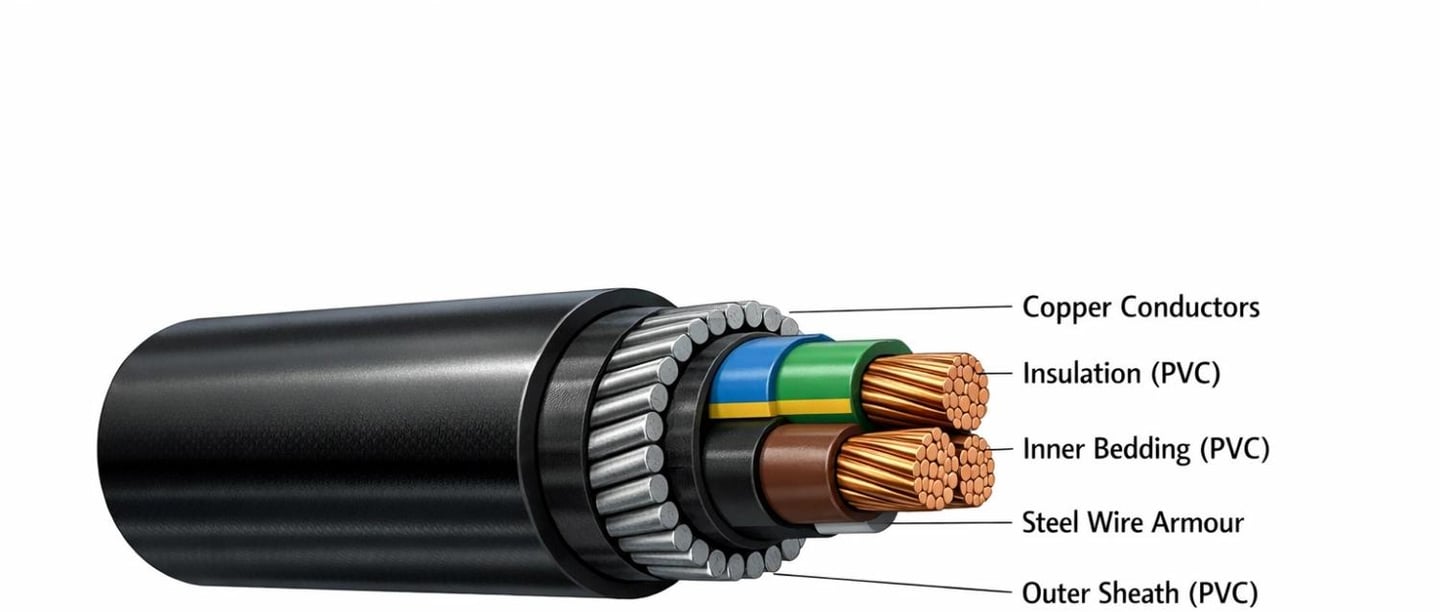
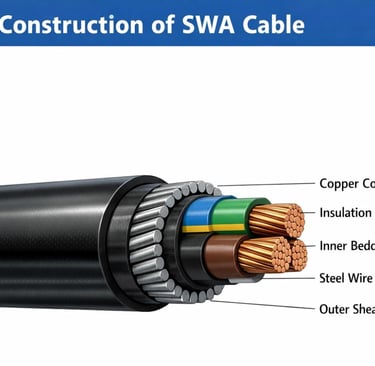
For multi-core power and control cables, Steel Wire Armoured construction represents the standard engineering choice. In an SWA cable, a helically wound layer of galvanized steel wires is applied directly over an inner bedding material that cushions the insulated cores. This galvanized steel layer provides exceptional tensile strength, making SWA cables highly resistant to longitudinal pulling forces during long installation runs through underground ducts. The heavy steel matrix also forms an excellent physical barrier against sharp rocks and accidental impact from hand tools, making it the preferred configuration for multi-core distribution lines across industrial sites.
Aluminium Wire Armoured (AWA) Construction
When a project requires single-core cables to carry high-amperage alternating current, steel armor cannot be used due to magnetic properties. Passing a high-current single-phase AC line through a magnetic material like steel generates circulating eddy currents and localized magnetic hysteresis. This effect causes severe heating within the armor layer, leading to thermal degradation of the adjacent insulation.
To prevent this phenomenon, single-core cables must utilize Aluminium Wire Armoured construction. Because aluminum is a non-magnetic metal, it allows the single-phase AC fields to pass through without generating parasitic heat loads. Additionally, AWA construction provides a distinct weight reduction advantage, which simplifies cable management and reduces structural loads on elevated cable trays and support brackets.
The Internal Material Layers
A premium industrial armoured cable features a carefully balanced layer structure. At the core is the high-purity copper or aluminum conductor, which is encased in a high-temperature insulation material like XLPE. Surrounding the insulated cores is an extruded bedding layer, usually composed of a low-smoke, halogen-free compound or high-grade PVC. This bedding serves two functions: it binds the internal conductors into a round profile and acts as a protective cushion that prevents the hard armor wires from pressing into the soft insulation.
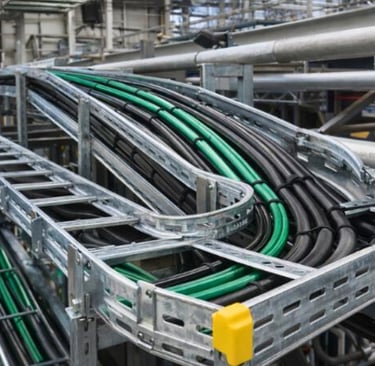
Directly over the bedding sits the helical layer of SWA or AWA wires. Finally, a heavy-duty outer sheath is extruded over the armor matrix. This outer jacket protects the metallic armor from moisture, salt spray, and chemical attack, ensuring long-term structural integrity in harsh industrial environments.
6. Typical Industrial Cable Types
Selecting the correct cable for an installation requires matching the specific performance standard with the intended application. Industrial cable families are typically grouped by their fire performance capabilities and structural design, allowing engineers to target specific areas of risk within a facility.
Fire-Resistant and LSZH Cable Families
For applications where human safety and controlled system shutdowns are the primary design priorities, engineers specify fire-resistant, Low Smoke Zero Halogen (LSZH) cable families. These cables are designed to meet the strict criteria of BS 6387. They utilize specialized fire-barrier tapes, such as mica tape, wrapped directly around the copper conductors underneath the main insulation. When exposed to extreme fire conditions, the organic polymers of the insulation may burn away, but the mineral mica tape vitrifies, forming a non-conductive, heat-resistant ceramic shield that maintains the electrical separation between phases.
The outer jackets of these cables are formulated from specialized halogen-free polyolefin compounds. If a fire occurs, these materials release minimal smoke and zero corrosive halogen gases like hydrogen chloride, keeping visibility high for evacuation and preventing acid damage to sensitive control systems. These properties make BS 6387-compliant cables essential for emergency lighting circuits, fire alarm networks, control lines for fire pumps, and critical data links in public infrastructure.
Fixed Power Distribution Cable Families
For bulk power transmission where fire integrity is not the primary requirement but mechanical protection is essential, cables built to the BS 7870 standard are specified. These cables utilize high-efficiency XLPE insulation, which allows the conductors to operate continuously at 90°C and handle short-circuit temperatures up to 250°C. They are built with robust SWA or AWA layers to withstand the mechanical stresses of direct burial or outdoor installation in open cable trays.
These fixed power distribution families are commonly deployed as the main feeder lines linking primary utility substations to plant-wide distribution boards, motor control centers, and large stationary industrial equipment, providing a durable foundation for the facility's power network.
7. Procurement and Approval Process in the Middle East
The path to integrating industrial components into a Middle Eastern project requires navigating a structured, multi-tiered technical procurement process. Because major engineering developments in regions like Abu Dhabi, Dubai, and the wider GCC involve substantial capital investments, developers and asset owners implement strict engineering oversight to protect their long-term interests.
[Consultant Specification]
│
▼
[Vendor Prequalification]
│
▼
[Technical Submittal Generation]
│
▼
[Consultant Evaluation & Approval Gate]
│
▼
[Purchase Order Award & Quality Inspection]
│
▼
[On-Site Delivery & Installation]
The process begins with the Consultant Specification phase. International engineering firms, operating on behalf of clients like ADNOC, Dubai Holding, or regional utility authorities, draft comprehensive tender documents detailing the precise standards, material types, and test certifications required for the project. To participate in these projects, manufacturers must pass through vendor prequalification, a process that evaluates the factory's production capacity, quality control systems, and international third-party test certificates.
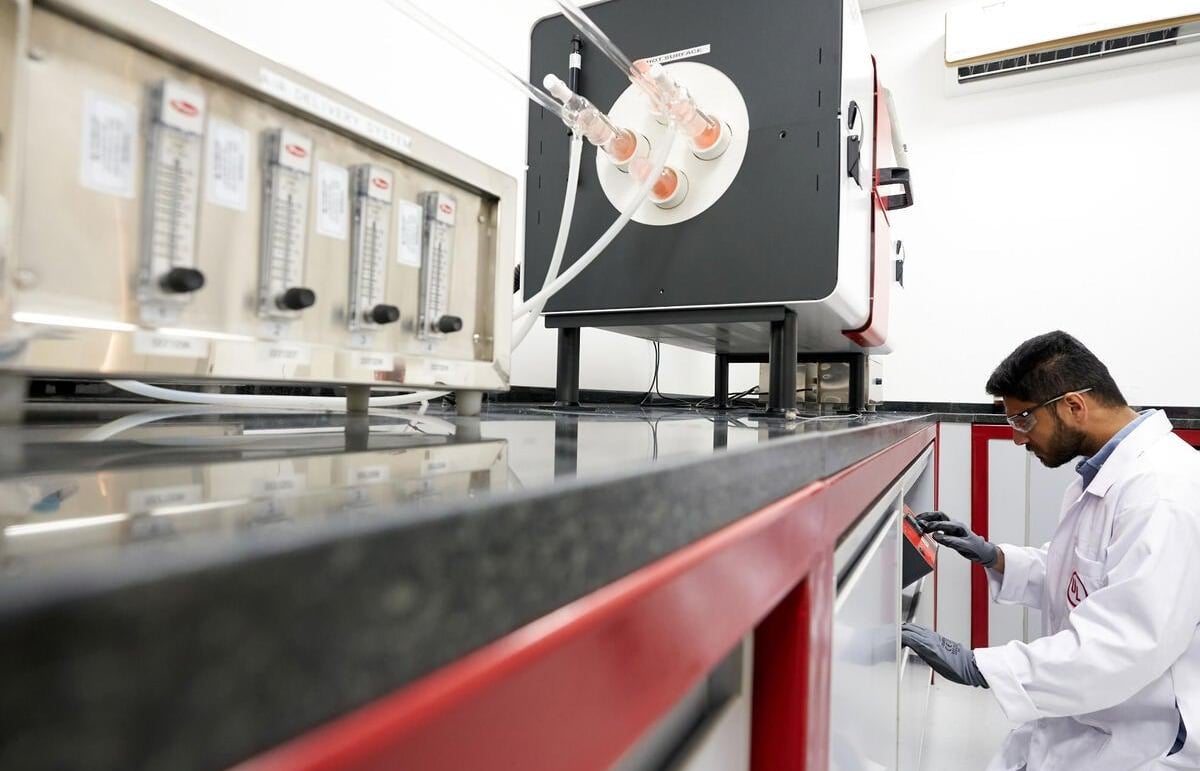
Once a project is awarded to an EPC contractor, the technical procurement team generates a comprehensive technical submittal for the specific cables needed. This submittal includes data sheets, manufacturing drawings, independent type-test reports from accredited laboratories (such as BASEC or KEMA), and compliance statements verifying adherence to standards like BS 6387 and BS 7870. This package is submitted to the lead consultant for evaluation.
The consultant review serves as the primary gatekeeper in Middle East Procurement. If a submittal lacks sufficient third-party proof of compliance or uses vague catalog references instead of verified standards, it is routinely rejected, causing potential project delays. Conversely, presenting a submittal backed by clear British Standard certifications builds immediate confidence with the engineering board, accelerating the approval process and moving the project smoothly toward manufacturing, inspection, and on-site delivery.
8. Application Scenarios
The practical value of sourcing a certified BS Standard Cable becomes clear when analyzing specific high-demand industrial installations across the Middle East.
Port Power Distribution Systems
Modern container terminals and maritime logistics hubs require extensive electrical distribution networks to support automated gate systems, reefer container washing stations, administrative complexes, and extensive high-mast yard lighting arrays. These installations feature long cable runs routed through complex networks of underground concrete duct banks, where cables are often exposed to standing brackish water, high soil salinity, and heavy surface loads from passing container handlers.
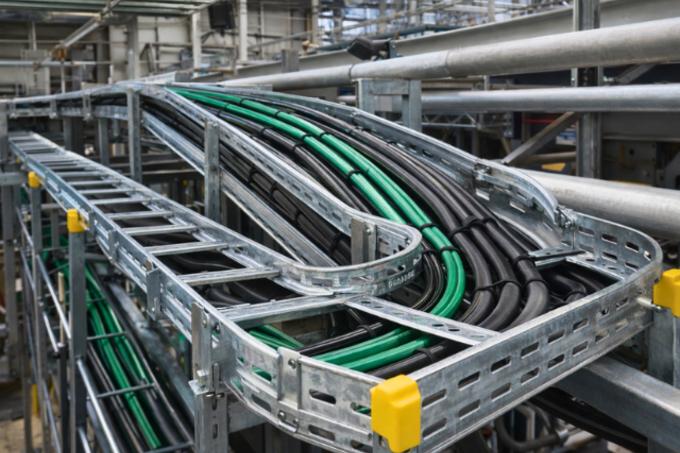
To ensure long-term reliability, engineers deploy heavy-duty armoured cable options designed to BS 7870. The galvanized steel wire armor provides the necessary tensile strength to withstand high pulling forces during installation through winding ducts, while protecting the core insulation from shifting soils and long-term mechanical compression.
Crane Power Supply Lines
Heavy-duty outdoor equipment, such as rail-mounted gantry cranes and specialized material handling systems operating in industrial yards, relies on consistent, uninterrupted power delivery. While the moving parts of these structures require highly flexible reeling lines, the fixed infrastructure that delivers power down the length of the crane runway demands a rugged, stationary cable solution.
Engineers install large-cross-section SWA or AWA cables compliant with BS 7870 along the crane tracks or within dedicated concrete trenches. These cables must withstand continuous ground vibrations generated by the movement of multi-ton crane structures, while maintaining stable insulation performance despite high ambient temperatures and solar heating.
Oil Terminal Electrical Systems
Perhaps the most demanding application environment for industrial wiring is found within coastal oil terminals, refinery tank farms, and downstream hydrocarbon processing facilities. In these zones, electrical systems face a combination of physical hazards, including potential chemical exposure, heavy physical impacts, and the risk of industrial fires.
Within an oil terminal, power distribution lines for main transfer pumps use robust armoured cable options designed to resist physical damage and prevent hydrocarbon penetration. Simultaneously, the control networks, emergency shutdown systems, and fire-suppression automation lines utilize cables certified to BS 6387 Category CWZ. This dual approach ensures that while the main power system is protected against daily mechanical wear, the safety critical control loops remain operational during an emergency, allowing operators to execute a controlled, safe shutdown of the terminal.
9. Regional Relevance
The preference for British Standard compliance is a defining characteristic of industrial procurement across specific economic zones and industrial sectors within the UAE and the broader GCC. This standards-driven approach is particularly evident in the technical requirements enforced within major industrial hubs.
Abu Dhabi Infrastructure and Energy Sectors
In the Emirate of Abu Dhabi, technical submittals are governed by comprehensive engineering standards developed by major state-owned enterprises and utility bodies. Entities like the Abu Dhabi National Oil Company (ADNOC) and the Abu Dhabi Department of Energy maintain detailed engineering specifications that prioritize British and international standards.
When an EPC contractor sources materials for a new oil and gas processing train or an island infrastructure expansion, the evaluation boards require clear, independent type-test evidence for every cable batch. In these projects, presenting a cable verified to BS 6387 or BS 7870 provides an efficient path to compliance, helping ensure the submittal satisfies the strict risk-management and safety criteria mandated by regional asset owners.
Dubai Industrial Zones and Commercial Hubs
A similar commitment to standardized quality is found across the industrial and commercial expansion projects within Dubai. Major developments across Dubai Industrial City, Jebel Ali Free Zone (JAFZA), and Dubai South involve complex engineering challenges that require high-performance materials.
Whether building centralized cold-storage logistics facilities or expanding the power networks for automated manufacturing plants, project consultants incorporate British Standard guidelines into their initial tender documents. This consistent framework ensures that developers receive components capable of delivering long-term performance under the region's demanding environmental conditions, establishing a reliable baseline of quality across diverse industrial applications.
10. Real-World Case Studies and Problem Solving
Examining actual engineering challenges encountered during regional project executions highlights the practical importance of choosing the correct cable standards and armor configurations.
Case Study 1: Resolving Single-Phase Heating at a Coastal Power Plant
During the construction phase of a major coastal desalination and power plant in the Gulf, an international EPC contractor ran a series of high-amperage, single-core low-voltage power cables to connect a main step-down transformer to a distribution switchgear room. In the initial material submittal, the procurement team sourced single-core cables fitted with galvanized steel wire armor, overlooking the magnetic implications of the design. During initial commissioning trials under partial electrical load, thermal imaging cameras detected rapid temperature spikes along the cable run, with the armor temperature exceeding 85°C well before the system reached full capacity.
The engineering consultant immediately halted the trial, identifying that the single-phase AC fields were generating severe eddy currents and magnetic hysteresis within the steel wire armor. To resolve the issue without delaying the project timeline, the contractor contacted a qualified British Standard cable supplier to source single-core Aluminium Wire Armoured cables built to BS 7870. The installation of the non-magnetic aluminum armor eliminated the parasitic magnetic heating, allowing the conductors to operate safely within standard temperature limits and enabling the plant to achieve full commercial operation.
Case Study 2: Protecting Emergency Shutdown Loops at a Jebel Ali Storage Facility
In another instance, a petrochemical storage and logistics provider operating within the Jebel Ali industrial zone undertook a comprehensive safety upgrade of its tank farm control systems. The project required installing new automated emergency shutdown valves designed to isolate fuel storage tanks in the event of an overfill or thermal incident. The project consultant specified that all critical control loops and power feeds to these actuator valves must maintain complete operational continuity during a fire, mandating the use of fully certified fire-resistant cables.
The contractor selected a premium cable family certified to BS 6387 Category CWZ, featuring dual-layer mica tape fire barriers and an LSZH outer jacket. This choice proved its value during a localized transformer fire near one of the valve stations. While the intense heat warped adjacent standard PVC conduit runs, the BS 6387-compliant cable maintained its electrical circuit integrity throughout the event. This allowed the control room operators to successfully activate the emergency isolation valves from the central console, preventing fuel migration and protecting the broader facility from a more serious incident.

11. Technical Sourcing Reference Matrix
To assist procurement teams and technical specifiers in aligning their sourcing requirements with the correct engineering terminology, the following reference section outlines the key parameters that define standard industrial cable procurements in the Middle East region. When drafting technical submittals, requests for quotation (RFQ), or material approvals, engineers can utilize these defined standard categories to ensure clear communication with manufacturers:
BS Standard Cable Compliance: Specifies that the incoming cable must be manufactured, tested, and certified in strict accordance with recognized British Standards, ensuring immediate familiarity and faster approval from regional project consultants.
Heavy-Duty Armoured Cable Middle East Specifications: Directs suppliers to provide cables equipped with robust galvanized steel or aluminum wire layers, engineered to withstand the mechanical stresses of direct burial and ground shifting in challenging desert soils.
Verified Industrial Cable Compliance Metrics: Requires complete documentation, including independent type-test certificates from accredited bodies like BASEC, to confirm the cable satisfies all electrical and physical safety thresholds required for major infrastructure tenders.
BS Approved Cable Supplier Prequalification: Used during the vendor selection phase to identify manufacturers who maintain a proven track record of supplying certified British Standard products to major regional developments.
British Standard Cable Supplier Reference Documentation: Mandates the delivery of comprehensive manufacturing data, materials sheets, and country-of-origin evidence required to pass strict consultant evaluation gates in Abu Dhabi and Dubai.
BS 6387 Cable Fire Integrity Performance: Specifies a cable capable of passing the full Category CWZ testing regime, confirming its ability to maintain circuit integrity under the simultaneous stresses of 950°C fire, water spray, and mechanical shock.
BS 7870 Cable Distribution Standards: Used to define low-voltage and medium-voltage polymeric insulated cables intended for fixed installation up to 19/33 kV across primary power distribution networks and utility grids.
12. Conclusion
Sourcing industrial cables for complex engineering projects in the Middle East requires balancing strict regulatory standards with demanding environmental realities. As shown throughout this guide, the BS 6387 and BS 7870 standards serve distinct but complementary roles in ensuring facility safety and operational reliability.
While BS 6387 provides the testing framework needed to guarantee circuit integrity for safety-critical systems during a fire, BS 7870 defines the structural requirements for durable low-voltage and medium-voltage power distribution networks. By understanding these technical distinctions and selecting the appropriate armor configuration—whether multi-core SWA for impact resistance or single-core AWA to eliminate magnetic heating—procurement professionals can build reliable electrical systems.
Ultimately, aligning material choices with familiar British Standard references helps streamline the consultant approval process, reduces project execution risks, and ensures that critical infrastructure across the UAE and the broader GCC is equipped for long-term operational success.
Port crane cables | Mining cables | Reeling cables | Trailing cables | Festoon cables | Heavy-duty power cables | Medium voltage cables | Offshore crane cables | Underground mining cables | Dragline cables | Shearer cables | Container handling cables | STS crane cables | RTG cables | Mobile equipment cables | Armored cables | Flexible power cables | VFD cables | Submersible cables | Cold resistant cables | Abrasion resistant cables | Flame retardant cables | Marine environment cables | Opencast mining | Underground operations
© 2006 All rights reserved.
[INDUSTRIAL_CABLES]
INDUSTRIAL GRADE CABLE SYSTEMS | PORT & MINING SOLUTIONS
TEL: +86 153 7530 2641 |MAIL: hongjing.Wang@feichuncables.com