Choosing the Right Conductor Class: Class 5 vs Class 6 Flexible Copper Conductors
Compare Class 5 and Class 6 copper conductors under IEC 60228 and discover which is better for crane cables, drag chains, robotics, and continuous motion systems.
hongjing.Wang@Feichun
7/16/202617 min read
In the expansive landscape of modern industrial development, heavy machinery and automated systems act as the primary engines driving economic diversification and industrial strength. From the massive automated container terminals handling international maritime trade at Jebel Ali, King Abdullah Port, and Khalifa Port, to the highly integrated robotic assembly lines, material handling hubs, and downstream chemical plants sprawling across the region, heavy industry relies on absolute operational consistency. In these high-performance environments, unexpected equipment failure is not merely a minor setback; it represents an expensive operational failure that directly cuts into production targets, delays project timelines, and compromises supply chain reliability.
When international B2B buyers, plant directors, asset management teams, and Engineering, Procurement, and Construction (EPC) contractors design or upgrade complex power and control distribution infrastructure for automated machinery, a substantial amount of engineering time is dedicated to selecting external protective layers. Procurement teams meticulously review specifications for chlorinated polyethylene outer jackets, specialized synthetic rubber formulations, polyurethane coverings, and advanced flame-retardant insulations. While protecting the cable from external elements is a vital part of procurement, focusing exclusively on the outer jacket overlooks the internal component that directly determines the cable's physical performance, lifetime service capacity, and functional flexibility: the copper conductor itself.
The internal architecture of the copper core dictates how well a cable handles continuous mechanical stress, high-speed movement, and repetitive bending profiles. Choosing the appropriate conductor construction is not just an optional specification detail; it is a fundamental engineering decision that directly influences the cable's structural integrity, installation bending radius, spatial footprint, and long-term reliability under demanding operating conditions. To build robust systems that endure heavy use without early failure, industrial decision-makers must look beyond the outer sheath and evaluate the standard classifications governing flexible copper conductor design.
1. Introduction: Why Conductor Class Matters
Within any high-demand automated facility or heavy industrial extraction zone, heavy equipment does not remain stationary. Heavy gantry cranes travel along extensive rail networks to offload cargo ships; automated storage and retrieval systems move quickly through high-density warehouses; energy chains carry power and data lines back and forth across heavy machinery beds; and multi-axis articulated robotic arms twist, turn, and bend continuously to execute precise manufacturing and handling tasks. Every single movement places immediate mechanical stress directly onto the internal metallic structure of the cables feeding these machines.
When a standard cable is forced into a tight bend or subjected to continuous motion, the internal copper strands experience severe physical forces. The outer edge of the bend undergoes intense longitudinal stretching and tensile stress, while the inner portion of the bend is subjected to high compressive forces. If the internal copper core is too rigid or poorly constructed for the application, these repeating forces lead directly to mechanical fatigue. Over time, individual copper strands begin to experience microscopic cracking, which quickly escalates into physical failure as strands snap one by one. As more strands break, the cable's total cross-sectional area decreases, leading to localized electrical resistance spikes, excessive heat generation, insulation melting, and ultimately, a catastrophic short-circuit fault that halts operation.
To prevent early physical failure and maximize the service life of automated equipment, engineering teams must evaluate the conductor class during the early stages of project design. Conductor construction affects installation flexibility, spatial management within tight cable trays, and the cable's ability to withstand hundreds of thousands or even millions of continuous flex cycles.
To ensure global standardization and consistent manufacturing quality, the international engineering community relies on the strict guidelines established under the IEC 60228 standard. This international benchmark explicitly defines the geometric, structural, and electrical properties of insulated cable conductors, giving engineers and buyers a uniform framework to evaluate flexible copper options.
2. IEC 60228 Conductor Classes
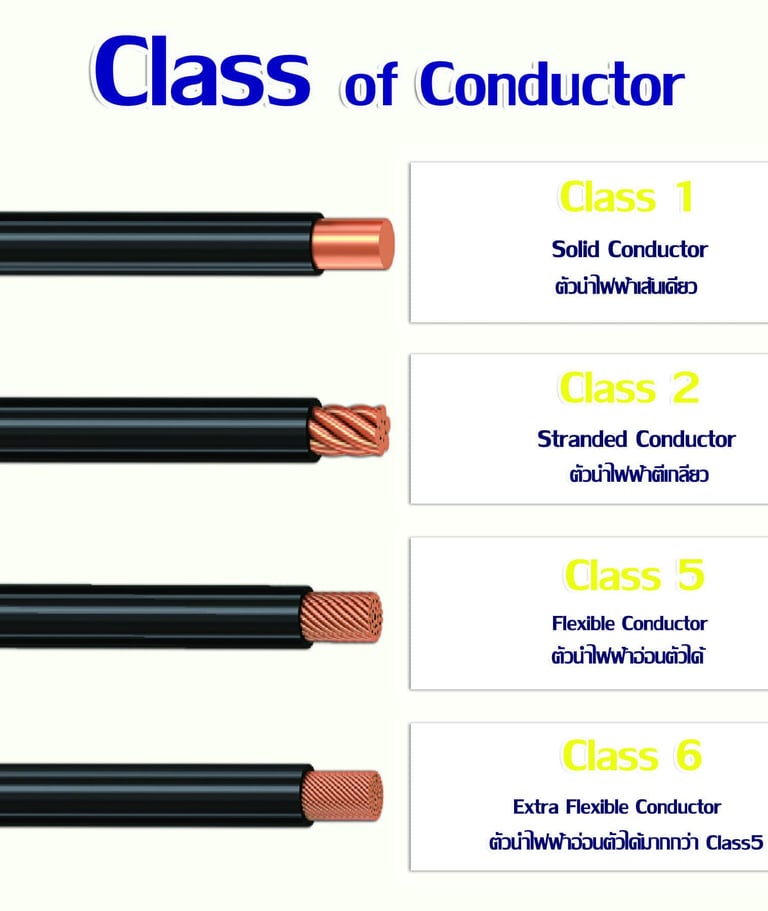
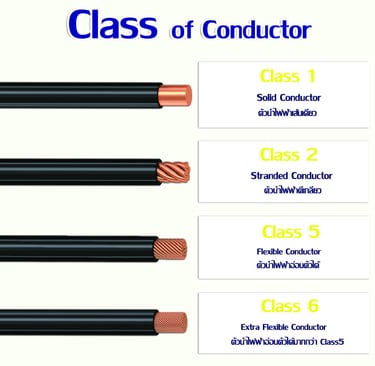
The international standard IEC 60228 establishes a clear classification system for cable conductors based on their structure, flexibility, and intended application. It divides copper and aluminum conductors into four distinct classes, ranging from completely rigid, solid metal designs to ultra-flexible, finely stranded core configurations. Understanding these four divisions allows procurement and engineering teams to easily distinguish between static infrastructure cables and dynamic, high-flex operational models.
IEC 60228 Conductor Classification │ ┌───────────────────────────┼───────────────────────────┐ ▼ ▼ ▼ [ Class 1 & 2 ] [ Class 5 ] [ Class 6 ] Rigid / Stranded Core Flexible Stranded Extra Flexible Fine Fixed Installations Only Portable & Mobile Use Continuous High-Speed Flex
Class 1: Solid Conductors for Fixed Wiring
Class 1 defines completely rigid conductors made from a single, solid piece of copper or aluminum wire. Because it lacks individual strands, a Class 1 conductor is stiff and offers minimal flexibility. If it is subjected to repeated bending or external vibration, it will quickly deform or snap due to metal fatigue. Consequently, Class 1 conductors are used exclusively for permanent, stationary electrical installations—such as domestic building wiring, internal conduit paths, and primary structural power backbones embedded in concrete walls—where the cable will never experience physical movement after installation.
Class 2: Stranded Conductors for Fixed Installations
Class 2 covers stranded conductors composed of several thicker wires twisted together into a single core. This design offers slightly more structural give than a solid Class 1 core, making it easier for installation crews to pull the cable through industrial conduits, route it around gentle structural corners, or settle it into heavy cable trays. However, Class 2 conductors remain relatively stiff and are designed solely for fixed, non-moving power distribution networks. They cannot handle dynamic operation, machinery vibration, or regular bending cycles without experiencing early structural degradation.
Class 5: Flexible Copper Conductors for Flexible Cables
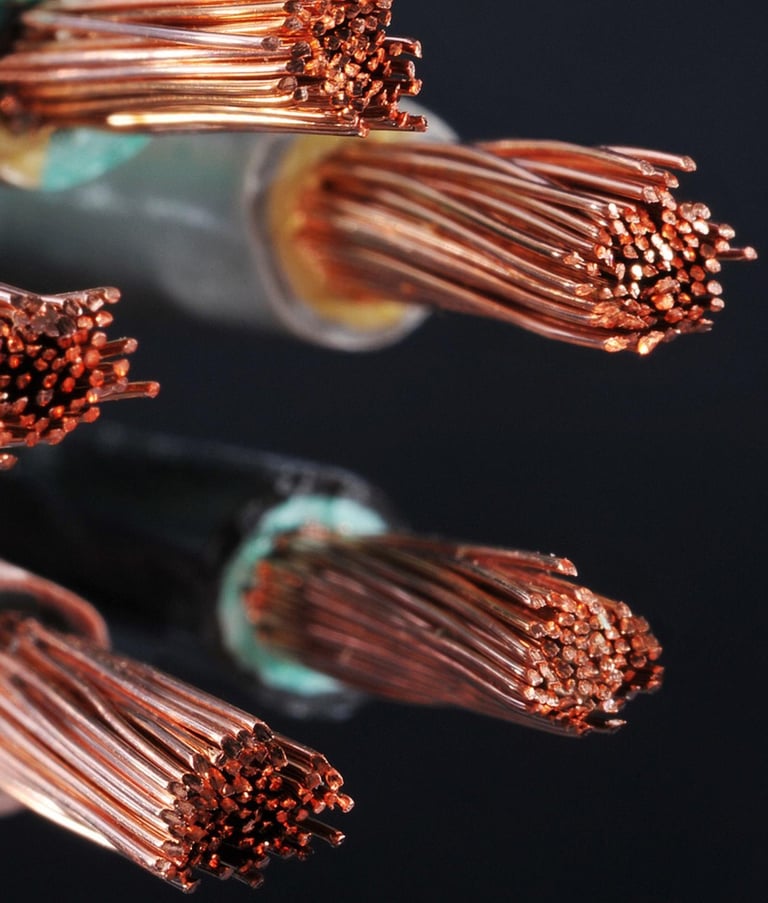
Class 5 marks the transition into true flexible cable design. These conductors are constructed by twisting dozens or hundreds of fine, thin copper wires together to form a highly flexible core. The use of many fine strands allows the individual wires to slide against each other slightly when the cable is bent, reducing internal friction and distributing physical stresses evenly across the conductor. Class 5 conductors are the industry standard for a wide range of mobile and portable industrial equipment, providing excellent handling flexibility and reliable service under moderate, periodic, or guided movement.
Class 6: Extra Flexible Copper Conductors
Class 6 represents the highest tier of flexibility and mechanical performance defined by the international standard. These conductors are engineered using ultra-fine copper strands that are significantly thinner than those used in Class 5 cores. Because it uses a much higher number of ultra-fine strands to achieve the target cross-sectional area, a Class 6 conductor offers exceptional flexibility and minimal bending resistance. These conductors are specifically designed for applications exposed to constant, high-speed, and repetitive bending, twisting, and multi-axis movement. They provide long-term protection against metal fatigue in demanding automated environments.
3. Class 5 vs Class 6
When choosing between Class 5 and Class 6 conductors for flexible industrial projects, buyers must understand how the structural differences between these two classes affect real-world performance. While both options are classified as flexible copper solutions, their internal geometry, strand counts, physical behavior, and total cost profiles differ significantly.
The primary difference lies in the relationship between individual strand diameter and the total number of strands within the core. To achieve a specific total cross-sectional area—for example, a 2.5 mm² power conductor—a Class 5 design will use a moderate number of fine copper strands. In contrast, a Class 6 design will use a much larger number of ultra-fine copper strands to reach that exact same 2.5 mm² target. Because the individual copper wires in a Class 6 core are thinner, they experience much lower internal mechanical stress when the cable is bent. This allows Class 6 cables to bend more easily, achieve a tighter minimum bending radius, and handle rapid, repetitive motion without fatiguing or breaking.
However, this increased performance involves distinct manufacturing trade-offs. Drawing high-purity copper down to the ultra-fine diameters required for Class 6 conductors is a complex, high-precision manufacturing process. It requires advanced drawing machinery, slower production speeds, and strict quality control measures to ensure that none of the ultra-fine strands break during bundling and twisting. Additionally, braiding and twisting thousands of ultra-fine strands together into a stable, round conductor core demands specialized production equipment.
Because of these complex manufacturing requirements, Class 6 conductors carry a higher production cost than Class 5 alternatives. For procurement managers and project planners, this means Class 6 cables represent a premium investment. While Class 5 conductors offer a highly economical and dependable solution for many flexible applications, Class 6 should be specified when the operating conditions involve continuous, rapid, and unguided motion where reducing structural downtime justifies the higher initial material cost.
4. Key Differences
To help procurement teams, system designers, and engineers select the appropriate conductor, the core structural and operational differences between Class 5 and Class 6 flexible copper elements can be broken down into several key engineering metrics:
Individual Wire Diameter: A Class 5 conductor utilizes fine copper strands designed to provide solid flexibility while maintaining structural efficiency. A Class 6 conductor uses ultra-fine copper strands that are significantly thinner, minimizing the mechanical resistance of each individual wire during deformation.
Relative Structural Flexibility: Class 5 delivers high flexibility, allowing the cable to be easily handled, bent around standard radiuses, and routed through industrial enclosures without excessive stiffness. Class 6 provides extra-high flexibility, offering minimal resistance to bending and allowing for easy movement in tight, restricted spaces.
Primary Application Fields: Class 5 conductors are widely used in standard flexible power lines, portable heavy machinery, crane festoon systems, and industrial equipment exposed to intermittent or guided movement. Class 6 conductors are designed for high-speed dynamic systems, multi-axis energy chains, high-acceleration drag chains, and robotic handling systems.
Long-Term Bending Life: Class 5 handles moderate bending cycles and periodic flexing effectively. Class 6 is built to survive millions of rapid, continuous flex cycles without suffering early metal fatigue or strand breakage.
Minimum Bending Radius: Class 5 requires standard, moderate bending radiuses to avoid kinking or internal stress concentration. Class 6 can safely operate within tighter bending radiuses, enabling more compact machinery layouts and smaller energy chain tracking systems.
Relative Commercial Cost: Class 5 is highly economical, offering an optimized balance of flexibility and cost for general industrial applications. Class 6 carries a higher price due to the precision drawing and complex stranding processes required to handle demanding dynamic motion.
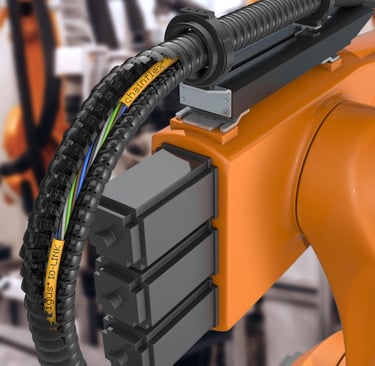
5. Where Class 5 Is Used
Class 5 flexible copper conductors serve as a reliable choice across a wide range of flexible industrial power applications. These conductors are ideal for setups that require excellent handling flexibility, easy installation, and the ability to withstand regular, controlled movement without requiring the extreme, continuous bending performance of high-speed automation systems.
A primary application field for Class 5 conductors is heavy-duty portable equipment and temporary industrial power lines. Equipment like portable generator units, high-capacity industrial welding stations, mobile air compressors, and site distribution boxes must be moved, repositioned, and reconnected frequently across expansive project environments. Using stiff Class 1 or Class 2 rigid wiring in these scenarios would make installation slow and difficult, while risking early cable failure from frequent handling. Class 5 conductors give installation crews the flexibility needed to roll, unroll, route, and deploy these heavy power links quickly and efficiently.
Another major application area includes heavy-duty industrial crane installations, overhead hoist networks, and material festoon systems. Heavy overhead cranes operating in shipping yards, metal processing facilities, and large industrial warehouses rely on continuous power while moving along structured, linear tracks. In these setups, the cables are typically supported by rolling festoon systems or guided tracks that manage the bending profile along a single, controlled plane.
Because the movement is predictable and follows a structured path, the cable is not subjected to rapid twisting or unguided multi-axis bending. Class 5 conductors provide the necessary flexibility to cycle through these linear loops smoothly, offering a highly reliable and cost-effective power solution that meets all mechanical demands without the need for an expensive upgrade to Class 6 extra-flexible conductors.
6. Where Class 6 Is Used
Class 6 extra-flexible copper conductors are engineered specifically for high-speed, automated industrial systems. When an application requires continuous, multi-axis, or high-acceleration movement, standard flexible conductors can fail quickly due to mechanical fatigue. Class 6 conductors provide the structural resilience needed to ensure long-term reliability in these demanding environments.
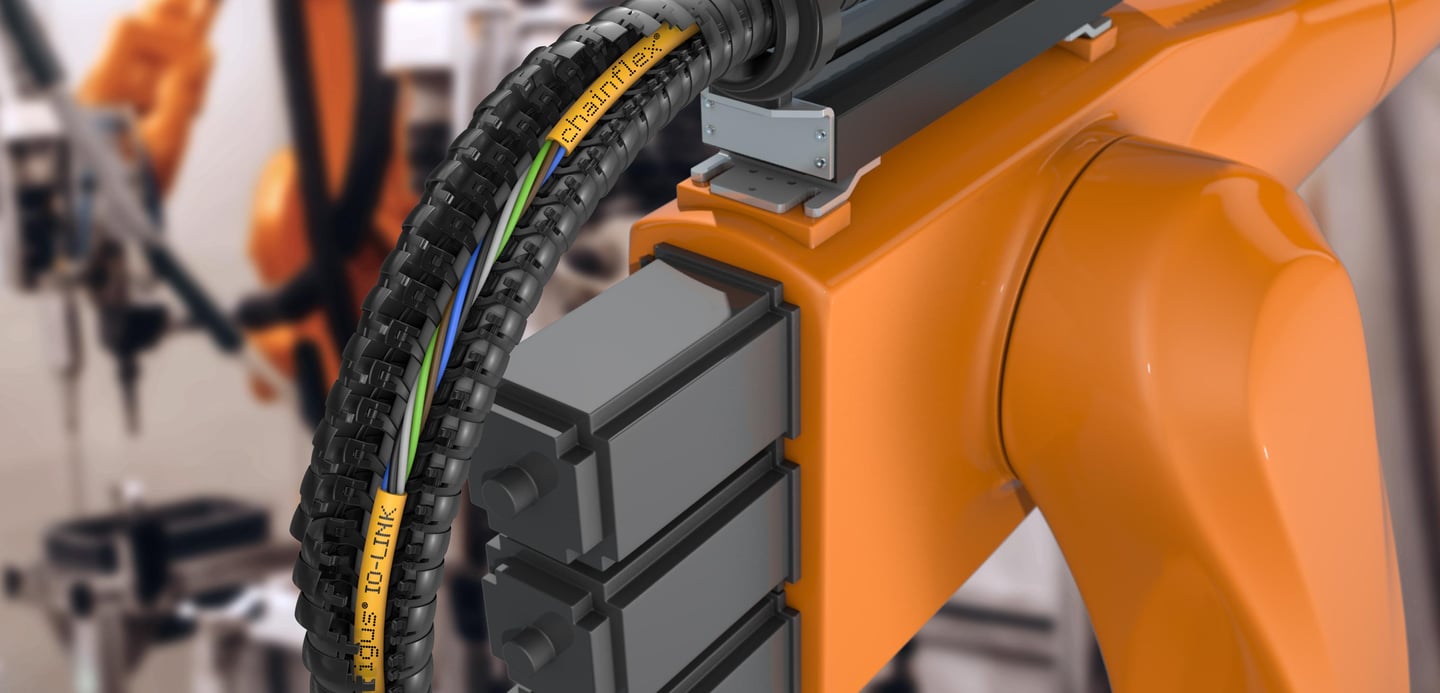
A key application for Class 6 conductors is modern multi-axis energy chains and high-acceleration drag chains. These dynamic guiding systems protect power, control, and data cables feeding automated machine tools, high-speed sorting systems, and gantry pick-and-place units. As the machinery cycles back and forth at speeds up to several meters per second, the cables inside the energy chain are forced to bend and straighten continuously within a tight, fixed radius.
A Class 5 conductor used in a high-speed drag chain can experience internal strand shifting, friction heat buildup, and early wire breakage. The ultra-fine stranding of Class 6 conductors allows the core to adapt to rapid, continuous bending profiles, preventing structural kinking and extending the cable's service life over millions of cycles.
Demanding Motions Managed by Class 6 │ ┌─────────────────────────┼─────────────────────────┐ ▼ ▼ ▼ [ Torsional Twisting ] [ Tight Radius Flexing ] [ High Acceleration ] Multi-axis robotic arms Compact energy chains Rapid pick-and-place rotating up to 360° with space limits gantry systems
Advanced industrial robotics represents another demanding application for Class 6 conductors. Modern articulated robotic arms used in automated welding, precision painting, and heavy material assembly operate with complex, multi-axis movements that combine tight bending with continuous torsional twisting. The cables routed inside or alongside these robotic structures must bend, twist, and stretch simultaneously across multiple planes.
Class 6 conductors are uniquely suited to handle these complex stresses. Their extra-fine copper strands reduce internal friction and minimize torsional stiffness, allowing the robotic arm to move freely without being restricted by rigid cabling. This exceptional flexibility prevents early physical breakdown, helping automated production facilities avoid unexpected downtime and maintain consistent operational output.
7. Why NSHTÖU Fits Class 5
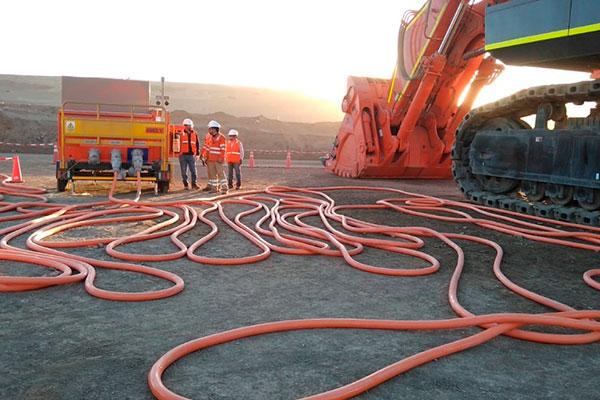
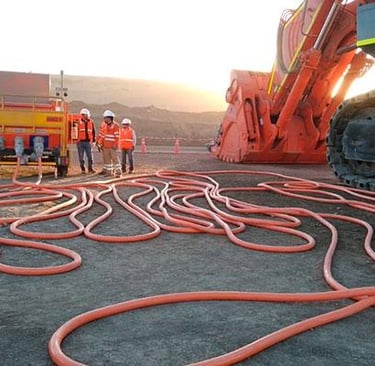
To understand how a Class 5 conductor performs in demanding industrial environments, it helps to examine a specific reference cable model. The Feichun NSHTÖU series is a heavy-duty, low-voltage rubber power and control cable engineered specifically for outdoor industrial use, heavy transport machinery, and crane installations. By analyzing the technical specifications of the Feichun NSHTÖU, project engineers can see exactly why Class 5 copper conductors are the industry standard for large-scale material handling equipment.
According to the official product data sheets, the core construction of the Feichun NSHTÖU is built around fine-wire tinned copper strands that strictly comply with VDE 0295 Class 5 and IEC 60228 Class 5 specifications. This design balances high electrical conductivity with solid mechanical flexibility. Tinned copper strands provide excellent protection against oxidation and corrosion caused by moisture, industrial gases, and saline environments, while the Class 5 wire geometry delivers the physical flexibility needed for reliable operation on heavy motorized reels and guided festoon systems.
The mechanical characteristics of the Feichun NSHTÖU illustrate how Class 5 conductors handle real-world operational stresses:
Rated Operating Voltage ($U_{0}/U$): 600/1000 V (0.6/1 kV), making it ideal for primary low-voltage power distribution and high-amperage machinery control systems.
High Dielectric Insulation: Utilizes a specialized Type 3G13 rubber compound layer extruded evenly over each Class 5 stranded core, ensuring excellent electrical isolation and long-term thermal stability.
Integrated Anti-Twist Braid: Features a high-tensile protective reinforcement braid embedded directly between the inner and outer rubber sheaths. This structural braid prevents cable twisting and minimizes the "corkscrew effect" during repeated winding and unwinding on motorized drums.
Tough Outer Protective Jacket: Wrapped in a heavy-duty Type 5GM3 rubber compound sheath that provides excellent resistance to tearing, mechanical cuts, oil exposure, and intense ultraviolet radiation.
Minimum Bending Radius: Engineered to support a minimum bending radius of 5 times the outer cable diameter for sizes under 21.5 mm, and 6.25 times the outer diameter for larger cables, allowing for safe installation on standard industrial reels and pulleys.
Flexible Temperature Performance: Designed to maintain its full structural elasticity and mechanical performance across a wide operating range from -25°C up to +80°C in dynamic applications.
The Feichun NSHTÖU demonstrates that a Class 5 conductor provides ample flexibility for heavy industrial machinery. It easily handles the structural demands of motorized reeling drums, overhead hoisting systems, and heavy transport conveyors without needing an upgrade to a more expensive Class 6 conductor, making it a highly reliable and cost-effective choice for heavy material handling projects.
8. Why Drag Chain and Robot Cables Prefer Class 6
While crane festoon systems and motorized reels move along predictable, guided lines, high-speed drag chains and automated robotic arms operate with much more complex and aggressive motion profiles. In these automated environments, cables are subjected to rapid accelerations, continuous high-velocity cycling, tight bending radiuses, and multi-axis torsional twisting. To ensure system reliability under these conditions, choosing a Class 6 extra-flexible conductor is critical.
Drag chain installations force cables to loop back and forth continuously within a restricted, flat track. As the automated machine moves, the cable transitions rapidly from a straight line into a tight bend and back again. If a standard Class 5 conductor is used in a high-acceleration drag chain, the thicker copper strands experience higher internal friction and mechanical stress at the bend point. Over time, this stress causes the strands to deform, shift out of their original layout, and push through the surrounding insulation—a failure mode known as "corkscrewing."
The ultra-fine stranding of a Class 6 conductor reduces the stiffness of the core, allowing it to bend smoothly within tight spaces and absorb continuous flex cycles without structural distortion.
Conductor Structural Stress Comparison │ ┌─────────────────────────┴─────────────────────────┐ ▼ ▼ [ Class 5 Core ] [ Class 6 Core ] • Thicker wire strands • Ultra-fine wire strands • Higher internal friction • Minimal internal friction • Prone to corkscrewing in chains • High torsional compliance • Best for guided linear motion • Designed for multi-axis twist
Multi-axis industrial robots present an even greater mechanical challenge, as their cables must handle simultaneous bending and torsional twisting. As a robotic arm rotates, the cable core is twisted along its longitudinal axis while being bent across different planes. Class 6 conductors provide the high torsional compliance needed to withstand these multi-axis forces.
The ultra-fine strands can slide past each other easily during twisting, minimizing internal friction heat and preventing microscopic cracks from forming in the copper. By reducing structural stiffness and maximizing flex life, Class 6 conductors protect robotic systems from early conductor failure, ensuring consistent operation in high-throughput automated facilities.
9. GCC Angle for Automated Ports
Across the Gulf Cooperation Council (GCC) region—and particularly within the Kingdom of Saudi Arabia's expanding industrial zones—automation is transforming logistical infrastructure and maritime operations. Modern ports like King Abdullah Port and Jeddah Islamic Port are deploying automated ship-to-shore (STS) cranes, rail-mounted gantry (RMG) cranes, and automated guided vehicles (AGVs) to handle growing international trade volumes. Operating high-voltage power and control systems in these environments requires cables that can withstand both intense mechanical cycling and severe desert conditions.
The extreme climate of the GCC region introduces unique thermal and mechanical challenges for industrial cable design:
High Ambient and Surface Temperatures: Ambient summer temperatures across the Arabian Peninsula regularly exceed 50°C, and direct sunlight can heat dark cable jackets to over 75°C.
Increased Electrical Resistance: As the temperature of a copper conductor rises, its internal electrical resistance increases. This higher baseline resistance generates additional thermal energy ($I^{2}R$ losses) when the cable carries operational current.
Accelerated Thermal Aging: The combination of environmental heat and internal current-driven heating places severe thermal stress on the cable's insulation and conductor cores.
Abrasive Sand and Dust Accumulation: Constant desert winds deposit fine, abrasive sand into energy chains, guided tracks, and open machinery gears, increasing mechanical friction on the cable's outer jacket.
In these high-temperature automated port applications, choosing the right conductor class becomes a critical safety decision. When cables operate in extreme ambient heat, the mechanical stress from rapid, continuous bending can accelerate material fatigue. If a cable core is too rigid, the combination of thermal expansion and physical bending stress increases the risk of early strand failure.
The ultra-fine wire construction of Class 6 conductors provides low physical resistance to bending, which helps minimize mechanical friction and reduce internal heat buildup during high-speed operation. This flexible design allows the cable to cycle smoothly through tight energy chains even under intense summer temperatures.
To ensure long-term reliability in the GCC climate, a high-flex conductor must be paired with an advanced, heat-resistant outer jacket. Specifying a Feichun high-flex cable that combines a Class 6 extra-flexible copper core with a premium, UV-stabilized, chlorinated polyethylene (CPE) or cross-linked rubber outer sheath provides comprehensive protection.
The specialized outer jacket prevents the cable from softening or cracking under intense solar radiation, while the internal Class 6 core handles continuous high-speed movement without generating excessive mechanical heat. This integrated approach protects automated material handling networks against premature wear, ensuring consistent port operations and reducing the risk of unexpected service interruptions.
10. Practical Selection Logic
Selecting the appropriate conductor class requires a systematic analysis of the equipment's real-world motion profile, space limitations, and environmental conditions. To help engineering and procurement teams choose the right option, the core selection logic can be organized into a structured engineering decision matrix:
Conductor Class Selection Matrix │ Is the cable exposed to continuous, rapid motion or dynamic multi-axis torsional twisting? │ ┌──────────────────┴──────────────────┐ ▼ ▼ [ NO ] [ YES ] │ │ Choose Class 5 Conductor Choose Class 6 Conductor • Economical choice • Engineered for heavy motion • Guided linear motion • Tight bending radiuses • Periodic handling allowed • High flex cycle life • Target: Feichun NSHTÖU • Target: Drag Chain / Robotics
1. Evaluate Motion Frequency and Acceleration
The first step is determining how often and how fast the cable will move. If the cable moves infrequently, serves as a portable power hookup, or travels along a guided, slow-moving linear path—such as a standard overhead shipyard crane festoon—a Feichun Class 5 conductor provides a highly reliable and cost-effective solution. However, if the cable is installed on automated machinery that operates continuously with high acceleration—such as a high-speed pick-and-place system or an automated sorting line—a Feichun Class 6 conductor should be specified to prevent early fatigue failure.
2. Check Bending Radius and Space Constraints
System designers must evaluate the physical space available for the cable's bending loop. Every cable has a minimum bending radius, typically expressed as a multiple of its outer diameter. In tight machinery enclosures or compact multi-axis energy chains where space is limited, the cable is forced to bend within a very sharp profile. Because Class 6 conductors use ultra-fine wire strands, they can handle tighter bending radiuses without suffering structural kinking or insulation damage. If the installation layout allows for large, generous bending loops, a standard Class 5 conductor is completely sufficient.
3. Identify Multi-Axis and Torsional Stresses
Engineers must verify whether the machinery movement involves twisting along the cable's length. Linear motion profiles, like those on simple motorized reels or straight tracks, exert predictable bending forces along a single plane. In contrast, articulated robotic arms, rotating automated fixtures, and complex crane attachments subject the cable to multi-axis bending and torsional twisting simultaneously. Class 5 conductors lack the structural compliance needed for continuous twisting and can fail quickly under torsional load. Class 6 conductors are engineered to distribute these multi-axis forces evenly, making them the preferred choice for complex robotic applications.
11. SEO-Friendly Buyer Guidance
For procurement officers, technical buyers, and contract managers handling international B2B inquiries, ordering heavy-duty flexible cables requires clear, comprehensive technical specifications. Simply requesting a "flexible copper power cable" or specifying a generic cross-sectional size leaves too much room for interpretation, increasing the risk of receiving an incorrect cable type that may fail prematurely in the field.
To ensure procurement accuracy and secure high-performance equipment, buyers should follow a structured approach when submitting Request for Quotation (RFQ) documents:
Explicitly State the Required IEC Conductor Class: Never leave the internal wire geometry to the manufacturer's discretion. Clearly specify whether the application requires an IEC 60228 Class 5 flexible conductor or an IEC 60228 Class 6 extra-flexible conductor directly in the line-item technical description.
Define the Total Expected Motion Profile: Provide clear details about the equipment's movements, including the travel speed (measured in meters per minute), maximum acceleration rates, and the required minimum bending radius constraints.
Specify the Targeted Flex Cycle Expectations: For automated systems, explicitly state the required minimum service life—such as 3 million, 5 million, or 10 million continuous bending cycles—so the engineering team can optimize the core stranding profile.
Detail the Local Operating Environment: Clearly outline the environmental conditions at the installation site. For projects in the GCC region, specify the maximum ambient temperatures (e.g., up to 50°C), expected direct solar exposure, and whether the cable will be exposed to abrasive desert dust or industrial oils.
Mandate Comprehensive Certification and Standard Compliance: Require the cable manufacturer to provide verified test documentation showing compliance with international standards, such as VDE 0295, IEC 60228, and relevant flame-retardant or oil-resistant benchmarks.
By including these comprehensive technical metrics in your procurement requests, your team can avoid costly specification errors, establish clear quality standards, and ensure you receive specialized Feichun high-flex cables engineered to deliver long-term reliability in demanding industrial environments.
12. Conclusion
In modern industrial automation and heavy material handling, the internal copper conductor is a critical factor determining a cable's operational lifetime, physical flexibility, and long-term reliability. As regional industries expand and deploy advanced automated machinery, relying on standard fixed wiring is no longer sufficient. Engineering teams must look beyond the external jacket and specify the appropriate conductor class to ensure safe, continuous system operation.
IEC 60228 Class 5 flexible copper conductors serve as a dependable, cost-effective option for applications that involve controlled or periodic movement. Heavy-duty designs like the Feichun NSHTÖU series demonstrate how Class 5 conductors deliver excellent reliability for large motorized reels, overhead hoists, and guided crane festoon systems. They balance structural flexibility with high electrical capacity, ensuring stable power delivery without requiring an expensive upgrade to extra-flexible designs.
For high-speed automated systems, compact energy chains, and multi-axis industrial robotics, IEC 60228 Class 6 extra-flexible conductors provide the necessary resilience. Their ultra-fine wire stranding minimizes internal friction, reduces mechanical bending resistance, and withstands continuous high-acceleration cycling without suffering early metal fatigue.
By matching the appropriate conductor class with your equipment's specific motion profile and environmental conditions, your operation can prevent premature cable failure, minimize unscheduled maintenance downtime, and maintain consistent productivity across demanding industrial networks.
Port crane cables | Mining cables | Reeling cables | Trailing cables | Festoon cables | Heavy-duty power cables | Medium voltage cables | Offshore crane cables | Underground mining cables | Dragline cables | Shearer cables | Container handling cables | STS crane cables | RTG cables | Mobile equipment cables | Armored cables | Flexible power cables | VFD cables | Submersible cables | Cold resistant cables | Abrasion resistant cables | Flame retardant cables | Marine environment cables | Opencast mining | Underground operations
© 2006 All rights reserved.
[INDUSTRIAL_CABLES]
INDUSTRIAL GRADE CABLE SYSTEMS | PORT & MINING SOLUTIONS
TEL: +86 153 7530 2641 |MAIL: hongjing.Wang@feichuncables.com