
Common Reeling Cable Installation Mistakes: How to Improve Cable Life in Ports and Bulk Handling Systems
Learn the most common reeling cable installation mistakes in motorized reels, spring reels, and cable drum systems. This guide covers fleet angle, drum diameter, tension, winding, storage, inspection, and maintenance for ports and industrial projects.
hongjing.Wang@Feichun
6/26/202611 min read
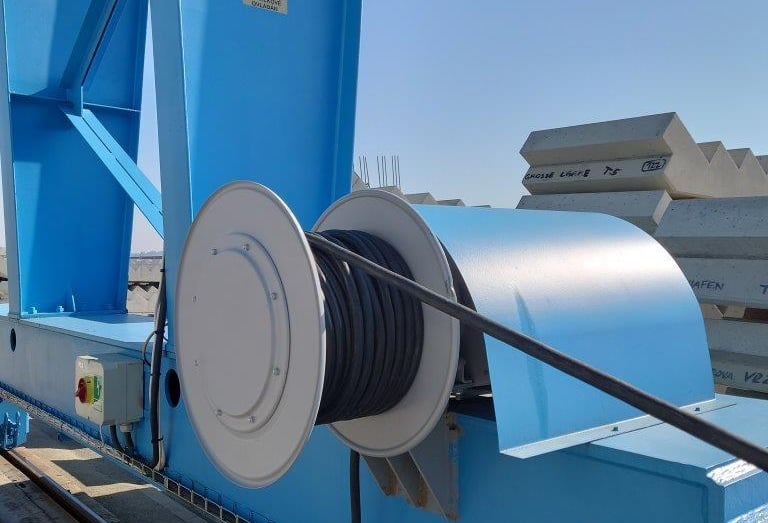
Reeling cables work in some of the most demanding industrial systems in existence — cranes, port equipment, ship loaders, and bulk handling machines — where cable life depends on correct installation just as much as on cable design. Small mistakes such as the wrong fleet angle, excessive tension, or poor winding can quickly cause jacket damage, conductor fatigue, and premature failure. This guide walks through the most common reeling cable installation mistakes and, more importantly, how to avoid them, so your cables last their full service life rather than failing months early.
1. Why Reeling Cable Installation Matters
A reeling cable lives a hard life. Unlike fixed wiring, it is in constant, dynamic motion — wound and unwound under tension, dragged across drums, exposed to weather, abrasion, and mechanical stress every working hour. In these systems, cable performance is the product of two things working together: the design of the cable itself, and the quality of its installation. A perfect cable installed poorly will still fail early.
You find reeling cables wherever heavy equipment moves while staying powered: ports and bulk terminals, ship-to-shore and gantry cranes, ship loaders, stackers, reclaimers, and a wide range of mobile industrial equipment. For the Middle East's major port and logistics hubs — Jebel Ali and the wider Dubai and Abu Dhabi terminals, the Kingdom's expanding Red Sea and Gulf ports, and Qatar's LNG handling facilities — this equipment runs around the clock in heat, humidity, salt air, and dust. Those conditions punish any weakness in cable selection or installation, which is exactly why getting both right matters so much.
2. What Is a Reeling System?
A reeling system is the mechanism that pays out and retrieves cable as equipment moves, keeping the power or control connection intact throughout the travel. Several designs exist, and each imposes a different pattern of mechanical stress on the cable.
A motorized reel uses a powered drive to wind and unwind the cable, giving controlled tension over long travel distances — the typical choice for large port cranes. A spring reel uses spring tension instead of a motor, suited to shorter, lighter-duty travel. A level wind reel uses a guiding mechanism that lays the cable evenly across the drum, helping prevent the uneven build-up that damages cables. A monospiral reel winds the cable in a single flat spiral layer, while a cylindrical drum winds it in multiple layers around a barrel.
The key point for buyers is that each system creates its own combination of bending, tension, and sidewall pressure. The cable must be matched to the reel design and the duty cycle — a mismatch here is a frequent root cause of early failure, long before any installation mistake compounds the problem.
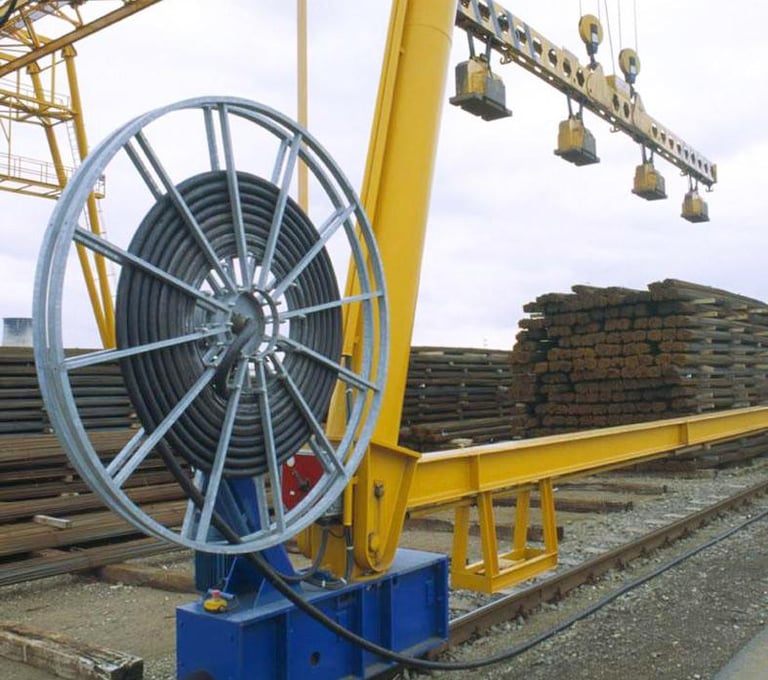
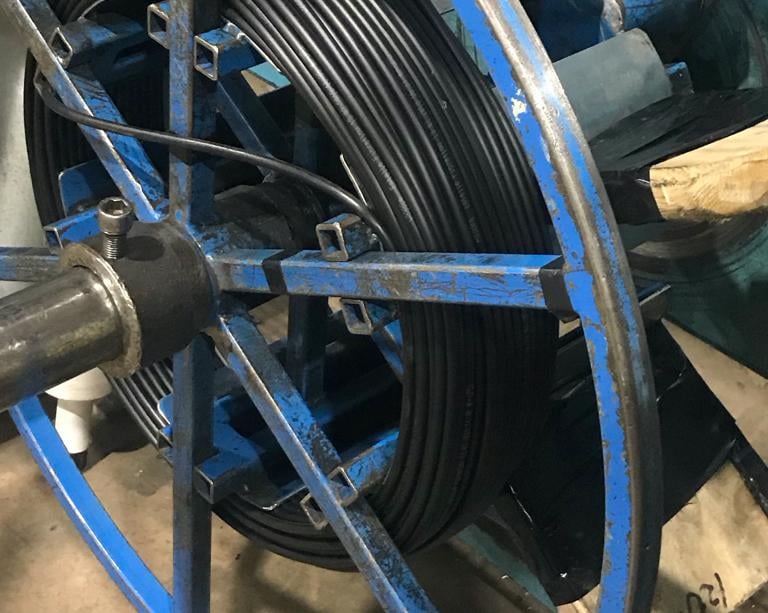
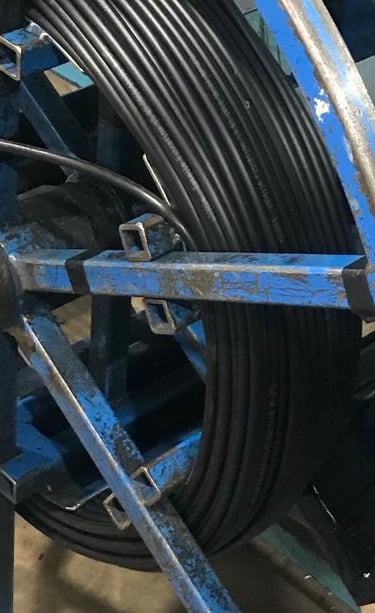
3. Key Installation Parameters
Before looking at what goes wrong, it helps to define the parameters that actually control reeling cable performance. Understanding these makes one thing clear: most reeling failures are a design or installation mismatch, not simply a faulty product.
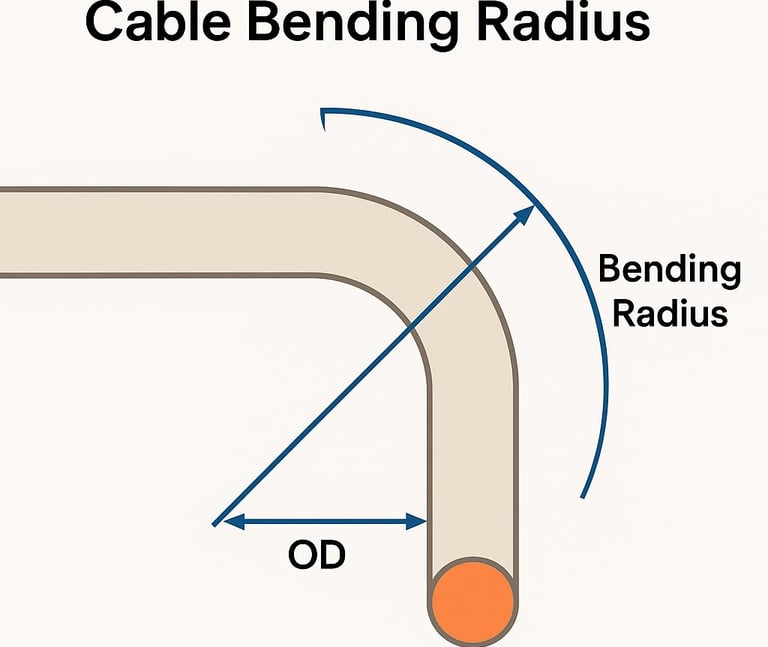
The parameters that matter most are the fleet angle (the angle at which the cable enters the drum relative to the drum's centre line), the drum diameter (which sets how tightly the cable is bent on every wind), and cable tension (the pulling force applied during winding and unwinding). Alongside these sit the travel distance the system must cover, the cable's minimum bending radius (the tightest curve it can take without damage), the pulling force required to move it, and the cable weight, which influences tension and sag over long runs.
Of these, fleet angle and drum diameter deserve the most attention, because together they govern winding quality and have the largest single influence on cable life. Get those two right, and many downstream problems never appear.
4. How to Match Cable to Reel Type
Many reeling projects go wrong before installation even begins, because the wrong type of cable was specified for the reel and duty. Matching cable to system is the foundation everything else rests on, so it is worth addressing directly.
Reeling cables are a specialised category, purpose-built for repeated winding, sidewall pressure, and controlled coiling — quite different from ordinary flexible cable. They typically feature fine-stranded conductors for flex life, a tough abrasion- and oil-resistant jacket (very often PUR / polyurethane), and a construction designed to resist the twisting and crushing forces of a reel. Across European cable catalogues, the families that procurement teams recognise for this work map cleanly onto common applications:
For port cranes and heavy-duty reels: PUR-jacketed crane and reeling cables of the ÖLFLEX® CRANE PUR and ÖLFLEX® CRANE NSHTÖU type are the classic references — built around a tough PUR jacket for high mechanical stress in outdoor crane and reeling service.
For halogen-free reeling applications: REELTEC® PUR-HF-type cable is the go-to, a 0.6/1 kV, unshielded, halogen-free reelable cable suited to environments where low smoke and zero halogen matter.
For high mechanical stress drum systems: TROMMELFLEX PUR-HF-type cable is designed explicitly for continuous winding under high mechanical stress — the heavy-duty drum workhorse.
For general reelable industrial use: REELTEC® (K) NSHTÖU / (N)SHTÖU-type cable covers everyday port, drum, and reel applications on mobile heavy equipment.
These naming systems are familiar to anyone specifying to German standards, and they are a useful shorthand for the type of construction a reeling system needs. It is worth knowing that equivalent constructions to all of these series can be manufactured to the same demanding requirements — often with greater flexibility on specification and a stronger price position — so if a project calls for any of these types, the same performance can be sourced without being locked to a single catalogue. (If you'd like help matching a specific reel and duty to the right construction, our team is happy to advise.)
The headline rule: confirm you are specifying a genuine reeling cable for the reel type and duty cycle, not a general-purpose flexible cable pressed into a job it was never designed for.
5. Common Installation Mistakes
With the right cable selected, installation quality becomes the next line of defence. Here are the ten mistakes that most often shorten reeling cable life in the field.
1. Wrong fleet angle. If the cable enters the drum at too steep an angle, it rubs against flanges and previous wraps, winds unevenly, and wears prematurely. Fleet angle is one of the most influential — and most frequently mismanaged — parameters in the whole system.
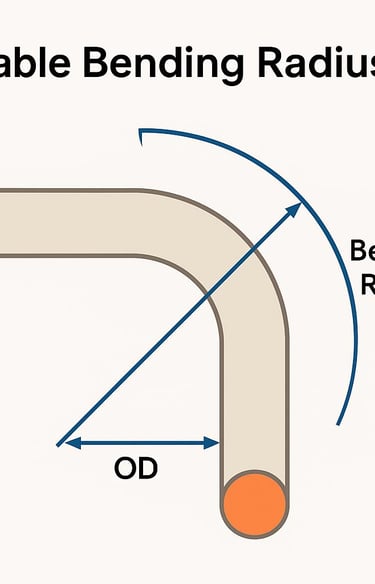
2. Incorrect drum diameter. A drum that is too small forces the cable into a bend tighter than its minimum bending radius on every single wind, fatiguing the conductors and stressing the insulation from day one.
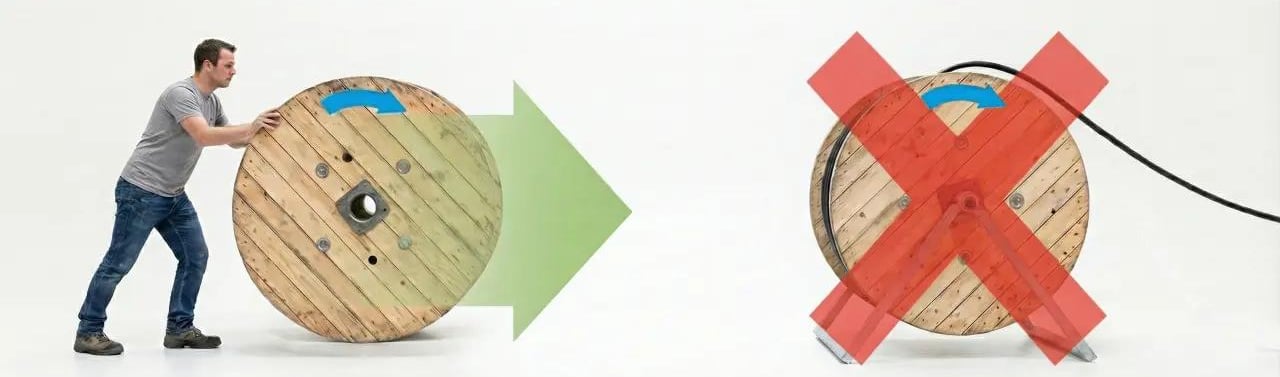
3. Cable twisting before installation. Pulling cable off a coil incorrectly, rather than rolling it off a spool, introduces twist into the cable before it is even mounted. That built-in twist works against the cable for its entire life.
4. Over-tension. Too much winding tension stretches the cable, fatigues the conductors, and accelerates wear. Reeling cables need controlled, appropriate tension — not maximum tension.
5. Improper anchoring. A poorly anchored cable end concentrates stress at the termination, leading to localised fatigue and eventual failure right where the cable is fixed.
6. Cross winding. When wraps cross over each other on the drum instead of laying neatly side by side, the crossing points crush the cable and create high-pressure wear spots.
7. Improper storage. Cable stored badly before installation — left in tight coils, exposed to weather, or crushed under weight — can be damaged or deformed before it ever sees service.
8. Wrong entry direction. Feeding the cable onto the drum in the wrong direction fights the cable's natural lay, encouraging twist and uneven winding.
9. Ignoring inspection. Skipping routine inspection lets small, fixable problems — a little jacket wear, slight twist build-up — grow unseen into failures.
10. Using a standard cable instead of a reeling cable. The most fundamental mistake of all: fitting a general flexible cable to a reeling system. It may survive installation and look fine, then fail early under the repeated motion, tension, and sidewall pressure it was never built to handle.
6. What Each Mistake Causes
Understanding the damage mechanism behind each mistake makes it far easier to take prevention seriously. The failures below are not random — each traces back to a specific installation error.
A wrong fleet angle and cross winding both drive outer jacket damage and abrasion, as the cable rubs against flanges, neighbouring wraps, and crossing points until the jacket wears through. An incorrect drum diameter and over-tension cause conductor fatigue and core breakage, because bending the cable too tightly or pulling it too hard, over thousands of cycles, work-hardens the copper strands until they crack.
Cable twisting before installation and the wrong entry direction lead to bird caging — the alarming condition where the outer conductors or strands balloon outward and separate from the core, a direct result of twist and torsional stress with nowhere to go. Improper anchoring concentrates stress at the termination and causes localised conductor fatigue. Improper storage can deform the cable or damage the insulation before service, while crushing and abrasion in service can eventually expose conductors and cause a short circuit.
Ignoring inspection doesn't cause a specific mechanical failure so much as it allows every other problem to progress unchecked, quietly eroding service life. And using a standard cable instead of a reeling cable invites all of the above at once, because the cable lacks the construction to resist any of these stresses. The common thread is unmistakable: every installation mistake maps to a concrete, avoidable damage mechanism that shortens cable life.
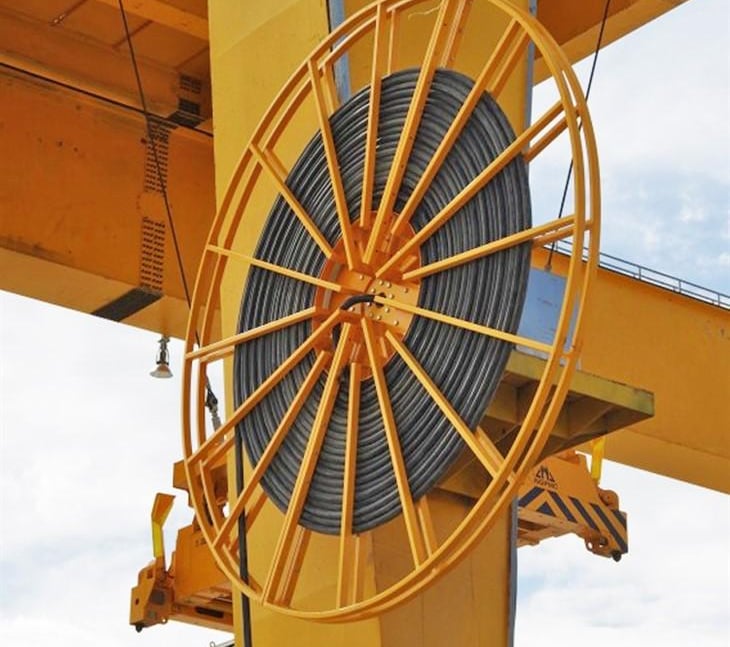
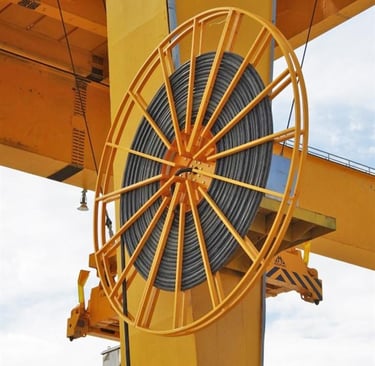
7. Why Standard Cable Fails in Reeling Service
It is worth dwelling on that last point, because it is the mistake that catches out the most buyers and the easiest to make on a budget.
Standard flexible cables are simply not designed for the specific demands of reeling: repeated winding around a drum, sustained sidewall pressure as outer wraps press on inner ones, controlled coiling under tension, and the torsional forces of paying out and retrieving. A standard cable might be perfectly flexible and pass every test on the day it's installed — yet fail within months under continuous motion, high tension, or poor spool geometry.
This is precisely why the reeling-specific families mentioned earlier exist. A genuine reeling cable carries a tougher, abrasion- and oil-resistant PUR jacket, fine-stranded conductors built for flex fatigue, and an internal construction engineered to resist crushing and twisting. The lesson for procurement is direct: do not treat a reeling cable as a generic flexible cable. The two are different products for different jobs, and substituting one for the other is a false economy that costs far more in downtime and replacement than it saves at purchase. Where a reeling-grade construction is required, it can be supplied to match — the priority is the construction and duty rating, not cutting a corner on cable type.
8. Maintenance Checklist
Most installation guides stop once the cable is mounted. But reeling cables are dynamic assets, and disciplined maintenance is what separates a cable that reaches its rated life from one that fails early. Build the following into your routine.
Carry out a weekly inspection focused on the obvious warning signs: visible jacket wear, abrasion, and any twist beginning to build up in the cable. Run a more thorough monthly inspection that also checks the drum condition, the quality of the winding across the full travel, the anchoring points, and the reel mechanism itself. Where the system specifies it, attend to lubrication of the reel's moving parts to keep tension smooth and even.
Throughout, rely on visual inspection as your first tool — most developing problems show themselves visually before they fail. Watch specifically for jacket wear, twist build-up, poor drum condition, irregular winding, and any unusual noise or vibration during operation, which often signals a mechanical problem that will soon damage the cable. Finally, agree clear cable replacement criteria in advance (covered in the next section) so maintenance teams replace cables on evidence, not guesswork.
For high-duty port and bulk terminal systems running continuously, this discipline matters even more: tension control, correct storage of spare cable, and consistent inspection should be treated as non-negotiable rather than occasional.
9. Replacement Criteria
Knowing when to replace a reeling cable is as valuable as knowing how to install one. Replacing too early wastes money; replacing too late risks an unplanned failure that stops the equipment. Replace the cable when you observe any of the following.
Replace it if you see jacket cracking or visible abrasion exposing the layers beneath, or any flattening or distortion of the cable's round profile, which signals crushing damage. Broken conductors — detectable as intermittent power, electrical faults, or visible strand damage — are a clear end-of-life indicator, as is bird caging or other structural deformation. A noticeable loss of flexibility, where the cable becomes stiff or brittle, means the materials have degraded. Repeated overheating points to conductor damage or overloading and should not be ignored. And irregular winding behaviour that persists after the reel and fleet angle have been checked often indicates the cable itself has been compromised.
Treat any one of these as a prompt to plan replacement before the cable fails in service.
10. Frequently Asked Questions
What is the most common reeling cable installation mistake? The single most common — and most damaging — is using a standard flexible cable instead of a purpose-built reeling cable. Among true installation errors, an incorrect fleet angle is the most frequent, because it directly degrades winding quality and accelerates jacket wear.
How do I calculate the correct fleet angle? Fleet angle is the angle between the cable and a line perpendicular to the drum, measured at the guide or sheave. It is kept within a small range (commonly cited as up to a few degrees) by positioning the guide at the correct distance from the drum relative to the drum width. Because the acceptable limit depends on the reel design and cable type, confirm the target value against the reel and cable manufacturer's data for your system.
Why does my cable twist on the drum? Twist usually comes from one of three sources: the cable was pulled off a coil incorrectly (introducing twist before installation), it was fed onto the drum in the wrong direction, or it is being installed against its natural lay. Rolling cable off a spool, confirming the correct entry direction, and respecting the cable's lay all prevent it.
How often should reeling cables be inspected? A practical rhythm is a quick weekly visual check for jacket wear and twist, plus a more thorough monthly inspection of the drum, winding quality, anchoring, and reel mechanism. High-duty port systems running continuously warrant tighter discipline.
Can I use a standard flexible cable on a reel? It is not recommended. Standard flexible cables are not designed for repeated reeling, sidewall pressure, and controlled winding, and they tend to fail early even if they appear fine at installation. Use a genuine reeling-grade cable matched to your reel and duty.
What causes bird caging in reeling cables? Bird caging — where the outer strands or conductors balloon outward and separate — is caused by torsional stress and twist: pulling the cable off a coil incorrectly, feeding it in the wrong direction, or subjecting it to twisting forces it cannot accommodate. Correct handling and a torsion-tolerant reeling construction prevent it.
How do I know when a reeling cable must be replaced? Replace it when you see jacket cracking, visible abrasion, flattening or distortion, broken conductors or bird caging, a clear loss of flexibility, repeated overheating, or persistent irregular winding that isn't fixed by adjusting the reel. Any one of these is a signal to plan replacement.
Final Thoughts
Reeling cables fail early far more often from how they are selected and installed than from any defect in the cable itself. Match the cable to the reel type and duty, get the fleet angle and drum diameter right, control tension, handle and store the cable correctly, and back it all with disciplined inspection — and a reeling cable will reach the service life it was built for.
For the Middle East's ports, terminals, and bulk handling operations, where equipment runs continuously in heat, salt, and dust, that discipline pays for itself many times over in avoided downtime. The reeling-specific cable families referenced here represent the construction standard these systems demand — and equivalent, reeling-grade cables can be supplied to meet the same requirements with added flexibility on specification and cost. If you'd like help matching the right cable construction to a specific reel, duty cycle, or port application, feel free to get in touch.
This article is a general guide. Always confirm fleet angle limits, bending radii, tension values, and replacement criteria against the relevant reel and cable manufacturer datasheets, and consult a qualified engineer for reeling system design and installation.
Port crane cables | Mining cables | Reeling cables | Trailing cables | Festoon cables | Heavy-duty power cables | Medium voltage cables | Offshore crane cables | Underground mining cables | Dragline cables | Shearer cables | Container handling cables | STS crane cables | RTG cables | Mobile equipment cables | Armored cables | Flexible power cables | VFD cables | Submersible cables | Cold resistant cables | Abrasion resistant cables | Flame retardant cables | Marine environment cables | Opencast mining | Underground operations
© 2006 All rights reserved.
[INDUSTRIAL_CABLES]
INDUSTRIAL GRADE CABLE SYSTEMS | PORT & MINING SOLUTIONS
TEL: +86 153 7530 2641 |MAIL: hongjing.Wang@feichuncables.com