DIN VDE 0250: Why Special Flexible Rubber Cables Outperform Ordinary Cables in Harsh Industrial Environments
DIN VDE 0250 rubber flexible cables are designed for cranes, mining equipment, and reeling systems, offering superior flexibility, abrasion resistance, and long-term performance in harsh industrial environments.
hongjing.Wang@Feichun
7/16/202611 min read
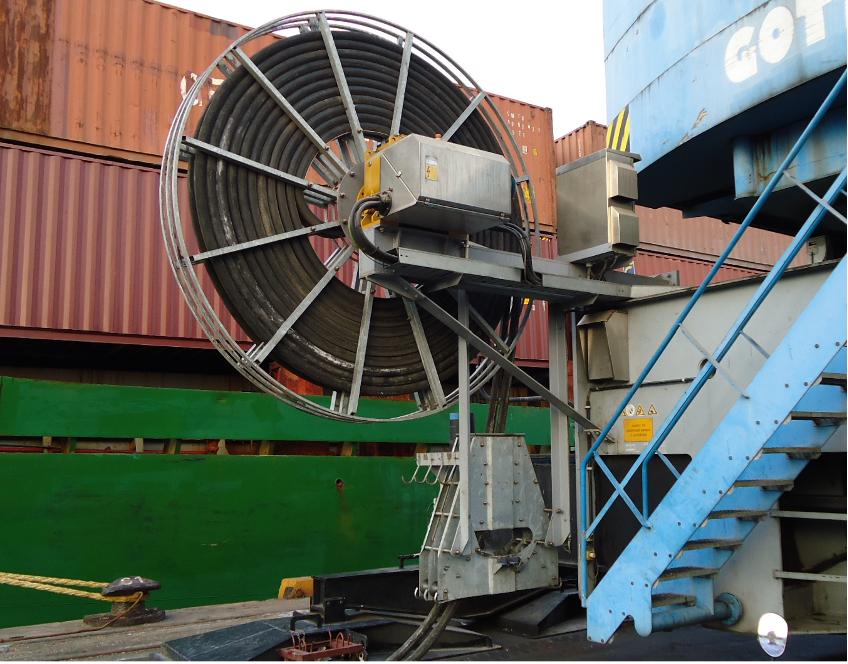
In heavy industrial operations, energy and signal distribution systems function as the literal nervous system of the enterprise. When infrastructure is deployed within extreme operational landscapes—ranging from heavy port terminals managing automated container transshipment to deep underground mine faces and expansive open-cast pits—the physical integrity of every component is constantly tested. In these environments, standard commercial wiring solutions quickly fail, leading to costly operational shutdowns, safety risks, and rising maintenance budgets.
For industrial engineers, procurement officers, and project management teams operating in highly demanding regions like the Gulf Cooperation Council (GCC), mitigating unexpected downtime is a top priority. When dealing with heavy-duty material handling machinery, heavy port crane installations, and continuous-motion industrial processes, selecting the right cable is critical. Standard Polyvinyl Chloride (PVC) cables, while cost-effective for static indoor commercial uses, frequently experience rapid degradation and structural failure when subjected to continuous bending, severe abrasion, high temperatures, intense ultraviolet (UV) exposure, and chemical contamination.
To address these challenges, the German engineering framework established the DIN VDE 0250 standard family. This standard outlines the manufacturing, testing, and performance criteria for specialized rubber-insulated flexible cables engineered specifically for high mechanical stress, continuous structural motion, and aggressive environmental exposure. As an industry leader in heavy-duty wiring solutions, Feichun delivers high-end, VDE-compliant flexible rubber cables designed to withstand these intense conditions.
1. Introduction: Why Cable Selection Matters in Heavy Industry
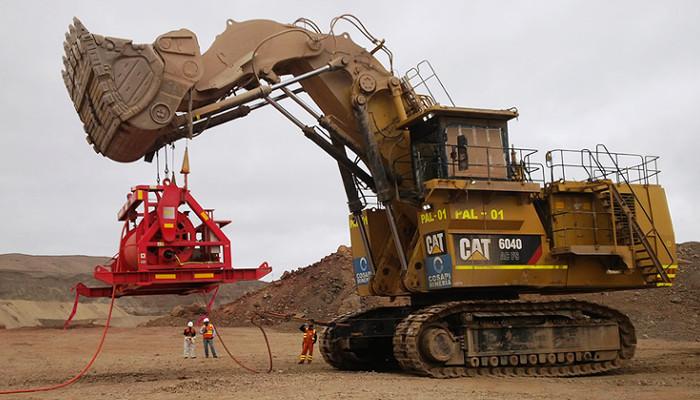
Across heavy industries like maritime ports, minerals extraction, heavy metallurgy, and bulk logistics, equipment operates under intense physical stress. Heavy-duty material handling machinery—such as ship-to-shore (STS) container cranes, rail-mounted gantry (RMG) cranes, rubber-tired gantry (RTG) cranes, massive bucket wheel excavators, and underground roadheaders—relies on an uninterrupted flow of high-voltage power and multi-channel control signals.
If a trailing or reeling cable fails on an automated ship-to-shore crane during vessel discharge, the operational consequences accumulate immediately:
Immediate Operational Stoppage: Demurrage fees for stranded vessels escalate rapidly, disrupting tightly synchronized maritime logistics networks.
Severe Safety Hazards: Sudden electrical faults or physical cable ruptures in high-voltage lines pose major fire risks, arc flash hazards, and threats to nearby personnel.
Compounded Maintenance Expenditures: Replacing a failed cable involves more than just the material cost; it requires specialized maintenance teams, heavy rigging equipment, and extended system shutdowns.
The root cause of many premature field failures is the use of ordinary PVC flexible cables in environments they were never designed to handle. While PVC is highly effective for static or light-duty applications, it has inherent physical limitations under continuous dynamic stress. When subjected to repetitive bending, deep torsional twisting, and heavy tensile loads, PVC lacks the molecular elasticity required to recover its original shape, leading to structural deformation.
Furthermore, environmental factors accelerate the breakdown of PVC. High ambient thermal loads combined with intense solar radiation quickly strip plasticizers from the compound, rendering the outer jacket brittle and prone to cracking under minor bending stress. In contrast, heavy-duty rubber cables manufactured in strict compliance with the DIN VDE 0250 standard family are engineered to handle these mechanical and environmental challenges, offering long-term reliability and extended service life.
2. What DIN VDE 0250 Covers
The DIN VDE 0250 standard is a foundational regulatory framework established by the Deutsches Institut für Normung (DIN) and the Verband der Elektrotechnik Elektronik Informationstechnik (VDE). It governs the design, manufacturing specifications, structural dimensions, and rigorous testing methodologies for a wide family of specialized cables, insulated wires, and flexible cords utilized in heavy power and control installations.
Rather than being a simple naming system or a single cable specification, DIN VDE 0250 functions as a multi-part standard. Each distinct part defines specific structural makeups, material compound formulations, insulation thicknesses, voltage limits, and target operational fields:
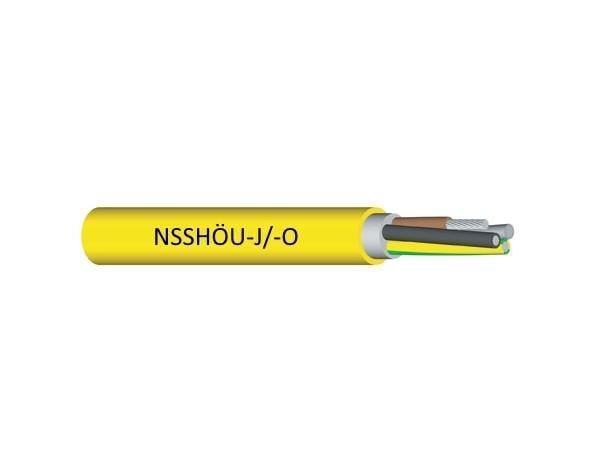
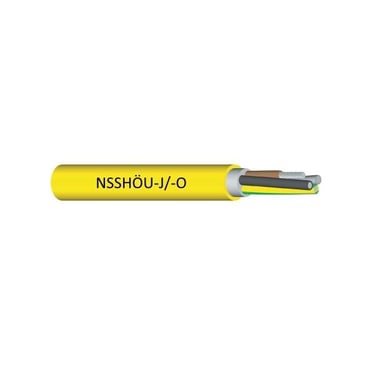
DIN VDE 0250 Part 812: Specifies the structural guidelines, mandatory testing regimes, and performance benchmarks for heavy-duty flexible mining cables rated for 0.6/1kV installations, particularly focusing on the NSSHÖU cable series.
DIN VDE 0250 Part 813: Establishes the engineering requirements for specialized, high-stress flexible rubber reeling cables intended for heavy mechanical installations, governing higher voltage options such as the (N)TSKCGEWÖU cable system.
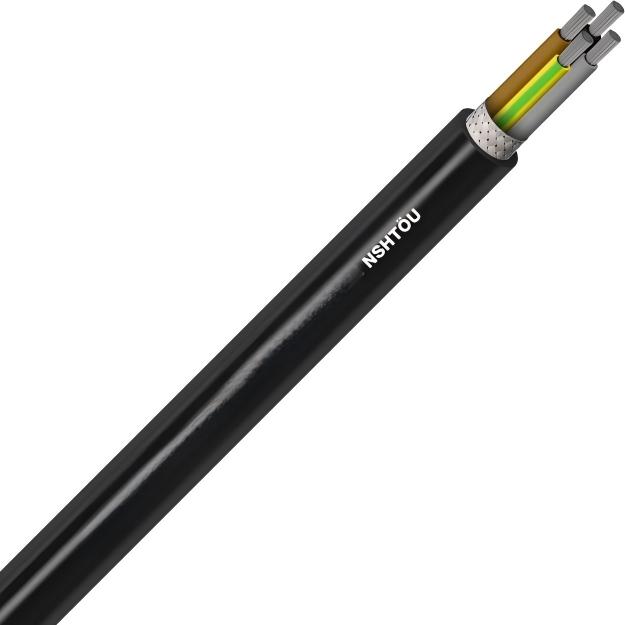
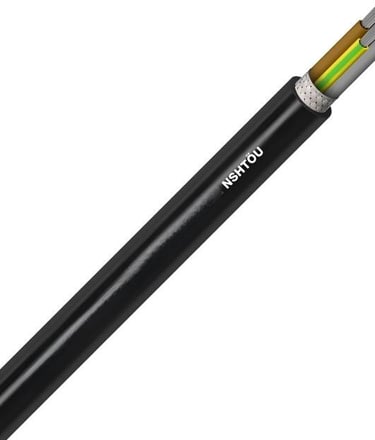
DIN VDE 0250 Part 814: Codifies the design parameters, integrated reinforcement metrics, and testing criteria for low-voltage rubber sheathed cables engineered for continuous reeling applications under medium to high mechanical stress, specifically covering the NSHTÖU cable series.
The standard explicitly differentiates between standard, low-voltage general flexible rubber cables and heavily screened, higher-voltage iterations. By separating the standard into targeted parts, it ensures that every cable construction is explicitly optimized for its intended deployment—whether that involves handling low-voltage control signals on a factory hoist or managing multi-kilovolt main power feeds on an open-cast mine reclaimer.
3. What the Standard Tests
To secure full VDE certification and comply with the DIN VDE 0250 framework, production samples from the Feichun manufacturing lines undergo comprehensive verification testing. These protocols ensure the cable can withstand the extreme mechanical, electrical, and environmental demands of heavy industry.
Mechanical Performance Testing
Tensile Strength and Elongation Resistance: Verifies that both the primary insulation compounds and the heavy outer jackets can withstand significant pulling forces without structural tearing or cross-sectional thinning.
Repeated Flexing Protocols: Cables are installed within specialized dynamic test rigs that simulate continuous, multi-directional bending over predefined roller radii, confirming the core conductors will not fatigue or fracture during long-term operational movement.
Torsional Stress Verification: Measures the cable's structural capacity to endure continuous twisting along its longitudinal axis—often up to ± 25 degrees per meter—without wrinkling the inner conductors or splitting the outer protective sheath.
Abrasion and Cut Resistance: The outer jacket material is subjected to rough contact testing to ensure it can slide over coarse surfaces, sharp rocks, and metal guides without tearing.
Electrical Performance Testing
Insulation Resistance Verification: Confirms that the proprietary rubber insulation compounds maintain high dielectric barriers under extreme thermal loads and high humidity.
Voltage Withstand Thresholds: Confirms that the cable can safely handle sudden voltage spikes well above its nominal rating without dielectric breakdown (e.g., testing a 0.6/1kV rated cable at a rigorous 3kV or higher).
Conductor Resistance Auditing: Measures the electrical resistance of the fine, tinned-copper wires to guarantee optimal energy transmission and minimal internal heat generation.
Environmental Performance Testing
Oil and Chemical Resistance: Submerges the outer sheath materials in hot industrial oils, hydraulic fluids, and aggressive chemical solvents to verify the rubber won't swell, soften, or lose its mechanical strength.
Ozone and UV Radiation Exposure: Subjects the outer protective compound to concentrated ozone concentrations and intense ultraviolet spectral radiation to prevent surface cracking and premature aging.
Flame Retardancy and Self-Extinguishing Capability: Ensures that if an external thermal event occurs, the cable resists flame propagation and self-extinguishes once the external fire source is removed.
Temperature Operational Thresholds: Tests performance across extreme thermal ranges, ensuring the rubber remains flexible at cold temperatures down to -30°C and thermally stable during short-circuit spikes reaching up to 250°C.
4. Why Rubber Cables Beat Ordinary PVC Cables
To understand why Feichun’s DIN VDE 0250 rubber-insulated flexible cables consistently outperform standard commercial PVC variants, it is helpful to look at the fundamental material differences between these two polymer families.
The Structural Limitations of PVC
Polyvinyl Chloride (PVC) is a thermoplastic polymer. Its material properties depend directly on temperature: as temperatures drop, the polymer chains lose mobility, and the material stiffens. In cold weather, PVC cables become highly rigid, increasing the force required to bend them and making the outer jacket prone to cracking under dynamic stress. Conversely, under high heat, PVC softens, reducing its mechanical protection against cuts and crushing forces.
Additionally, PVC relies on added chemical plasticizers to achieve its baseline flexibility. When exposed to heat, solar radiation, or industrial oils, these plasticizers gradually migrate out of the compound, causing the cable to become brittle, lose its elasticity, and crack during standard bending operations.
The Structural Advantages of Advanced Rubber Formulations
In contrast, the rubber compounds specified by the DIN VDE 0250 standard—such as Type 3G13 for internal insulation, Type 5GM5 for heavy-duty mining outer jackets, and Type 5GM3 for high-speed reeling outer sheaths—are thermosetting polymers. Through vulcanization, these materials develop a chemically cross-linked molecular network. This permanent structure provides key operational advantages:
True Elastomeric Memory: When deformed by severe bending, high tensile pulls, or longitudinal twisting, the cross-linked polymer chains easily pull back into their original alignment, preventing structural deformation.
Stable Thermal Performance: The material retains its flexible, high-end characteristics across a wide temperature range, from -30°C up to 90°C, and will not melt or deform during short-circuit thermal spikes up to 250°C.
Inherent Chemical and Environmental Resistance: The vulcanized rubber matrix naturally resists oil absorption, blocks UV degradation, and withstands constant abrasion without needing specialized chemical additives that can leach out over time.
For high-speed reeling systems and heavy container cranes, these properties translate directly into a significantly longer service life under continuous mechanical stress, protecting critical power delivery systems far better than standard PVC alternatives.
5. Recommended Cable Types for Each Application
Selecting the right heavy-duty cable requires matching the specific mechanical demands of the machinery with the appropriate cable construction outlined in the DIN VDE 0250 standard. Feichun offers three primary certified cable series designed for high-stress industrial applications.
Feichun NSHTÖU: The Reeling and Crane Specialist
The NSHTÖU series is specifically engineered for low-voltage power and control applications on material handling equipment where cables are frequently wound and unwound onto motorized reeling drums or guided through energy supply chains.
Core Voltage Handling: Rated for safe operation at 0.6/1kV installations.
Internal Material Architecture: Formulated with flexible Class 5 fine-wired tinned copper conductors insulated with Type 3G13 rubber compound.
Integrated Anti-Twist Protection: Features a high-tensile textile reinforcement braid embedded between the inner and outer rubber sheaths. This integrated braid prevents the cable from twisting longitudinally, eliminating the structural deformations known as the "corkscrew effect".
Optimized Outer Sheath: Protected by a rugged Type 5GM3 outer rubber compound that remains oil-resistant, UV-stable, and abrasion-resistant during fast reeling speeds up to 120 meters per minute.
Feichun NSSHÖU: The Heavy-Duty Mining Workhorse
The NSSHÖU cable family is engineered to withstand severe mechanical impacts, crushing forces, and continuous abrasion in underground and open-cast mining operations.
Core Voltage Handling: Tailored for 0.6/1kV energy transmission networks.
Heavy-Duty Construction Make-Up: Built with fine Class 5 flexible tinned copper elements covered by Type 3G13 rubber insulation. The cores are enclosed within a heavy-duty Type GM1b inner rubber bed and protected by a robust, impact-resistant Type 5GM5 outer rubber jacket.
Advanced Shielding Options: Available with individual tinned-copper wire screens or braid systems around each phase core to provide robust electromagnetic shielding and reliable earth-fault protection in hazardous environments.
Submersible Capabilities: Engineered to operate reliably while completely submerged in fresh water, salt water, or contaminated industrial wastewater down to a depth of 100 meters.
Feichun (N)TSKCGEWÖU: The High-Voltage Mining Powerhouse
For high-voltage distribution networks on large mobile machinery, the (N)TSKCGEWÖU series provides a specialized solution capable of handling significant mechanical stress and high electrical loads.
Core Voltage Handling: Designed for medium-voltage power distribution, including 3.6/6kV, 6/10kV, 8.7/15kV, and 12/20kV networks.
High-End Medium-Voltage Architecture: Built with Class 5 flexible tinned copper conductors wrapped in inner and outer semi-conductive rubber layers. This design evenly distributes electrical field stress across the rubber insulation, preventing localized dielectric breakdown.
Fiber Optic Integration: Can integrate single-mode or multi-mode fiber optic cores directly into the central filler matrix, allowing a single cable to handle both high-voltage power transmission and real-time data communications.
Extreme Reeling Capabilities: Features a high-strength polyester anti-twist reinforcement braid embedded within a heavy-duty red outer rubber sheath. This construction supports high tensile loads up to 30N/mm² and travel speeds reaching up to 240 meters per minute.
6. Model Selection Logic
Choosing the correct industrial cable requires evaluating the specific operational mechanics, physical routing, and installation layout of the target application. Selecting a cable based solely on basic cross-sectional size or voltage rating often leads to premature field failure if the cable design does not match the motion profile of the machinery.
To ensure long-term reliability, engineering teams should use a structured selection process based on three distinct mechanical profiles:
7. Why These Cables Work Well in GCC Conditions
The Gulf Cooperation Council (GCC) region presents some of the most challenging operating environments in the world for heavy industrial equipment. Industrial infrastructure in countries like the United Arab Emirates, Saudi Arabia, Qatar, Oman, Kuwait, and Bahrain must withstand intense environmental factors that accelerate the breakdown of standard materials.
Extreme Thermal Gradients: Ambient summer temperatures regularly exceed 50°C, causing surface temperatures on exposed machinery and cable jackets to reach over 75°C due to direct solar absorption. Standard PVC cables soften rapidly under this level of heat, significantly reducing their mechanical strength and resistance to cuts.
Intense Solar UV Radiation: The high solar radiation in the region rapidly degrades many standard polymers through photo-oxidation, leading to surface chalking, brittleness, and deep cracking along the outer jacket within a short period.
Abrasive Desert Dust and Sandstorms: Constant exposure to fine sand particles creates severe abrasive wear on moving parts, quickly eroding standard sheathing materials as cables slide over surfaces.
Feichun’s DIN VDE 0250 rubber cables are well-suited for these conditions. The vulcanized rubber compounds—such as Type 5GM3 and 5GM5—are chemically stable and do not rely on volatile plasticizers that can evaporate in extreme heat. This allows the outer sheaths to maintain their elasticity, structural toughness, and impact resistance even under continuous exposure to high ambient temperatures and intense UV radiation.
For coastal port operations and highly exposed desert installations, Feichun can customize cables with specialized Chlorinated Polyethylene (CPE) or tough Polyurethane (PUR) outer jackets. These materials provide exceptional resistance to sand abrasion, chemical exposure, and intense solar radiation, ensuring reliable performance in harsh desert environments.
8. Practical Application Scenarios
Automated Container Ports
Modern automated container terminals operate continuously to ensure rapid vessel turnaround. On high-speed ship-to-shore (STS) cranes and rail-mounted gantry (RMG) cranes, the power delivery cables undergo frequent winding and unwinding cycles under significant tensile load. Feichun NSHTÖU cables handle these demands effectively, using their integrated anti-twist reinforcement braids to prevent structural distortions and maintain reliable operation over millions of cycles.
Open-Cast and Underground Mining
Mining machinery like continuous miners, roadheaders, and heavy shuttle cars operate in tight, hazardous environments. Cables are frequently dragged over jagged rock faces, exposed to heavy equipment impacts, and subjected to standing water. Feichun NSSHÖU mining cables provide the necessary impact resistance and mechanical durability for these conditions, while their submersible rating ensures dependable performance even in wet or flooded mine sectors.
Large-Scale Bulk Material Handling
Massive material handling systems like bucket wheel excavators and stacker-reclaimers require reliable power distribution while moving along expansive tracks. These large setups typically operate on medium-voltage power lines and require real-time data links for control systems. The Feichun (N)TSKCGEWÖU series is built for these high-demand applications, safely managing voltages up to 12/20kV and protecting integrated fiber optic elements from mechanical stress.
9. Key Buying Criteria
When purchasing heavy-duty flexible cables for demanding industrial projects, procurement teams should evaluate several technical criteria beyond simple cross-sectional size and core counts:
Nominal Voltage Classes ($U_{o}/U$): Verify that the cable's voltage rating matches the system requirements, choosing between standard low-voltage 0.6/1kV options or specialized medium-voltage versions up to 12/20kV.
Conductor Flexibility Ratings: Specify Class 5 fine-stranded copper elements to ensure the cable provides optimal bending performance and resists mechanical fatigue over long-term operation.
Minimum Bending Radius Limits: Always design cable routing systems to meet or exceed the standard bending limits—typically 5 to 6 times the overall diameter for fixed setups, and 10 times the overall diameter for dynamic dynamic applications.
Temperature and Oil Resistance Ratings: Confirm the insulation and jacket compounds meet international standards like EN 60811-404 for oil resistance and maintain structural stability across the expected operating temperature range.
Application Motion Profiling: Match the specific cable construction to the equipment's actual movement pattern, ensuring specialized reeling cables are used for winding drums rather than standard fixed-installation options.
10. Conclusion
In heavy industrial operations, choosing the right components can mean the difference between efficient, reliable performance and costly unexpected downtime. The DIN VDE 0250 standard framework provides a trusted benchmark for engineering flexible rubber cables capable of withstanding severe mechanical loads and harsh environmental conditions. While standard PVC cables are suitable for basic static uses, they quickly degrade when exposed to continuous bending, abrasion, high heat, and intense solar radiation.
By utilizing advanced vulcanized rubber insulation and heavy-duty protective sheaths, Feichun’s compliant cable families—including the NSHTÖU, NSSHÖU, and (N)TSKCGEWÖU series—deliver the durability and long-term performance required by heavy industry. Whether deployed on high-speed container cranes in major container terminals or heavy mobile machinery in deep mining operations, these specialized rubber cables help protect critical energy delivery networks, reduce maintenance costs, and extend equipment service life in the most demanding operating environments.
Port crane cables | Mining cables | Reeling cables | Trailing cables | Festoon cables | Heavy-duty power cables | Medium voltage cables | Offshore crane cables | Underground mining cables | Dragline cables | Shearer cables | Container handling cables | STS crane cables | RTG cables | Mobile equipment cables | Armored cables | Flexible power cables | VFD cables | Submersible cables | Cold resistant cables | Abrasion resistant cables | Flame retardant cables | Marine environment cables | Opencast mining | Underground operations
© 2006 All rights reserved.
[INDUSTRIAL_CABLES]
INDUSTRIAL GRADE CABLE SYSTEMS | PORT & MINING SOLUTIONS
TEL: +86 153 7530 2641 |MAIL: hongjing.Wang@feichuncables.com