Drag Chain Cable vs Standard Flexible Cable: How to Choose the Right Cable for Automation and Moving Applications
Compare drag chain cables and standard flexible cables for automation, CNC, robotics, and packaging lines. Learn key differences in bending radius, travel distance, speed, cycles, torsion, oil resistance, and cable life.
hongjing.Wang@Feichun
6/26/202612 min read
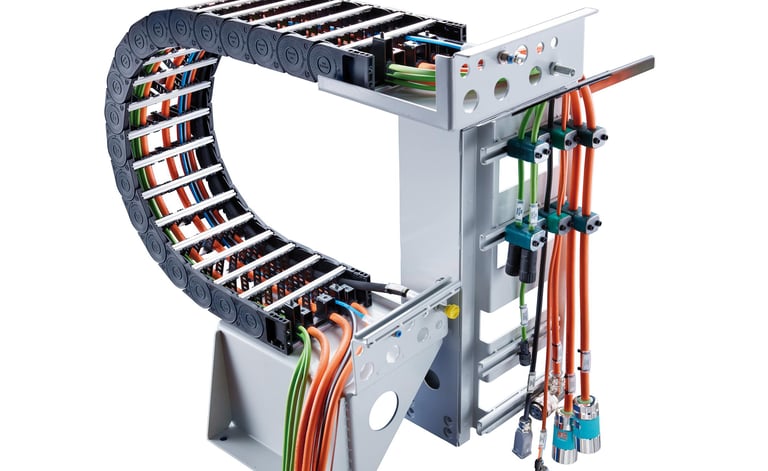
Drag chain cables and standard flexible cables can look almost identical on a shelf, yet they are engineered for very different worlds of movement. In automation, CNC, robotics, and packaging equipment, choosing the wrong one leads to predictable, expensive failures: copper conductors that snap from fatigue, sheaths that crack, and cores that fail long before the machine they serve. This guide compares both cable types in practical terms so procurement and engineering teams can select the right solution for the real operating environment, not just match a voltage or a core count.
1. Why This Comparison Matters
Industrial automation has fundamentally changed what we ask of a cable. A generation ago, most cables were installed once and left to sit. Today, in CNC machines, robotic cells, packaging lines, machine tools, and cable carrier (energy chain) systems, cables are in constant motion — bending back and forth thousands of times an hour, accelerating, decelerating, and sometimes twisting, for years on end.
That shift makes the central question of this guide less about quality and more about fit. The real question is not "which cable is better?" but "which cable matches the movement pattern and mechanical stress of this application?" A premium flexible cable used in the wrong motion profile will still fail early; a correctly matched cable, even a modest one, will last its full design life. Movement pattern — not price, not brand — is the deciding factor.
2. What Is a Drag Chain Cable?
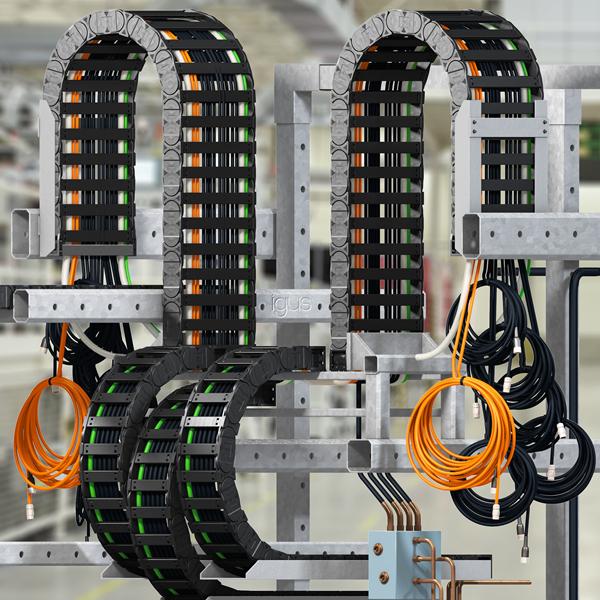
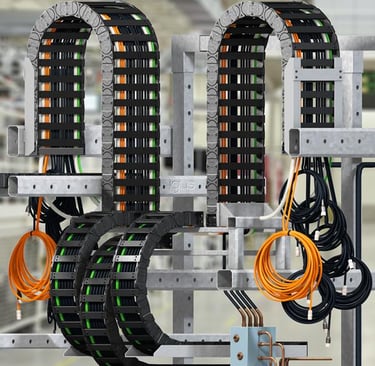
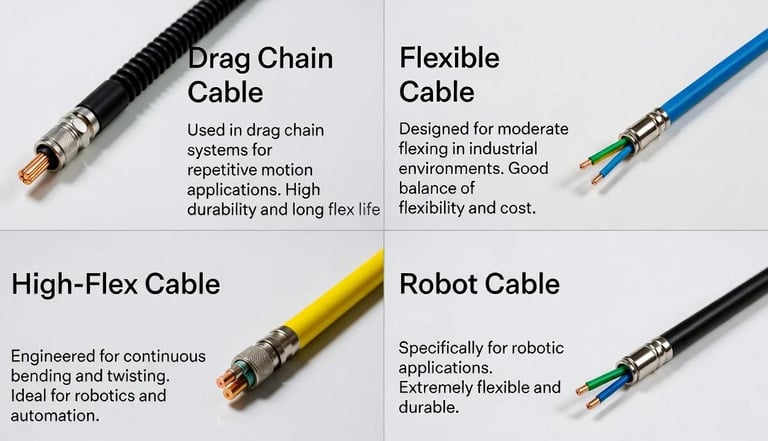
A drag chain cable (also called a continuous-flex or energy-chain cable) is purpose-built for sustained motion inside a cable carrier. Where an ordinary cable is asked to bend occasionally, a drag chain cable is designed to bend continuously, predictably, and millions of times over its life without degrading.
The features buyers care about most reflect that demanding job:
Continuous flex performance — built to bend back and forth endlessly inside an energy chain without the cores migrating or buckling.
High cycle life — frequently rated for millions of flex cycles, giving a defined, dependable service life in fast machinery.
PUR (polyurethane) jacket — chosen for its abrasion resistance, oil resistance, and toughness, ideal for the demanding conditions of a moving machine.
Short lay length — the conductors and elements are stranded with a tight, optimized lay so the bundle moves as a stable unit rather than fighting itself.
Anti-torsion and reduced internal stress — the construction is designed to keep internal stresses low and balanced as the cable flexes.
Abrasion-resistant construction — both the jacket and the internal architecture resist wear from constant motion and friction inside the carrier.
In short, a drag chain cable is engineered from the conductor outward to survive a life of motion.
3. What Is a Standard Flexible Cable?
A standard flexible cable is designed to be bent and moved, but not necessarily to endure constant, high-cycle motion inside a cable carrier. These are the versatile, hard-wearing cables you find on worksites, mobile equipment, and portable machinery: rubber-sheathed flexible cables, general flexible control cables, and the widely specified H07RN-F family.
H07RN-F is a good example to examine closely, because it is one of the most common flexible cables on industrial sites across the region — and understanding exactly what it is built for shows precisely where standard flexible cable ends and drag chain cable begins.
A typical H07RN-F cable is constructed with a Class 5 flexible copper conductor, EPR (ethylene propylene rubber) insulation, and a tough PCP (polychloroprene) rubber sheath. It is rated at 450/750 V (and suitable for 1 kV in fixed applications), with a wide temperature range — roughly −30°C to +90°C when fixed, and −15°C to +90°C when flexed. Critically, it offers genuine industrial resilience: it is oil- and grease-resistant, UV-resistant, water-resistant, and flame retardant, making it well suited to handling equipment, mobile power supplies, worksites, port areas, dams, water treatment, cold environments, and severe industrial settings.
Notice the minimum bending radius, though. For a cable like H07RN-F it is around 4 × the overall diameter when fixed and 6 × when flexed. That figure tells the whole story: this is a cable designed for repeated handling and occasional flexing — coiling, dragging, repositioning — not for the tight, fast, million-cycle bending of an energy chain. It moves well, but it is not a continuous-flex cable.
So standard flexible cables like H07RN-F are excellent for portability, mobile power, and intermittent movement. They are tough, oil-resistant, and weatherproof — exactly what a Gulf worksite or port needs. But asking one to live inside a fast cable carrier on a packaging line is asking it to do a job it was never designed for.
4. Key Construction Differences
The difference in performance comes directly from differences in construction. Reading both cables from the conductor outward makes the contrast clear.
Conductor. Both use fine, flexible stranded copper (Class 5 in the case of H07RN-F). But drag chain cables typically use even finer strands with a specially optimized, short lay length, so the conductor can flex repeatedly without individual strands work-hardening and breaking. In a standard flexible cable, the stranding is optimized for general bending rather than relentless carrier motion.
Lay length and bundling. This is one of the most important and least visible differences. Drag chain cables use a short, tightly controlled lay so the cores move as a coordinated bundle and resist buckling or corkscrewing inside the chain. Standard flexible cables are not built around this constraint.
Sheath/jacket. Drag chain cables most often use a PUR jacket for superior abrasion resistance and dimensional stability under motion. Standard flexible cables like H07RN-F use a rubber sheath such as PCP (polychloroprene) — extremely rugged and weather- and oil-resistant, but optimized for handling toughness rather than continuous-flex fatigue life.
Shielding and signal stability. Where signal integrity matters — feedback signals, encoders, data — drag chain versions are often shielded and built to keep that shielding and the internal geometry stable as the cable moves. A shield that degrades under motion causes intermittent faults that are notoriously hard to diagnose, so motion-stable construction is a real advantage.
The takeaway: both cables are "flexible," but a drag chain cable is engineered specifically to survive repeated, carrier-guided motion, while a standard flexible cable is engineered for general bending and rugged handling.
5. Performance Comparison
Here is how the two cable types compare across the factors procurement teams actually ask about. Think of this as a side-by-side reference rather than a verdict — each cable wins in the conditions it was built for.
On bending radius, drag chain cables support a much smaller radius for continuous flexing, whereas a standard flexible cable like H07RN-F has a larger minimum radius (around 4× the overall diameter when fixed and 6× when flexed) and is not intended for tight, repeated bends. On travel distance, drag chain cables are designed for long, repeated travel inside carriers, while standard flexible cables suit short or occasional movement. The same divide appears with acceleration and speed: drag chain cables withstand high, repeated acceleration and fast continuous cycling, while standard flexible cables are best for low, intermittent, or slower motion.
The clearest distinction is in number of cycles — drag chain cables are often rated for millions of flex cycles, giving a defined service life, whereas standard flexible cables carry no high-cycle flex rating at all. On torsion resistance, drag chain cables are available in anti-torsion and robot grades, while standard flexible cables are limited and not designed for repeated twisting. Expected service life follows directly from all of this: a drag chain cable lasts long and predictably under continuous motion, while a standard flexible cable lasts well in handling and fixed use but fails early inside a moving carrier.
Interestingly, the two are closely matched on oil resistance: a quality PUR jacket on a drag chain cable and the PCP rubber sheath on an H07RN-F-type cable are both genuinely oil-resistant. This is exactly why rugged rubber-sheathed flexible cable remains a regional favourite for plant and port use, even though it is not a continuous-flex cable.
The overall pattern is consistent: drag chain cables outperform standard flexible cables wherever motion is continuous, fast, or long-travel. Standard flexible cables, by contrast, are often the more economical and entirely appropriate choice where movement is occasional, where the cable is handled rather than cycled, or where ruggedness and weather resistance matter more than flex-cycle life. Notice that on oil resistance the two are closely matched — a quality rubber-sheathed flexible cable is genuinely oil-resistant, which is why it remains a regional favourite for plant and port use.
6. Application Guide
Matching cable to application becomes straightforward once you focus on the motion profile.
Automation lines → Drag chain cable. Continuous, repeated motion is exactly its design case.
CNC machines → Drag chain cable. Fast axis movement demands continuous-flex performance.
Packaging equipment → Drag chain cable. High-speed, high-cycle motion over long service periods.
Machine tools → Drag chain cable. Repeated travel and acceleration on moving axes.
Robotics → Drag chain or dedicated robot-rated cable, depending on the motion. If the application involves twisting, a torsion-rated robot cable is required (see below).
Static or occasional movement → Standard flexible cable. Mobile power, portable tools, worksite supplies, port and handling equipment — the natural home of H07RN-F-type cables.
A Note on Robotics: Continuous Flex Is Not the Same as Torsion
It is worth pausing here, because robotics is one of the fastest-growing reasons buyers both over-specify and under-specify cables — and the root cause is usually a confusion between two different kinds of motion.
Continuous flex is back-and-forth bending, typically in one plane, as inside a cable carrier. Torsion is twisting around the cable's own axis, as happens at a robot's rotating joints. They are different stresses, and they cause different failures. A cable optimized for continuous flex can still fail quickly under torsion, because twisting loads the conductors and shield in a way that linear bending does not.
The practical rule: if your application bends the cable back and forth, you need a continuous-flex (drag chain) cable. If your application twists the cable — most multi-axis robots do — you need a torsion-rated robot cable specifically. Specifying a standard drag chain cable for a twisting robot axis is a common and costly mistake. Separate the two questions before you buy.
7. Common Failure Cases
Understanding how cables fail is the fastest way to avoid buying the wrong one. Almost every premature failure in moving machinery traces back to a mismatch between the cable and the motion. Here are the failures to watch for.
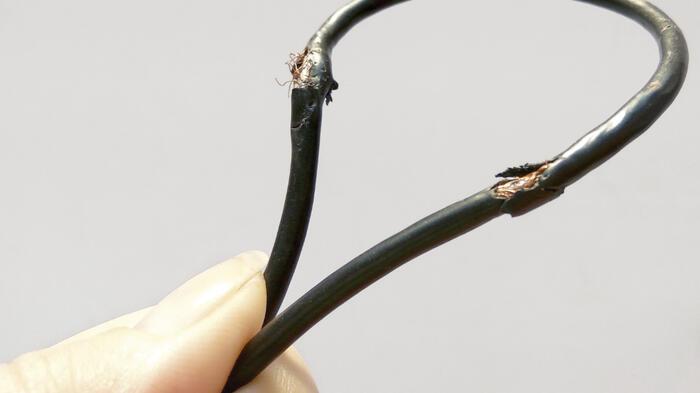
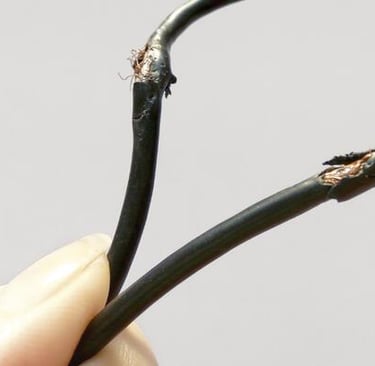
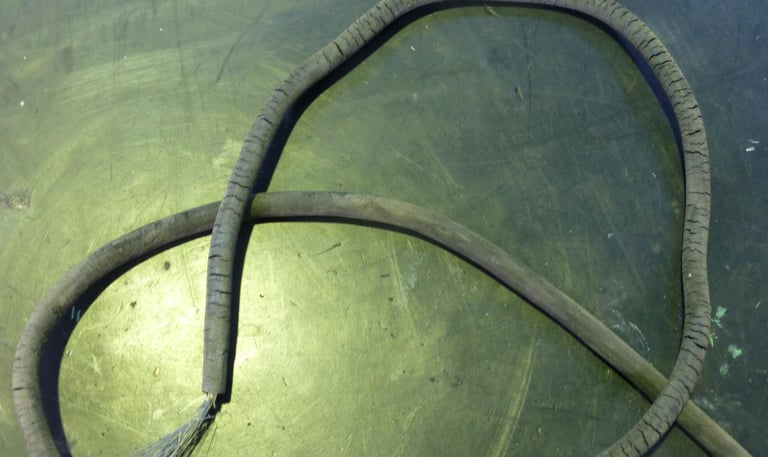
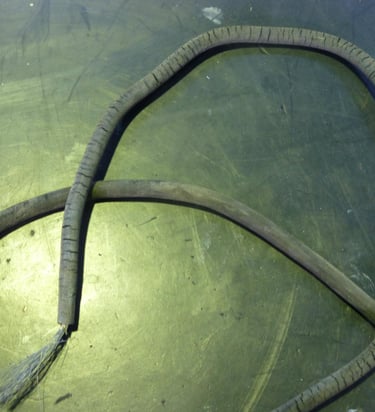
Copper breakage from repeated bending. When a conductor that wasn't built for continuous flex is cycled millions of times, individual strands work-harden and snap. The cable may keep working until enough strands break, then fail intermittently or open completely. This is the classic result of using a standard flexible cable in a carrier.
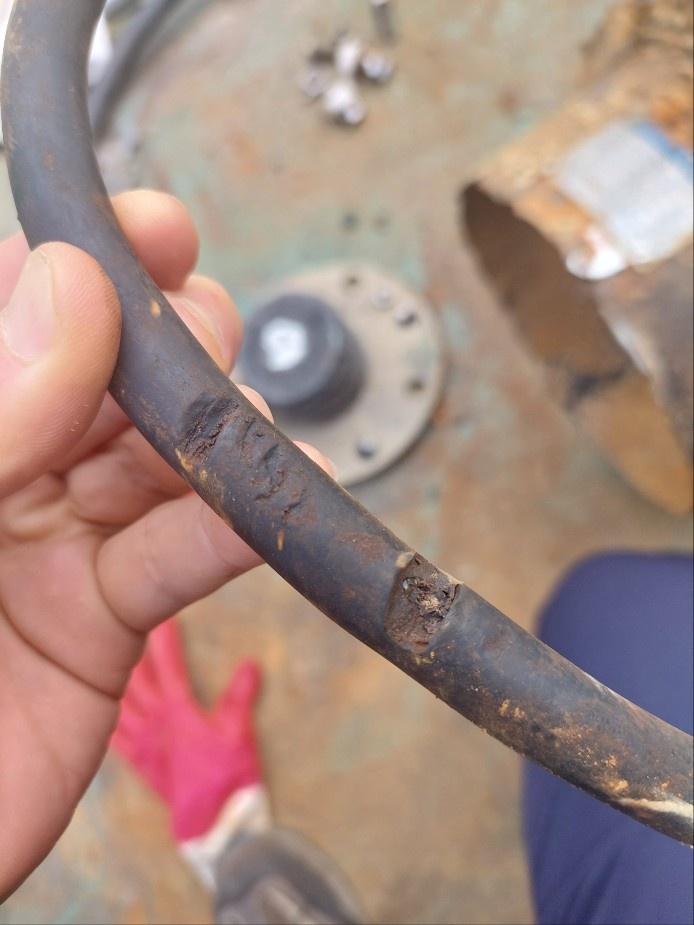
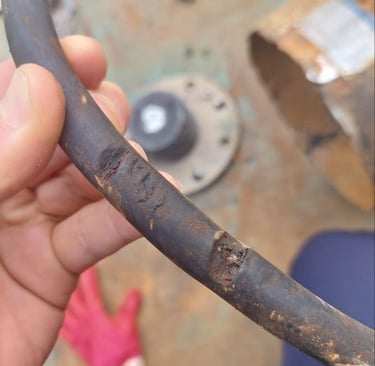
Sheath cracking. A jacket material not suited to constant motion — or a cable bent tighter than its minimum radius — will crack over time, exposing the cores to oil, coolant, and abrasion. Respecting the bending radius matters as much as the material choice.
Core damage from excessive movement. Without a short, controlled lay length, cores migrate and buckle inside the cable during fast motion, damaging insulation and conductors from the inside.
Twisting (torsion) failure. In robot and rotary applications, a cable not rated for torsion will fail at the twist points as the conductors and shield are wound and unwound. This is the failure mode that catches out teams who reach for a continuous-flex cable when a torsion cable was needed.
Frame these together and the lesson is simple: to avoid premature cable failure in moving machinery, match the cable's construction to the exact motion — bending, travel, speed, and torsion — that it will actually experience.
8. How to Choose the Right Cable
Run through this checklist for any moving-cable application. It works for procurement and engineering teams alike, because it turns an abstract decision into a series of concrete questions.
Is the cable moving continuously or only occasionally? Continuous motion points to drag chain cable; occasional motion or handling points to standard flexible cable.
Is it installed in a cable carrier (energy chain)? If yes, specify a continuous-flex drag chain cable.
What is the travel distance? Long travel raises the demand on flex life and lay-length stability.
What is the bending radius? Confirm the cable's minimum radius suits the carrier; tighter radii need true continuous-flex construction.
What speed and acceleration are expected? Fast, high-acceleration motion favours drag chain cable.
Is torsion involved? If the cable twists (most robots), specify a torsion-rated robot cable, not a standard drag chain cable.
Is there oil, coolant, or abrasion exposure? Demanding industrial conditions favour a PUR jacket; for handling and worksite use, a rubber-sheathed flexible cable offers strong oil and weather resistance.
How long is the required service life? Match the cable's rated cycle life to the duty so the cable lasts the machine's design life.
A regional reminder: oil, heat, and abrasion together
For projects across the Middle East, three conditions tend to arrive together — oil and coolant exposure, high ambient heat, and abrasive dust — and they deserve more weight than a generic global guide would give them. A cable that handles motion perfectly in a temperate factory can still struggle if its jacket isn't rated for the heat and oil of a regional plant. The good news is that both cable families address this: quality drag chain cables use oil- and abrasion-resistant PUR jackets, and rugged rubber-sheathed flexible cables like H07RN-F are genuinely oil-, UV-, and weather-resistant with a temperature ceiling around +90°C. The point is to confirm oil resistance, temperature rating, and abrasion resistance explicitly against the datasheet — not to assume them.
9. Frequently Asked Questions
What is the difference between drag chain cable and flexible cable? A drag chain cable is engineered for continuous, high-cycle motion inside a cable carrier, with a short lay length, fine stranding, a tough (usually PUR) jacket, and often shielding that stays stable under motion. A standard flexible cable is built to bend and be handled, but not to endure constant carrier motion. Both are flexible; only one is built for relentless cycling.
Can I use a standard flexible cable in a cable chain? You can physically install one, but it is not recommended for continuous motion. Standard flexible cables lack the optimized lay length and fatigue-resistant conductor construction of drag chain cables, so they tend to fail early from copper breakage and core migration. For anything beyond occasional movement, use a proper continuous-flex cable.
Is a PUR jacket better than PVC? For moving and demanding industrial applications, generally yes. PUR offers superior abrasion resistance, oil resistance, and toughness, which is why it dominates drag chain cables. PVC remains a cost-effective choice for static or light-duty use. Note that rubber sheaths such as PCP (used on H07RN-F) are also excellent for oil and weather resistance in rugged handling applications.
What cable is best for CNC and automation? A continuous-flex drag chain cable. CNC machines and automation lines involve fast, repeated axis motion that demands the high cycle life, controlled lay length, and abrasion-resistant jacket of a purpose-built drag chain cable.
How do I calculate cable life in a drag chain? Cable life depends on the bending radius, travel distance, speed, acceleration, and the cable's rated flex cycles. As a rule, larger bending radii and lower speeds extend life. Manufacturers publish cycle ratings (often in the millions) for defined radius conditions — match those ratings to your duty cycle, and always respect the minimum bending radius.
When do I need an anti-torsion cable? Whenever the application twists the cable around its own axis — most multi-axis robots and rotary joints. Continuous-flex (back-and-forth bending) and torsion (twisting) are different stresses with different failure modes, so a twisting application needs a torsion-rated robot cable specifically, not a standard drag chain cable.
Is H07RN-F suitable for moving applications? For handling and occasional movement, yes — it is excellent. H07RN-F is a rugged, oil-, UV-, and water-resistant rubber-sheathed cable (EPR insulation, PCP sheath, Class 5 flexible copper, rated −30°C to +90°C and 450/750 V) ideal for mobile power, worksites, ports, and severe industrial environments. But with a minimum bending radius around 4× fixed / 6× flexed, it is not designed for the tight, fast, continuous flexing of a cable carrier. For that, choose a dedicated drag chain cable.
Final Thoughts
Drag chain cables and standard flexible cables are not competitors so much as specialists. One is built for a life of continuous, carrier-guided motion; the other for rugged handling, mobile power, and occasional flexing in tough conditions. The H07RN-F family shows just how capable a standard flexible cable can be — genuinely oil-, UV-, and weather-resistant, with a wide temperature range — while its bending-radius limits also show exactly where a purpose-built drag chain cable becomes necessary.
For automation, CNC, robotics, and packaging teams across the Middle East, the winning approach is to define the motion first — continuous flex, travel, speed, and torsion — then layer on the regional realities of oil, heat, and abrasion, and only then select the cable. Get that sequence right, and you avoid the copper breakage, sheath cracking, and early failures that quietly drain budgets on moving machinery.
This article is a general guide. Always confirm specifications against the relevant manufacturer datasheets and project requirements, and consult a qualified engineer for cable selection in moving and automated applications.
Port crane cables | Mining cables | Reeling cables | Trailing cables | Festoon cables | Heavy-duty power cables | Medium voltage cables | Offshore crane cables | Underground mining cables | Dragline cables | Shearer cables | Container handling cables | STS crane cables | RTG cables | Mobile equipment cables | Armored cables | Flexible power cables | VFD cables | Submersible cables | Cold resistant cables | Abrasion resistant cables | Flame retardant cables | Marine environment cables | Opencast mining | Underground operations
© 2006 All rights reserved.
[INDUSTRIAL_CABLES]
INDUSTRIAL GRADE CABLE SYSTEMS | PORT & MINING SOLUTIONS
TEL: +86 153 7530 2641 |MAIL: hongjing.Wang@feichuncables.com