
Engineering Guide: Selecting 6kV, 10kV, and 20kV Medium Voltage Reeling Cables for GCC Smart Port Terminals
This selection guide compares 6kV, 10kV, and 20kV reeling cables for GCC port applications. It helps readers choose the right voltage based on current demand, cable length, environment, and mechanical requirements for cranes and bulk-handling equipment.
hongjing.Wang@Feichun
7/28/202612 min read
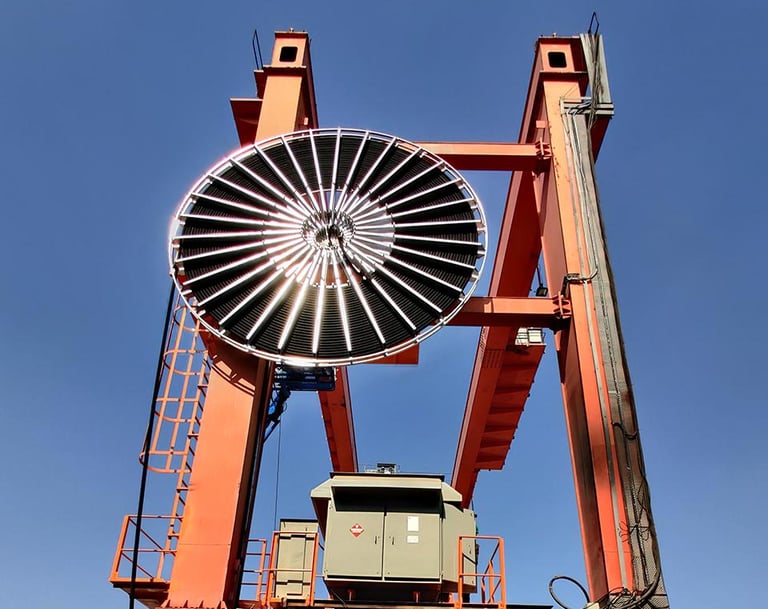
The maritime logistics network across the Gulf Cooperation Council region is undergoing a massive transformation. Modern port hubs—such as Jebel Ali Port and Khalifa Port in the United Arab Emirates, King Abdulaziz Port in Saudi Arabia, and the Port of Salalah in Oman—are expanding berth capacity, electrifying container handling fleets, and integrating high-speed remote automation.
As ship-to-shore gantry cranes, rubber-tyred gantries, and continuous ship loaders become larger, faster, and more automated, their electrical power requirements grow significantly. Relying on traditional low-voltage electrical systems like 400V or 690V is no longer practical for major crane electrification projects. Low-voltage power delivery over long travel distances requires heavy copper cross-sections, creates high electrical line losses, and causes excessive voltage drops that can overheat motors and trigger control system faults.
To deliver high electrical power cleanly and efficiently over long distances, port engineers and equipment manufacturers are turning to medium-voltage flexible reeling cables. By stepping up supply levels to 6kV, 10kV, or 20kV, equipment can operate at significantly lower operating currents for the same megawatt power rating. This reduces copper conductor weight, minimizes reel drum inertia, cuts operating heat, and improves system efficiency.
However, selecting the right medium-voltage reeling cable across GCC ports requires more than matching voltage ratings. Specifiers must carefully balance electrical demand, travel distance, reeling speed, and mechanical motion while accounting for the region's harsh operating environment.
Why GCC Ports Require Medium-Voltage Reeling Cables
Low-voltage electrical power systems like 400V and 690V work well for low-power auxiliary machinery or short-travel equipment. However, modern container handling cranes and bulk unloaders require several megawatts of power to operate heavy hoist motors, high-speed trolley drives, and automated gantry travel systems simultaneously.
When high electrical loads are powered at low voltage, the operating current increases significantly. High current levels force engineers to use thick, heavy copper conductors, which increases overall cable weight and outer diameter. On motorized spooling reels, heavier cables increase mechanical strain, require larger winding drums, and increase rotational inertia. This leads to faster mechanical wear on guide sheaves, rollers, and drive motors.
Moving to medium-voltage cable architectures solves these engineering challenges:
Reduced Operating Current: Increasing the operating voltage reduces the current required to deliver the same power. Lower current allows for smaller, lighter copper conductors, reducing overall cable weight and reel diameter.
Lower Heat Generation and Thermal Stress: Electrical heat losses increase with the square of the current. Lower operating current reduces heat buildup within cable reels, which is critical in hot environments where high ambient temperatures already stress cable insulation.
Reduced Voltage Drop Over Long Distance: Medium-voltage systems maintain stable voltage levels over travel distances exceeding 500 meters, protecting motors and sensitive automation controllers from voltage dips.
Improved Reel Dynamics and Motor Efficiency: Lighter cables reduce spooling torque, allow faster travel speeds, and improve acceleration control on high-speed reels.
At major GCC hubs like DP World's Jebel Ali Port or AD Ports Group's Khalifa Port, medium-voltage reeling cables provided by manufacturers like Feichun deliver the reliable power needed for high-speed automated operations.
Recommended Voltage Classes by Port Equipment Type
Medium-voltage reeling cables are available in three primary voltage classes across GCC port installations: 6kV, 10kV, and 20kV. Choosing the right voltage class depends on crane size, total power demand, travel distance, and terminal electrical architecture.
RECOMMENDED VOLTAGE CLASS MATCHING Voltage Class Target Port Equipment & Machinery ───────────────────────────────────────────────────────────────── 6kV (3.6/6 kV) Electrified RTGs, small STS cranes, and medium yard handling gantries. 10kV (6/10 kV) Standard high-capacity STS cranes, automated stacking cranes, and yard hubs. 20kV (12/20 kV) Large quayside ship unloaders, long-travel bulk loaders, and heavy industrial reels.
6kV Cable Applications: Rubber-Tyred Gantries and Compact STS Units
The 6kV voltage class (specifically rated at 3.6/6 kV nominal, with maximum system voltage of 7.2 kV) is widely used for electrifying Rubber-Tyred Gantry yard cranes and compact Ship-to-Shore cranes.
Electrified RTGs converting from diesel generators to quayside power rails or reeling drums require compact, flexible cables that can handle frequent short travel cycles and tight turning angles. A 6kV supply delivers sufficient power for yard container hoisting while keeping cable outer diameters small enough to fit on compact reel systems.
10kV Cable Applications: Mainstream Ship-to-Shore Cranes
The 10kV voltage class (rated at 6/10 kV nominal, with maximum system voltage of 12 kV) is the standard electrical supply for modern, high-capacity Ship-to-Shore gantry cranes.
Ultra-Large Container Vessels require STS cranes with outreach booms exceeding 70 meters and lift heights over 50 meters. These giant cranes rely on multi-megawatt variable frequency drives to hoist containers quickly. A 10kV electrical supply provides an optimal balance, delivering high power through lightweight cables that maintain stability during rapid acceleration and deceleration.
20kV Cable Applications: Bulk Handling Terminals and Long-Travel Ship Loaders
The 20kV voltage class (rated at 12/20 kV nominal, with maximum system voltage of 24 kV) is designed for large bulk handling systems, long-distance continuous ship unloaders, and heavy industrial stacker-reclaimers.
Bulk material handling terminals processing iron ore, bauxite, sulfur, or clinker often operate along berths extending over 1000 meters. At these long distances, transmitting power at 20kV reduces line losses and prevents voltage drops. This allows heavy conveyers and bucket unloaders to run continuously without overheating power cables.
Technical Factors for Choosing the Right Voltage Class
Selecting the right voltage class requires evaluating four core engineering factors: electrical current capacity, cable travel length, regional ambient environment, and mechanical motion profiles.
1. Current Capacity and Power Calculations
Determining the required voltage class starts with evaluating total electrical power demand. Electric power in a balanced three-phase system is calculated using the standard formula:
Power equals the square root of 3 multiplied by System Voltage, multiplied by Operating Current, multiplied by the Power Factor.
In this relationship, electrical power is directly proportional to voltage and current. If system voltage is increased, the operating current decreases proportionally for the same total power demand.
For example, delivering two megawatts of power at a low voltage of 400V requires over 3200 amperes of electrical current, requiring multiple heavy cables in parallel. Stepping up the supply to 6kV reduces the current to roughly 210 amperes. Moving to 10kV reduces current further to around 125 amperes, allowing a single compact medium-voltage cable to power the entire crane cleanly.
2. Cable Length and Voltage Drop Limits
As travel distance increases along quayside berths or container yards, electrical resistance in the copper conductor causes voltage drop over the length of the run. If the voltage drop exceeds 5 percent of nominal system voltage, drive motors experience higher thermal stress, reduced torque, and potential electrical trips.
Voltage drop is directly proportional to operating current and total conductor length. By choosing a higher voltage class (such as moving from 6kV to 10kV, or from 10kV to 20kV), operating current drops significantly. This reduces voltage drop across long travel runs, allowing cables to operate reliably over distances exceeding 500 to 1000 meters.
3. Harsh Operating Environments in the GCC Region
Cables installed in GCC ports operate under severe environmental conditions:
GCC PORT ENVIRONMENTAL CHALLENGES Environmental Hazard Operational Impact on Cables ───────────────────────────────────────────────────────────────── Extreme Summer Heat Ambient air temperatures reach 50 °C, driving internal cable temperatures high. Intense Solar Radiation UV radiation bakes exposed cables and reels, causing low-grade rubber to crack. Salt Mist Corrosion High coastal humidity creates salt spray, corroding exposed metal components. Airborne Silica Sand Windblown desert sand acts like an abrasive, wearing down cable jackets over time.
High Ambient Temperatures: Summer ambient air temperatures across the Arabian Gulf routinely reach 45 °C to 50 °C, with direct sunlight driving steel reel temperatures above 70 °C. High ambient heat reduces the cable's current-carrying capacity, making high-temperature Ethylene Propylene Rubber (EPR or EPDM) insulation essential.
Intense Solar UV Radiation: Constant exposure to ultraviolet rays can dry out and crack standard rubber jackets. Heavy-duty thermosetting synthetic rubber outer sheaths (such as type 5GM5 Chloroprene or PCP) are required to resist UV degradation.
Marine Salt Spray: High humidity and salt mist cause chemical corrosion on exposed copper conductors and metallic armor. Using tinned copper conductor strands prevents corrosion and maintains long-term electrical conductivity.
Windblown Desert Sand: Fine silica sand settles into guide sheaves and reel drums, acting as an abrasive. Tough, tear-resistant outer sheaths prevent jacket erosion during continuous spooling.
4. Dynamic Mechanical Motion Requirements
Reeling cables on fast-moving cranes endure continuous mechanical stress. They must flex smoothly over guide sheaves, resist stretching under dynamic acceleration, and withstand rotational torque during directional changes.
Cables engineered for dynamic reeling incorporate specialized construction features:
Extra-flexible Class 5 tinned copper conductors that resist metal fatigue.
Symmetrical split earth conductors that balance cable weight and prevent internal distortion.
Embedded polyester anti-torsion braids that absorb rotational twisting forces.
Double-layer rubber sheathing systems that cushion internal components and resist surface abrasion.
Selection Logic for Port Procurement Teams
To help engineering and procurement teams select the right medium-voltage cable, consider this step-by-step evaluation process:
PORT CABLE SELECTION FLOWCHART [ Step 1: Equipment ] ──> Identify Crane Type (RTG, STS, or Bulk Loader) [ Step 2: Power ] ──> Calculate Total Megawatt Demand & Operating Current [ Step 3: Distance ] ──> Measure Cable Travel Distance & Check Voltage Drop [ Step 4: Voltage ] ──> Select Voltage Class (6kV, 10kV, or 20kV) [ Step 5: Speed ] ──> Evaluate Reeling Speed (Standard vs Rapid Reeling) [ Step 6: Data ] ──> Determine Data Needs (Add Integrated Fiber Optics)
Identify Machinery Type: Determine whether the cable is for an RTG yard crane, a high-speed STS quay crane, or a continuous bulk ship loader.
Calculate Total Power Demand: Calculate total electrical load requirements and determine maximum continuous current.
Evaluate Travel Distance and Voltage Drop: Measure total travel length. If travel distance causes excessive voltage drop at 6kV, step up to 10kV or 20kV.
Select the Voltage Class: Select 6kV for RTGs and compact cranes, 10kV for standard STS cranes, or 20kV for long-travel bulk loaders.
Assess Reeling Speed and Dynamic Stress: If travel speeds exceed 120 to 180 meters per minute or involve rapid acceleration, select a reinforced, high-speed reeling cable design.
Determine Communication and Data Requirements: If the terminal uses automated control systems, remote operation desks, or live video feeds, select a hybrid cable with integrated fiber optics.
Recommended Cable Families for GCC Port Electrification
Feichun manufactures three specialized medium-voltage rubber reeling cable families designed for port equipment. Each family addresses specific electrical, mechanical, and automation requirements:
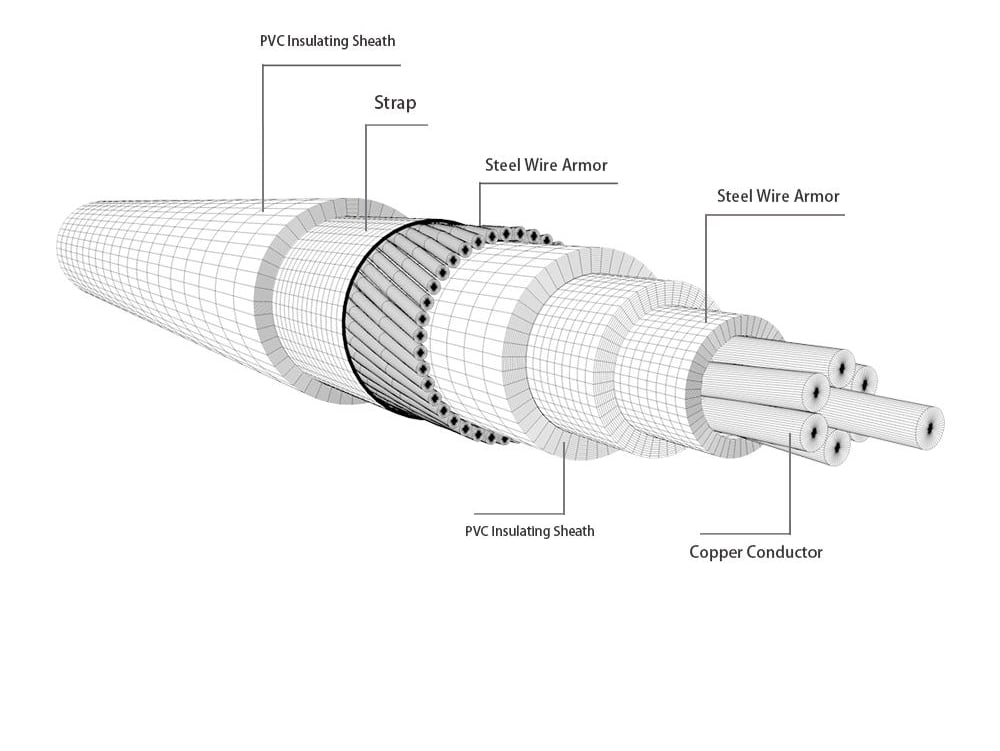
RECOMMENDED CABLE PRODUCT MATRIX Cable Model Core Capabilities & Applications ───────────────────────────────────────────────────────────────── NTSCGEWOEU Standard heavy-duty medium-voltage reeling cable for reliable power delivery on cranes. NTSKCGEWOEU Hybrid power cable with integrated fiber optics for automated, remote-controlled smart ports. R-(N)TSCGEWOEU Reinforced, high-speed reeling cable with reduced outer diameter for fast STS and RTG cranes.
1. NTSCGEWOEU: Standard Medium-Voltage Reeling Cable
The NTSCGEWOEU cable is a heavy-duty, flexible medium-voltage rubber reeling cable engineered for standard crane operations and bulk handling machinery. Built to DIN VDE 0250-813 standards, it provides high mechanical durability and reliable power delivery.
Key Construction Features:
Fine-stranded Class 5 tinned copper conductors for high flexibility.
High-grade EPR rubber insulation (type 3GI3) with inner and outer semiconductive field control layers.
Symmetrical split earth conductors in outer core gaps to balance weight and reduce electrical fields.
Double-layer Chloroprene rubber outer jacket (type 5GM5 in red) offering high UV, ozone, oil, and moisture resistance.
Embedded polyester anti-torsion braid to prevent structural corkscrewing.
Primary Applications: Standard-speed STS gantry reels, electrified RTGs, stacker-reclaimers, and open-cast mining machinery.
2. NTSKCGEWOEU: Hybrid Cable with Integrated Fiber Optics
The NTSKCGEWOEU cable is a hybrid medium-voltage reeling cable that integrates power conductors, split earth wires, and a fiber optic module within a single compact structure.
Key Construction Features:
High-flexibility power and earth core construction identical to the NTSCGEWOEU series.
Integrated fiber optic unit in the core gap, available with 6, 12, 18, or 24 optical fibers.
Supports multimode glass fibers (G50/125 µm and G62.5/125 µm) for local networks and single-mode fibers (E9/125 µm) for long-distance data transmission.
Gel-filled ETFE hollow buffer tubes that protect optical fibers from vibration and crushing forces.
Complete immunity to electromagnetic interference from high-voltage power cores.
Primary Applications: Automated stacking cranes, remote-controlled STS cranes with live 4K video feeds, and smart terminals requiring simultaneous power and high-speed data transmission.
3. R-(N)TSCGEWOEU: Reinforced Cable for High-Speed Reeling
The R-(N)TSCGEWOEU cable features a reinforced design built specifically for rapid reeling duty, high acceleration forces, and extreme dynamic stresses. The "R" designation highlights a reinforced structure with reduced physical dimensions.
Key Construction Features:
Compact outer diameter achieved using high-efficiency EPDM insulation compounds.
Reinforced inner sheathing (type 5GM3) and an extra-heavy polyamide anti-torsion braid.
Able to handle continuous travel speeds beyond 240 meters per minute and peak acceleration forces up to 30 N/mm².
Tight dynamic bending radius of 6 times the outer cable diameter (6 × D), allowing installation on compact spooling reels.
Optional integrated fiber optic module for combined power and data transmission.
Primary Applications: High-speed STS trolley reels, fast yard cranes, rapid monospiral drums, and high-cycle container handling machinery.
Why These Cable Families Fit GCC Smart Port Terminals
GCC port authorities are investing heavily in terminal automation and electrification to improve container throughput and lower carbon emissions. Facilities like Jebel Ali Port, Khalifa Port, and King Abdulaziz Port lead the region in adopting remote-controlled STS cranes, automated stacking yards, and high-voltage quayside connections.
These specialized medium-voltage cables engineered by Feichun are well suited to support these modern terminals:
Heat Endurance for Middle Eastern Climates: High-temperature EPR and EPDM insulation compounds operate continuously at +90 °C conductor temperatures, with short-circuit thresholds up to +250 °C. This provides an essential thermal buffer when operating under hot GCC summer conditions.
Resistance to Solar Radiation and Abrasion: Special thermosetting rubber outer jackets (type 5GM5) incorporate UV, ozone, and heat stabilizers. They resist surface cracking from solar exposure and withstand abrasion from windblown desert sand.
High Mechanical Stability Under Fast Travel: Embedded anti-torsion braids absorb axial twisting and prevent structural corkscrewing during rapid acceleration cycles.
Integrated Fiber Optics for Port Automation: Embedding optical fibers directly into the power cable eliminates the need for auxiliary data lines, simplifying reel design and ensuring clean communication links for remote control systems.
Practical Application Examples across Port Terminals
To understand how these voltage classes and cable designs perform in real-world port environments, review these typical installation scenarios:
Example 1: Yard Electrification using 6kV Cables on RTG Cranes
A major container terminal converts its diesel-powered RTGs to electric operation using quayside motorized reel systems.
System Voltage: 6kV (3.6/6 kV).
Selected Cable: 6kV R-(N)TSCGEWOEU or NTSCGEWOEU.
Key Performance Factors: Small outer diameter fits compact RTG reel drums. High flexibility allows easy bending around guide rollers during frequent lane shifts, while the tough outer jacket resists ground abrasion from concrete yard decks.
Example 2: High-Speed Automated Quayside STS Cranes
A smart port terminal installs automated, remote-controlled Ship-to-Shore gantry cranes with outreach booms capable of serving ultra-large container ships.
System Voltage: 10kV (6/10 kV).
Selected Cable: 10kV NTSKCGEWOEU or R-(N)TSCGEWOEU with integrated 18-fiber optic module.
Key Performance Factors: 10kV power supply keeps operating current low, reducing cable weight on motorized monospiral drums. The integrated single-mode fiber optic unit streams multi-channel 4K video and laser positioning telemetry back to remote operator desks in real time without signal distortion.
Example 3: Long-Travel Bulk Terminal Stacker-Reclaimers
A bulk material handling facility operates a continuous ship loader along a berth extending over 800 meters.
System Voltage: 20kV (12/20 kV).
Selected Cable: 20kV NTSCGEWOEU or NTSKCGEWOEU.
Key Performance Factors: 20kV power supply minimizes voltage drop across the 800-meter travel run. Heavy-duty thermosetting rubber sheaths resist harsh sun, salt fog, and abrasive silica dust, ensuring continuous operation during long loading cycles.
Installation and Maintenance Practices for Long Cable Life
Proper installation and routine inspection are essential to maximize cable service life and prevent unscheduled terminal downtime. Maintenance teams should follow these technical recommendations:
Match Spooling Drum Geometry: Ensure spooling reel diameters and guide sheaves maintain a minimum dynamic bending radius of at least 6 to 10 times the cable outer diameter (or up to 20 times for specific high-voltage designs). Tight bending radii accelerate mechanical fatigue in copper strands and optical fibers.
Adjust Reel Tension and Torque Settings: Motorized reel torque control systems must maintain even tension during acceleration, travel, and braking. Excessive tension stretches internal cores, while insufficient tension allows the cable to slacken and snag in quayside guide troughs.
Apply Thermal Derating Factors: Standard cable current ratings are based on 30 °C ambient air temperatures. In GCC ports, where summer ambient temperatures reach 45 °C to 50 °C, apply thermal derating factors to prevent conductor overheating.
Pre-Terminated Fiber Modules: Fiber optic splicing requires cleanroom conditions and specialized equipment. Ordering factory pre-terminated fiber optic connectors from Feichun eliminates field splicing risks, speeds up installation, and ensures certified optical performance.
Conduct Routine Sheath and Torsion Inspections: Inspect outer rubber sheaths regularly for signs of mechanical abrasion, surface cuts, or UV cracking. Check guide rollers to ensure they turn freely, as stuck rollers cause rapid surface wear and introduce structural corkscrewing.
Recommended Visual Documentation Elements
To complement technical submittals, blog posts, or engineering proposals, consider incorporating these visual elements:
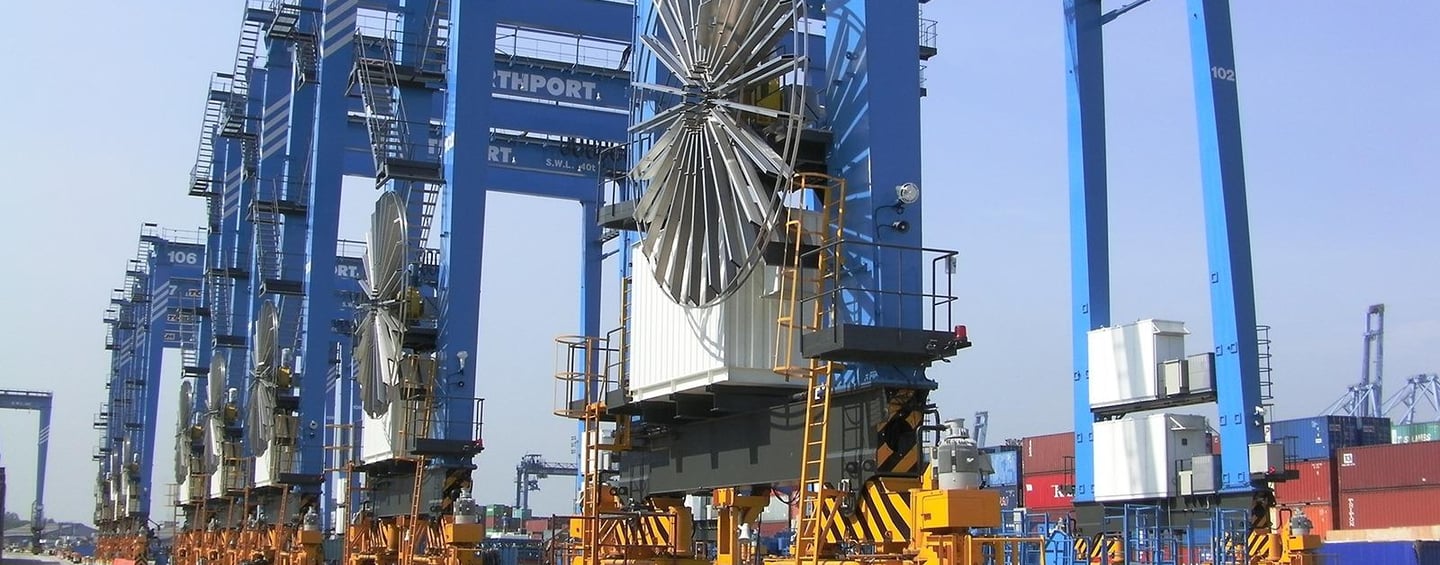
GCC Port Crane Installation Map: A conceptual diagram showing automated stacking yards and quay cranes connected via quayside trenches to central medium-voltage substations.
Voltage Class Comparison Matrix Diagram: A visual graphic illustrating current capacity, conductor sizing, and voltage drop across 6kV, 10kV, and 20kV cable configurations.
Cable Reel Spooling Close-Up Illustration: A detailed drawing showing cable winding patterns on monospiral drums, turnover sheaves, and guide rollers.
Conclusion
Upgrading and electrifying port infrastructure across the GCC requires careful selection of medium-voltage reeling cables. Standard low-voltage power systems are no longer sufficient for modern high-capacity cranes, while selecting the wrong voltage class or cable design can lead to premature jacket failure, excessive line losses, and costly operational shutdowns.
By evaluating total power demand, travel distance, environmental exposure, and reeling speeds, port specifiers can choose the optimal voltage class:
6kV cables provide an ideal, compact solution for electrified RTGs and yard gantries.
10kV cables deliver balanced power and high performance for mainstream high-speed STS cranes.
20kV cables provide efficient, low-loss power delivery for long-travel bulk ship loaders and heavy terminal equipment.
Combining these voltage classes with specialized cable designs—such as the standard NTSCGEWOEU, the fiber-integrated NTSKCGEWOEU for smart terminals, or the reinforced R-(N)TSCGEWOEU for high-speed reeling—ensures that GCC port operators build reliable, efficient electrification networks. High-performance medium-voltage cables from Feichun deliver the thermal stability, mechanical durability, and data capabilities needed to keep regional trade moving smoothly.
Would you like me to prepare a detailed technical submittal datasheet or calculate exact thermal ampacity derating values for 6kV, 10kV, or 20kV reeling cables based on your target port's maximum summer ambient temperatures?
Port crane cables | Mining cables | Reeling cables | Trailing cables | Festoon cables | Heavy-duty power cables | Medium voltage cables | Offshore crane cables | Underground mining cables | Dragline cables | Shearer cables | Container handling cables | STS crane cables | RTG cables | Mobile equipment cables | Armored cables | Flexible power cables | VFD cables | Submersible cables | Cold resistant cables | Abrasion resistant cables | Flame retardant cables | Marine environment cables | Opencast mining | Underground operations
© 2006 All rights reserved.
[INDUSTRIAL_CABLES]
INDUSTRIAL GRADE CABLE SYSTEMS | PORT & MINING SOLUTIONS
TEL: +86 153 7530 2641 |MAIL: hongjing.Wang@feichuncables.com