How Komatsu's Haul Trucks at Escondida Mine Rely on Medium Voltage Flexible Mining Cables Like N)TSKCGECWOEU-CH to Stay Powered Underground
Learn how medium voltage flexible mining cables — including designs like the N)TSKCGECWOEU-CH — power mobile machinery at world-famous underground and surface mines like Escondida in Chile. Explore key specs, fire safety, drag chain installation, and real-world mining applications.
hongjing.Wang@Feichun
3/24/202613 min read

What Is a Medium Voltage Flexible Mining Cable? (Google Featured Snippet)
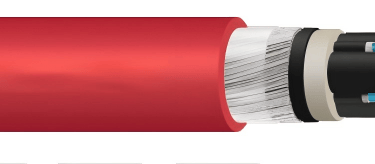
A medium voltage flexible mining cable is a specialised power supply cable rated typically at 3.6/6 kV, designed to continuously power mobile underground equipment — such as coal cutters, roadheaders, and longwall shearers — while trailing behind or being guided through cable drag chains. Unlike fixed-installation cables, these cables are engineered for repeated mechanical flexing, exposure to oil, abrasion, and tight bending radii, while maintaining fire-retardant and low-smoke performance in confined underground galleries. The N)TSKCGECWOEU-CH is one such cable, designed according to DIN VDE 0250-813, combining fine-stranded Class 6 tinned copper conductors, EPR insulation, and a reinforced rubber outer sheath to deliver both electrical reliability and mechanical endurance in the harshest mining conditions.
Introduction: Why Power Supply Cables Are the Lifeline of Modern Mining
Deep underground, hundreds of metres beneath the earth's surface, massive machines carve through rock and ore around the clock. What keeps them running is not just hydraulics or mechanics — it is a continuous, reliable supply of electrical power delivered through cables that must flex, bend, twist, and drag with every machine movement.
This is the world of medium voltage flexible mining cables. They are arguably the most mechanically demanding electrical cables in any industry. In a single shift, a trailing cable on a longwall shearer may complete hundreds of cycles of extension and retraction, all while remaining exposed to coal dust, oil mist, crushing forces, and temperatures that swing from the deep chill of a cold start to the heat generated by continuous operation.
The N)TSKCGECWOEU-CH, manufactured to DIN VDE 0250-813, is engineered specifically for this environment. To understand why its technical parameters matter so much, it helps to look at where and how such cables are actually deployed — at some of the world's most famous mining operations.
Background: Escondida Copper Mine, Chile — The World's Largest Copper Producer
Situated 3,100 metres above sea level in the Atacama Desert of northern Chile, Escondida is the single largest copper-producing mine on earth. Operated by BHP and partners, it has produced more than one million tonnes of refined copper in a single year. The mine combines both open-pit and underground extraction methods, with the underground concentrator and ore handling systems requiring enormous mobile electrical infrastructure.
At a site like Escondida, mobile machinery — including electric rope shovels, mobile conveyor systems, and underground loaders — must receive continuous medium voltage power while moving across ore faces and haulage tunnels. Cable management systems here are not an afterthought: they are engineered systems in which trailing cables and drag chains form the critical link between fixed substations and moving machines. The altitude, extreme UV exposure at the surface, wide daily temperature variations, and the constant presence of oil and hydraulic fluids make cable selection a matter of operational continuity and safety.
Cables operating in this environment must tolerate ambient temperatures ranging from below freezing at night to elevated temperatures during peak machine operation — precisely the range that a flexible mining cable rated for fixed installation from -40 °C to +90 °C and flexible operation from -25 °C to +80 °C is designed to cover.
A Second Real-World Context: Mponeng Gold Mine, South Africa — The Deepest Mine on Earth
Mponeng, located in South Africa's Gauteng Province and operated by AngloGold Ashanti, descends more than 4 kilometres below the earth's surface — making it the deepest operating mine in the world. At that depth, rock temperatures can exceed 60 °C before cooling systems intervene, and the confined tunnel geometry means that any cable fire has potentially catastrophic consequences for personnel and infrastructure.
At Mponeng, continuous miners and other mobile machinery are connected to the power grid via flexible trailing cables that snake through narrow headings. Cable chains are used extensively to manage mechanical routing and protect cables from direct crushing loads on the tunnel floor. The mine's depth means that electrical faults or cable fires are extraordinarily difficult to respond to — making the fire performance characteristics of every cable in the system a fundamental safety consideration, not a secondary specification.
This is precisely where an oxygen index greater than 29 — as specified for the N)TSKCGECWOEU-CH outer sheath — becomes operationally critical. A material with an oxygen index above 27 will not sustain combustion in the normal atmospheric oxygen concentration found in underground air. In the event of an arc flash or localised heating, a cable with this characteristic will self-extinguish rather than propagate a fire along its length.
Electrical Parameters: Rated for Real Underground Power Distribution
The N)TSKCGECWOEU-CH carries a rated voltage of 3.6/6 kV, which corresponds to the medium voltage distribution systems commonly used to power mobile mining equipment at distances of several hundred metres from fixed substations. In AC systems, the maximum permissible operating voltage is 4.2/7.2 kV, and in DC systems it reaches 5.4/10.8 kV, allowing flexibility across different mine electrical architectures.
The AC test voltage according to DIN VDE 0250-813 is 11 kV, confirming that the cable is tested well beyond its rated operating point — a standard practice that provides assurance of insulation integrity under transient overvoltage conditions.
The maximum permissible conductor temperature during continuous operation is 90 °C, rising to 250 °C during short-circuit events. These parameters, combined with current-carrying capacities determined according to DIN VDE 0298-4, allow electrical engineers to correctly size the cable cross-section for specific load profiles, machine duty cycles, and ambient temperature conditions at each mine site.
Available conductor cross-sections span from 3x25 mm² to 3x150 mm², with corresponding current-carrying capacities from approximately 131 A up to 404 A, covering the full range of medium voltage mobile machine power ratings typically encountered in underground mining.
Cable Construction: Built for Repeated Mechanical Stress
The conductor is the first line of performance. The N)TSKCGECWOEU-CH uses finely stranded Class 6 tinned electrolytic copper conductors, which offer the highest flexibility available within standard conductor classifications. The tinning provides corrosion resistance in the humid, chemically active underground atmosphere, and the fine stranding distributes mechanical stress across thousands of individual wires rather than concentrating it on a small number of larger strands — the key to surviving hundreds of thousands of flex cycles without fatigue failure.
The insulation system is based on EPR (ethylene propylene rubber) compound with enhanced electrical and mechanical characteristics, referenced to DIN VDE 0207 Part 20. EPR maintains excellent dielectric properties across the operating temperature range and resists the degradation caused by ozone, UV radiation, and the moisture that is endemic to underground working environments.
Electrical field control is achieved through inner and outer layers of semiconductive rubber applied over and under the insulation. This is standard practice for medium voltage cables and serves to prevent localised electrical stress concentrations at the conductor surface and at the insulation-screen interface — stress concentrations that, over time, lead to premature insulation breakdown.
Core identification uses natural colouring with black semiconductive rubber and printed white digits 1 to 3, allowing reliable identification during installation and maintenance even after years of service in a dirty environment.
The three power conductors are laid up with double concentric control and protective conductor elements placed in the outer interstices — a geometry that optimises the lay length and bending characteristics of the assembled cable. The inner sheath is GM1b rubber compound, and the signal and monitoring conductor consists of spirally applied galvanised steel and tinned copper wires vulcanised between the inner and outer sheaths. The outer sheath is 5GM5 compound with enhanced mechanical properties, coloured red for immediate identification as a mining cable.
Mechanical Parameters: Engineered for Trailing and Drag Chain Systems
The tensile load limit of 15 N/mm² defines the maximum tension that the cable can experience during trailing operation without risk of conductor or sheath damage. For drag chain applications where the tensile load is managed by the chain structure and limited to 5 N/mm², the minimum bending radius is defined as 2.3 times the cable outer diameter. Under higher tensile loads, the bending radius requirement follows DIN VDE 0298 Part 3.
For S-type directional changes — the geometry that occurs when a cable transitions from one direction to the opposite in a cable chain — the minimum distance is specified as 20 times the cable outer diameter. This requirement exists because S-bends impose a combination of bending stress and lateral shear on the cable structure simultaneously. Violating this minimum distance causes accelerated fatigue at the transition point and is one of the most common causes of premature cable failure in drag chain applications.
In practical terms, for a 3x70 mm² cable with an outer diameter of approximately 61 mm, the minimum S-type distance would be 1,220 mm. Cable chain systems must be dimensioned accordingly, and the chain length and geometry should be verified against cable specifications during the engineering phase of any new machine installation.
The outer diameter range across standard cross-sections runs from 48 mm for the 3x25 mm² variant to 71 mm for the 3x150 mm² variant, with maximum permissible tensile forces ranging from approximately 3,900 N up to approximately 10,470 N. These values are directly relevant to the mechanical design of cable reeling systems and drag chain anchorage points.


Thermal Performance: From Arctic Pre-Shifts to Deep-Mine Heat
The temperature range specified for the N)TSKCGECWOEU-CH covers two distinct operating scenarios that represent the extremes of real mining environments.
For fixed installation — cable runs that are routed once and not repeatedly flexed — the ambient temperature range is -40 °C to +90 °C. This is relevant for sections of cable that pass through surface infrastructure or ventilation shafts in cold-climate mines, such as those in northern Canada, Siberia, or high-altitude Andean operations where overnight temperatures routinely fall well below freezing.
For flexible operation — the trailing and drag chain duty for which this cable is primarily designed — the operating range is -25 °C to +80 °C. At -25 °C, EPR rubber retains sufficient flexibility to perform bending cycles without cracking, a property that distinguishes it from PVC-insulated cables, which become brittle and prone to fracture at low temperatures. At +80 °C ambient, the cable maintains full electrical performance with the conductor temperature ceiling of 90 °C providing a 10-degree thermal margin under full load.
In the context of a mine like Cerro Verde in Peru — a large copper and molybdenum operation at altitude where surface temperatures drop sharply at night — this thermal range allows equipment to be connected and operated from cold starts without requiring cable warm-up procedures or special handling precautions.
Fire and Safety Performance: Self-Extinguishing in Confined Spaces
Fire safety in underground mining is governed by the catastrophic potential of any ignition event in a confined, difficult-to-evacuate space. The N)TSKCGECWOEU-CH addresses this through two independently significant characteristics.
The oxygen index of greater than 29 for the outer sheath material means that the sheath compound requires an oxygen concentration above 29% to sustain combustion. Since normal atmospheric air contains approximately 21% oxygen, any flame that ignites the outer sheath will self-extinguish once the ignition source is removed. In practical terms, this eliminates the outer sheath as a flame propagation pathway along the cable length.
The flame retardant behaviour of the insulation for single insulated cable is tested to DIN EN/IEC 60332-1-2, the standard that assesses whether a vertically mounted cable specimen will sustain or propagate a flame after a defined ignition period. A cable that passes this test will not carry a fire upward along its own insulation — a critical characteristic for any cable routed vertically in a shaft or steeply inclined heading.
Together, these two properties mean that the cable does not contribute fuel to a fire and does not act as a propagation medium. In the confined geometry of an underground heading, where a single cable fire can cut power to an entire production section and force evacuation of personnel who may be hundreds of metres from an exit, this performance level is not optional — it is the minimum acceptable standard.
Chemical and Environmental Resistance: Surviving the Underground Environment
Underground mining environments subject cables to a range of chemical and physical hazards that are absent from most other industrial settings.
Oil resistance is tested according to DIN EN/IEC 60811-404. In a mining environment, the sources of oil contamination include hydraulic fluid from roof supports and cutting heads, transmission and gearbox oil from mobile machines, and chain lubricants used in the cable chain systems themselves. A cable sheath that absorbs oil will swell, soften, and eventually lose its mechanical integrity — leading to accelerated wear and possible electrical fault. The specified oil resistance ensures that the outer sheath maintains its dimensional stability and mechanical properties even after prolonged contact with these fluids.
Mechanical resistance against abrasion, impact, and crushing is provided by the 5GM5 compound outer sheath. In trailing applications, the cable inevitably contacts the mine floor, roof bolts, rib structures, and the internal surfaces of the cable chain. The outer sheath must withstand these contacts repeatedly without surface degradation that would expose the inner layers.
Weather resistance is described as unrestricted — covering indoor and outdoor use with resistance to ozone, UV radiation, and moisture. This characteristic allows the same cable type to be used through the entire length of a mobile machine's power supply, from the surface substation connection through outdoor transition areas and down into the underground workings, without requiring cable joints at the surface-to-underground transition point.
Real-World Application: Mobile Machinery at Glencore's Raglan Mine, Canada
Raglan, operated by Glencore in the Nunavik region of northern Quebec, Canada, is one of the world's highest-grade nickel mines and one of the most remote. Located above the 61st parallel in subarctic conditions, it operates year-round in an environment where outdoor temperatures can fall below -40 °C in winter.
Underground continuous miners and load-haul-dump machines at Raglan operate on medium voltage power supplied through trailing cables that must function reliably from cold starts at the beginning of each shift. The combination of low-temperature flexibility, oil resistance, and mechanical robustness required by this environment maps directly to the specification profile of cables like the N)TSKCGECWOEU-CH.
The cable chain systems used at Raglan and similar mines provide the mechanical protection that allows the cable to operate within its specified bending radius and tensile load limits even as the machine traverses irregular terrain. The chain performs the structural role, and the cable performs the electrical role — a division of function that is fundamental to the design philosophy embodied in DIN VDE 0250-813.
Installation Recommendations: Maximising Service Life in Drag Chain Systems
Correct installation is as important as correct cable selection. A cable that meets every relevant specification will fail prematurely if it is installed incorrectly, and the most common installation errors in drag chain applications relate to bending radius violations, improper tensile load management, and incorrect S-type spacing.
The minimum bending radius must be observed at every point where the cable changes direction, including at the cable entry and exit points of the drag chain, at the machine connection point, and at the power supply end. It is not sufficient to verify the radius only at the most obvious bend — the entire routing must be checked.
Tensile load management requires that the cable entry point into the drag chain be anchored in a way that transfers longitudinal forces to the chain structure rather than to the cable conductors. A cable that is permitted to carry the full tensile load of its own weight plus the weight of the chain over an unsupported span will exceed its tensile load limit at cross-sections far from the obvious stress concentration points.
Inspection intervals should be determined based on the duty cycle of the specific application. In high-production longwall operations where the cable completes many hundreds of flex cycles per shift, a monthly outer sheath inspection is a reasonable minimum. In lighter-duty applications such as cable chains on surface stacker-reclaimer equipment, quarterly inspection may be appropriate. Any evidence of outer sheath cracking, delamination, or oil absorption is cause for immediate replacement planning.

FAQ — Frequently Asked Questions About Medium Voltage Flexible Mining Cables
What does the rated voltage of 3.6/6 kV mean for a mining cable? The notation 3.6/6 kV means the cable is rated for a phase-to-earth voltage of 3.6 kV and a phase-to-phase voltage of 6 kV. This corresponds to a nominal 6 kV three-phase distribution system, which is one of the most common medium voltage levels used to supply mobile equipment in underground mines.
Why is Class 6 conductor stranding important for trailing cables? Class 6 is the highest flexibility class defined in EN 60228. It uses the finest wire gauges in the conductor bundle, maximising the number of individual wires for a given cross-section. This distributes mechanical bending stress across the largest possible number of wires, dramatically extending the fatigue life of the conductor under repeated flexing.
What is the oxygen index and why does it matter in underground mining? The oxygen index is the minimum oxygen concentration, expressed as a percentage, required to sustain combustion of a material. Normal atmospheric air contains approximately 21% oxygen. A material with an oxygen index above 27 will self-extinguish in normal air because there is insufficient oxygen to sustain the combustion reaction. In underground mining, where evacuation routes can be long and fire suppression response times are measured in minutes, self-extinguishing cable materials are a critical safety feature.
Can the N)TSKCGECWOEU-CH be used in explosion-hazardous areas? Yes, the cable carries certification for use in explosion-hazardous areas, which corresponds to the requirements of underground coal mines and other gassy mining environments where methane or other flammable gases may be present.
What is the minimum bending radius for a 3x70 mm² cable in a drag chain application? For a 3x70 mm² variant with an outer diameter of approximately 61 mm and a tensile load limited to 5 N/mm², the minimum bending radius is 2.3 × 61 mm = approximately 140 mm. The minimum S-type distance is 20 × 61 mm = 1,220 mm. These values must be verified against the actual cable data sheet for the specific cross-section and manufacturer.
How does EPR insulation compare to PVC for mining cables? EPR (ethylene propylene rubber) maintains flexibility at low temperatures, typically down to -25 °C or lower for flexible operation grades, whereas PVC insulation becomes stiff and crack-prone below approximately -5 °C to -10 °C. EPR also has superior resistance to ozone and UV degradation and maintains its dielectric properties at elevated operating temperatures. For these reasons, EPR has become the standard insulation material for medium voltage mining cables in demanding applications.
What inspection intervals are recommended for trailing mining cables? Inspection frequency depends on duty cycle and operating conditions. In high-intensity longwall coal mining applications, monthly visual inspection of the outer sheath, connectors, and anchor points is a reasonable baseline. The inspection should specifically look for outer sheath cracking, oil absorption and swelling, mechanical wear at the chain entry and exit points, and any signs of conductor exposure. Cables showing outer sheath damage should be scheduled for replacement before the damage progresses to the insulation layer.
Is this cable suitable for surface use as well as underground? Yes. The combination of UV resistance, ozone resistance, moisture resistance, and a wide ambient temperature range allows unrestricted use both indoors and outdoors. This makes it suitable for use across the full cable run from surface substation to underground machine, including transition sections through shaft entries and portal areas.
The technical data referenced in this article is based on the BiTmining (N)TSKCGECWOEU-CH product datasheet. Specifications for individual cross-sections should be verified against the current manufacturer datasheet for engineering design purposes. Mining case studies are presented for illustrative purposes based on publicly available information about these operations.
Port crane cables | Mining cables | Reeling cables | Trailing cables | Festoon cables | Heavy-duty power cables | Medium voltage cables | Offshore crane cables | Underground mining cables | Dragline cables | Shearer cables | Container handling cables | STS crane cables | RTG cables | Mobile equipment cables | Armored cables | Flexible power cables | VFD cables | Submersible cables | Cold resistant cables | Abrasion resistant cables | Flame retardant cables | Marine environment cables | Opencast mining | Underground operations
© 2006 All rights reserved.
[INDUSTRIAL_CABLES]
INDUSTRIAL GRADE CABLE SYSTEMS | PORT & MINING SOLUTIONS
TEL: +86 153 7530 2641 |MAIL: hongjing.Wang@feichuncables.com