
How to Choose the Right BS Cable for Industrial Projects: A Practical Selection Guide
Compare drag chain cables and standard flexible cables for automation, CNC, robotics, and packaging lines. Learn key differences in bending radius, travel distance, speed, cycles, torsion, oil resistance, and cable life.
hongjing.Wang@Feichun
6/26/202610 min read
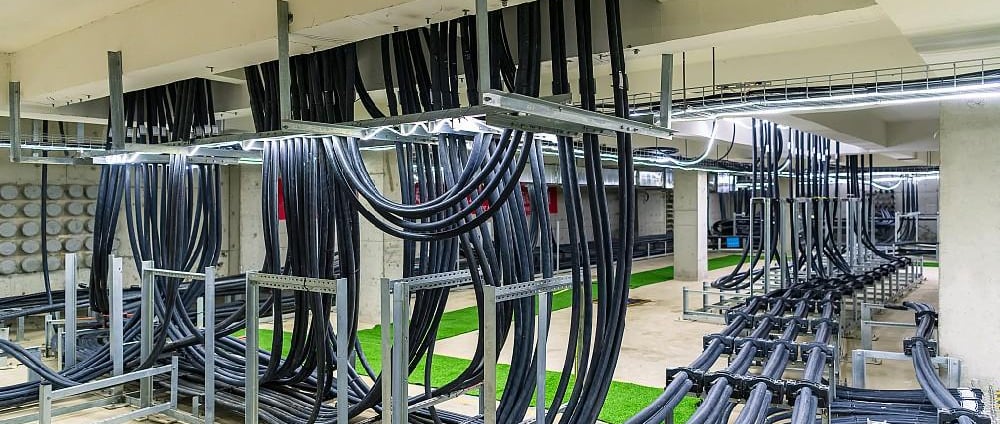
Choosing the right BS cable for an industrial project is not simply about matching a voltage rating. The correct cable depends on the application, the installation environment, the level of mechanical protection needed, the fire performance required, and the certifications your project must satisfy. Get any one of these wrong and the consequences are real: cables rejected at inspection, costly site delays, or worse, a failure in service.
This guide is built for procurement teams and project engineers across the Middle East who need to make confident cable decisions quickly. Rather than walking through the history of each standard, it focuses on the practical question that matters on every tender: which BS cable actually fits these conditions? We start with the selection logic, introduce the standards you will encounter most, then move through application, environment, sheath materials, the mistakes that cause cables to be rejected, and a fast checklist you can use on your next order.
1. What This Guide Helps You Do
The aim here is simple: help you select the most suitable BS cable for real project conditions, not just tick a box against a voltage figure or a standard name on a drawing.
A cable that is "correct" on paper can still be the wrong choice in practice. A PVC-sheathed cable rated at the right voltage may fail early under intense Gulf sunlight if it lacks UV resistance. A standard power cable may be rejected outright in a public building if the specification calls for low-smoke, halogen-free performance. An indoor wiring cable will not survive direct burial.
So the right choice always comes down to five questions working together:
Application — power, control, instrumentation, fire safety, or marine?
Installation environment — indoor, outdoor, buried, chemical, marine, hot, UV-exposed, or oil-exposed?
Mechanical protection — does the cable need armour?
Fire performance — is low smoke, flame retardance, or circuit integrity required?
Certification — what project approvals and third-party certifications must the cable carry?
Keep these five in mind as you read. Every section that follows maps back to them.
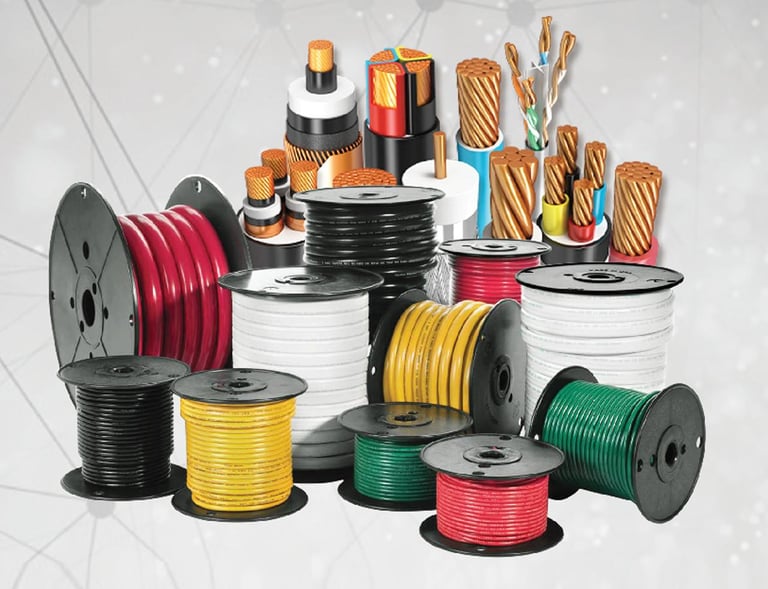
2. Common BS Cable Standards and Typical Uses
Before matching cable to project, it helps to know the cast of characters. These are the British Standards you are most likely to see specified on industrial and building projects in the region, with what each is generally used for.
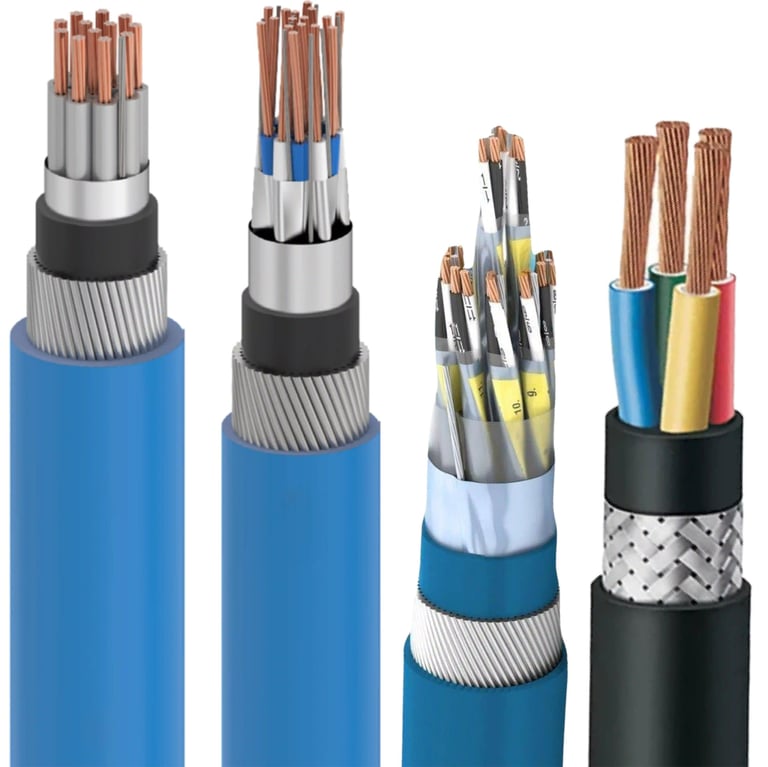
BS5308 — Instrumentation and control signals. The reference for instrument signal cables used to transmit low-level measurement and control signals in industrial plants. It is used heavily in oil, gas, petrochemical, and process industries. Part 1 covers polyethylene (PE) insulated cables; Part 2 covers PVC insulated cables. (Note: BS5308 was superseded by PAS5308, but it remains very widely referenced by that name.)
BS5467 — Armoured power and control cables. XLPE-insulated, PVC-sheathed armoured cable for fixed installations, industrial wiring, and mains distribution. A workhorse standard for low-voltage power, rated to a 90°C conductor temperature, with steel wire armour (SWA) on multi-core and aluminium wire armour (AWA) on single-core cables.
BS6724 — LSZH armoured power and control cables. Essentially the low-smoke, zero-halogen counterpart to BS5467. Same XLPE insulation and armour, but with an LSZH sheath and bedding that release far less smoke and corrosive gas in a fire. Chosen wherever fire safety for people and equipment is a concern.
BS6004 — PVC building wire. PVC insulated and PVC sheathed cables for general building wiring, lighting, and power circuits — including familiar twin-and-earth and single-core wiring cables. Used for lighter indoor fixed wiring rather than heavy distribution.
BS6387 — Fire-resistant cables. Not a general cable family but a fire-performance test standard. It specifies how cables maintain circuit integrity during a fire — tested against fire alone, fire with water, and fire with mechanical shock. Cables meeting the toughest categories are marked CWZ. Used for fire alarms, emergency lighting, and other life-safety circuits that must keep working as a fire develops.
BS7211 — Thermosetting LSZH fixed wiring. Thermosetting-insulated, non-armoured fixed wiring cables rated up to 450/750 V, with low emission of smoke and corrosive gas. Think of it as the LSZH alternative to BS6004 for indoor power and lighting wiring where fire safety matters but armour does not.
BS6883 — Marine and offshore fixed wiring. Elastomer-insulated, LSZH cables for fixed wiring on ships and offshore units — drilling rigs, platforms, and vessels. Built for the unique demands of the marine environment, where smoke toxicity and corrosive gases are a direct threat to life in confined spaces.
3. Match Cable Standard to Project Type
With the standards introduced, the next step is to map them to the kind of system you are wiring. This is how most specifications are organised, so it mirrors how buyers think.
Power distribution. For mains and sub-main distribution, the default choices are BS5467 (XLPE armoured) or BS6724 (LSZH armoured) where fire performance is required. For lighter indoor distribution and final circuits, BS6004 may be sufficient.
Instrumentation. Signal and measurement circuits call for BS5308, designed specifically to carry low-level instrument signals with appropriate screening against interference.
Control systems. Control wiring can use BS5308 for signal-level control, or BS5467 / BS6724 for power-level control cables, with the choice between the latter two driven by the fire and smoke requirements of the environment.
Fire alarm and fire safety circuits. Life-safety circuits that must survive a fire need fire-resistant cable tested to BS6387 (or related fire-performance standards). This is where circuit integrity, not just flame retardance, becomes the deciding factor.
Marine and offshore. Ships, rigs, and platforms require BS6883, purpose-built for shipboard and offshore fixed wiring. This is a distinct category and should not be substituted with general industrial cable.
Mining, factory, and oil field. Heavy industrial settings typically use BS5467 or BS6724, with the choice between them turning on the balance of mechanical protection and fire/smoke requirements. Oil and petrochemical areas usually add oil-resistant sheathing and may call for fire-resistant grades on critical circuits.
4. Choose by Installation Environment
This is the heart of cable selection. Two projects can need the same voltage and the same application, yet require completely different cables because of where the cable is installed. The environment determines the sheath, the insulation, the armour, and the special properties you must specify. Work through the conditions your cable will actually face.
Indoor. For general fixed wiring and lighting indoors, BS6004 (PVC) or BS7211 (thermosetting LSZH) are typical. Where the building requires low-smoke, zero-halogen performance — common in occupied public spaces — choose BS7211 for non-armoured wiring or BS6724 for armoured power.
Outdoor. Outdoor runs should favour armoured, UV-resistant constructions such as BS5467 or BS6724. The armour handles mechanical exposure, and a UV-stable sheath is essential under the strong sunlight typical across the region.
Direct burial / underground. Buried cables need armour for mechanical protection against ground movement, settlement, and accidental dig-ins. BS5467 and BS6724 are the standard choices. Always confirm the cable is rated for direct burial and consider the soil's chemical aggressiveness.
Chemical areas. In chemically aggressive environments, the sheath and insulation must resist the specific chemicals present. Do not assume a standard PVC sheath will cope — confirm chemical compatibility against the manufacturer's datasheet for the substances on site.
Marine. For shipboard and offshore conditions, use BS6883 specifically. The marine environment combines salt, moisture, vibration, confined spaces, and strict smoke-toxicity requirements that general industrial cables are not designed for.
High temperature. Where ambient or process heat is high, select cables with thermosetting (XLPE/EPR) insulation and a suitable temperature rating, and verify the conductor and connected equipment can handle the operating temperature. Check the datasheet rather than assuming a standard rating is enough.
UV exposure. Before any outdoor installation, confirm the sheath is UV-resistant. This is one of the most overlooked points in the region's projects and one of the most consequential, given the intensity and duration of sunlight exposure.
Oil exposure. For refineries, plants, and heavy industrial areas where cables may contact oil or fuel, verify the sheath is oil-resistant. A standard sheath can degrade over time when exposed to hydrocarbons.
5. Understand Common Sheath Materials
The outer sheath is the cable's first line of defence and often the single most important variable for matching a cable to its environment. Here is what each common sheath material means in buying terms, and when to choose it.
PVC (Polyvinyl Chloride). General-purpose, cost-effective, and the most common sheath in building and industrial cables. It offers solid all-round protection but produces dense smoke and corrosive halogen gases when it burns, which rules it out where fire safety for occupants is critical. Choose it for: standard, cost-sensitive installations without special fire or chemical demands.
PE (Polyethylene). Offers good moisture resistance and performs well in certain outdoor and underground applications depending on construction. Choose it for: specific industrial and buried applications where its properties suit the design.
LSZH (Low Smoke Zero Halogen). Releases very low levels of smoke and no corrosive halogen gases in a fire. Choose it for: occupied public buildings, tunnels, transport hubs, hospitals, marine, and anywhere smoke toxicity threatens life or sensitive equipment. This is the safety-driven choice.
PUR (Polyurethane). Excellent abrasion resistance, flexibility, and toughness. Choose it for: demanding industrial environments where the cable is subject to movement, dragging, or mechanical wear.
Rubber (Elastomer). Used where flexibility, repeated movement, or harsh conditions are involved, including many marine and heavy-duty applications. Choose it for: flexible connections and rugged environments where rigid sheaths would fail.
The decision logic is straightforward once you frame it around four drivers: fire safety pushes you toward LSZH; harsh outdoor or chemical environments point to PE or specially compounded PVC; flexibility and movement favour PUR or rubber; and cost with standard conditions keeps you on PVC. Match the driver that dominates your project, then confirm the rest against the datasheet.
6. Seven Procurement Mistakes That Cause Cable Rejection or Site Failure
This section speaks directly to the pain points buyers face in the region. Each of these mistakes is common, avoidable, and capable of derailing a project. Treat them as a pre-order warning list.
1. Checking only voltage and ignoring installation conditions. The most frequent error. A cable can match the voltage perfectly and still be wrong because it was never assessed against where and how it will be installed.
2. Ignoring ambient temperature. High ambient heat reduces a cable's current-carrying capacity. Specifying without accounting for temperature derating leads to undersized cables that overheat in service.
3. Ignoring UV exposure on outdoor projects. Standard sheaths degrade under sustained sunlight. In a region of intense, year-round UV, omitting UV resistance on outdoor runs invites premature cracking and failure.
4. Ignoring oil resistance in industrial plants. In refineries and petrochemical facilities, cables that contact oil need oil-resistant sheaths. Overlooking this shortens cable life dramatically.
5. Ignoring flame retardancy or low-smoke requirements. Specifying a standard PVC cable where the project demands low-smoke, halogen-free, or fire-resistant performance is a common cause of rejection at inspection — and a genuine safety risk.
6. Ignoring certification and project approval requirements. Many projects mandate specific third-party certifications and approvals. A technically suitable cable without the required certification will be rejected regardless of its performance.
7. Confusing fire-retardant with fire-resistant. These are not the same. Flame-retardant cables resist spreading fire; fire-resistant cables (tested to BS6387) keep working during a fire. Specifying one when the other is required leaves a critical circuit unprotected.
7. Practical Selection Checklist
Use this as a fast procurement tool. Run through it for every cable line on your order, and the right specification will fall into place.
What is the application? Power, control, instrumentation, fire safety, or marine?
Indoor or outdoor? Outdoor pushes toward armoured, UV-resistant construction.
Underground or direct burial? If yes, armoured cable is the default.
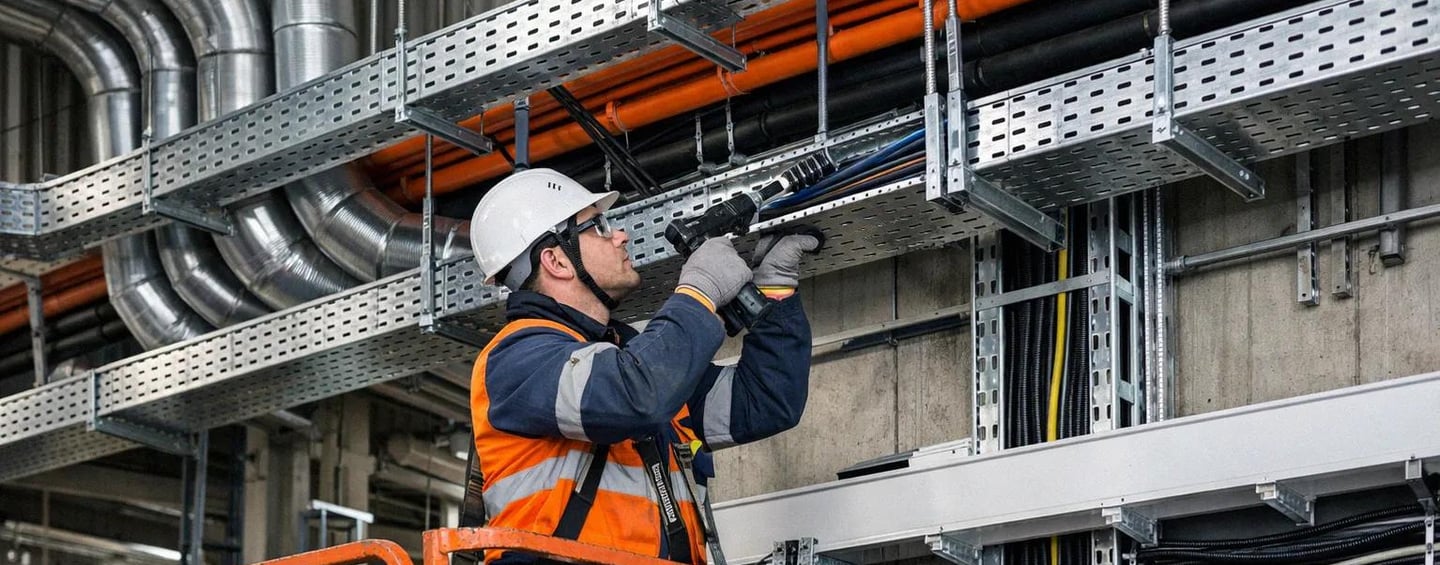
Is mechanical protection required? If the cable faces impact, crushing, or rodents, specify armour (SWA for multi-core, AWA for single-core).
Is fire performance important? Decide between flame-retardant, low-smoke/LSZH, and fire-resistant (BS6387) — they are not interchangeable.
Is UV exposure expected? If yes, confirm a UV-resistant sheath before ordering.
Is oil or chemical resistance required? For plants and refineries, verify the sheath suits the substances present.
What temperature will the cable face? Account for ambient heat and derating; check the datasheet rating.
What certification or project approval is needed? Confirm the cable carries the approvals your specification mandates.
If you can answer all nine with confidence, you have selected the right cable — not just a cable that matches the voltage.
8. Frequently Asked Questions
What BS cable is best for industrial power distribution? For most industrial power distribution, BS5467 (XLPE armoured, PVC sheath) is the standard choice, offering robust mechanical protection and 90°C operation. Where low-smoke, halogen-free performance is required, choose BS6724, its LSZH equivalent. For lighter indoor distribution, BS6004 may suffice.
Which BS cable should I use for instrumentation? Use BS5308 (now also referenced as PAS5308) for instrument signal and control cables. Part 1 covers PE-insulated versions common in petrochemical work; Part 2 covers PVC-insulated versions. Armoured variants suit areas needing mechanical protection.
Can I use BS cable outdoors? Yes, but choose the right construction. Outdoor runs should use armoured, UV-resistant cables such as BS5467 or BS6724. Always confirm the sheath is UV-resistant before installing in direct sunlight, which is especially important given the region's solar conditions.
Is LSZH always better than PVC? Not always — it depends on the requirement. LSZH is essential where smoke toxicity threatens life or sensitive equipment, such as occupied buildings, tunnels, and marine settings. But for standard industrial installations without those concerns, PVC is a proven, cost-effective choice. Specify LSZH where fire safety demands it, not by default.
When do I need armoured cable? Whenever the cable faces mechanical risk: direct burial, outdoor exposure, plant areas, vehicle crossings, or anywhere impact, crushing, or rodent damage is possible. Multi-core armoured cables use steel wire armour (SWA); single-core cables use non-magnetic aluminium wire armour (AWA) to avoid induced heating.
Which BS cable is suitable for marine projects? Use BS6883 for shipboard and offshore fixed wiring. It is purpose-designed for ships, rigs, and platforms, with LSZH materials that protect life and equipment in the confined spaces where marine fires are especially dangerous. Treat it as a distinct category, not a substitute for general industrial cable.
What mistakes should I avoid when choosing BS cable? The big ones: selecting on voltage alone, ignoring ambient temperature and derating, overlooking UV resistance outdoors, missing oil resistance in plants, specifying standard cable where low-smoke or fire-resistant performance is required, confusing flame-retardant with fire-resistant, and forgetting the project's certification requirements.
Final Thoughts
The right BS cable is never chosen on voltage alone. It emerges from the interaction of application, environment, mechanical protection, fire performance, and certification — the five questions this guide opened with. A procurement team that runs every cable line through those questions, and through the checklist above, will avoid the rejections and site failures that catch out buyers who stop at the voltage rating.
For the Middle East's industrial, infrastructure, and building projects, where heat, UV, dust, and demanding plant conditions are the norm, that disciplined approach is what turns a compliant order into a reliable, long-lasting installation.
This article is a general procurement guide. Always confirm specifications against the relevant manufacturer datasheets and project requirements, and consult a qualified electrical engineer for installation design and final cable selection.
Port crane cables | Mining cables | Reeling cables | Trailing cables | Festoon cables | Heavy-duty power cables | Medium voltage cables | Offshore crane cables | Underground mining cables | Dragline cables | Shearer cables | Container handling cables | STS crane cables | RTG cables | Mobile equipment cables | Armored cables | Flexible power cables | VFD cables | Submersible cables | Cold resistant cables | Abrasion resistant cables | Flame retardant cables | Marine environment cables | Opencast mining | Underground operations
© 2006 All rights reserved.
[INDUSTRIAL_CABLES]
INDUSTRIAL GRADE CABLE SYSTEMS | PORT & MINING SOLUTIONS
TEL: +86 153 7530 2641 |MAIL: hongjing.Wang@feichuncables.com