How to Select NSHTÖU Reeling Cables for High-Temperature Port Environments in the UAE
Guide to choosing NSHTÖU reeling cables for UAE ports: high heat, UV, salt spray, ampacity derating and procurement checklist.
hongjing.Wang@Feichun
7/9/202610 min read
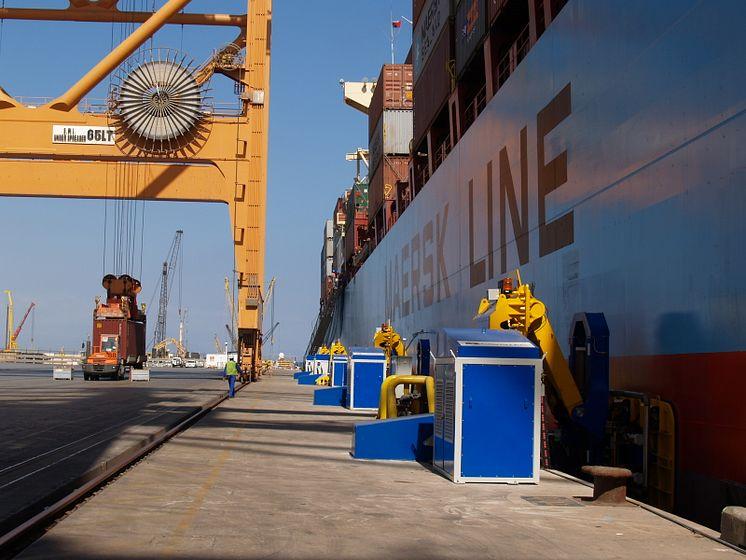
The rapid expansion of maritime logistics hubs across the Middle East has positioned United Arab Emirates ports as global benchmarks for operational efficiency. Mega-terminals such as DP World’s Jebel Ali Port in Dubai, Khalifa Port in Abu Dhabi, and Fujairah Port are continually expanding their automated capacity to handle millions of TEUs annually. However, maintaining uninterrupted container terminal operations requires engineering infrastructure capable of withstanding extreme ambient conditions. Among the most vulnerable components in heavy container handling equipment are the flexible power, control, and data transmission links.
For engineers, procurement officers, and port maintenance managers in the Arabian Gulf region, sourcing an NSHTÖU cable UAE specification that survives the climate is a frequent challenge. Standard industrial flexible cables fail prematurely when subjected to the intense thermal and mechanical stress of high-speed port crane reeling systems. Opting for unoptimized cabling results in rapid insulation degradation, runtime faults, and catastrophic operational bottlenecks that disrupt tightly managed supply chains.
This comprehensive technical guide provides an engineering-grade breakdown of NSHTÖU cable construction, UV-resistant rubber compounding, ampacity derating methodologies for 50°C climates, and practical procurement criteria tailored for Feichun heavy-duty solutions in Middle Eastern container terminals.
UAE Port Environment and Why it Matters
The coastal regions of the Arabian Gulf present a combination of environmental factors that accelerate the degradation of standard industrial polymeric materials. When deploying a high temperature reeling cable on ship-to-shore (STS) cranes, rail-mounted gantry (RMG) cranes, or rubber-tyred gantry (RTG) cranes, the choice of materials must account for several severe factors.
Extreme Thermal Conditions and Solar Load
During peak summer months, ambient shade temperatures across UAE port terminals routinely reach 45°C to 50°C. For reeling cables installed on outdoor motorized drums, the physical reality is far more severe. Direct, uninterrupted solar radiation can easily elevate the cable’s black outer surface temperature to over 60°C. When the severe heat generated by internal copper electrical losses ($I²R$) is added, the total continuous thermal load on the internal insulation layer frequently approaches or exceeds its maximum rated operating threshold if the system architecture is not properly over-engineered.
Intensive Solar Radiation and Photo-Oxidative Attack
The UV index in the Middle East is among the highest globally, maintaining high levels year-round. Ultraviolet radiation acts as a powerful catalyst for photo-oxidative degradation in standard synthetic polymers. Unprotected jackets exposed to this spectrum exhibit severe surface cross-linking, which leads to premature outer sheath failure, structural cracking, and loss of tensile flexibility.
Abrasive Dust and Airborne Particulates
Desert winds, such as the seasonal Shamal winds, transport highly abrasive fine silica dust across port terminals. As cables are wound and unwound onto motorized reels, this dust mixes with standard mechanical lubricants, forming an abrasive paste. This paste wears down outer jackets and clogs the internal mechanisms of guide rollers, cable trays, and deflection sheaves.
Corrosive Marine Atmosphere and Salinity
High ambient humidity combined with high salinity creates a highly corrosive environment. Marine salt spray penetrates micro-cracks in sub-standard cable jackets, causing rapid oxidation of the internal metallic structural components, shielding layers, and core conductors, which increases overall line impedance.
Continuous Operational Duty Cycles
Modern UAE mega-ports operate on high-throughput, continuous schedules. Reeling cables must withstand constant tension, continuous bending, and high acceleration forces under these ambient conditions without losing structural integrity.
Real-World Middle Eastern Port Use Cases
To ground these challenges in reality, let us look at specific mega-port projects across the region where specialized NSHTÖU cables are required:
Jebel Ali Port (Terminal 3 & Terminal 4) — Dubai, UAE
As one of the largest semi-automated terminals in the world, Jebel Ali relies heavily on automated RMG stacks and high-speed STS cranes. The long-travel gantry systems here operate over distances exceeding 1000 meters. Cables face continuous high-velocity reeling under direct sunlight, where any power interruption halts the automated guided vehicle (AGV) scheduling matrix.
Khalifa Port (KP2 Expansion Area) — Abu Dhabi, UAE
Khalifa Port’s advanced automated container terminal uses automated stacking cranes (ASCs) where reliability is paramount. The proximity to industrial zones means cables are exposed not just to sea salt and sand, but also to trace chemical emissions, requiring an outer compound with exceptional multi-environmental resistance.
King Abdulaziz Port — Dammam, Saudi Arabia
Located on the Arabian Gulf coast, this port experience extreme humidity combined with summer temperatures that push past 50°C. The heavy bulk handling facilities and gantry systems here require cables that can support high tensile loads without stretching while dealing with fine iron ore dust and ambient sand accumulation.
What is an NSHTÖU Reeling Cable?
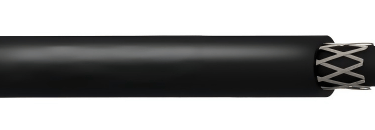
The design designation NSHTÖU represents a specific, standardized category of heavy-duty rubber-sheathed flexible cables explicitly engineered for severe mechanical stresses, specifically tension and reeling applications.
Typical Construction
To understand how an NSHTÖU cable handles high-stress environments, let us examine its cross-sectional architecture layer by layer from the inside out:
Conductor: The center consists of the conductor made of fine-stranded tinned copper wires complying with VDE 0295 Class 5 or IEC 60228 Class 5. This layout provides the necessary flexibility for repeated winding cycles while the tinned coating prevents copper corrosion under high-humidity marine conditions.
Core Insulation: Surrounding the conductor is the core insulation, utilizing a high-grade rubber compound of designation Type 3G13. This layer delivers electrical isolation, temperature resistance up to 90°C continuous at the conductor, and high dielectric strength. For easy identification, the cores follow a clear identification code: up to 5 cores are colour-coded according to VDE 0293-308, while cables from 6 cores onward are black with white numbers.
Inner Sheath: The insulated core assembly is bound together by an extruded rubber compound inner sheath matrix, providing a smooth, concentric bedding layer for the structural reinforcement.
Anti-Torsion Braid: Embedded firmly between the inner and outer jacket layers is an anti-torsion braid, which is an integrated high-tensile textile or synthetic fiber supporting braid. This structural layer prevents cable twisting, corkscrewing, and axial distortion under tensile load during operation.
Outer Sheath: The outermost layer is the heavy-duty rubber compound outer sheath of designation Type 5GM3. This acts as the primary defense layer and is specifically formulated for oil, UV, ozone, weather, and abrasion resistance in heavy industrial port applications.
Designed Use Cases
NSHTÖU cables function as low-voltage power and control links, rated at an operating voltage of U0/U: 600/1000 V, for heavy machinery that requires continuous moving energy supply systems.
Motorized Cable Reel Systems: Active cylindrical or monospiral winding drums that spool the cable during long-travel crane movements.
Ship-to-Shore (STS) Container Cranes: Powering the main trolley travel, gantry long-travel, and spreader systems.
Rail-Mounted Gantry (RMG) and RTG Cranes: Managing power delivery across automated container stacks.
Material Handling Conveyors and Stackers: Delivering energy to mobile bulk material trippers and continuous stacker-reclaimer systems used in port dry-bulk facilities.

UV and Weather Resistance — Why Compound Matters
The primary point of failure for an unoptimized crane cable in the Middle East is the outer jacket. When selecting a crane cable for UAE ports, evaluating the chemical formulation of the outer rubber compound is crucial.
Failure Mechanism of Ordinary Rubber Compounds
When standard synthetic elastomer formulations are exposed to direct sunlight in high-temperature environments, high-energy UV photons strike the polymer backbones. This energy breaks the molecular chains, a process known as photo-cleavage.
As the polymer bonds rupture, the rubber loses its elasticity and forms micro-cracks along the surface. During reeling operations, the mechanical tension concentrates at these crack tips, causing them to split deeper into the jacket. This allows moisture, marine salt spray, and fine sand particulates to penetrate the core assembly, leading to internal short circuits and unexpected system downtime.
What Makes a Rubber Compound UV-Resistant?
High-durability compounds, such as the Type 5GM3 rubber formulations used in Feichun NSHTÖU profiles, prevent photo-degradation through targeted additive chemistry:
Carbon Black Micro-Dispersion: The addition of specialized, fine-particle carbon black acts as a physical UV absorber. It captures incoming ultraviolet photons and converts the radiation into harmless thermal energy before it can degrade the main polymer chains.
Chemical UV Stabilizers and HALS: Hindered Amine Light Stabilizers (HALS) scavenger free radicals formed during initial UV exposure, stopping chain reaction degradation.
Ozone-Resistant Elastomers: The inclusion of synthetic polymers less sensitive to ozone cracking protects the outer jacket from high localized ozone levels often found near high-voltage terminal substations.
Antioxidants: Thermal-oxidative degradation inhibitors prevent the compound from turning brittle when exposed to continuous 60°C surface temperatures.
Ampacity Derating for High Ambient Temperatures
A common engineering oversight in international procurement is selecting a conductor cross-section based on standard catalog ratings without applying correction factors for localized ambient heat.
Why Derating is Required
Standard catalog current ratings for heavy-duty rubber cables are typically calculated based on an assumed standard ambient air temperature of 30°C, per European standards like VDE 0298 Part 4. When the continuous ambient temperature rises to 50°C, the baseline thermal gradient between the copper conductor (rated for a maximum continuous operating limit of 90°C) and the surrounding air decreases significantly.
If a cable carries its full standard rated current in a 50°C environment, the reduced heat dissipation causes internal temperatures to exceed 90°C. This causes rapid thermal aging of the Type 3G13 insulation, leading to insulation breakdown, embrittlement, and phase-to-phase short circuits.
Thermal Correction Factors
To maintain safe operation, engineers must apply temperature correction factors to the standard current ratings based on VDE 0298-4 guidelines for rubber cables operating at elevated ambient temperatures:
Ambient operating air temperature of 30°C: Thermal correction derating factor of 1.00 (Standard Baseline Rating Basis).
Ambient operating air temperature of 35°C: Thermal correction derating factor of 0.95.
Ambient operating air temperature of 40°C: Thermal correction derating factor of 0.89.
Ambient operating air temperature of 45°C: Thermal correction derating factor of 0.82.
Ambient operating air temperature of 50°C: Thermal correction derating factor of 0.75.
Ambient operating air temperature of 55°C: Thermal correction derating factor of 0.65.
Critical Note on Multi-Layer Reeling De-rating: When an NSHTÖU cable is wound onto a cylindrical multi-layer drum, the accumulated heat cannot escape from the inner layers. If the cable is spooled in multiple layers, a secondary de-rating factor must be applied on top of the ambient temperature correction factor:
1 Layer on Drum: Winding correction factor is approximately 0.85
2 Layers on Drum: Winding correction factor is approximately 0.65
3 Layers on Drum: Winding correction factor is approximately 0.45
Mechanical and Chemical Resistance Requirements
Beyond thermal management, an NSHTÖU cable must meet specific mechanical and chemical performance targets to ensure reliable operational lifetime:
Tensile Load Carrying Capacity: Dynamic reeling forces apply significant tensile stress. Standard NSHTÖU designs allow a maximum dynamic tensile load of 20 N/mm² of total copper cross-section area, preventing conductor elongation.
Torsion Resistance: Constant acceleration and alignment errors can introduce structural twisting. The integrated anti-torsion braid must absorb these forces, limiting structural twisting to less than +/- 25 degrees per meter.
Dynamic Bending Minimums: Proper bending ratios prevent internal core separation. The minimum bending radius changes according to the outer diameter of the cable profile: for outer diameters less than or equal to 21.5 mm, the minimum bending radius is 5 × cable outer diameter; for outer diameters greater than 21.5 mm, the minimum bending radius is 6.25 × cable outer diameter.
Chemical Resistances: The outer jacket must resist mineral oils, greases, and marine salt environments without softening or cracking.
Practical Selection Checklist (Procurement-Ready)
When drafting technical procurement documents or reviewing commercial bids for infrastructure projects in the UAE, use this checklist to verify compliance:
[ ] Outer Sheath Compound: Specify Type 5GM3 heavy-duty rubber with explicit UV-stabilization and carbon black formulation.
[ ] Conductor Base Coating: Require tinned-copper flexible Class 5 strands to prevent marine atmospheric corrosion.
[ ] Anti-Torsion Geometry: Verify an integrated synthetic textile supporting braid is embedded between the inner and outer sheaths.
[ ] Thermal Correction Calculation: Ensure engineering calculations use a 50°C ambient baseline temperature, applying a 0.75 derating factor to the standard catalog values.
[ ] Drum Layer Allocation: Account for multi-layer winding reduction factor if the cable is configured on cylindrical drums.
[ ] Flame Retardancy Certification: Confirm compliance with international standard IEC 60332-1-2.
[ ] Oil and Chemical Resistance: Confirm compound testing verification matches standard EN 60811-404.
[ ] Type Approvals: Ensure manufacturing compliance matches VDE 0250-814 design standards for NSHTÖU cables.
Typical Application Recommendations
Different areas of port operations require specific cable configurations to balance service life and cost:
1. Ship-to-Shore (STS) Container Cranes
Application Environment: High speeds up to 240 m/min, continuous acceleration forces, and exposure to direct sea spray.
Cable Strategy: Choose larger cross-section Feichun NSHTÖU configurations with integrated central strain relief members. Prioritize tinned copper elements to prevent salt-fog damage.
2. Automated Rail-Mounted Gantry (RMG) Cranes
Application Environment: Long-travel paths across dedicated tracks, constant operations, and high horizontal tracking precision.
Cable Strategy: Focus on low outer-diameter tolerances and highly accurate geometric geometric consistency to ensure predictable winding behavior on monospiral reels.
3. Dedicated Material Handling Ship Loaders
Application Environment: High dust environments (such as sulfur, iron ore, or bauxite processing) combined with marine sea spray.
Cable Strategy: Specify extra-thick Type 5GM3 outer jackets to handle severe continuous particulate abrasion.
Example Sizing Workflow (Mini Worked Example)
An electrical engineer needs to specify an NSHTÖU power cable for an RTG crane long-travel system operating in a port container terminal in Dubai.
Step 1: Establish Baseline System Parameters
Continuous Electrical Load Profile: 135 Amps
Maximum Local Design Temperature: 50°C ambient air temperature
Reeling System Configuration: Monospiral winding drum (1 layer configuration)
Step 2: Calculate Combined Environmental Derating Factors
Thermal Correction Factor at 50°C = 0.75
Drum Winding Correction Factor for 1 Layer = 1.00
Total Effective Derating Coefficient = 0.75 × 1.00 = 0.75
Step 3: Determine Required Minimum Adjusted Cable Ampacity
To ensure safe operation without overheating, divide the actual system operational load by the total calculated derating factor:
Required Catalog Ampacity $\ge$ Actual System Operating Current $\div$ Total Effective Derating Coefficient
Required Catalog Ampacity $\ge$ 135 A $\div$ 0.75 = 180 A
Step 4: Cable Profile Cross-Section Selection
Using standard international manufacturer engineering tables for NSHTÖU cables based on a 30°C baseline reference rating:
A 4 G 25.0 mm² conductor assembly has an outer diameter of 32.6 mm and provides a nominal standard rating of approximately 138 A, which is insufficient for our adjusted target.
A 4 G 35.0 mm² conductor assembly has an outer diameter of 34.8 mm and provides a nominal standard rating of approximately 170 A, which is also insufficient for our adjusted target.
A 4 G 50.0 mm² conductor assembly has an outer diameter of 40.6 mm and provides a nominal standard rating of approximately 210 A.
Engineering Selection: The 4 G 50.0 mm² configuration is chosen. This cross-section ensures the cable operates safely below its maximum thermal limits in peak 50°C summer conditions.
Technical Frequently Asked Questions (FAQs)
What is the exact definition of an NSHTÖU cable according to VDE standards?
The designation follows a structured German engineering classification framework system:
N: Indicates a standardized type-approved cable catalog design line.
S: Indicates special flexible rubber construction suitable for heavy movement applications.
HT: Indicates high-tensile structural suitability, specifically for tracking, payout, and reeling stresses.
Ö: Indicates high structural resistance to industrial mineral oil exposure.
U: Indicates a flame-retardant, heavy-duty UV-stabilized outer protective jacket material matrix.
Why does an NSHTÖU cable use an embedded internal textile braid between jacket layers?
The high-tensile synthetic fiber braid helps prevent cable twisting and corkscrewing during high-speed winding operations. It locks the inner core bundle and the outer protective jacket together. This transforms torque stresses into axial tension forces, which are safely absorbed by the core structural support members without damaging the internal copper conductors.
Can I use a polyurethane (PUR) jacketed cable instead of an NSHTÖU rubber cable for port crane reels?
While polyurethane jackets offer high mechanical abrasion resistance, heavy rubber compounds like Type 5GM3 are generally preferred for large-scale outdoor port crane reels in the Middle East. Heavy rubber provides better thermal stability at continuous surface temperatures above 60°C, maintains its flexibility over years of intense solar UV radiation, and offers excellent dampening characteristics during sudden braking and acceleration cycles on large monospiral reels.
How does ambient humidity in coastal areas like Dubai affect the selection of internal conductors?
High humidity combined with marine atmospheric salinity can cause rapid copper oxidation if moisture reaches the core assembly. To prevent this, specifiers should require tinned-copper conductors of Class 5 flexibility. The thin tin coating provides galvanic protection, preventing copper corrosion and preserving low connection resistance at termination points throughout the operating life of the machine.
Port crane cables | Mining cables | Reeling cables | Trailing cables | Festoon cables | Heavy-duty power cables | Medium voltage cables | Offshore crane cables | Underground mining cables | Dragline cables | Shearer cables | Container handling cables | STS crane cables | RTG cables | Mobile equipment cables | Armored cables | Flexible power cables | VFD cables | Submersible cables | Cold resistant cables | Abrasion resistant cables | Flame retardant cables | Marine environment cables | Opencast mining | Underground operations
© 2006 All rights reserved.
[INDUSTRIAL_CABLES]
INDUSTRIAL GRADE CABLE SYSTEMS | PORT & MINING SOLUTIONS
TEL: +86 153 7530 2641 |MAIL: hongjing.Wang@feichuncables.com