
(N)SHTOEU-J SPREADER Reeling Cable: The High-Tensile Power Supply Solution for Ship-to-Shore Crane Spreader Systems
Learn how (N)SHTOEU-J SPREADER reeling cables power ship-to-shore crane spreader systems in demanding port environments. Engineered for high tensile loads, torsional stress, and continuous vertical drum operation — the technical standard for modern container terminals.
hongjing.Wang@Feichun
3/20/202612 min read
Introduction: Why Spreader Reeling Cables Are the Hidden Backbone of Container Terminal Efficiency
Every time a ship-to-shore crane lifts a container from a vessel, hundreds of rapid electrical and mechanical decisions happen in milliseconds. The spreader — the mechanical frame that grips the top of a container — must receive uninterrupted power throughout every lifting and lowering cycle. Without a reliable power supply cable connecting the crane structure to the spreader head, the entire operation stops.
Yet the cable performing this role is one of the most mechanically abused components in the entire crane system. It winds and unwinds on a vertical drum at high speed, absorbs tensile forces during lifting, endures torsional movement as the crane slews and travels, and operates year-round in humid, salt-laden marine environments.
Standard industrial cables fail quickly in this environment. Only a purpose-engineered reeling cable — specifically designed for the dynamic demands of vertical drum spreader systems — can deliver the service life and reliability that modern high-throughput terminals require.
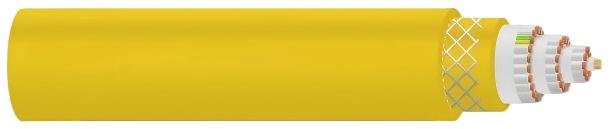
The (N)SHTOEU-J SPREADER cable was developed precisely for this application. It is a low-voltage, heavy-duty rubber reeling cable built to DIN VDE 0250-814, and it represents one of the most technically demanding cable specifications in the port crane industry.
What Is a Spreader Cable and Why Does It Need to Be Special?
Featured Snippet Answer: A spreader reeling cable is a specialized flexible power cable that supplies electricity to the spreader mechanism of a ship-to-shore crane. It is wound onto a vertical drum during lifting operations and must withstand repeated bending, high tensile loads up to 30 N/mm², torsional stresses of ±50°/m, and reeling speeds up to 240 m/min — conditions that standard industrial cables cannot survive over extended operational periods.
In a ship-to-shore crane, the spreader system descends from the trolley to lock onto a container's corner castings, then lifts the box from the ship or ground level. The spreader is not a passive mechanical device — it contains active components including twist locks, sensors, lighting, and control electronics, all of which require a continuous and stable electrical supply.
The cable delivering that supply travels with the spreader, which means it must reel in and out thousands of times per shift. In a busy automated terminal operating 24 hours a day, a single crane may perform more than 30 container moves per hour. Over the course of a year, that translates to millions of reeling cycles for the spreader cable.
This places extraordinary demands on the cable in three dimensions simultaneously: tensile loading along its axis as it carries the weight of the suspended cable length, bending stress as it wraps around the drum, and torsional stress as the crane structure rotates. No standard flexible cable is designed to survive this combination over a multi-year service life. Specialised reeling cables like the (N)SHTOEU-J SPREADER are engineered from the ground up for exactly this duty cycle.
Key Technical Characteristics of (N)SHTOEU-J SPREADER Cable
Voltage and Thermal Performance
The (N)SHTOEU-J SPREADER is rated at 0.6/1 kV, making it suitable for the low-voltage power distribution systems used in modern crane spreader applications. The maximum permissible operating voltage reaches 0.9/1.8 kV in DC systems and 0.7/1.2 kV in AC systems, providing compatibility with a wide range of crane electrical architectures.
The cable operates across an ambient temperature range of -35°C to +80°C during reeling operation, and -50°C to +80°C in fixed installations. The maximum permissible conductor temperature is 90°C under normal service conditions, with short-circuit conductor temperature tolerance up to 250°C — a critical safety parameter in the event of an electrical fault.
Mechanical Strength: Engineered for the Toughest Loading Conditions
The mechanical performance specification of this cable reflects the severity of ship-to-shore crane service:
The cable is rated for static tensile loads of 15 N/mm² and dynamic tensile loads of 30 N/mm². This dual rating acknowledges that the dynamic tensile forces during rapid hoisting acceleration are substantially higher than the static load of the hanging cable weight alone.
Torsional stress resistance of ±50°/m ensures the cable maintains electrical and structural integrity even as the crane slews and the spreader rotates to align with containers of varying orientation.
Bending radius requirements are specified for each installation scenario: a minimum of 4× the cable diameter for fixed installation, 6× for reeling application, and 7.5× on deflection pulleys. The minimum distance for S-type directional changes is 20× the cable diameter — a parameter that must be respected during cable system design to prevent premature fatigue.
Reeling speed capacity of up to 240 m/min means the cable can support the high-speed hoisting requirements of modern automated crane systems without performance degradation.
Electrical Parameters at a Glance
The AC test voltage is 3.5 kV. Current-carrying capacities are determined in accordance with DIN VDE 0298-4 Table 15, and de-rating factors for both thermal and reeling conditions are applied per DIN VDE 0298-4.
Cable Construction: Anatomy of a High-Performance Reeling Cable
The performance of the (N)SHTOEU-J SPREADER cable comes from a carefully engineered construction that addresses each of the mechanical and electrical stresses it must endure.
Finely Stranded Copper Conductors
Main cores and ground conductors both use plain copper wires, finely stranded to IEC 60228 Class 5 flexibility standards. Fine stranding dramatically increases the number of individual wire strands within each conductor, which distributes bending stress across more points and delays the onset of conductor fatigue during repeated flexing. The ground conductor uses the standard green-yellow colour coding.
HEPR Rubber Insulation
Individual core insulation uses HEPR (Hard Ethylene Propylene Rubber) compound in accordance with IEC 60502-1. HEPR provides excellent dielectric properties, maintains flexibility at low temperatures, and resists the ozone and UV exposure inherent in outdoor crane installations. Core colours follow DIN VDE 0293-308 for clear identification during installation and maintenance.
Multi-Layer Core Arrangement and Inner Sheath
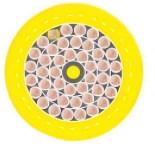
Cores are stranded in layers, and the assembly is enclosed in an extra heavy-duty rubber compound inner sheath to type 5GM5 per DIN VDE 0207-21. This inner sheath fills the interstices between cores, preventing relative movement that would accelerate mechanical fatigue in dynamic applications.
Synthetic Thread Reinforcement
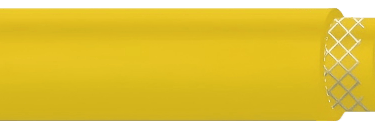
A braid of synthetic threads is applied over the inner sheath and vulcanised into a bond between the inner and outer sheaths. This reinforcement layer is one of the key differentiators of a high-performance reeling cable — it provides the tensile strength that allows the cable to withstand the 30 N/mm² dynamic loading specification without elongation or structural failure.
Extra Heavy-Duty Rubber Outer Sheath
The outer sheath uses the same 5GM5 extra heavy-duty rubber compound, coloured yellow for visibility and equipped with inkjet marking for identification. This sheath is the cable's primary defence against abrasion from drum contact, mechanical impact, and environmental exposure.
Environmental and Chemical Resistance
Port environments subject cables to a uniquely demanding combination of chemical and environmental stressors. Ship exhaust, hydraulic oil from crane systems, salt spray, UV radiation from prolonged outdoor exposure, and moisture penetration all degrade standard cables rapidly.
The (N)SHTOEU-J SPREADER cable addresses these challenges comprehensively. Oil resistance is validated to DIN EN/IEC 60811-404, ensuring the outer sheath does not swell, soften, or crack when exposed to the hydraulic and industrial oils present in crane machinery rooms and on terminal pavement. Fire behaviour is tested to DIN EN/IEC 60332-1-2 for flame retardancy under single cable fire conditions.
Weather resistance is rated for unrestricted use both indoors and outdoors, with specific resistance to ozone, UV radiation, and moisture. For a cable that may be exposed to tropical sun, monsoon rain, and salt-laden sea air simultaneously — as is common in Middle Eastern and Southeast Asian port environments — this all-weather capability is not optional. It is the baseline requirement.
Real-World Application: Middle Eastern Automated Container Terminals
Khalifa Port, Abu Dhabi (UAE) — The Automated Quayside Challenge
Khalifa Port, operated by Abu Dhabi Ports, is one of the most technologically advanced container terminals in the Middle East and one of the first in the region to implement fully automated ship-to-shore crane systems combined with automated stacking cranes. The terminal handles volumes exceeding 1.5 million TEU per year and operates in one of the harshest ambient conditions on earth — summer temperatures regularly exceed 45°C on the quayside, and humidity is extreme during the humid season.
In this environment, the spreader reeling cable is exposed to ambient heat that pushes operating temperatures toward the upper limits of standard cable specifications. The -35°C to +80°C reeling operating range of (N)SHTOEU-J SPREADER cables provides meaningful headroom above the ambient temperature, while the HEPR insulation system maintains its mechanical properties even as surface temperatures rise. The cable's resistance to ozone and UV — both highly elevated in Gulf coastal environments — prevents the cracking and surface degradation that would otherwise require premature cable replacement.
Automated terminals like Khalifa Port also demand absolute electrical reliability. When a spreader cable fails on a manually operated crane, a technician can investigate and resolve the fault. When a cable fails on an automated crane operating without on-site operators, the entire crane bay can be brought to a standstill until a maintenance crew is dispatched. The high tensile load rating and reinforced construction of cables in this class significantly reduce the frequency of mechanical failure events in automated applications.
Jebel Ali Port, Dubai (UAE) — High-Cycle Volume Operations
Jebel Ali, operated by DP World, is consistently ranked among the top ten busiest container ports in the world by TEU throughput. The terminal operates a large fleet of ship-to-shore cranes serving ultra-large container vessels (ULCVs) carrying 20,000 TEU or more per call. When a ULCV is berthed, crane productivity targets can exceed 35 moves per crane per hour across multiple cranes working simultaneously.
At this productivity level, the cumulative mechanical stress on spreader reeling cables is enormous. A cable performing 30 full lift cycles per hour, with each lift requiring 25 to 30 metres of cable travel, accumulates more than 700 metres of reeling movement per hour. Over a single maintenance cycle, that translates into tens of thousands of kilometres of cumulative reeling distance. The 240 m/min reeling speed rating of (N)SHTOEU-J SPREADER cables ensures they are not the limiting factor in achieving these productivity targets.
The dynamic tensile load rating of 30 N/mm² is particularly relevant at Jebel Ali, where spreaders must handle 40-foot high-cube containers weighing up to 30.5 tonnes gross. The acceleration and deceleration forces during high-speed crane operation generate peak dynamic loads that standard reeling cables are not rated to withstand.
King Abdullah Port, Saudi Arabia — Salt and Wind Exposure
King Abdullah Port (KAP), located on the Red Sea coast of Saudi Arabia approximately 120 kilometres north of Jeddah, operates in an environment characterised by high salinity, persistent coastal wind, and intense solar radiation. The port is designed to handle significant container volumes as part of Saudi Arabia's Vision 2030 infrastructure programme.
Cables at KAP face a specific combination of stressors: salt spray from the Red Sea accelerates surface degradation of inadequately protected cable jackets, while windblown sand and grit creates abrasive contact with cables at deflection pulleys and during drum operation. The extra heavy-duty 5GM5 rubber outer sheath of the (N)SHTOEU-J SPREADER specification provides the abrasion resistance needed to withstand this grit and sand contact without jacket erosion that would expose the reinforcement layer to moisture ingress.
Engineering Challenges in Spreader Cable System Design
Selecting the right cable specification is only the starting point. The engineering of the complete spreader cable system — including the drum, the cable guide, and the cable termination arrangements — must respect the mechanical parameters of the cable to achieve the rated service life.
The most common cause of premature cable failure in spreader applications is violation of the bending radius. When a cable is bent below its minimum permissible radius — whether at the drum, at a deflection pulley, or at a cable guide — the individual conductors on the inside of the bend are compressed beyond their fatigue limit. Micro-cracks develop, propagate, and eventually cause conductor strand breakage. Once a significant proportion of strands have broken, the effective conductor cross-section is reduced, resistance increases, and the cable generates heat that accelerates further degradation.
For the (N)SHTOEU-J SPREADER cable, the minimum bending radius in reeling application is 6× the cable diameter. For a cable with an outer diameter of 32 mm, this means a minimum drum diameter of 384 mm at the point where the cable first contacts the drum. This parameter must be incorporated into the crane design at the engineering stage — it cannot be corrected after installation without physical modification to the drum assembly.
Torsional stress management is equally important. Although the cable is rated for ±50°/m of torsional stress, minimising torsional input through careful cable guide design extends service life significantly. Cable management systems that allow a controlled degree of rotational freedom at the spreader end, while preventing excessive twist accumulation over multiple operating cycles, are best practice in modern crane engineering.
Installation Best Practices for Spreader Reeling Cables
Correct installation is the single largest controllable factor in spreader cable service life, beyond the cable specification itself.
The cable should be installed with the correct lay direction relative to the drum winding direction. Winding against the natural twist direction of the cable stranding causes progressive torsional loading with every cycle, which accumulates until conductor breakage occurs. The manufacturer's documentation should specify the recommended winding orientation, and installation teams should verify this before the cable is laid.
Termination arrangements at both the drum end and the spreader end must be engineered to eliminate stress concentration. Cable glands and clamps should distribute load over the maximum possible length of cable jacket, and the first point of bend after any termination should be at least the minimum bending radius away from the termination hardware.
During the initial commissioning period, cable performance should be monitored closely. Abnormal heat development, unusual noise during reeling, or visible jacket distortion are early indicators of installation problems that are far less costly to address at commissioning than after significant cable damage has occurred.
Available Configurations
The (N)SHTOEU-J SPREADER cable is available in multiple conductor configurations to match different spreader system electrical requirements. Standard configurations include:
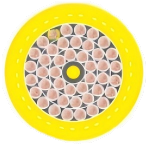
25 cores at 2.5 mm² (outer diameter 29–32 mm, approximately 1,360 kg/km), 30 cores at 2.5 mm² (outer diameter 32–35 mm, approximately 1,650 kg/km), 36 cores at 1.5 mm² (outer diameter 29–32 mm, approximately 1,255 kg/km), 36 cores at 2.5 mm² (outer diameter 32–35 mm, approximately 1,725 kg/km), 44 cores at 1.5 mm² (outer diameter 32–35 mm, approximately 1,535 kg/km), 44 cores at 2.5 mm² (outer diameter 38–41 mm, approximately 2,230 kg/km), and 56 cores at 2.5 mm² (outer diameter 43–46 mm, approximately 2,885 kg/km).
Custom cross-sections and core counts are available on request for applications with non-standard requirements.


Conclusion
The (N)SHTOEU-J SPREADER reeling cable represents the convergence of electrical engineering, materials science, and mechanical design in a single product. It exists because the ship-to-shore crane spreader system places demands on its power supply cable that no general-purpose industrial cable can reliably meet.
With a dynamic tensile load rating of 30 N/mm², torsional stress resistance of ±50°/m, reeling speed capability up to 240 m/min, and a construction built around finely stranded Class 5 conductors, HEPR insulation, synthetic thread reinforcement, and extra heavy-duty rubber sheaths, this cable is designed to deliver multi-year service life in the most mechanically demanding cable application in the port industry.
For terminal operators, crane manufacturers, and port engineers specifying spreader cable systems — particularly in the demanding climatic and operational conditions of the Middle East, Southeast Asia, and other high-throughput port regions — the (N)SHTOEU-J SPREADER specification offers a technically validated solution to the challenge of reliable, long-life spreader power supply.
Frequently Asked Questions (FAQ)
What is a spreader reeling cable used for in a ship-to-shore crane? A spreader reeling cable supplies electrical power to the spreader mechanism of a ship-to-shore crane. The spreader is the device that grips and lifts containers, and it contains active electrical components — including twist locks, sensors, and control electronics — that require continuous power during every lift cycle. The cable is wound onto a drum during the lift and paid out as the spreader descends.
Why can't a standard flexible cable be used for spreader reeling applications? Standard flexible cables are not engineered to withstand the combination of high tensile loads (up to 30 N/mm² dynamic), continuous bending on a drum, torsional stress during crane operation, and exposure to outdoor marine environments over years of high-cycle operation. Standard cables will fail prematurely under these conditions, typically through conductor strand breakage caused by fatigue, jacket cracking from ozone and UV exposure, or sheath damage from abrasion on the drum.
What is the maximum reeling speed of the (N)SHTOEU-J SPREADER cable? The (N)SHTOEU-J SPREADER cable is rated for reeling speeds up to 240 metres per minute. This rating supports the high-speed hoisting requirements of modern automated ship-to-shore cranes operating at 30+ container moves per hour.
What temperature range does the (N)SHTOEU-J SPREADER cable operate in? During reeling operation, the cable is rated for ambient temperatures from -35°C to +80°C. In fixed installation configurations, the range extends to -50°C to +80°C. The maximum permissible conductor temperature is 90°C.
What is the rated voltage of the (N)SHTOEU-J SPREADER cable? The rated voltage is 0.6/1 kV. Maximum permissible operating voltage is 0.7/1.2 kV in AC systems and 0.9/1.8 kV in DC systems.
What conductor configurations are available for the (N)SHTOEU-J SPREADER cable? Standard configurations range from 25×2.5 mm² to 56×2.5 mm², with outer diameters between 29 mm and 46 mm. Custom core counts and cross-sections are available on request to meet specific spreader system electrical requirements.
How should the minimum bending radius be applied when installing a spreader reeling cable? For reeling applications, the minimum bending radius is 6× the cable outer diameter. For deflection pulleys, the minimum is 7.5× the cable outer diameter. For S-type directional changes, the minimum distance is 20× the cable outer diameter. These values must be incorporated into the drum and cable guide design before installation.
Is the (N)SHTOEU-J SPREADER cable suitable for use in hot and humid port environments such as the Middle East? Yes. The cable is rated for unrestricted outdoor use with resistance to ozone, UV radiation, and moisture. Its operating temperature range accommodates the extreme ambient temperatures encountered at Gulf and Red Sea ports, and the extra heavy-duty rubber sheath provides the chemical and abrasion resistance needed for harsh marine environments.
What certifications does the (N)SHTOEU-J SPREADER cable carry? The cable complies with RoHS Directive 2015/863/EU, the Low Voltage Directive (LVD) 2014/35/EU, and the Construction Products Regulation (CPR) 305/2011. It is built to DIN VDE 0250-814 and carries a 24-month warranty.
Can the (N)SHTOEU-J SPREADER cable be used on cranes other than ship-to-shore cranes? Yes. While the cable is optimised for the vertical drum spreader systems of ship-to-shore cranes, it is also suitable for other hoisting equipment that imposes similar combinations of tensile load, bending, and torsional stress, including heavy-duty rail-mounted gantry cranes and other industrial lifting systems with cable reeling requirements.
Port crane cables | Mining cables | Reeling cables | Trailing cables | Festoon cables | Heavy-duty power cables | Medium voltage cables | Offshore crane cables | Underground mining cables | Dragline cables | Shearer cables | Container handling cables | STS crane cables | RTG cables | Mobile equipment cables | Armored cables | Flexible power cables | VFD cables | Submersible cables | Cold resistant cables | Abrasion resistant cables | Flame retardant cables | Marine environment cables | Opencast mining | Underground operations
© 2006 All rights reserved.
[INDUSTRIAL_CABLES]
INDUSTRIAL GRADE CABLE SYSTEMS | PORT & MINING SOLUTIONS
TEL: +86 153 7530 2641 |MAIL: hongjing.Wang@feichuncables.com