NSHTÖU-JZ and (N)SHTÖU-JZ Flexible Reeling Control Cables: Engineering Excellence for Crane and Port Applications
Discover NSHTÖU-JZ, NSHTÖU-JZK and (N)SHTÖU-JZ flexible low-voltage control cables for cable reel systems on cranes, spreaders and mobile equipment, with LSZH and anti-torsion designs compliant with VDE 0250-814.
REELING CABLE
hongjing.Wang@Feichun
1/14/20269 min read
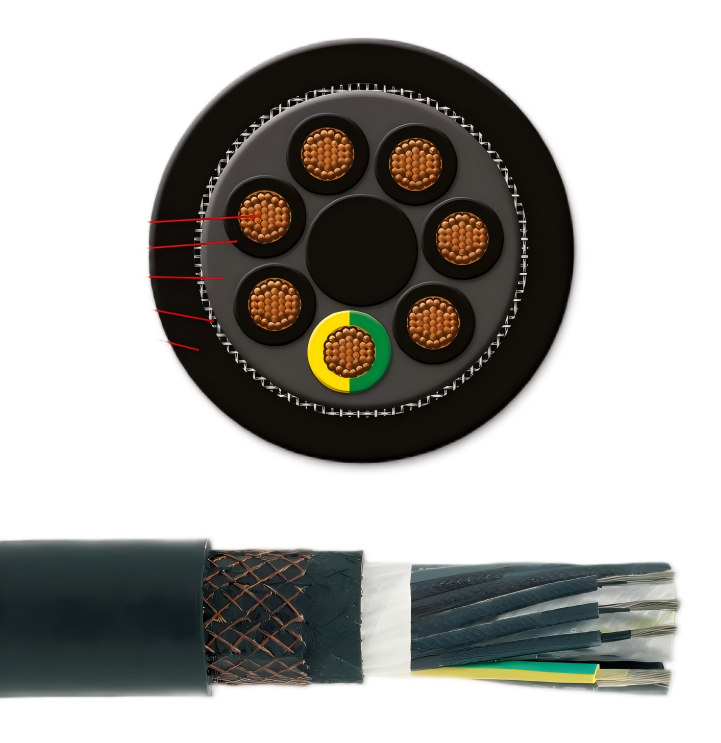
In demanding industrial environments where cable reeling systems operate continuously under mechanical stress, the choice of control cable is not a peripheral consideration — it is a core engineering decision. NSHTÖU-JZ, NSHTÖU-JZK, and (N)SHTÖU-JZ are a family of flexible low-voltage control and signalling cables engineered specifically for dynamic reeling duty in port terminals, container handling facilities, mining operations, and heavy industrial plants. Designed in full compliance with DIN VDE 0250 Part 814, DIN VDE EN 60228, VDE 0295, and VDE 0298-4, these cables represent a purpose-built solution where standard industrial cables would rapidly fail under the combined demands of torsion, repeated bending, tensile loading, and high travel speeds.
Cable Structure and Construction Design
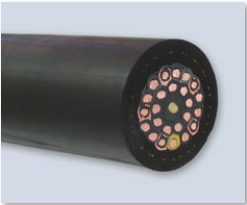
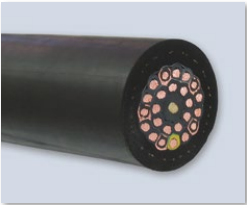
The architecture of the NSHTÖU-JZ cable reflects a deep understanding of the failure mechanisms that affect reeling cables in service. Every layer of the cable cross-section has been designed to address a specific mechanical or electrical stress, and the result is a construction that performs reliably across millions of reeling cycles.
At the core, the cable uses tinned flexible Class 5 conductors in accordance with DIN VDE EN 60228 and VDE 0295. Class 5 represents the highest conductor flexibility classification in the standard, achieved through the use of fine-wire bunching that maximizes the number of individual copper strands within each conductor. Tinning the individual wires protects against oxidation and corrosion, which is particularly important in port and coastal environments where humidity and salt-laden air would otherwise degrade conductor-to-insulation interfaces over time. For a cable reeling at speeds up to 200–240 m/min, conductor integrity under dynamic bending is non-negotiable.
The conductor insulation is a special elastomeric compound equivalent to or better than EPR grade 3GI3. Ethylene Propylene Rubber-based insulation systems offer excellent dielectric performance — rated voltage is 0.6/1 kV with AC test voltages of 2.5 to 3.5 kV depending on the specific design variant — while retaining flexibility across a wide temperature range. Unlike PVC insulation, which hardens at low temperatures and becomes brittle under repeated dynamic bending, the elastomeric insulation of NSHTÖU-JZ cables maintains its mechanical properties even during cold-weather port operations. Each insulated core is colour-coded for reliable circuit identification, following the multicore multilayer layout that optimizes the cable's overall geometry for compactness.
The inner sheath is formed from a special elastomeric compound exceeding GM1b quality requirements. This layer serves two functions simultaneously: it provides mechanical protection to the core bundle against internal abrasion during bending, and it stabilizes the core arrangement to prevent relative movement that would otherwise cause uneven stress distribution during reeling cycles. In screened versions — the NSHTÖU-JZK variant — individual pairs or groups are provided with screening for signalling and communication circuits, making the cable suitable for transmitting control and feedback signals alongside power conductors within a single cable run.
Perhaps the most distinctive structural feature is the anti-torsion protection braid embedded between the inner sheath and the outer sheath. During end-feed ground-laid reeling or one-way reeling operations on spreader systems, the cable is subject to torsional forces as it winds and unwinds on the drum. Conventional cables without anti-twist protection accumulate rotational stress, eventually causing core deformation, insulation cracking, or mechanical failure. The anti-torsion braid in NSHTÖU-JZ cables counteracts these rotational forces, distributing torsional stress evenly along the cable length and dramatically extending service life under continuous reeling duty.
The outer sheath is available in two formulations depending on application requirements. The standard NSHTÖU-JZ uses a heavy-duty black elastomeric sheath exceeding 5GM3 or 5GM5 quality, providing exceptional resistance to mechanical abrasion, tensile stress, oils, moisture, and outdoor UV exposure. For installations in enclosed terminals, industrial buildings, and areas governed by strict fire safety regulations, the (N)SHTÖU-JZ variant is specified with a Low Smoke Zero Halogen (LSZH) outer sheath. This formulation significantly reduces the emission of corrosive and toxic gases in the event of fire, protecting both personnel and sensitive electrical equipment in areas where evacuation or fire suppression may be complicated by dense smoke.
Material Advantages and Performance Characteristics
The material selection across the NSHTÖU-JZ cable family translates into measurable performance advantages that directly affect the total cost of ownership in crane and port applications.
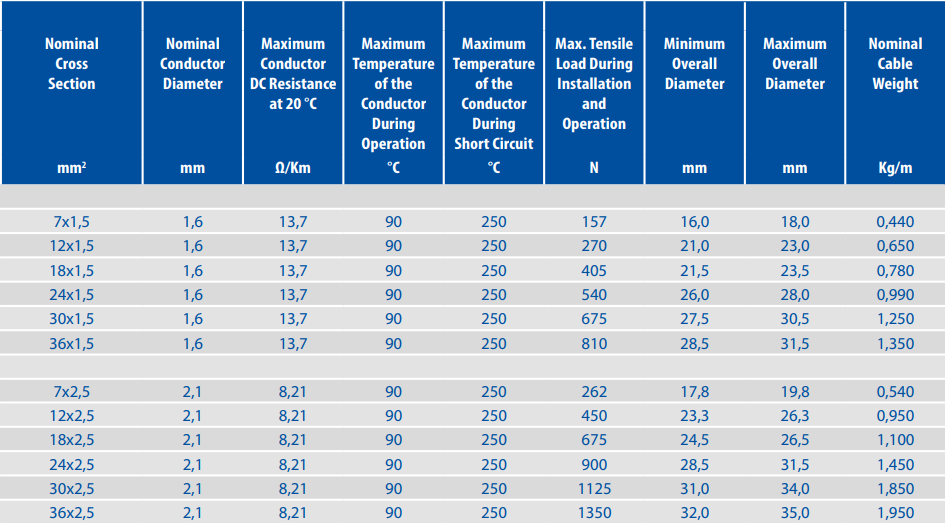
The combination of Class 5 conductors and optimized cable geometry results in a reduced overall outer diameter and lower cable weight compared to conventionally constructed cables of equivalent current-carrying capacity. This matters considerably when specifying cable drum designs for STS ship-to-shore cranes or RTG rubber-tyred gantry cranes, where drum dimensions, winding density, and cable mass directly affect the mechanical design of the reeling system. A cable with reduced diameter allows more cable layers on a given drum width, while reduced weight lowers the centrifugal and inertial forces on the drum drive during acceleration and deceleration phases.
The elastomeric insulation and sheath materials maintain flexibility and mechanical integrity across the full operating temperature range typical of outdoor port environments, from sub-zero winter conditions to elevated ambient temperatures in tropical terminals. Under dynamic operating conditions — continuous reeling, tensile loading, bending around sheaves and cable guides — these materials resist crack propagation and surface fatigue that would prematurely degrade a standard PVC or rubber compound cable.
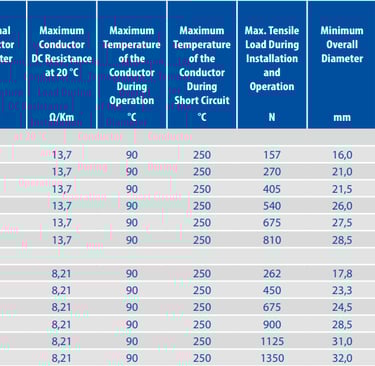
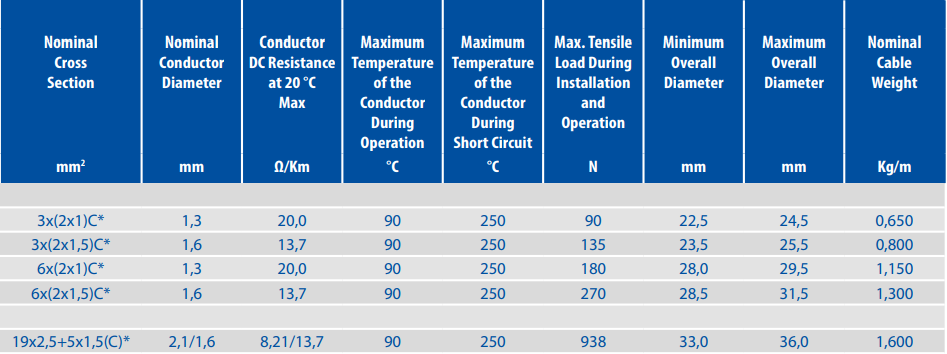
Current-carrying capacity is assessed in accordance with VDE 0298-4, which provides the de-rating factors applicable to cables installed on reeling drums and in bundled configurations. The thermal performance of the EPR-grade insulation supports sustained current loading without accelerated ageing, ensuring that control and power circuits remain within their rated parameters across the operational lifespan of the cable.
Applicable Crane Types and Motion Profiles
The NSHTÖU-JZ cable family is optimized for a specific and demanding set of crane types and motion profiles encountered in port, container terminal, and heavy industrial applications.
In port and container terminals, STS cranes rely on end-feed ground-laid reeling systems where the cable is laid out along the crane rail track and retrieved onto the cable reel as the crane travels. The combination of high travel speeds — up to 240 m/min in certain configurations — with the need for reliable transmission of control signals, safety circuits, and automation feedback makes the flexible NSHTÖU-JZ control and signalling cable for port crane cable reel systems the correct engineering choice. RTG and RMG cranes operating in yard areas similarly demand cables capable of high-cycle reeling with minimal maintenance intervention. Ship unloaders, stacker reclaimers, and multipurpose cranes in bulk handling terminals subject their trailing and reeling cables to particularly severe mechanical environments, combining tensile loads with torsional and bending stresses simultaneously.
In mining and heavy industry, mobile stackers, reclaimers, bucket wheel excavators, and conveyor tripper cars operate in environments characterized by abrasive dust, ground-level mechanical hazards, and extreme weather exposure. The heavy-duty elastomeric sheath of the standard NSHTÖU-JZ cable is formulated to resist exactly these conditions, while the anti-torsion design protects against the rotational stresses common in slewing and travelling machine motions.
For spreader reel systems on container cranes, where the cable must accommodate both vertical hoisting motion and horizontal spreader positioning, the one-way reeling and spreader reeling capability of these cables — combined with the anti-twist braid — ensures that torsional fatigue does not accumulate into a service failure at an operationally critical point.
Comparison with Standard Industrial Cables
Engineering teams frequently face the question of whether a standard flexible cable — such as a general-purpose H07RN-F or NSSHÖU type — can substitute for a purpose-built VDE 0250-814-compliant flexible reeling cable in a crane application. The answer, from a technical standpoint, is clear.
General-purpose rubber cables are not designed for the continuous dynamic bending, torsion, and tensile cycling that reeling applications impose. Their conductors, while flexible, are not optimized for the tight bending radii around cable drum sheaves and guides. Their sheath compounds, while robust in static or semi-static installations, do not incorporate anti-torsion features. Over time, the combination of repeated bending and torsional loading causes conductor fatigue fractures, insulation cracking at the inner sheath interface, and outer sheath wear that standard cables simply cannot resist for an acceptable service period.
Furthermore, standard cables are not dimensioned for the reduced outer diameter that efficient cable drum design requires. A standard H07RN-F of equivalent conductor count and cross-section will occupy significantly more drum volume than a NSHTÖU-JZ cable with its optimized geometry, directly impacting cable reel design and the capital cost of the drum mechanism.
The VDE 0250-814 standard exists precisely to define the performance criteria that differentiate a true reeling cable from a general flexible cable. Specifying a VDE 0250 Part 814-compliant reeling cable is not a regulatory formality — it is the technically correct approach to ensuring that the cable selected will perform reliably under the actual service conditions of the application.
Engineering Value: Service Life, Reliability, and Safety
The engineering value proposition of the NSHTÖU-JZ cable family can be assessed across three dimensions that matter most to the plant engineer and asset manager: service life, system reliability, and operational safety.
Service life in reeling applications is determined by resistance to the cumulative mechanical fatigue imposed by bending, torsion, and tensile cycling. The anti-torsion braid, Class 5 conductors, and elastomeric insulation system work together to distribute and absorb these stresses without accumulating damage at the rates seen in standard cables. The result is a substantially extended replacement interval that reduces not only cable procurement costs, but also the maintenance downtime associated with cable changes on operational cranes — an interruption that carries significant throughput cost in a busy container terminal.
System reliability in crane control and automation applications depends on the integrity of control and signalling circuits throughout the cable's service life. A degraded or intermittently failing control cable on an STS crane or RMG crane introduces fault conditions that can halt operations, trigger safety shutdowns, or — in the worst case — cause equipment damage. The robust construction of the NSHTÖU-JZ cable, combined with screened variants for sensitive communication circuits in the NSHTÖU-JZK design, ensures that signal integrity is maintained across the full operating speed and environmental range of the application.
Safety is addressed at two levels. Mechanically, the cable's resistance to premature failure reduces the risk of uncontrolled cable separation events that could damage equipment or endanger personnel. From a fire safety perspective, the LSZH (N)SHTÖU-JZ low smoke halogen free control cable for material handling cranes provides a significant advantage in enclosed terminals and industrial buildings, where the evacuation of personnel and the response of fire suppression systems depend heavily on maintaining visibility and limiting toxic gas concentrations.
Technical Q&A
Q: What is the maximum operating speed for NSHTÖU-JZ cables in port crane reeling applications?
A: Depending on the specific variant and reeling system geometry, NSHTÖU-JZ and (N)SHTÖU-JZ cables are rated for operating speeds up to 200–240 m/min in one-way reeling and spreader reel configurations. This covers the travel speed requirements of the majority of STS, RTG, and RMG crane applications in current operation.
Q: When should the (N)SHTÖU-JZ LSZH variant be specified instead of the standard NSHTÖU-JZ?
A: The LSZH (N)SHTÖU-JZ variant should be specified wherever the installation environment is enclosed or semi-enclosed — such as covered container terminals, industrial buildings, or areas with restricted ventilation — and where local fire safety regulations require reduced smoke emission and halogen-free cable materials. The standard elastomeric sheath NSHTÖU-JZ remains the preferred choice for fully outdoor, open-air crane rail applications where fire performance requirements are less stringent.
Q: How does the anti-torsion braid function, and why is it necessary in reeling applications?
A: The anti-torsion braid is a structural element applied between the inner and outer sheaths, oriented to resist the rotational forces that develop when a cable winds and unwinds on a reel drum. Without this feature, torsional stress accumulates along the cable length, eventually causing core displacement, insulation damage, and outer sheath failure. The anti-twist low-voltage control cable design of the NSHTÖU-JZ family neutralizes these forces, making it the correct specification for continuous-duty end-feed and one-way reeling systems.
Q: Can NSHTÖU-JZK screened variants carry both power and communication signals in the same cable?
A: Yes. The NSHTÖU-JZK variant incorporates individually screened pairs or groups within the multicore layout, allowing power conductors and screened communication or signal circuits to be integrated into a single cable run. This is particularly valuable on mobile cranes and spreader systems where minimizing the number of separate cable runs on the reel simplifies cable management and reduces overall system weight.
Q: What standards govern the selection and installation of these cables?
A: The primary standard is DIN VDE 0250 Part 814, which establishes the construction and performance requirements for reeling and trailing cables. Conductor classification follows DIN VDE EN 60228 and VDE 0295. Current-carrying capacity and installation de-rating factors are determined in accordance with VDE 0298-4. Compliance with this framework ensures that the cable selected is appropriate for the mechanical and electrical demands of the specific reeling application.
The NSHTÖU-JZ, NSHTÖU-JZK, and (N)SHTÖU-JZ cable family represents the result of engineering a cable from first principles around the actual demands of crane and port reeling applications, rather than adapting a general-purpose product to a duty for which it was not designed. For the plant engineer specifying a cable reel system on a new crane or evaluating a replacement strategy for an existing fleet, this family of anti-torsion, reduced-diameter, VDE 0250-814-compliant flexible reeling cables offers a technically sound and operationally proven foundation for reliable, long-life crane control and communication systems.
Port crane cables | Mining cables | Reeling cables | Trailing cables | Festoon cables | Heavy-duty power cables | Medium voltage cables | Offshore crane cables | Underground mining cables | Dragline cables | Shearer cables | Container handling cables | STS crane cables | RTG cables | Mobile equipment cables | Armored cables | Flexible power cables | VFD cables | Submersible cables | Cold resistant cables | Abrasion resistant cables | Flame retardant cables | Marine environment cables | Opencast mining | Underground operations
© 2006 All rights reserved.
[INDUSTRIAL_CABLES]
INDUSTRIAL GRADE CABLE SYSTEMS | PORT & MINING SOLUTIONS
TEL: +86 153 7530 2641 |MAIL: hongjing.Wang@feichuncables.com