NSSHCOEU Heavy Duty Screened Rubber Cable for Frequency Converters: Complete Technical Guide
Discover NSSHCOEU heavy duty screened rubber cable for frequency converters: 0.6/1 kV, UV and oil resistant, high mechanical strength for mining and tunnelling applications.
hongjing.Wang@Feichun
3/19/202612 min read

What Is NSSHCOEU Screened Rubber Cable?
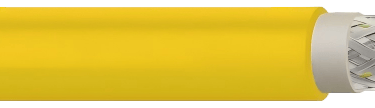
If you are specifying power cables for frequency converter controlled drives in underground mines, open-cast sites, or heavy tunnelling projects, the NSSHCOEU screened rubber cable is one of the most capable solutions available on the market today. It is a flexible, rubber-insulated, screened low-voltage power cable rated at 0.6/1 kV, engineered specifically for motor power supply in environments where mechanical punishment, chemical exposure, and electromagnetic interference are everyday realities.
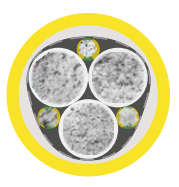
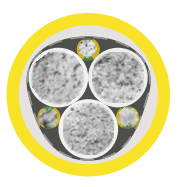
The designation itself tells you a great deal about the cable's construction. The rubber insulation system — based on EPR (Ethylene Propylene Rubber) compounds — delivers exceptional thermal and chemical stability. The tinned copper conductors resist corrosion in damp underground environments. The braided tinned copper screen addresses EMC (electromagnetic compatibility) requirements that arise wherever frequency converters modulate motor speed, generating high-frequency interference that unshielded cables cannot contain. All of this is wrapped in a heavy duty outer sheath compounded to withstand the abrasion, impact, and tearing forces that routinely destroy lighter-duty cables on mobile equipment.
Google Featured Snippet: NSSHCOEU Cable in One Paragraph
NSSHCOEU is a heavy duty, flexible, screened rubber power cable rated at 0.6/1 kV, designed to supply power to frequency converter controlled electric motors on mobile equipment in underground mines, open-cast mines, quarries, and tunnelling sites. Its construction consists of finely stranded, tinned copper conductors insulated with EPR compound, a tinned copper wire braid screen for EMC protection, synthetic rubber inner sheath, and a heavy duty outer rubber sheath resistant to oil, UV, ozone, and mechanical damage. It complies with DIN VDE 0250-812 and is suitable for use in dry, damp, outdoor, and explosion hazard areas at ambient temperatures from -40 °C to +80 °C.
Key Technical Specifications
Electrical Characteristics
The rated voltage of the NSSHCOEU cable is U₀/U = 0.6/1 kV, which positions it firmly in the low-voltage class used across the majority of mining motor drive systems. In AC systems, the maximum permissible operating voltage rises to 0.7/1.2 kV, and in DC systems to 0.9/1.8 kV — a useful margin when frequency converters produce voltage spikes above the nominal supply level during switching events.
The AC test voltage applied to main cores during factory testing reaches 3 kV, in accordance with DIN VDE 0250-812. Current-carrying capacities are referenced to DIN VDE 0298-4 table 15 and DIN EN 50628, with de-rating factors applied according to DIN VDE 0298-4 to account for grouping, elevated ambient temperatures, and thermal insulation of the route.
Thermal and Temperature Limits
For fixed installations, the NSSHCOEU cable handles ambient temperatures from -40 °C to +80 °C — a range that covers arctic surface stockyards as well as warm underground headings. For flexible or moving connections, the lower limit rises to -30 °C, protecting the sheath from cold-cracking during cable reeling and flexing.
The maximum permissible conductor temperature under continuous load is 90 °C, providing meaningful headroom above typical installation temperatures. Under short-circuit conditions, the conductor can briefly reach 200 °C without permanent damage to the insulation system — an important safety characteristic that allows protective devices adequate time to operate without the cable catastrophically failing.
Mechanical Performance
The minimum bending radius is 4 × outer diameter for fixed installation and 5 × outer diameter for movable connections. These figures guide cable tray design, drum winding calculations, and flexible trailing cable arrangements on mobile mining machines.
The maximum tensile load on the conductor is 15 N/mm² — a figure that reflects the reality that mining cables are frequently dragged, pulled across rough floors, or suspended under their own weight across long spans. Cross-sections available in the NSSHCOEU range span from 3×16+3×2.5 mm² up to 3×185+3×95/3 mm², with corresponding outer diameters from approximately 25 mm to 69 mm and cable weights from around 1,330 kg/km to over 10,250 kg/km.
Cable Construction and Materials
Conductor and Insulation Design
Both main cores and the ground conductor use tinned copper wires, finely stranded to IEC 60228 / EN 60228 class 5. Class 5 stranding is the standard for flexible and highly flexible cables — the individual wires are thin enough to bend repeatedly without work-hardening and breaking, a quality that matters enormously when cables travel with moving equipment dozens of times per shift.
Tinning the copper wires does more than prevent tarnishing. In environments where hydrogen sulfide is present — common in some ore bodies and decaying organic material in tunnel muck — bare copper rapidly corrodes. Tinning provides a protective barrier that extends service life significantly.
Main core insulation uses EPR compound type 3GI3 to DIN VDE 0207-20, with natural colour and black digit identification. The ground conductor uses the same EPR system but with the universally recognised green-yellow colouring.
Screening and Sheathing
The tinned copper wire braid screen serves two critical functions simultaneously. First, it provides electromagnetic shielding that constrains the high-frequency conducted emissions generated by frequency converters, preventing them from radiating into adjacent instrumentation cables, communication cables, or sensitive measurement equipment running nearby in the same installation. Second, the braid adds mechanical reinforcement against radial compression and lateral impact.
Beneath the outer sheath, a synthetic rubber inner sheath of type GM1b (DIN VDE 0207-21) fills the interstices between cores, preventing moisture tracking along the cable interior and giving the assembly a robust circular cross-section that resists crushing.
The outer sheath is a heavy duty rubber compound type 5GM5 to DIN VDE 0207-21, coloured yellow for high visibility on the mine floor. Yellow is the internationally recognised colour for mining and tunnelling power cables, helping operators and maintenance teams identify power feeds at a glance in poorly lit underground workings.
Environmental and Chemical Resistance
Oil resistance is tested and certified to DIN EN / IEC 60811-404. In practice, this means the sheath survives contact with hydraulic oils, gear oils, cutting fluids, and diesel fuel — all substances routinely present on mining machines and roadways.
Weather resistance is described as unrestricted — the cable can be installed indoors, outdoors, in wet locations, and is resistant to ozone, UV radiation, and moisture. This covers everything from an open-cast pit where cables lie exposed to tropical sun and monsoon rain, to a humid underground heading ventilated by water-laden air.


Standards, Approvals, and Safety
Applicable Standards and Approvals
The NSSHCOEU cable is manufactured in accordance with DIN VDE 0250-812, the German standard for rubber-insulated flexible cables for power installations in mining and similar applications. This is the primary construction and performance standard that governs the design.
Beyond the construction standard, the cable is aligned with DIN EN 50628 for the erection of electrical installations in underground mines, DIN VDE 0168 for electrical installations in open-cast mines, quarries, and similar works, and DIN VDE 0298-3 for the application of cables and cords in power installations. Together, these installation standards define how the cable should be selected, routed, protected, and terminated in real mining infrastructure.
Compliance markings include CE under the Low Voltage Directive 2014/35/EU, CPR (Construction Products Regulation 305/2011), and RoHS 2015/863/EU, confirming that hazardous substance restrictions are met.
Fire Performance and Safety Behaviour
Flame retardant behaviour is certified to DIN EN / IEC 60332-1-2, which tests resistance to flame spread along a single cable mounted vertically. In an underground mine or tunnel, a cable fire is a life-safety event: toxic smoke rapidly fills confined airways, evacuation is slow and complex, and fire suppression is difficult. A cable that self-extinguishes after the ignition source is removed dramatically reduces this risk.
The combination of flame retardant behaviour, the absence of halogenated materials in the sheath compounds, and the robust mechanical protection that prevents jacket damage — a common ignition precursor — makes the NSSHCOEU an appropriate choice wherever fire risk mitigation is specified.
Regulatory and Conformity Information
For projects subject to European procurement regulations, CE marking under the LVD and CPR declarations simplify the documentation trail. Inspection bodies, project approval authorities, and insurance underwriters increasingly require cables to carry current European conformity markings, and cables without them can delay commissioning or trigger non-conformance findings during audits.
Typical Applications and Use Cases
Mining, Tunnelling, and Material Handling
The primary application is motor power supply for frequency converter controlled drives on mobile mining equipment. Modern underground mines rely heavily on variable speed drives to control ventilation fans, hoist drives, pump stations, load-haul-dump vehicles, and drill jumbos. Each of these applications demands a cable that tolerates repeated flexing, high tensile events when machinery moves, and the harsh chemical environment of an active mine.
On tunnelling machines — tunnel boring machines (TBMs), roadheaders, and drill-and-blast jumbos — the trailing cable must flex continuously as the machine advances. The NSSHCOEU's class 5 stranding and carefully calculated bending radius allowances are directly suited to this application. Similarly, on surface conveyor systems, stackers, and reclaimers at ports and bulk material handling facilities, the cable handles the constant motion of the tripper car or shuttle boom without fatigue failure.
Installations in Explosion Hazard and Harsh Areas
Underground mines classified as hazardous areas — particularly coal mines with methane present — require cables that do not generate ignition-capable surface temperatures and that carry appropriate approvals. The NSSHCOEU's compliance with the relevant DIN EN and DIN VDE standards positions it for use in these environments, subject to the specific zonal classification and national regulatory requirements of the site.
Open-cast mines and quarries present a different but equally demanding set of challenges: intense UV from long outdoor exposure, wide temperature swings between night and day, dust and grit that abrades cable sheaths, and diesel contamination from haul roads. The UV-stabilised, oil-resistant outer sheath is engineered for precisely these conditions.
Middle East Mining Case Study: Copper and Gold Operations in Saudi Arabia and Oman
The Middle East is not the first region that comes to mind in global mining discussions, yet it hosts some of the world's oldest and most geologically significant mineral belts. The Arabian Shield — covering western Saudi Arabia and extending into northern Oman — contains substantial deposits of gold, copper, zinc, and associated base metals that have been worked since antiquity and are now the subject of large-scale modern mining investment.
Ma'aden Gold and Base Metals Operations, Saudi Arabia
Saudi Arabia's Ma'aden (Saudi Arabian Mining Company) operates gold mines at several locations across the Arabian Shield, including the Ad Duwayhi mine in the Makkah region — one of the largest open-pit gold mines in the Middle East. Ambient surface temperatures at these sites routinely exceed 45 °C in summer, with intense UV radiation, blowing sand abrasion, and significant temperature cycling between day and night operations.
In operations of this type, frequency converter controlled drives are used extensively on grinding mills, conveyor drives, thickener rakes, and ventilation systems for underground access tunnels and process facilities. The cable specification challenge is significant: conventional PVC-sheathed cables degrade rapidly under sustained UV exposure and high ambient temperatures. A screened rubber mining cable rated for continuous operation to +80 °C ambient, with UV resistance and oil resistance, directly addresses this environment.
For underground sections of the Ad Duwayhi operation — where ore is accessed via decline tunnels — the need for flame retardant, mechanically robust trailing cables on mobile loaders and drill rigs replicates exactly the performance profile the NSSHCOEU is designed to deliver. The cable's ability to handle ambient temperatures down to -40 °C is largely irrelevant in Saudi Arabia, but the upper thermal limits, UV stability, and compliance with DIN EN 50628 for underground mine installations are directly applicable.
Sohar and Lasail Copper Operations, Oman
Oman's copper mining history stretches back to the Bronze Age, and the Sohar and Lasail copper deposits in the Al Batinah and Al Dakhiliyah regions have seen modern exploitation by Oman Mining Company. These operations involve underground stoping methods and surface concentrator plants, with the concentrator driving large variable-speed SAG mills, ball mills, and flotation cell agitators — all requiring robust, screened power cables from the frequency converter panels to the motor terminals.
Underground workings in these copper-bearing volcanogenic massive sulfide (VMS) deposits frequently encounter acidic groundwater and mineralised dust that aggressively attacks cable sheaths. The oil-resistant, chemically stable rubber sheath of the NSSHCOEU provides meaningful resistance against dilute acid contact and sulfide-laden moisture — conditions that cause premature failure in less robust cable types.
In the concentrator plant, long cable runs from the variable frequency drive (VFD) panels to grinding mill motors — distances that can reach 100 to 200 metres — make EMC performance critical. Without adequate screening, the high-frequency switching harmonics from large VFDs couple capacitively into parallel instrument cables, corrupting process control signals and triggering nuisance trips. The tinned copper braid screen of the NSSHCOEU, properly bonded at both ends to the drive and motor earth terminals, provides the common-mode current path that eliminates this interference mechanism.
Practical Lessons from Middle East Mining Installations
Experienced electrical engineers working on Arabian Shield projects have identified several recurring selection criteria that align directly with the NSSHCOEU's specification:
Cable sheath colour is operationally significant. The yellow outer sheath is highly visible on mine floors and roadways, helping operators avoid running mobile equipment over the cable and assisting maintenance teams in tracing circuits in underground headings with inadequate lighting.
Drum storage and deployment in high ambient temperatures places specific demands on sheath flexibility. Rubber-sheathed cables outperform thermoplastic-sheathed alternatives in these conditions because rubber compounds retain flexibility at elevated temperatures where PVC compounds soften and deform under mechanical load.
Compliance documentation matters enormously on projects that are subject to international engineering standards and third-party verification. Cables carrying CE, CPR, and RoHS markings, manufactured to DIN VDE 0250-812, satisfy the documentation requirements of international EPCm contractors and their client companies without exception requests or substitution approvals.
Engineering Selection Considerations
Selecting the right cross-section of NSSHCOEU cable begins with the motor's full-load current and the frequency converter's output characteristics. Because VFDs produce non-sinusoidal output with significant harmonic content, the cable must be derated compared to its performance on a clean sinusoidal supply. The de-rating factors in DIN VDE 0298-4 address grouping and ambient temperature; engineers should additionally consult the frequency converter manufacturer's cable sizing guidelines for harmonic de-rating.
Route length determines the cross-section required to limit voltage drop between the converter output and the motor terminals. At low frequencies — where VFDs operate when machines start or run at reduced speed — the impedance of long cable runs can impair torque production and speed regulation. Sizing up by one cross-section step on runs exceeding 50 to 100 metres is common practice.
For movable connections, the bending radius constraint of 5 × outer diameter must be respected in the cable management design. On drum-mounted trailing cables, the drum diameter must be at least 10 × the cable's outer diameter to keep the bent section within the rated minimum radius at the drum flange. Calculating the drum capacity against the cable weight per kilometre — which ranges from approximately 1,330 kg/km for 3×16 mm² to over 10,250 kg/km for 3×185 mm² — is essential for ensuring the drum's structural and motor ratings are not exceeded.
Termination practices at the frequency converter and motor terminal boxes must include proper screen bonding. The tinned copper braid screen should be connected to the equipment earth at both ends using 360-degree EMC cable glands rather than a pigtail connection, which introduces inductance that degrades high-frequency shielding effectiveness at exactly the frequencies where VFD interference is most problematic.
FAQ: NSSHCOEU Screened Rubber Cable
What does NSSHCOEU stand for? NSSHCOEU is a German cable designation. Each letter group indicates a construction element: rubber-insulated (N), copper conductor (S), screen (S), heavy duty rubber sheath (H), copper (C), outer rubber sheath (O), European (E), power supply (U). Together they describe a heavy duty, screened, rubber-insulated flexible cable for power supply applications in underground and surface mining.
What is the rated voltage of NSSHCOEU cable? The rated voltage is U₀/U = 0.6/1 kV. In AC systems the maximum permissible operating voltage is 0.7/1.2 kV, and in DC systems it is 0.9/1.8 kV.
Why is NSSHCOEU cable used with frequency converters? Frequency converters generate high-frequency switching noise on their output conductors. Without adequate screening, this noise radiates from the cable and couples into adjacent cables and equipment. The NSSHCOEU's tinned copper wire braid screen provides a low-impedance return path for common-mode currents, containing the interference and ensuring EMC compliance.
What temperature range does NSSHCOEU cable cover? For fixed installations: -40 °C to +80 °C ambient. For flexible or moving use: -30 °C to +80 °C ambient. The maximum conductor temperature under load is 90 °C, with a short-circuit limit of 200 °C.
Can NSSHCOEU cable be used outdoors? Yes. The cable has unrestricted weather resistance, including resistance to ozone, UV radiation, and moisture. It is suitable for outdoor installation in open-cast mines, surface plant, stockyards, and port facilities.
What mining standards does NSSHCOEU comply with? The cable is manufactured to DIN VDE 0250-812 and is suitable for use under DIN EN 50628 (underground mine electrical installations), DIN VDE 0168 (open-cast mine electrical installations), and DIN VDE 0298-3 (application of cables in power installations). It also carries CE, CPR, and RoHS markings.
What cross-sections are available for NSSHCOEU cable? Standard constructions range from 3×16+3×2.5 mm² up to 3×185+3×95/3 mm², covering the majority of mining motor drive applications from smaller conveyor drives to large grinding mill motors. Other cross-sections and core configurations can be produced on request.
How should the screen of NSSHCOEU cable be terminated? For effective EMC performance, the tinned copper braid screen should be bonded to the protective earth at both the frequency converter end and the motor end using 360-degree EMC cable glands. A pigtail or single-point bond introduces inductance that significantly reduces shielding effectiveness at high frequencies.
What is the minimum bending radius for NSSHCOEU cable? For fixed installation: 4 × outer diameter. For movable or flexible connections: 5 × outer diameter. These values must be respected during installation and in the design of cable management systems, including cable trays, conduits, and reeling drums.
Is NSSHCOEU cable suitable for explosion hazard areas? The cable meets the requirements of DIN EN 50628 and DIN VDE 0168, which cover hazardous area installations in underground and open-cast mines. Specific suitability depends on the area's zone classification and applicable national regulations. Always confirm with the project's electrical safety authority.
This article provides technical guidance for engineers and procurement professionals selecting screened rubber mining cables for frequency converter applications. Always verify current standards compliance and consult the cable manufacturer's technical documentation before finalising specifications.
Port crane cables | Mining cables | Reeling cables | Trailing cables | Festoon cables | Heavy-duty power cables | Medium voltage cables | Offshore crane cables | Underground mining cables | Dragline cables | Shearer cables | Container handling cables | STS crane cables | RTG cables | Mobile equipment cables | Armored cables | Flexible power cables | VFD cables | Submersible cables | Cold resistant cables | Abrasion resistant cables | Flame retardant cables | Marine environment cables | Opencast mining | Underground operations
© 2006 All rights reserved.
[INDUSTRIAL_CABLES]
INDUSTRIAL GRADE CABLE SYSTEMS | PORT & MINING SOLUTIONS
TEL: +86 153 7530 2641 |MAIL: hongjing.Wang@feichuncables.com