NSSHÖU Cable Specification: The Ultimate Heavy-Duty Cable for Tunnelling and Roadheaders
Discover NSSHÖU cable specifications, including voltage, structure, and sheath performance, and learn why this heavy-duty rubber cable is ideal for tunnelling, roadheaders, and underground construction.
hongjing.Wang@Feichun
7/13/202615 min read
1. Introduction
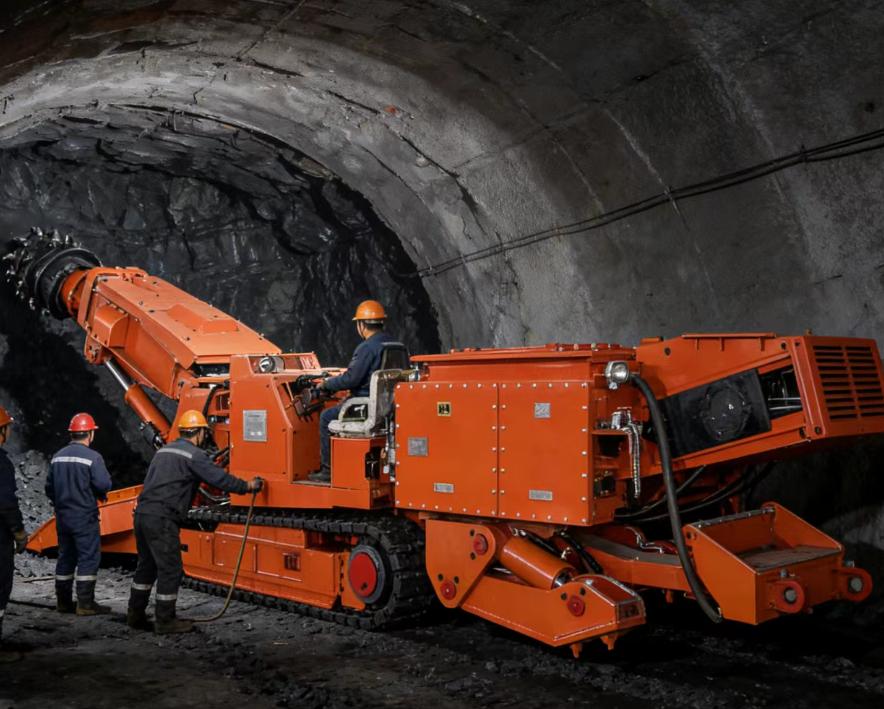
In the global industrial landscape, heavy-duty infrastructure projects demand an uncompromising level of engineering resilience. Underground excavation, deep-core mining, and tunnel construction represent some of the most punishing operational environments on Earth. Within these subterranean spaces, massive machinery operates continuously under conditions defined by intense physical vibration, abrasive dust, ambient moisture, and severe spatial limitations. For these multi-million dollar operations to run without catastrophic interruptions, the electrical nervous system supplying power to the machinery must be virtually indestructible.
This is where the Feichun NSSHÖU 0.6/1kV heavy-duty rubber flexible power cable becomes an indispensable asset. Specially engineered to withstand the brutal dynamics of mobile excavation equipment, such as roadheaders and tunnel boring machines (TBMs), this cable represents the pinnacle of heavy industrial cable manufacturing.
Tunnelling and roadheader operations pose a unique double threat to electrical infrastructure: they require immense amounts of electrical power to grind through solid rock while simultaneously subjecting the supply cables to continuous movement, twisting, dragging, and crushing forces. Standard industrial cables fail within days or even hours under such stress.
By prioritizing mechanical integrity, exceptional flexibility, and advanced material science, the Feichun NSSHÖU cable ensures that continuous excavation remains safe, predictable, and highly efficient. This comprehensive guide provides an exhaustive technical analysis of the NSSHÖU cable specification, exploring its structural design, performance parameters, and why it stands as the ultimate choice for heavy-duty underground engineering.

2. What Is NSSHÖU Cable?
The NSSHÖU cable is a highly specialized, heavy-duty, rubber-insulated, and rubber-sheathed flexible power cable designed specifically for dynamic and static applications in aggressive industrial environments. Built in accordance with strict European and international engineering standards, the designation codes highlight its exact structural properties:
The letter N indicates compliance with standardized VDE regulations.
The SS signifies special heavy-duty rubber compounding capable of enduring intense physical stress.
The H denotes the presence of a robust inner embedding sheath layer.
The Ö guarantees integrated oil and grease resistance.
The U confirms its flame-retardant capabilities.
At its core, Feichun's NSSHÖU cable is engineered to maintain absolute electrical and mechanical functionality where standard flexible cables fail. It serves as the primary power supply line for mobile machinery, transport systems, and excavation tools operating under high levels of mechanical stress and constant physical abrasion. It is equally effective in dry, damp, wet, and highly hazardous environments, making it a truly versatile solution for both indoor and outdoor heavy industrial layouts.
One of the most remarkable design achievements of the NSSHÖU specification is its extraordinary fluid resistance. According to its rigorous testing profiles, this cable can be permanently submersed in fresh water, salt water, storm water, oily industrial runoff, and even sewage-contaminated water down to a maximum operating depth of 100 meters. This submersibility ensures that even if a tunnel face suffers sudden flooding or experiences severe groundwater ingress, the primary power distribution network remains fully operational, preventing critical system blackouts and ensuring worker safety systems stay online.
3. NSSHÖU Cable Basic Specification
Understanding the core technical ratings of the NSSHÖU cable is vital for project engineers, electrical designers, and procurement managers who must select components capable of matching project demands. The technical parameters of the Feichun NSSHÖU cable reflect its premium engineering architecture:
Voltage and Insulation Ratings
Voltage Rating (Uo/U): 0.6/1kV. This means the cable is rated for an operating voltage of 600 Volts between any insulated conductor and the earth, and 1000 Volts (1kV) between the phase conductors themselves. This voltage range is standard for heavy industrial motor control centers, mobile machinery drives, and subterranean distribution transformers.
Test Voltage: 3kV (3000 Volts). During quality assurance testing at the manufacturing facility, the cable is subjected to an electrical stress test three times its nominal rating to verify dielectric strength and ensure there are no microscopic voids or imperfections within the rubber compound insulation layers.
Thermal Boundaries
Fixed Ambient Temperature Range: -40 deg C to +80 deg C. In static or permanently anchored installations, the cable can withstand extreme sub-zero freezing environments as well as intense surface heat without cracking, shrinking, or losing its mechanical properties.
Flexed Ambient Temperature Range: -25 deg C to +80 deg C. When the cable is under active motion, reeled on drums, or dragged by mobile machinery, it retains its optimal elastomeric flexibility down to -25 deg C, ensuring cold-weather operations do not compromise the safety of the cable jacket.
Maximum Short-Circuit Temperature: +250 deg C. In the event of an electrical fault or sudden short-circuit spike, the heavy-duty rubber compounds can withstand momentary thermal surges up to 250 deg C without melting, degrading, or causing catastrophic insulation failure.
Physical and Mechanical Tolerances
Minimum Bending Radius (Fixed Installation): 4 x overall diameter. When installed statically within cable trays, conduits, or structural brackets, the cable requires a radius of only four times its total thickness, allowing for exceptionally tight turns in confined spatial designs.
Minimum Bending Radius (Flexed Application): 5 x overall diameter. When deployed on moving machinery, reeled onto motorized drums, or fed through active articulation joints, the cable safely operates at a bending radius of five times the overall diameter, offering superior flexibility compared to standard industrial cables.
Maximum Submersible Depth: 100 meters. Engineered for long-term submersion in highly contaminated waters without material degradation.
Regulatory Compliance and Standards: The Feichun NSSHÖU cable is manufactured and tested in strict compliance with VDE 0250 Part 812, VDE 0295, and EN 60228 standards. Furthermore, its flame-retardant properties are fully verified according to international standard IEC/EN 60332-1-2, ensuring that it will not propagate fire along its length in the event of an external thermal emergency. It also fully satisfies the strict mandates of the Low Voltage Directive 2014/35/EU, the RoHS Directive 2015/65/EU, and the REACH Directive EC 1907/2006.
4. Conductor Construction
The remarkable flexibility and durability of the NSSHÖU cable start at its absolute core: the electrical conductors. Feichun utilizes Class 5 flexible tinned copper conductors for both the primary phase cores and integrated control lines.
The Class 5 Advantage
Unlike standard Class 1 solid conductors or Class 2 rigid stranded conductors, Class 5 conductors are formed by bunching together hundreds of incredibly fine, precision-drawn copper wires. This fine-stranded configuration is crucial for heavy-duty mobile machinery. When a cable is composed of thousands of micro-strands rather than a few thick wires, the internal physical forces generated during bending and twisting are distributed across a massive surface area.
Mitigating Conductor Fatigue
In underground excavation, heavy equipment like roadheaders operates via hydraulic booms that rotate, telescope, and strike rock faces with extreme force. These movements create continuous, high-frequency vibrations that travel directly down the trailing power supply cable.
If a standard rigid cable were used, these vibrations would cause rapid "work-hardening" of the copper, leading to micro-fractures and ultimate conductor fatigue where the wires snap internally. The Class 5 fine-stranded construction eliminates this risk by allowing individual copper filaments to slide slightly past one another, absorbing the mechanical energy and dramatically reducing conductor fatigue over millions of operational cycles.
The Power of Tinning
Furthermore, the copper strands within the NSSHÖU cable undergo a meticulous tinning process. Each individual copper filament is coated in a micro-layer of pure tin before being stranded into the final conductor bundle. Tinning provides an exceptional defensive barrier against chemical corrosion.
Underground construction sites are highly corrosive environments; groundwater frequently contains dissolved sulfur oxides, acidic mineral salts, and alkaline concrete runoff. When raw copper is exposed to moisture and oxygen, it undergoes oxidation, forming a green crust that increases electrical resistance and generates localized heat spots. Tin does not oxidize in this manner, ensuring the conductor retains its ultra-low resistance, high electrical conductivity, and long-term flexibility throughout its operational lifespan.
5. Insulation and Sheath Structure
The physical survivability of the Feichun NSSHÖU cable is achieved through a carefully engineered triple-layer elastomeric structure. Each layer utilizes a distinct rubber compound formulated to perform a specific mechanical or electrical protective function.
Phase Insulation: Rubber Compound Type 3GI3
Directly surrounding the Class 5 tinned copper conductors is a thick layer of Type 3GI3 rubber compound. This synthetic elastomer is selected for its exceptional dielectric strength and high thermal stability. The Type 3GI3 compound provides continuous electrical containment even under maximum voltage loads, resisting electrical breakdown while remaining flexible enough to bend without cracking or peeling away from the moving copper core.
Inner Sheath: Rubber Compound Type GM1b
The individual insulated cores are gathered together and encased within an intermediate embedding layer known as the inner sheath, composed of Type GM1b rubber compound. The primary function of this layer is structural stability and internal shock absorption. It fills the triangular voids between the circular insulated cores, locking them into a balanced geometric layout. This prevents the internal cores from rubbing against one another during intense twisting or torsional manipulation, acting as a internal cushion that dampens external impact forces before they can penetrate the core insulation.
Outer Sheath: Rubber Compound Type 5GM5
The final, outermost layer is the toughest shield of the cable: a heavy rubber jacket composed of Type 5GM5 rubber compound, finished in a highly visible yellow color. The Type 5GM5 compound is a masterpiece of polymer engineering, specifically designed to withstand direct mechanical violence. It provides the cable's primary defense against:
Extreme abrasion from being dragged across razor-sharp fractured granite and blasted rock faces.
Heavy tearing, cutting, and notch propagation when caught on jagged steel structural ribbing.
Constant chemical contact with industrial oils, hydraulic fluids, drilling greases, and environmental fats.
Intense weather conditions, UV radiation, and ozone exposure in outdoor setups.
By combining these three distinct layers into a single cohesive structure, Feichun creates a cable that effectively manages internal electrical stresses while completely isolating those sensitive electrical paths from the destructive forces of the external environment.
6. Why NSSHÖU Fits Tunnelling
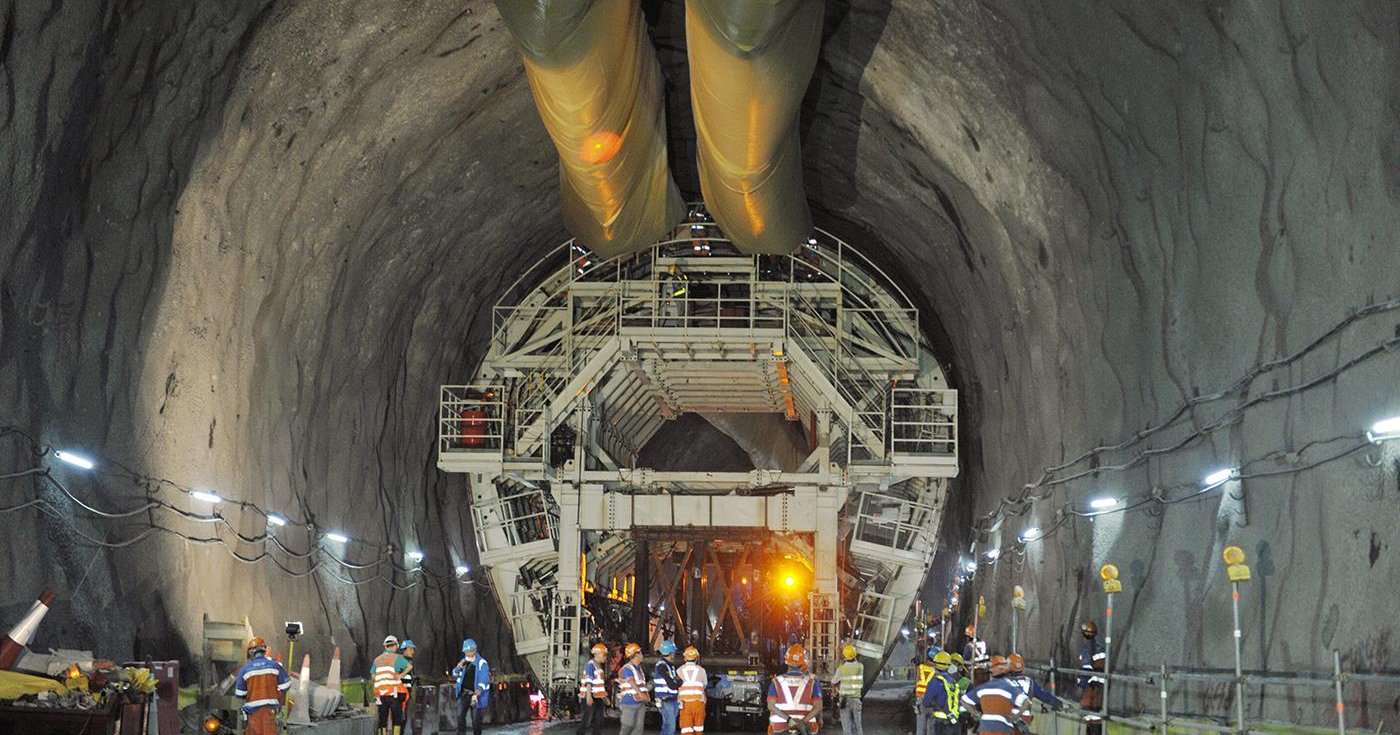
Tunnelling operations represent a logistical race against time and geology. Whether utilizing drill-and-blast methods, sequential excavation, or massive mechanized boring systems, the environment at the tunnel face is consistently hostile to industrial equipment. The Feichun NSSHÖU cable is engineered specifically to survive these precise conditions, outperforming standard flexible cables across several key parameters:
Defeating Continuous Mechanical Shockwaves
When excavation machinery cuts through rock, it generates violent structural shockwaves. These vibrations are transmitted directly through the chassis of the machine and into the trailing power cables. Standard PVC or generic rubber cables experience rapid material fatigue under these conditions, causing the outer jackets to split open. The NSSHÖU’s Type 5GM5 outer rubber jacket acts as an elastomeric dampener, absorbing and dissipating the kinetic energy of continuous mechanical shock waves without suffering structural failure.
Resisting the Crushing and Dragging Forces of Jagged Topography
In a rapidly expanding tunnel, cables are constantly dragged across rough, unpaved floors covered in sharp rock fragments, quartz dust, and dropped steel fixings. The NSSHÖU cable possesses phenomenal tear and cut resistance. If a sharp stone gouges the outer jacket under the weight of the cable, the polymer structure resists "notch propagation"—meaning the cut remains a minor surface blemish rather than splitting open into a deep, catastrophic tear that exposes the internal conductors.
Surviving Fluid Accumulation and Hazardous Environmental Elements
Tunnels are naturally low-lying zones where groundwater naturally collects. It is common for trailing cables to spend months submerged in pools of murky water mixed with abrasive rock dust, concrete curing agents, spilled diesel fuel, and hydraulic oil. The NSSHÖU cable’s certified 100-meter submersibility and broad oil/chemical resistance ensure that prolonged exposure to these corrosive fluid mixtures will not weaken the outer sheath or lead to dangerous moisture ingress.
7. Roadheader Working Conditions
To fully appreciate why the NSSHÖU cable specification is so highly regarded, one must examine the operational reality of a roadheader excavation machine. A roadheader is a track-mounted, highly mobile excavation asset equipped with a powerful rotating cutting head mounted on a multi-axis maneuvering boom.
Complex Multi-Axial Movements
As the roadheader works, the cutting head is forcefully swung horizontally and vertically across the rock face, grinding away material. The entire machine frequently moves forward and backward on its crawler tracks to adjust its cutting angle or clear away fallen debris. The power cable feeding this massive machine is subjected to continuous, complex movements: it is bent, twisted axially, pulled taut, and then coiled back down in rapid succession within confined spatial configurations.
High Spatial Constraints and Reeling Demands
Because space inside a tunnel is limited, trailing cables cannot be left strewn loosely across the floor where they risk being run over by heavy transport vehicles. Instead, the cable is typically managed via a compact, motorized cable reeling drum mounted directly to the rear of the machine or nearby structural systems. As the roadheader advances, the cable is reeled off under constant tension; when the machine retreats, the drum rapidly spools the cable back up. This operational pattern subjects the cable to continuous frictional wear against the reeling guide rollers and tight, multi-layer bending stresses on the drum core. The Feichun NSSHÖU cable is built exactly for this cadence, ensuring the copper conductors and rubber sheaths handle this constant mechanical cycle without losing structural integrity.
8. Common Cable Failure Modes
In underground engineering, using an incorrect or under-specified cable always leads to field failure. By studying how standard cables fail in these environments, we can better understand why the NSSHÖU cable’s design is a necessity.
Jacket Abrasion and Friction Thinning
When a cable lacks a highly specialized elastomeric compound like Type 5GM5, the friction generated by dragging it over rough concrete or blasted rock quickly sands down the outer jacket. Over time, the wall thickness of the cable becomes unevenly thin, drastically lowering its mechanical protection and leaving the inner cores vulnerable to external impacts.
Violent Equipment Crushing
In the dark, high-activity environment of an underground construction site, cables are frequently pinched by heavy machinery, caught beneath track links, or struck by falling rocks. Standard cables lack the internal structural padding required to survive these events; a heavy impact compresses the cable completely flat, forcing the internal conductors to punch through the insulation layer and create an explosive phase-to-phase short circuit.
Dynamic Bending Fatigue and Micro-Fracturing
Cables that use stiff copper conductors or brittle insulation materials suffer rapidly from dynamic bending fatigue. As the cable is repeatedly wound and unwound from reeling drums, the copper strands experience micro-stretching and compression. Eventually, individual wire filaments begin to snap, reducing the total cross-sectional area of the conductor. This reduction increases electrical resistance, causing the cable to overheat under normal operational loads until the insulation melts from the inside out.
Microscopic Moisture Ingress
If a cable jacket suffers even a minor, microscopic puncture from a sharp rock notch, water will inevitably enter under the ambient hydrostatic pressure of the underground environment. Once inside, the water travels along the strands via capillary action. If the copper is unpolished and untinned, it corrodes rapidly, destroying the cable's electrical performance and creating a serious safety hazard for ground personnel. The NSSHÖU cable eliminates these failure points through its tinned copper strands, shock-absorbing inner bedding, and robust outer jacket.
9. NSSHÖU Structure Diagram
The internal architecture of the Feichun NSSHÖU cable is structured as a series of concentric protective layers, carefully engineered to balance mechanical strength with high operational flexibility. The layered build order consists of the following technical elements:
Core Element 1: Phase Conductors: Class 5 fine-stranded tinned copper wires, providing the primary path for high-amperage power delivery while offering exceptional resistance to vibration and mechanical fatigue.
Core Element 2: Core Insulation: Heavy-duty Type 3GI3 rubber compound applied directly over each conductor bundle, ensuring excellent dielectric performance and thermal endurance.
Core Element 3: Internal Screens (Variant Specific): High-density copper braiding or wire shielding applied around individual cores to isolate electromagnetic fields and provide reliable grounding pathways.
Core Element 4: Control Elements (Variant Specific): Fine-stranded Class 5 tinned copper control lines interspersed within the cable layout to handle telemetry, safety interlocks, and sensor signals.
Core Element 5: Inner Structural Sheath: Type GM1b rubber compound extruded smoothly over the assembled cores, filling all internal gaps and acting as a shock-absorbing structural bed.
Core Element 6: Outer Protective Jacket: Heavy-duty Type 5GM5 rubber compound in high-visibility yellow, acting as the primary defense against abrasion, tearing, impact, oil, and water ingress.
This highly engineered, multi-layered layout ensures that external physical impacts are absorbed and deflected by the outer sheaths before they can cause structural deformation or electrical degradation within the critical copper cores.
10. Technical Performance Benefits
The technical parameters of the Feichun NSSHÖU cable translate directly into tangible operational benefits for industrial operations:
Superior Abrasion and Friction Defiance: The Type 5GM5 rubber outer jacket allows the cable to be continuously dragged across rough ground surfaces without suffering wall thinning or structural breakdown, ensuring an extended operational life.
Advanced Tear and Notch Resistance: The high elasticity of the outer rubber shield stops minor cuts and punctures from turning into deep tears, preventing the internal components from becoming exposed to external hazards.
Excellent Industrial Chemical and Oil Resistance: The cable keeps its structural shape even when constantly exposed to hydraulic fluid, grease, diesel oil, and chemical lubricants, preventing the outer jacket from softening or swelling.
Certified 100-Meter Submersible Performance: The cable can be completely submerged in fresh, salt, or contaminated wastewater down to 100 meters, allowing it to perform reliably in flooded areas and wet underground settings.
High Elasticity Under Heavy Movement: With a minimum bending radius of just 5 times its overall diameter when flexed, the cable handles tight curves, continuous reeling, and complex machine movements without experiencing kinking or internal conductor stress.
11. Middle East Project Relevance
The extraordinary performance characteristics of the Feichun NSSHÖU cable make it highly relevant for large-scale infrastructure projects across the Middle East. The region is currently undergoing a massive transformation, characterized by ambitious civil engineering initiatives that demand highly resilient equipment.
Demanding Mega-Infrastructure Initiatives
Visionary developments such as Saudi Arabia's NEOM, which includes extensive underground transportation and utility networks, require continuous, heavy-duty excavation through challenging geological structures. Similarly, major urban expansions like the Riyadh Metro expansion and various Dubai Metro extensions involve digging long, large-diameter tunnels directly beneath dense urban centers.
Overcoming High Thermal and Geological Challenges
These mega-projects present severe operational challenges. Temperatures in the region can cause surface environments to exceed 40 deg C, meaning equipment must handle high ambient heat while operating in deep, enclosed underground spaces. The NSSHÖU cable’s high thermal rating (up to +80 deg C during active use) ensures it can reliably distribute power without overheating in these hot, unventilated subterranean environments.
Furthermore, the regional geology often shifts from soft sand to incredibly hard, abrasive quartz and solid granite formations. Excavating these rock layers requires high-powered roadheaders and TBMs that subject trailing cables to constant vibration, sharp rock debris, and heavy physical handling. By deploying a cable with the rugged specification of the NSSHÖU, contractors can avoid costly downtime caused by cable failures, helping these major regional infrastructure projects stay on schedule and run safely.
12. Selecting the Right NSSHÖU Version
The NSSHÖU cable specification is not a one-size-fits-all product; Feichun manufactures a diverse portfolio of structural variants designed to match specific electrical, mechanical, and telemetry requirements.
Single-Core vs. Multi-Core Layouts
Single-Core Configurations: Available in nominal cross-sectional areas ranging from 1.5 mm2 all the way up to a massive 300 mm2. These single-core options are ideal for high-amperage power transmission where individual phases must be routed separately to accommodate high-current loads or custom distribution frameworks. For example, a 300 mm2 single-core cable can handle a nominal weight of 3510 kg/km and has a robust nominal overall diameter of 36.1 mm.
Multi-Core Configurations: Standard multi-core versions include 3, 4, and 5-core models, as well as high-density control cables with up to 24 individual cores. These are frequently utilized for standard three-phase power routing, system grounding, and low-voltage auxiliary power supplies.
Specialized Earth and Screening Variants
Versions with Integrated Earth Cores (3+3 Design): For enhanced electrical safety, the $3+3$ design includes 3 primary phase conductors and 3 split earth conductors placed evenly in the internal gaps. For instance, the A7JS3E050 model features three 50 mm2 phase conductors paired with three 25 mm2 split earth lines, providing a highly balanced layout that minimizes electrical noise and ensures a low-resistance path to ground during an electrical fault.
Versions with Individual Core Screens (3+3 + Screen): These models feature a high-density copper braid (up to 10 mm2 cores) or copper wire shield (from 16 mm2 cores) wrapped around each individual insulated core. This shielding is critical for mitigating electromagnetic interference (EMI) and preventing cross-talk between high-power supply lines and nearby control systems.
Versions with Control Conductors (3+3+3 Design): Designed for highly sophisticated machinery, these configurations integrate 3 primary phase conductors, 3 split earth conductors, and 3 independent control lines into a single yellow jacket. This allows a single trailing cable to simultaneously deliver high-voltage motive power, maintain system grounding, and transmit critical telemetry or emergency-stop control signals back to a central control station.
When specifying an NSSHÖU cable, engineers must carefully evaluate the required phase current, control layout, grounding approach, and expected tensile loads to choose the ideal variant for their specific industrial setup.
13. FAQ Section
Is NSSHÖU cable suitable for tunnelling equipment?
Yes. The NSSHÖU cable is built specifically to handle the harsh conditions found in tunnel construction and mining operations. Its combination of a Type 5GM5 outer rubber jacket, Class 5 flexible tinned copper conductors, and robust tear/abrasion resistance makes it the ideal choice for powering heavy underground machinery.
What is the voltage rating of NSSHÖU cable?
The NSSHÖU cable has a nominal voltage rating of 0.6/1kV ($U_o/U$). This allows it to safely operate at 600 Volts relative to earth and 1000 Volts (1kV) between phase conductors, matching the requirements of most heavy industrial motor drives and underground power distribution systems.
Why is a rubber sheath important in underground construction?
Rubber sheaths offer superior flexibility, impact absorption, and environmental resistance compared to standard PVC or polyurethane alternatives. The Type 5GM5 outer rubber jacket used on the NSSHÖU cable remains highly flexible at low temperatures, resists tearing and notch propagation from sharp rocks, and provides excellent protection against water, oils, and industrial chemicals.
Can NSSHÖU cables be used on roadheaders?
Yes. The Class 5 fine-stranded conductor construction allows the cable to handle the continuous twisting, bending, and high-frequency vibrations generated by roadheader cutting heads and mobile crawler tracks without experiencing conductor fatigue or jacket splitting.
What makes NSSHÖU different from standard flexible power cables?
Unlike standard flexible cables, the NSSHÖU cable is engineered to meet strict VDE 0250 Part 812 heavy-duty specifications. It features a robust triple-layer rubber construction, certified permanent submersion capability down to 100 meters, high resistance to oils and grease, and exceptional defense against severe mechanical stresses like crushing and abrasion.
14. Closing Section
In the challenging world of underground excavation and heavy industrial engineering, operational success depends heavily on the reliability of your equipment. A single cable failure on a primary excavation asset like a roadheader can immediately halt operations, leading to costly project delays, logistical bottlenecks, and potential safety risks for ground personnel. Selecting high-quality electrical components is a crucial step in protecting your operational efficiency.
The Feichun NSSHÖU 0.6/1kV heavy-duty rubber flexible power cable provides an exceptionally reliable, field-tested solution for these demanding environments. By combining Class 5 flexible tinned copper conductors with a high-performance, triple-layer rubber structural layout, this cable delivers an ideal balance of electrical efficiency, mechanical strength, and long-term durability. Whether handling continuous multi-axial vibrations, operating on heavy motorized reeling drums, or running through flooded subterranean areas, the NSSHÖU cable ensures consistent, safe power delivery.
For project managers, lead engineers, and procurement specialists oversighted with delivering major infrastructure initiatives under tough deadlines, choosing the Feichun NSSHÖU cable means investing in minimized downtime and enhanced workplace safety. It stands out as an ideal option for demanding power supply applications in harsh underground environments, helping you keep your heavy machinery moving forward safely and efficiently.
Port crane cables | Mining cables | Reeling cables | Trailing cables | Festoon cables | Heavy-duty power cables | Medium voltage cables | Offshore crane cables | Underground mining cables | Dragline cables | Shearer cables | Container handling cables | STS crane cables | RTG cables | Mobile equipment cables | Armored cables | Flexible power cables | VFD cables | Submersible cables | Cold resistant cables | Abrasion resistant cables | Flame retardant cables | Marine environment cables | Opencast mining | Underground operations
© 2006 All rights reserved.
[INDUSTRIAL_CABLES]
INDUSTRIAL GRADE CABLE SYSTEMS | PORT & MINING SOLUTIONS
TEL: +86 153 7530 2641 |MAIL: hongjing.Wang@feichuncables.com