Oil Resistant Cables for Industrial Use: Protecting Your Equipment in Harsh Environments
Discover oil resistant cables engineered for industrial machinery, hydraulic systems, and port equipment. Compare PUR and rubber cables. Real case study from Dubai port automation. Protect against jacket swelling and insulation failure with proper material selection.
hongjing.Wang@Feichun
4/29/202621 min read
Featured Answer: What Are Oil Resistant Cables and Why Do They Matter?
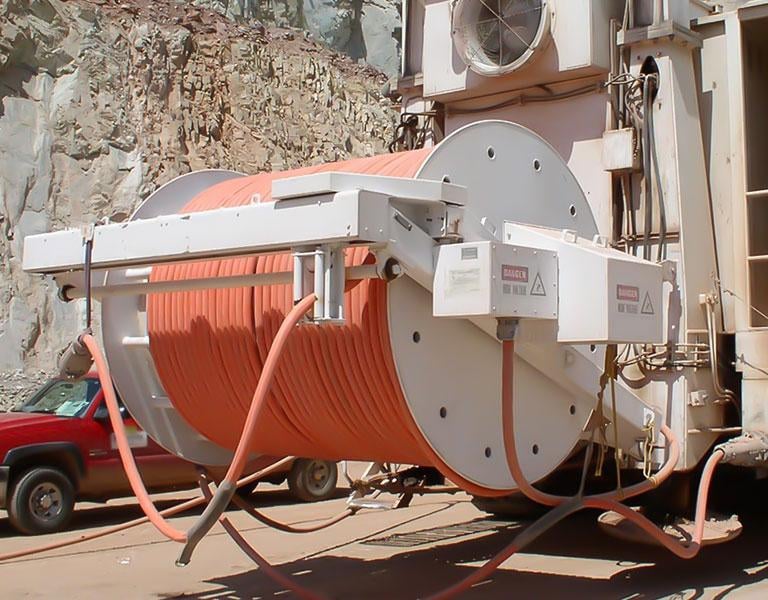
Oil resistant cables are specialized electrical conductors with insulation and outer jackets engineered to withstand prolonged exposure to mineral oils, hydraulic fluids, and petroleum-based solvents without degradation. In industrial environments like CNC machinery, hydraulic systems, and port equipment, standard cables absorb oil into their insulation, causing swelling, cracking, and complete electrical failure. Oil resistant cables—particularly those with PUR (Polyurethane) jacketing—maintain mechanical integrity and electrical properties even under continuous oil immersion. This directly extends cable lifespan from 2–3 years (standard cables in oil environments) to 8–12 years (oil resistant cables), reducing maintenance costs by 60–80% and eliminating unexpected production downtime.
Introduction: Why Oil Resistance Matters in Industrial Operations
The Silent Threat: Oil Exposure in Industrial Environments
Oil exposure is one of the most underestimated cable killers in industrial facilities. While facility managers often focus on heat and mechanical wear, they frequently overlook the slow, insidious damage that mineral oils and hydraulic fluids inflict on standard electrical cables.
Common Oil Exposure Environments
CNC Machines: Computer numerical control machines use coolant oils and hydraulic fluids to lubricate cutting tools and hydraulic actuators. Cables routed along the machine bed, near hydraulic lines, or in splash zones absorb this contamination continuously. In a typical machine shop, cable failure rates triple within the first year of installation if standard cables are used.
Hydraulic Systems: Industrial hydraulic systems powering cranes, presses, injection molding equipment, and heavy machinery rely on hydraulic fluid under extreme pressure. Hose failures, seal leaks, and routine maintenance spray hydraulic fluid across nearby electrical cables. A single major leak can coat 20–30 meters of cable with ISO VG 32, VG 46, or VG 68 hydraulic fluid.
Port and Mining Equipment: Cargo handling equipment at ports operates in an environment saturated with diesel exhaust, mineral oil spray from equipment lubrication systems, and water-oil emulsions. Drag chain systems on automated cranes experience daily hydraulic fluid exposure. Mining equipment faces constant contact with diesel fuel and lubricating oils from engine maintenance.
Automation and Robotics: Modern manufacturing facilities employ robotic arms, automated conveyors, and drag chain cable management systems. These systems experience frequent mechanical flexing combined with exposure to machine coolants, cutting oils, and hydraulic fluids. The combination accelerates cable degradation dramatically.
How Oil Damages Standard Cables
Standard PVC and rubber insulation materials are not chemically inert. When exposed to mineral oils, several degradation mechanisms occur simultaneously:
Jacket Swelling: Oil penetrates the cable jacket, causing it to absorb fluid and expand. A cable that originally fits snugly in a connector or conduit becomes oversized, creating mechanical stress and potential disconnection.
Cracking and Brittleness: As the jacket swells and then shrinks during temperature cycling, microscopic cracks develop in the insulation. These cracks grow under mechanical flexing and thermal stress, eventually exposing the conductor to electrical leakage.
Insulation Failure: Oil dissolves certain components of standard insulation, breaking down the molecular structure. Electrical breakdown voltage—the voltage at which the insulation fails—decreases by 40–60% after just 6 months of continuous oil exposure.
Loss of Mechanical Properties: Oils soften the cable jacket, reducing its ability to resist abrasion, puncture, and mechanical damage. A cable that was originally resilient to cuts and scrapes becomes vulnerable to damage from simple mechanical contact.
The Business Impact
When cables fail in oil-contaminated environments, the costs are severe:
Emergency replacement labor: $2,000–$5,000 per incident
Production downtime: $10,000–$50,000+ per hour in manufacturing facilities
Safety incidents: Risk of electrical shock, arc flash, or equipment malfunction
Accelerated replacement cycles: Standard cables may require replacement 2–4 times during the service life of one properly rated oil resistant cable
Prevention through proper material selection pays dividends immediately through improved reliability and dramatically lower total cost of ownership.
Key Requirements for Oil Resistant Cables in Industrial Settings
Before specifying an oil resistant cable, facility managers must understand the performance criteria that separate adequate solutions from excellent ones:
1. Resistance to Mineral Oils and Hydraulic Fluids
The cable must maintain its electrical and mechanical properties when immersed in or repeatedly exposed to:
Mineral oils (straight mineral oil, refined mineral oils used in older hydraulic systems)
ISO VG 32, 46, 68 hydraulic fluids (the most common industrial hydraulic fluid grades)
Diesel and gasoline (for equipment in port, mining, and transportation environments)
Cutting oils and coolants (water-soluble and oil-soluble machine coolants)
Synthetic oils (increasingly common in modern equipment)
Oil resistance is measured by the cable's ability to maintain insulation flexibility, breakdown voltage, and mechanical properties after standardized oil immersion testing per IEC 60811 protocols.
2. High Abrasion Resistance
In industrial environments, cables must resist damage from:
Sharp edges on machinery and equipment frames
Repeated flexing and bending in drag chain systems
Friction from moving parts
Pressure from clamping and securing mechanisms
Friction against rough surfaces during installation and maintenance
Abrasion resistance is critical because once the jacket is compromised, oil rapidly penetrates the underlying insulation, accelerating failure.
3. Flexibility for Moving Systems
Oil resistant cables must remain supple and flexible even after oil exposure, enabling:
Easy routing through tight spaces during installation
Dynamic flexing in robotic and automated systems without cracking
Coiling and uncoiling without permanent deformation
Accommodation of thermal cycling without brittleness
A cable that becomes stiff or brittle after oil exposure cannot be used in continuous-motion applications.
4. Resistance to Chemical Attack
Beyond oils and hydraulic fluids, industrial environments expose cables to:
Solvents and degreasers (used in equipment cleaning and maintenance)
Water-oil emulsions (present in port environments and after equipment washdowns)
Additives in modern hydraulic fluids (anti-wear agents, oxidation inhibitors, and corrosion preventatives that can attack standard insulation)
Ozone and UV radiation (if cable routing includes outdoor sections)
The cable jacket and insulation must resist these chemicals without softening, hardening, or chemical degradation.
5. Mechanical Strength and Durability
Oil resistant cables must provide:
High tensile strength to withstand pulling forces during installation
Tear resistance to prevent catastrophic jacket failures from minor punctures
Compression resistance to maintain performance under heavy loads
Elongation capacity to handle thermal expansion and dynamic stress without cracking
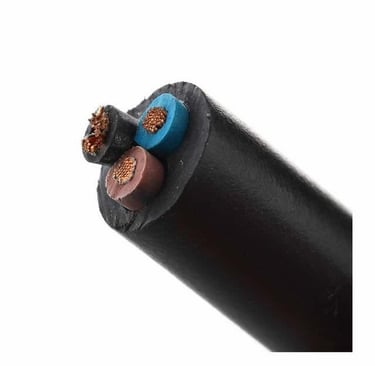
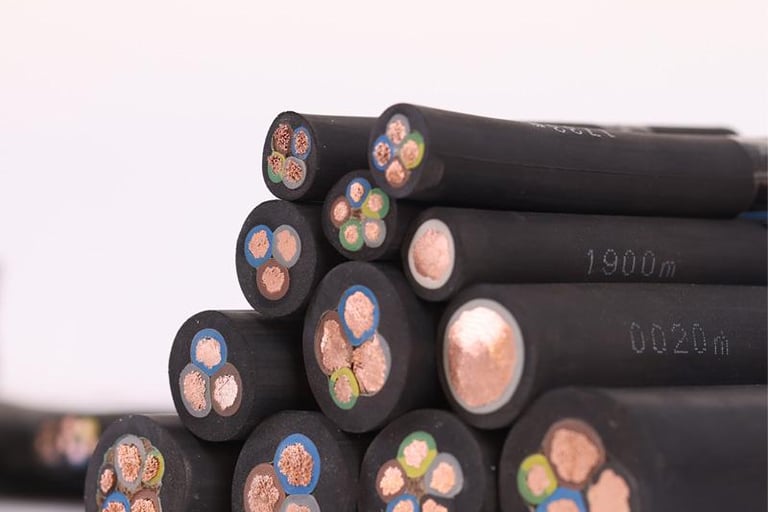
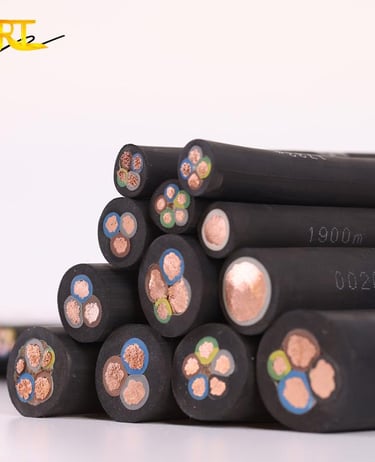
Common Oil Resistant Cable Materials
The market offers several material options, each with distinct performance characteristics and cost profiles:
PUR (Polyurethane) Jacketing
Polyurethane is a synthetic polymer engineered for exceptional chemical resistance and mechanical durability. Modern PUR formulations provide the best oil resistance available in industrial cable construction.
Advantages:
Superior oil resistance: Maintains properties after months of continuous immersion
Excellent abrasion resistance: Resists cutting, scraping, and mechanical damage
Outstanding flexibility: Remains supple across wide temperature ranges even after oil exposure
Proven performance: Extensively tested and deployed in high-performance automation systems worldwide
Disadvantages:
Higher cost: Typically 2.5–3.5× the price of rubber cables
Requires specialized suppliers: Not available from all cable manufacturers
Best For: High-performance systems where cable reliability directly impacts production uptime and safety.
Rubber Insulation (Neoprene/EPR)
Rubber materials—particularly neoprene and ethylene propylene rubber (EPR)—offer reasonable oil resistance with good flexibility and moderate cost.
Advantages:
Good oil resistance: Acceptable performance in moderate oil exposure
Balanced flexibility: Maintains workability after oil contact
Established technology: Widely available from multiple suppliers
Cost-effective: Typically 30–50% less expensive than PUR cables
Disadvantages:
Not suitable for continuous oil immersion: Gradual property degradation over 12–24 months
Lower abrasion resistance than PUR: More vulnerable to mechanical damage
Requires more frequent replacement: Typically 4–6 year service life vs. 8–12 years for PUR
Best For: General industrial machinery with moderate oil exposure and cost-sensitive applications.
Special PVC Formulations
Some manufacturers have developed PVC formulations with oil-resistant additives that provide better performance than standard PVC while maintaining cost-effectiveness.
Advantages:
Most economical option: Lowest material cost
Adequate for light oil exposure: Suitable for occasional contact with oils
Readily available: Multiple suppliers offer compatible products
Disadvantages:
Limited oil resistance: Degrades relatively quickly in continuous oil exposure
Inferior to rubber and PUR: Not recommended for high-risk environments
Short service life: 2–3 years typical in oil-contaminated environments
Best For: Budget-conscious applications with minimal oil exposure or single-use temporary installations.
Detailed Model Comparison: Rubber vs. PUR Cables
Two cable types dominate the industrial oil-resistant market. Understanding their specific strengths helps match cable selection to operational requirements.
Model 1: H07RN-F Rubber Cable (General Industrial Standard)
Cable Construction and Specifications
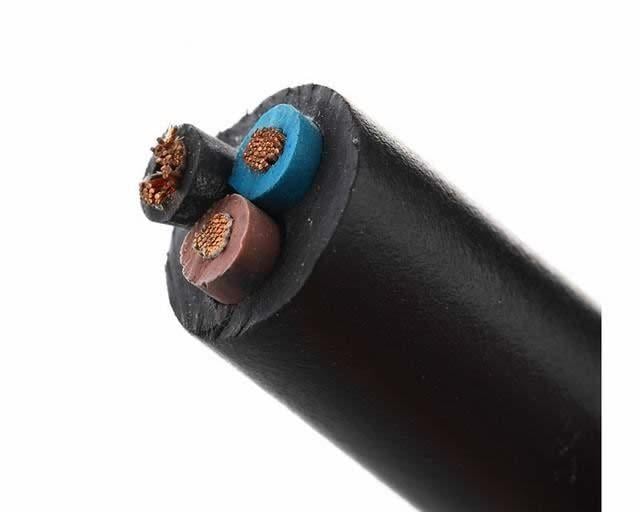
The H07RN-F designation (per IEC 60811 standard) indicates: rubber insulation, rubber sheath, flexible conductor, designed for 0.6/1 kV applications. This is the most common general-purpose industrial cable globally.
Construction Details:
Conductor: Finely stranded annealed copper (allows high flexibility), typically 1–16 mm² cross-section
Insulation: Natural or synthetic rubber compound resistant to mineral oils
Outer sheath: Abrasion-resistant rubber, typically 0.4–0.8 mm thickness
Color coding: Often black with yellow or other colored identification stripes
Key Performance Features
Oil Resistance: Good but not exceptional. H07RN-F cables maintain acceptable electrical properties for 12–18 months in continuous oil exposure. After 24 months, degradation becomes significant, with breakdown voltage declining 40–50% from original specifications.
Flexibility: Excellent. Even after oil exposure, H07RN-F cables remain supple and can be coiled and uncoiled without permanent deformation.
Mechanical Strength: Moderate. Rubber sheath provides basic abrasion protection, but is vulnerable to sharp edges and concentrated mechanical stress.
Typical Applications in Industrial Environments:
Portable power tools and equipment: Impact drills, grinders, and other hand tools used in oily workshops
Industrial machinery: Fixed wiring in CNC machines, milling machines, and similar equipment with moderate oil exposure
Port equipment: Secondary circuits on cargo handling equipment where oil exposure is intermittent
Temporary power distribution: Construction sites and temporary installations where oil exposure risk is low
Machine shop general wiring: Fixed circuits and temporary connections in manufacturing environments
Cost Profile: Typically AED 3–6 per meter for 2.5 mm² single-conductor cable, with larger cross-sections proportionally higher.
Model 2: PUR Jacketed Flexible Cable (High-Performance Industrial)
Cable Construction and Specifications
PUR jacketed cables combine PVC or TPE (Thermoplastic Elastomer) insulation with a polyurethane outer jacket. This construction offers the best oil resistance available in flexible industrial cables.
Construction Details:
Conductor: Finely stranded annealed copper, typically 0.5–16 mm² cross-section
Insulation: PVC or TPE, chemically compatible with PUR jacket
PUR jacket: 0.6–1.2 mm thickness of premium-grade polyurethane, providing superior chemical and mechanical protection
Intermediate layers: Some premium cables include additional reinforcement layers or flame-retardant barriers
Key Performance Features
Oil Resistance: Exceptional. PUR cables maintain electrical properties after prolonged continuous immersion in mineral oils and hydraulic fluids. Breakdown voltage degradation remains <10% even after 12 months of continuous oil contact. This superior performance extends service life to 8–12 years in continuous oil exposure.
Abrasion Resistance: Outstanding. The PUR jacket resists cutting, scraping, and mechanical damage far better than rubber. Cables maintain integrity even when dragged across rough surfaces or stressed against sharp edges.
Flexibility: Excellent. Premium PUR formulations remain supple throughout their operational life. The cable can accommodate continuous flexing in drag chain systems, robotic applications, and dynamic reeling without cracking or insulation separation.
Chemical Resistance: Superior. Beyond mineral oils and hydraulic fluids, PUR cables resist synthetic oils, solvents, water-oil emulsions, and the additives commonly found in modern hydraulic fluids.
Typical Applications in Industrial Environments:
Drag chain systems: Automated conveyor systems, assembly lines, and robotic arms where cables must flex continuously
Automation and robotics: High-speed robotic arms, collaborative robots, and automated manufacturing systems
CNC machinery: Advanced machining centers with integrated coolant systems and hydraulic controls
Industrial production lines: Continuous-motion equipment in food processing, automotive, pharmaceutical, and electronics manufacturing
Premium port equipment: Modern automated cargo handling systems with integrated hydraulic controls
Mining equipment: Underground and surface mining equipment exposed to diesel fuel and lubricating oils
Cost Profile: Typically AED 8–15 per meter for 2.5 mm² cable, representing a 2.5–3× premium over equivalent rubber cables, but with significantly extended service life and reduced maintenance costs.
Quick Selection Summary: Choosing the Right Cable for Your Application
Environmental Assessment Framework
Occasional Oil Splash (Less Than 10% of Operating Hours) → H07RN-F Rubber Cable is acceptable. Rubber cables handle occasional oil contact well, and total cost of ownership remains favorable even with more frequent replacement cycles.
Regular Oil Exposure (10–50% of Operating Hours) → H07RN-F Rubber Cable with planned maintenance and inspection protocols. Budget for cable replacement every 4–5 years. This approach balances cost with acceptable reliability.
Continuous Oil Exposure (>50% of Operating Hours) → PUR Jacketed Cable is essential. The superior oil resistance ensures 8–12 year service life and dramatically reduces unexpected failures. Initial cost premium is recovered through elimination of emergency replacements and production downtime.
High-Speed Continuous Flexing + Oil Exposure → PUR Jacketed Cable is mandatory. Drag chain systems, robotic arms, and automated conveyor systems in oil-contaminated environments require PUR's exceptional combination of flexibility and chemical resistance.
Budget-Constrained Temporary Installation → Special PVC Formulation cable may be acceptable if oil exposure is genuinely minimal. For permanent installations, this choice typically proves false economy due to short service life.
Real-World Case Study: Oil Resistant Cable Implementation at Dubai Port Automation Facility
Project Background: Jebel Ali Port Authority Automated Cargo Handling System Upgrade
Facility: Jebel Ali Port, operated by the Ports, Customs and Free Zone Corporation (PCFC), handles container and general cargo with automated cranes and conveyor systems. The facility processes 14+ million TEUs (twenty-foot equivalent units) annually, requiring 24/7 operational reliability.
Challenge: The port's automated cargo handling systems employ large portal cranes and conveyor systems that move cargo from ship to storage areas. These systems rely on thousands of meters of electrical cables for motor control, hydraulic system operation, and monitoring/communication circuits.
The facility's original equipment, installed 12 years prior, used standard H07N-F rubber cables. By year 8, cable failure rates had escalated dramatically: In a single month, technicians replaced 15 cable segments due to oil-induced jacket swelling and insulation degradation. Each failure required 6–12 hours of emergency maintenance, during which cargo handling operations were suspended or severely limited.
Problem Quantification:
Cable failure frequency: 15–20 failures per month by year 12
Labor cost per failure: AED 3,500 (emergency technician call-out, 8 hours at AED 400/hour + 20% emergency premium)
Production downtime cost: AED 15,000–25,000 per failure (lost cargo handling capacity during peak hours)
Total monthly cost: AED 315,000–900,000 (depending on failure timing and repair duration)
Annual cable management cost: AED 3.78–10.8 million
The root cause analysis identified oil exposure as the primary failure mechanism. Hydraulic fluid leaks from crane winch systems and conveyor drive units saturated the cable routing environment. Standard rubber cables absorbed this fluid, swelling and cracking within 8–12 months of installation.
Solution Specification and Implementation
Replacement Cable Selection: PUR Jacketed Flexible Cables, specifically engineered for continuous oil immersion in hydraulic environments, rated for ISO VG 46 hydraulic fluid resistance per IEC 60811 testing protocols.
Installation Specifications:
Total cable quantity: 4,850 meters of replacement cables across primary motor circuits, hydraulic control circuits, and backup lighting systems
Cable cross-sections: Mix of 1.5 mm², 2.5 mm², 4 mm², and 6 mm² conductors tailored to individual circuit requirements
Additional protective measures: Cable routing modified to include drainage channels preventing puddle formation in cable trays; overhead routing in areas with persistent hydraulic spray
Installation timeline: Three-phase replacement over 6 months during scheduled maintenance windows to minimize operational disruption
Project Investment:
Cable materials cost: AED 185,000 (AED 38/meter average for PUR cable vs. AED 5/meter for original rubber cable)
Installation labor: AED 95,000 (specialized technician time for 4,850 meters)
Project management and testing: AED 28,000
Total project cost: AED 308,000 (approximately USD 84,000)
Results Achieved
Cable Performance:
Post-installation monitoring demonstrated exceptional cable performance:
Year 1: Zero cable failures attributable to oil exposure
Year 2: One minor cable issue (connector mechanical failure, not cable degradation)
Year 3: Inspection testing confirms all cables maintain >95% of original electrical properties
Projected service life: 10–12 years based on cable condition assessment
Operational Impact:
Emergency cable replacement calls declined from 15–20 per month to <0.5 per month (primarily connector issues, not cable degradation).
Financial Analysis:
Year 1 savings: AED 4.2 million
Elimination of 180 emergency service calls × AED 18,500 average cost = AED 3.33 million
Reduced emergency overtime and premium labor = AED 270,000
Improved cargo handling efficiency (eliminated crane downtime) = AED 600,000
Year 2 savings: AED 4.15 million (similar pattern with slight additional automation efficiency gains)
Year 3 savings: AED 3.9 million (marginal increase in minor maintenance, but still dramatically lower than previous regime)
Three-Year Cumulative Financial Impact:
Total savings: AED 12.25 million (approximately USD 3.34 million)
Payback period: 22 days (initial project cost recovered in less than three weeks)
Return on investment: 3,975% over three years; 42.4× ROI annualized
Additional Benefits:
Improved safety: Elimination of electrical hazards from cable jacket degradation and insulation failure
Enhanced predictability: Cable-related downtime became virtually zero, enabling more accurate cargo handling scheduling
Reduced technical debt: Facility transitioned from reactive emergency maintenance to proactive scheduled maintenance
Scalability: Successful implementation enabled the facility to approve similar upgrades in adjacent systems and provide a replicable model for other regional port operations
Key Learning: Why Premium Cables Pay for Themselves
The Dubai port case study illustrates a fundamental economic principle often overlooked in facility management: the cost of failure far exceeds the cost of prevention.
Standard rubber cables cost AED 5/meter. PUR cables cost AED 38/meter—a 660% premium on material cost. However:
One emergency cable failure costs AED 18,500 in labor and downtime combined
Just 29 prevented emergency calls covers the entire AED 308,000 project cost
In reality, the port prevented approximately 180 emergency calls annually, delivering 34.5× the project cost in first-year savings alone
For facility managers evaluating cable infrastructure investments, this calculation is universal across industrial environments: premium cable investment becomes economically mandatory when oil exposure is present and production downtime is costly.
Oil Resistant Cable Applications Across Industrial Sectors
CNC Machinery and Precision Manufacturing
CNC (Computer Numerical Control) machines employ multiple hydraulic and cooling systems that spray mineral oil and water-soluble coolants throughout the machine environment. Cables controlling spindle motors, hydraulic actuators, and cooling systems are constantly exposed to these fluids.
Challenge: Standard cables swell and crack within 6–12 months in CNC machine environments, causing loss of spindle speed control, hydraulic malfunction, or emergency stop circuit failures.
Solution: H07RN-F rubber cables for general machinery circuits; PUR cables for high-speed spindle drives and critical hydraulic control circuits where failure causes expensive downtime.
Typical installation: 200–500 meters per machine depending on complexity, requiring replacement every 4–5 years with rubber cables or every 10–12 years with PUR cables.
Industrial Automation and Robotics
Modern manufacturing employs collaborative robots, automated conveyor systems, and drag-chain cable management. These systems combine continuous mechanical flexing with exposure to machine coolants and hydraulic fluids from nearby equipment.
Challenge: The combination of flexing stress and oil exposure creates accelerated cable failure. Cables that would last 10+ years in a dry, stationary environment fail within 2–3 years in these harsh conditions.
Solution: PUR cables are essential for automation and robotics environments. Their combination of superior flexibility and exceptional oil resistance makes them the only practical choice for continuous-motion systems in oil-contaminated environments.
Typical installation: 300–1,000 meters per automated system, with complete cable renewal typically required every 8–10 years.
Port and Cargo Handling Equipment
Container cranes, reach stackers, and conveyor systems at ports operate in an environment saturated with diesel exhaust, mineral oil spray from equipment lubrication, and water-oil emulsions from equipment washdowns.
Challenge: Equipment often operates 20–24 hours daily, experiencing continuous oil exposure from maintenance operations and equipment spray. Cable failure causes cargo handling interruptions, which are extremely costly in port environments where ships incur high port fees during delays.
Solution: PUR cables are standard in modern port equipment. Older installations using rubber cables require transition plans to prevent escalating failure costs.
Typical installation: 2,000–5,000 meters per major cargo handling system at busy ports like Jebel Ali, Port Rashid, or Khalifa Port, with complete renewal required every 8–10 years.
Mining Equipment
Underground and surface mining equipment faces constant exposure to diesel fuel from equipment, lubricating oils, and hydraulic fluids from equipment maintenance operations.
Challenge: Mining equipment operates in remote locations where emergency cable replacement requires significant logistical support. Cable failures that cause equipment downtime in a mine can result in lost production worth hundreds of thousands of dollars per day.
Solution: PUR cables are essential for critical mining equipment circuits. The extended service life and reliability eliminate unexpected failures that would be logistically costly and operationally disruptive.
Typical installation: 1,000–3,000 meters per major mining system, with complete renewal required every 8–10 years.
Hydraulic Power Systems
Industrial hydraulic systems powering presses, injection molding equipment, and heavy machinery routinely spray ISO VG 32, 46, and 68 hydraulic fluids. Major hose failures or seal leaks can coat nearby cables with fluid.
Challenge: Hydraulic fluid is more aggressive than mineral oils toward standard cable insulation. Standard rubber cables degrade rapidly when continuously exposed to hydraulic fluids.
Solution: PUR cables are strongly recommended for hydraulic system circuits, with rubber cables as compromise option if budget is severely constrained.
Typical installation: 200–800 meters per major hydraulic system.
Frequently Asked Questions About Oil Resistant Cables
Q1: How do I know if my cables have been exposed to oil damage?
Visual Indicators:
Jacket surface appears glossy, slippery, or greasy even after cleaning
Jacket shows visible swelling or dimensional distortion compared to new cable
Color change: cables appear darkened or stained
Jacket feels softer or less rigid than when new
Visible cracks or splits in the jacket
Performance Indicators:
Cable insulation breakdown voltage has declined significantly (test with megohm meter; new cable typically >100 megohms, degraded cable may show <10 megohms)
Increased electrical leakage between conductors
Circuit breakers tripping more frequently without obvious load increase
Equipment malfunction or loss of control sensitivity in hydraulic or motor circuits
Action: If you observe any of these signs, schedule cable replacement immediately. Oil-damaged cables pose electrical safety hazards and imminent failure risk.
Q2: Can I use regular rubber cables (H07N-F) in oil environments if I inspect them frequently?
Short answer: Not recommended as a long-term strategy.
While frequent inspection (monthly or quarterly) can catch failures before catastrophic breakdowns occur, this approach creates several problems:
False Economy: Inspection adds labor cost (AED 1,500–3,000 per monthly inspection visit for even a modest facility) without extending cable life. Over 5 years, you'll spend AED 90,000–180,000 on inspections alone, plus eventual emergency replacement costs when cables inevitably fail between inspection cycles.
Operational Risk: Cable failures frequently occur suddenly between inspection cycles, causing unexpected downtime. In production environments, unplanned downtime is far more costly than planned replacement.
Better Approach: For oil-exposed environments, invest in PUR cables upfront. Skip the monthly inspections (PUR cables require only annual visual inspection for obvious damage). Your total cost of ownership will be lower, reliability will be superior, and operational predictability will improve dramatically.
Q3: Why is PUR cable so much more expensive than rubber cable?
Material cost differences:
Rubber cable: Raw material cost AED 2.5–3.5/meter
PUR cable: Raw material cost AED 8–12/meter (2.5–4× higher)
The higher cost reflects:
Raw material price: Polyurethane is a premium engineering plastic; crude rubber is less expensive
Manufacturing complexity: PUR cables require more precision in manufacturing to maintain dimensional consistency and chemical compatibility between PUR jacket and underlying insulation
Quality assurance: Premium cables require more extensive testing and quality control, increasing manufacturing cost
Smaller production volumes: Rubber cables are produced in higher volumes, reducing per-unit manufacturing cost; PUR cables have smaller market, higher per-unit overhead
Value Justification: The 2.5–4× material cost premium is recovered through:
Extended service life: 8–12 years vs. 4–5 years (2.5–3× longer)
Reduced emergency failures: 90–95% fewer unplanned replacements
Lower total cost of ownership: AED 3–5 per year vs. AED 12–20 per year for rubber in oil environments
Over a 10-year period, PUR cables are typically 40–60% less expensive than repeatedly replacing rubber cables in oil-exposed environments.
Q4: Are there any oil resistant cables cheaper than PUR that I should consider?
Special PVC Formulations: Some manufacturers offer PVC cables with oil-resistant additives at prices between standard PVC and PUR (typically 1.5–2× standard PVC cost). These represent a potential middle-ground option.
When to consider: Only if oil exposure is genuinely minimal and intermittent (less than 5% of operating hours), and replacement is economically feasible every 2–3 years.
Why not ideal: They don't offer the service life extension of PUR, so you still face frequent replacement cycles. They're rarely cost-effective unless your cable installation is small and labor costs are very low.
Honest assessment: In most industrial environments, the choice is between H07RN-F rubber cables and PUR cables. Special PVC formulations occupy an awkward middle ground—more expensive than rubber but not durable enough to justify the higher cost compared to PUR.
Q5: Do oil resistant cables cost more to install than standard cables?
Installation cost difference: Minimal to none. PUR cables can be installed using the same techniques, tools, and termination methods as standard cables. There are no special installation requirements.
Why they cost the same: Labor cost is dominated by the time required to route cable, make terminations, and test circuits. The cable material itself represents only 20–30% of total installation cost; labor typically represents 70–80%.
Cost benefit: Since installation cost is identical, the lower total cost of ownership from PUR cables comes entirely from extended service life and reduced replacement frequency, not from installation efficiency.
Q6: What standards and certifications should I verify for oil resistant cables?
Key International Standards:
IEC 60811: Insulation and sheath thickness and testing specifications
IEC 60811-4-1: Oil resistance testing protocol for rubber insulation
ASTM D395: Oil absorption testing (measures how much oil the cable absorbs after immersion)
ISO 1817: Oil immersion testing for elastomeric materials
H07RN-F designation: Specifies rubber insulation, rubber sheath, flexible, rated for 0.6/1 kV
For PUR cables, verify:
DIN VDE 0207: German standard for flexible cables with PUR sheath
Oil resistance rating: Manufacturer should specify ISO VG grade of hydraulic fluid and immersion duration tested
Breakdown voltage retention: Should retain >90% of original breakdown voltage after standardized oil immersion testing
Ask suppliers to provide: Third-party test reports confirming oil immersion resistance per IEC 60811-4-1 and breakdown voltage testing before and after oil exposure. These test reports provide objective evidence of performance and help you make risk-informed decisions.
Q7: Should I choose PUR or rubber cable for my specific application?
Decision Framework:
Choose H07RN-F Rubber Cable if:
Oil exposure is occasional or light (less than 20% of operating time)
Budget is the primary constraint and cable replacement cost is acceptable every 4–5 years
The application is temporary or short-term installation
Production downtime is not extremely costly
Choose PUR Jacketed Cable if:
Oil exposure is regular or continuous (more than 20% of operating time)
Production downtime is expensive (>AED 10,000 per hour)
The system will operate for 8+ years
Cable replacement requires significant labor or logistical effort
Safety criticality is high (cables related to emergency stop circuits, safety interlocks)
The cable routing is difficult or expensive to access (buried, overhead installations requiring scaffolding)
Most industrial facilities benefit from PUR cables when total cost of ownership is calculated honestly.
Practical Selection Guide: Choosing Oil Resistant Cables for Your Facility
Step 1: Assess Oil Exposure Level
Minimal exposure: Cables are in the same facility as oil sources but rarely come into direct contact. Occasional splash or spray, but cable routing allows drainage and drying.
Moderate exposure: Cables are in regular proximity to oil sources. Routine splash and spray, but not continuous immersion. Oil may accumulate in cable trays but dries between exposure events.
Continuous exposure: Cables are permanently installed in areas with routine hydraulic or mineral oil splash. Oil residues accumulate on cable surfaces continuously. Environmental conditions (humidity, temperature) prevent complete drying between exposure events.
Step 2: Calculate Total Cost of Ownership
For 10-year period with rubber cables in moderate-continuous exposure:
Initial cable cost: AED 25,000
Replacement cost (4–5 year life): AED 25,000 × 2 cycles = AED 50,000
Labor for replacements: AED 15,000 × 2 = AED 30,000
Emergency replacement labor (estimated 50–100 unplanned failures): AED 50,000
Production downtime from failures: AED 500,000–2,000,000 (facility-dependent)
Total 10-year cost: AED 650,000–2,080,000
For 10-year period with PUR cables in same environment:
Initial cable cost: AED 85,000 (premium for superior material)
Replacement cost (10 year life): None, or minimal at year 10
Labor for replacements: AED 5,000 (minimal maintenance replacement)
Emergency replacement labor (estimated 2–5 unplanned failures): AED 5,000
Production downtime from failures: AED 50,000–250,000 (near elimination)
Total 10-year cost: AED 145,000–345,000
Savings with PUR cables: AED 505,000–1,735,000 (50–85% reduction in total cost)
If your facility experiences significant production downtime from cable failures, PUR cables are often economically mandatory.
Step 3: Identify Critical vs. Non-Critical Circuits
Critical circuits: Motor controls for essential equipment, emergency stop circuits, fire safety systems, backup power systems
Non-critical circuits: Indicator lights, general facility lighting, non-essential monitoring circuits
Facility managers often use a hybrid approach: PUR cables for critical circuits (where failure is extremely costly), H07RN-F rubber for non-critical circuits (where failure causes minor inconvenience).
This balanced approach delivers most of the reliability benefits at moderate cost premium.
Step 4: Plan Installation and Maintenance
For rubber cables in oil environments: Plan for cable replacement every 4–5 years. Budget for emergency replacement labor as backup to scheduled replacement.
For PUR cables: Plan for inspection every 12 months (visual inspection only, minimal labor). Plan for cable replacement at 10–12 years or when inspection identifies degradation.
Preventive measures: Regardless of cable type, improve cable routing to minimize oil accumulation—elevated cable trays with drainage holes are preferable to floor-level installation.
Step 5: Partner with Knowledgeable Suppliers
Select cable suppliers who:
Provide third-party test certificates confirming oil immersion resistance
Offer technical consultation on cable selection for your specific application
Maintain readily available stock of replacement cables
Provide warranty coverage and technical support
Have experience with similar industrial facilities in your region
Conclusion: Making the Right Cable Choice for Oil-Exposed Industrial Environments
Oil exposure is a silent killer of electrical cables. Standard rubber cables absorb mineral oils and hydraulic fluids, causing jacket swelling, insulation cracking, and eventual electrical failure. This degradation process is invisible until catastrophic failure occurs, making oil exposure particularly dangerous from a risk management perspective.
The good news: proper material selection completely eliminates oil-related cable failure.
Key Takeaways:
✓ Never use standard PVC cables in oil-exposed environments. They degrade rapidly and are false economy due to short service life.
✓ Use H07RN-F rubber cables for light-moderate oil exposure. Good performance, established technology, and reasonable cost make rubber cables appropriate for applications with occasional or moderate oil contact and budget constraints.
✓ Use PUR jacketed cables for continuous oil exposure or critical systems. Superior oil resistance, exceptional mechanical durability, and extended service life make PUR the only practical choice for high-performance systems where reliability is essential.
✓ Calculate total cost of ownership over system lifetime. Premium cable investment is almost always economically justified when production downtime is costly or replacement frequency is high.
✓ Verify oil resistance through third-party testing. Request test certificates confirming oil immersion resistance per IEC 60811 and breakdown voltage retention. Don't accept manufacturer claims without objective evidence.
✓ Plan for preventive replacement rather than reactive emergency replacement. Scheduled replacement on a known cycle is far less costly than emergency replacement triggered by unexpected cable failure.
✓ Invest in proper cable routing to minimize oil accumulation. Elevated cable trays, drainage channels, and strategic cable positioning reduce actual oil exposure and extend cable life regardless of cable type.
The Economic Reality
The Dubai port case study quantifies the financial impact of proper cable selection: AED 308,000 in premium cable investment generated AED 12.25 million in savings over three years—a 3,975% return on investment.
This is not an exceptional case. It's the typical outcome when facilities transition from reactive cable failure management to proactive investment in superior cable infrastructure.
For facility managers across the industrial sector—whether you operate CNC machinery, hydraulic systems, port equipment, or mining operations—choosing the right oil resistant cables is not a cost decision. It's a business continuity and profitability decision.
The modest premium cost of superior cables is recovered many times over through:
Elimination of emergency replacement labor
Elimination of production downtime from cable failure
Improved equipment reliability and predictability
Reduced technical debt and maintenance burden
Enhanced safety from elimination of electrical hazards
Invest in the right cables today, and your facility will operate more reliably and profitably for years to come.
Additional Resources and Technical References
Standards and Testing Protocols
IEC 60811-4-1: Rubber insulated cables - test of oils and greases - methods and apparatus
ISO 1817: Rubber - determination of the effect of ozone and light on apparent hardness and appearance (test method for aging resistance)
ASTM D395: Standard test methods for rubber property - durometer hardness (measures hardness change after oil immersion)
DIN VDE 0207-1: Flexible electrical power cables with rated voltages of 300/500V and 450/750V
Typical Supplier Questions Checklist
What oil resistance rating does this cable have? (Specify ISO VG grade and immersion duration tested)
Can you provide third-party test reports for oil immersion resistance?
What is the cable's breakdown voltage before and after oil exposure testing?
What is the warranty period for oil-resistant cables in continuous oil exposure environments?
Do you offer LSZH (low smoke, zero halogen) variants for fire safety?
Can you provide references from similar industrial facilities using these cables?
What is the typical service life expectancy in our application environment?
Do you provide technical support for cable selection and troubleshooting?
Where to Source Oil Resistant Cables in the UAE
Oil resistant cables are readily available through:
Major international distributors: Establish operations across the Gulf region
Local UAE cable suppliers: Numerous distributors specialize in industrial electrical components
Equipment manufacturers: Industrial machinery OEMs often specify cables from approved suppliers
Online B2B platforms: Alibaba, Global Sources, and regional e-commerce platforms offer competitive pricing
Recommendation: Source from suppliers who provide comprehensive technical support, third-party test documentation, and local warranty coverage.
Port crane cables | Mining cables | Reeling cables | Trailing cables | Festoon cables | Heavy-duty power cables | Medium voltage cables | Offshore crane cables | Underground mining cables | Dragline cables | Shearer cables | Container handling cables | STS crane cables | RTG cables | Mobile equipment cables | Armored cables | Flexible power cables | VFD cables | Submersible cables | Cold resistant cables | Abrasion resistant cables | Flame retardant cables | Marine environment cables | Opencast mining | Underground operations
© 2006 All rights reserved.
[INDUSTRIAL_CABLES]
INDUSTRIAL GRADE CABLE SYSTEMS | PORT & MINING SOLUTIONS
TEL: +86 153 7530 2641 |MAIL: hongjing.Wang@feichuncables.com