Preventing Cable Torsion: Mechanical Stress Solutions for Reeling Cables on RTG Cranes
Learn how to prevent torsion and bird-caging in RTG crane reeling cables with anti-torsion structure, aramid braid, and proper drum design.
hongjing.Wang@Feichun
7/9/202615 min read
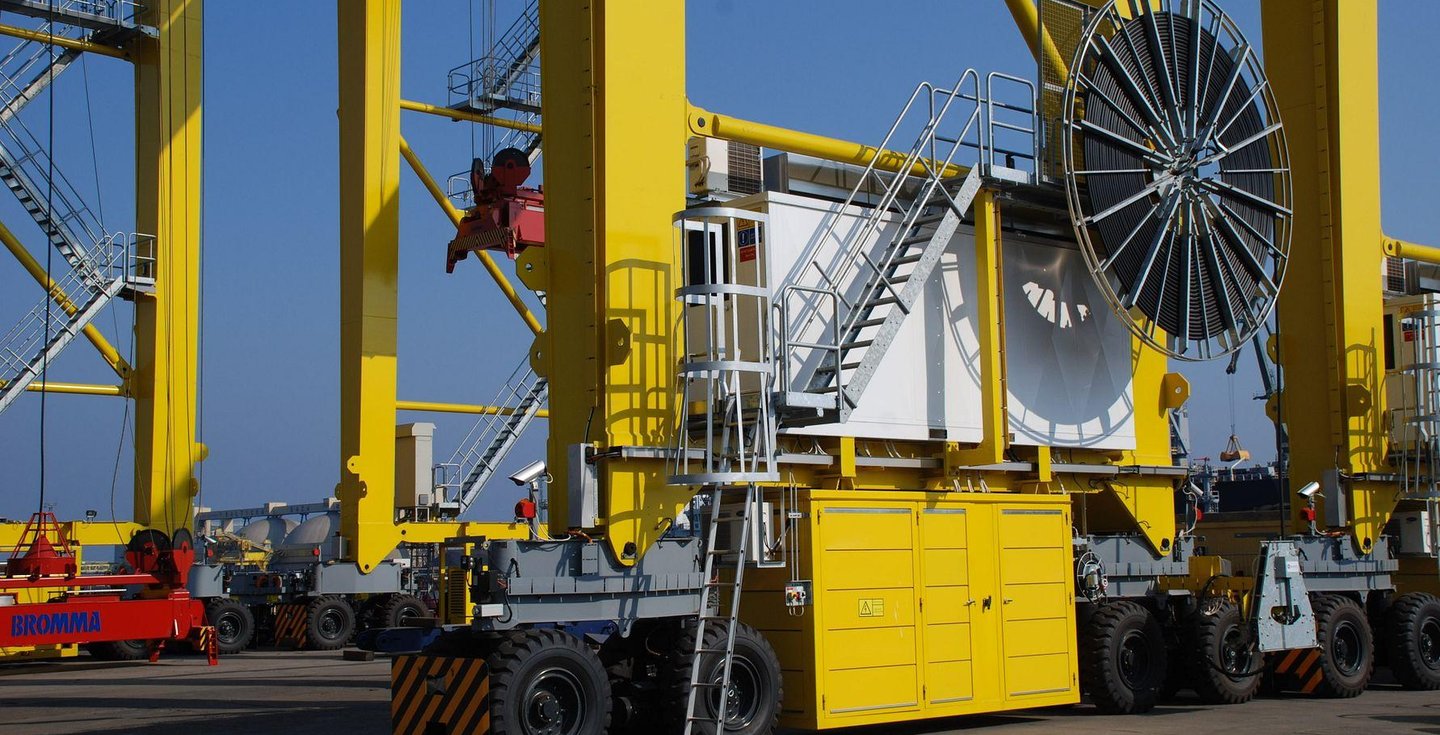
The container shipping routes passing through the Arabian Gulf and the Red Sea demand high operational speed from modern port infrastructure. Mega-terminals in the Gulf Cooperation Council region, such as DP World’s Jebel Ali Port in Dubai, Khalifa Port in Abu Dhabi, King Abdulaziz Port in Dammam, and Hamad Port in Qatar, are leading global standards in maritime logistics. To maintain precise container stacking schedules across expansive yard tracks, these terminals depend on fleets of Rubber Tyred Gantry cranes, commonly known as RTG cranes.
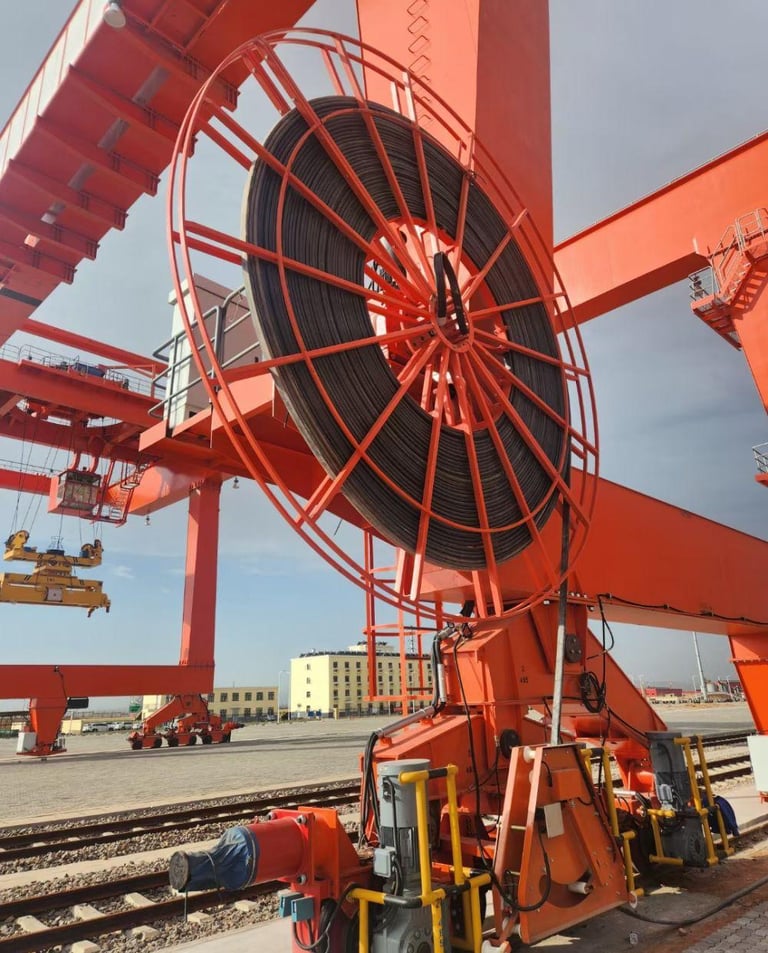
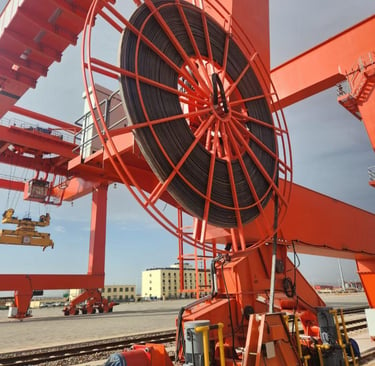
The electrical power and high-speed data delivery systems on an RTG crane are constantly in motion. These cranes utilize large, automated motorized cable reel systems to manage long power supply lines while travelling back and forth across container lanes. However, this continuous movement subjects the cables to severe mechanical stress.
Among the various types of physical strain encountered by port machinery, RTG crane cable torsion represents one of the most critical risks to system reliability. The repeated forward and backward travel, frequent directional reversals, and rapid reel acceleration curves of heavy yard machinery introduce structural torque forces into the flexible cable body. If left unmanaged, this rotational force can displace internal conductors, deform protective insulation layers, split external jackets, and eventually lead to a structural failure known as bird-caging.
For technical procurement managers, electrical engineers, and terminal asset operators across the Middle East, selecting a high-performance anti-torsion cable line is an important strategy to avoid unexpected downtime. This comprehensive technical guide analyzes the mechanics of torsional stress, details the structural layers of specialized anti-torsion reeling cable designs, highlights real-world port deployment challenges, and outlines the procurement criteria used by heavy industry specialists to protect modern port operations.
Why RTG Cranes Create High Torsion Risk
To understand how torsional stress develops within an RTG crane reeling cable, it helps to analyze the specific physical movements of rubber-tyred gantry machinery. Unlike rail-mounted systems that travel along perfectly straight tracks, an RTG crane runs on large rubber tires directly over concrete or reinforced asphalt container yard runways. This layout introduces distinct mechanical variations into the equipment's long-travel operation.
Constant Velocity Variations and Rapid Reversing Cycles
An RTG crane operates on a high-cycle schedule, continually repositioning itself over container stacks to follow instructions from terminal operating software. The gantry long-travel system must accelerate quickly from a complete stop, reach standard cruising speeds of 90 to 140 meters per minute, and then decelerate rapidly to align precisely with targeted container slots.
During these sudden transitions, the motorized cable reel system must react instantly. The drum reel uses dedicated torque control systems or variable frequency drives to maintain constant tension on the cable, preventing slack when the crane slows down and avoiding excessive pulling force when it accelerates.
The primary mechanical stress occurs during frequent reversing maneuvers. When the crane changes direction, the cable reel must instantly stop its payout rotation and begin high-speed winding, or vice versa. This rapid shift subjects the cable to intense dynamic loads. The physical inertia of the suspended cable, combined with the sudden rotational torque of the reel drum, creates a strong twisting force that travels down the length of the cable body.
Long Travel Paths and Complex Winding Geometries
Modern container yards require long long-travel paths, often stretching over distances of 200 to 500 meters or more from the central power feed point. As the cable spools onto a monospiral or cylindrical drum reel across these long distances, it rarely enters the reel guide assembly at a perfectly perpendicular angle.
Crosswinds from the coast can push the hanging cable loop to one side, forcing it to slide against guide rollers, fairleads, and diversion sheaves. This lateral friction introduces axial rotation into the cable before it even reaches the winding drum.
When this external rotation combines with the internal winding forces of the reel, it concentrates twisting stress within the cable's structural matrix. Over long operating shifts, this repetitive twisting builds up significant mechanical tension inside the cable.
What Cable Torsion Does to a Reeling Cable
If a flexible cable is not structurally engineered to handle rotational forces, the accumulation of internal torque leads to a steady breakdown of its internal materials. This physical degradation typically progresses through several clear stages.
Internal Stress Mechanisms and Material Shift
The internal cross-section of a standard low-voltage or high-voltage power reeling cable contains multiple elements: phase conductors made of fine copper strands, ground cores, control pairs or fiber-optic modules, and internal filler materials, all enclosed within an outer protective jacket. When a twisting force hits an unprotected cable, the outer jacket slips slightly against the internal core assembly. This relative movement causes several structural issues:
Conductor Displacement: Phase cores are pushed out of their balanced, parallel layout. Under continuous torque, the cores tend to wrap around one another tightly, altering the uniform layout of the cable cross-section.
Insulation Cracking and Mechanical Creep: As the internal conductors shift, they exert uneven pressure on the surrounding insulation layers. This localized pressure can cause mechanical creep, thinning the insulation material and increasing the risk of electrical tracking or phase-to-phase short circuits.
Shielding and Screen Distortion: For control and medium-voltage cables, the metallic braided shields or copper tape screens can warp, bunch up, or separate, reducing the cable's electromagnetic interference shielding and causing data signal errors.
Long-Term Operational Hazards in Port Service
As the cable's internal components gradually shift out of position, its overall electrical and mechanical reliability decreases. The built-in friction among the compressed internal layers generates localized heat, which can accelerate the thermal aging of the insulation material.
Eventually, the outer protective jacket can develop deep splits, opening paths for moisture, coastal salt spray, and abrasive sand dust to enter the core assembly. In active port operations, this level of material degradation often leads to unexpected breaker trips, intermittent control signal failures, and sudden system shutdowns that disrupt tightly managed terminal logistics.
What Bird‑Caging Means
The most severe and visually obvious consequence of unmanaged torsional stress in a flexible reeling cable is a major structural failure known as bird-caging. This term describes a condition where the internal components of a wire rope or flexible multi-core cable become permanently deformed and expand outward.
Definition and Structural Breakdown Mechanics
Bird-caging occurs when the internal twisting forces within a cable build up to a point where they overcome the structural containment provided by the outer protective jacket. When a cable is twisted against its natural lay direction, the copper conductor strands or individual phase cores are forced to uncoil and expand radially.
Because the ends of the cable are securely anchored at the crane's junction box and the reel drum anchor point, this structural expansion cannot escape along the length of the cable. Instead, the conductors push outward against the inner wall of the protective jacket.
This outward pressure deforms the jacket, causing it to stretch, swell, and separate from the internal core assembly. In severe cases, the outer jacket can rupture completely, allowing the separated phase conductors to bulge outward and resemble the bars of a birdcage.
Common Field Signs of Torsional Failure
Field maintenance teams can identify early structural torsion and bird-caging through several clear indicators during routine crane inspections:
Localized Swelling: Specific sections of the cable show a sudden increase in diameter, appearing swollen or out of round compared to the rest of the line.
Snake-Like Winding: The cable no longer spools flat or flush against the reel drum surface. Instead, it exhibits a wavy, snake-like pattern, often crossing over adjacent wraps and causing uneven spooling.
Jacket Delamination: The external protective sheath wrinkles, bubbles, or separates from the internal core assembly, indicating that the internal layers are shifting out of position.
Permanent Rotational Set: When tension is removed from the cable loop, the cable body does not hang straight down. Instead, it naturally curls or twists into a tight spiral loop, showing that the core has taken on a permanent rotational deformation.
On global heavy machinery forums, such as the operational maintenance discussions found at Heavy Equipment Forums, field mechanics and crane technicians frequently share insights on these failure modes. These community discussions underscore that once a flexible cable shows visible signs of swelling or bird-caging, its structural integrity is compromised. The uneven stress distribution across the deformed copper strands accelerates metal fatigue, making the cable unsafe for continued use and requiring an immediate replacement to prevent a major failure.
Anti‑Torsion Cable Structure
To prevent internal material shifting and bird-caging under heavy operational loads, specialized cable manufacturers like Feichun engineer anti-torsion reeling cables with reinforced internal structures designed to balance rotational forces.
Reinforced Internal Design Architecture
An advanced anti-torsion reeling cable utilizes a multi-layered design where each component plays a specific role in managing mechanical stress:
Fine-Stranded Conductor Matrix: The phase cores use fine-stranded tinned copper wires categorized under Class 5 or Class 6 flexibility standards. Tinned copper provides excellent resistance to corrosion from coastal salt spray, while the fine-stranded layout allows the conductors to flex repeatedly without early metal fatigue.
Premium Elastomeric Core Insulation: The conductors are jacketed with high-grade insulation materials, such as Type 3G13 Ethylene Propylene Rubber (EPR) compounds, which maintain stable electrical isolation at continuous operating temperatures up to 90 degrees Celsius.
Stabilizing Rubber Inner Sheath: The insulated cores are bundled together and encased in an extruded rubber inner sheath. This layer fills the gaps between the cores, locking them into a secure layout and providing a smooth foundation for the reinforcement layers.
Integrated Anti-Torsion Aramid Braid: The primary defense against rotational forces is a high-tensile aramid fiber braid embedded between the inner and outer sheaths. This heavy-duty braid is woven at a precise angle around the inner sheath to absorb rotational forces and prevent the core from twisting.
Heavy-Duty Protective Outer Sheath: The outermost layer consists of a reinforced chloroprene rubber compound, such as Type 5GM3 rubber, or a heavy-duty polyurethane (PUR) matrix. This jacket provides high resistance to abrasion, tearing, ultraviolet radiation, ozone, and industrial oils.
Structural Performance Comparison
To highlight the differences between standard cables and anti-torsion reeling cables, let let us look at how their designs handle operational stress:
Regarding the outer sheath, a standard cable relies on a basic industrial-grade rubber compound, whereas an anti-torsion cable uses a reinforced, high-durability rubber or premium polyurethane jacket.
The middle reinforcement layer reveals a significant engineering difference. Standard cables generally feature no internal braid layer between the sheaths, leaving the inner cores exposed to direct torque forces. In contrast, an anti-torsion cable includes an integrated high-tensile aramid fiber braid. This layer stabilizes the internal assembly, limits structural twisting, and protects the core from deformation.
These construction choices directly affect performance in the field. Under high mechanical stress, standard configurations offer limited torsion resistance, making them vulnerable to core shifting and bird-caging on high-speed reels. Anti-torsion designs provide high structural resistance, ensuring the cable maintains its shape and handles heavy dynamic loads safely.
For heavy-duty RTG crane reels that operate with frequent reversals and high acceleration, the reinforced anti-torsion design provides the structural strength needed to prevent premature failure. Standard cables remain a practical option for secondary, stationary lines or lighter-duty equipment where rotational stress is minimal.
Design Factors That Reduce Torsion
While specifying an anti-torsion cable structure is essential, port engineers must also ensure that the design and alignment of the crane's cable reel system match the physical requirements of the cable.
Drum and Reel Alignment Precision
The geometric alignment between the motorized cable reel drum, the guide fairleads, and the terminal's ground anchor point affects how evenly the cable winds onto the drum. If the guide sheave is misaligned even by a few degrees, the cable will pull against one side of the reel flange during spooling.
This off-center alignment forces the cable to roll axially as it enters the drum nesting groove, introducing a continuous twist into the line with every wrap. To prevent this, alignment systems must be calibrated regularly so that the cable moves along a straight pathway perpendicular to the reel axis.
Optimized Back Tension Management
Maintaining proper back tension is vital for preventing structural bird-caging. The motorized reel's control system must deliver steady tracking tension across all operating speeds:
Insufficient Back Tension: If the reel torque drops too low during crane deceleration, the cable loop can go slack. This slack allows the internal copper conductors to expand and loosen within the jacket, creating ideal conditions for bird-caging to develop during the next acceleration cycle.
Excessive Pulling Force: If the reel tension is set too high, the cable experiences severe tensile stress. This high tension compresses the internal core layers, increases surface friction against guide elements, and can lead to early outer jacket wear.
Dynamic Bend Radii and Routing Geometry
Bending a flexible cable over a radius smaller than recommended by the manufacturer creates severe compression on the inner curve and high tension on the outer curve. For high-stress applications like RTG crane reels, the minimum bending radius must be strictly maintained.
According to standard VDE 0250 guidelines, an NSHTÖU cable with an outer diameter greater than 21.5 mm requires a minimum bending radius of at least 6.25 × the cable's outer diameter when winding on a drum. For free moving guide pathways, this ratio should be increased to 10 to 12 × the outer diameter to provide a safety margin against dynamic shocks.
High‑Performance Cable Models for RTG Crane Service
When sourcing durable cables for port infrastructure, engineering teams focus on specific type-approved cable families that are built to withstand severe rotational and mechanical stresses.
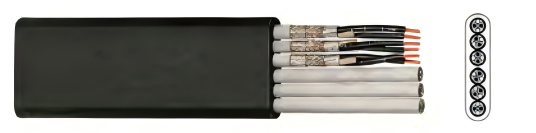
1. NSHTÖU Heavy-Duty Reeling Series
The NSHTÖU cable line is a globally recognized standard for heavy-duty material handling machinery. Built according to DIN VDE 0250-814 standards, this type uses high-grade Type 3G13 EPR core insulation and an extra-thick Type 5GM3 chloroprene outer sheath.
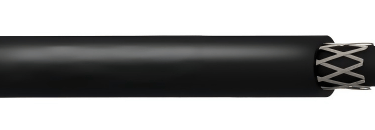
The key feature of the NSHTÖU line is its integrated textile or synthetic sheath supporting braid embedded between the inner and outer rubber layers. This braid binds the sheaths together, turning twisting forces into axial tension that can be safely absorbed by the cable's internal structural members. This design makes it a reliable choice for standard long-travel RTG crane reel setups.
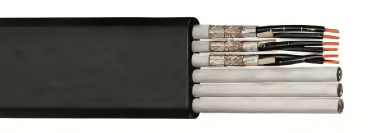
2. (N)SHTÖU-J Premium Anti-Torsion Series
For ports running high-speed, high-acceleration automated yard systems, the premium (N)SHTÖU-J series provides additional protection. This model features an upgraded anti-torsion braid woven from high-tensile aramid fibers.
The aramid matrix delivers exceptional tensile strength and torsional resistance, allowing the cable to handle regular twisting forces up to +/- 25 degrees per meter without core deformation. This series is engineered for heavy crane service where rapid reversing and high wind loads are common.
3. Feichun Specialized RTG Polyurethane (PUR) Series
Developed for ports operating in extreme environments, this series combines the torsional resistance of an integrated aramid braid with the high durability of an advanced polyurethane outer jacket.
The PUR sheath provides outstanding resistance to tearing, mechanical abrasion, and surface friction as the cable moves into guide baskets or fairleads. Additionally, the compound is highly resistant to saltwater hydrolysis, ozone degradation, and continuous solar surface temperatures over 65 degrees Celsius, making it well-suited for high-salinity container terminals.

Technical Selection Checklist for Procurement Operations
When drafting technical procurement documents or evaluating manufacturer bids for port infrastructure projects, use this checklist to verify compliance with high-quality engineering standards:
Verify Travel Velocity and Acceleration Profiles: Confirm the cable's mechanical ratings match the crane's long-travel speed (up to 140 meters per minute) and can handle the reel's peak acceleration curves.
Specify Internal Anti-Torsion Reinforcement: Require an integrated high-tensile aramid fiber or heavy-duty textile supporting braid embedded securely between the inner and outer sheaths.
Confirm Conductor Material and Coating: Specify flexible Class 5 or Class 6 fine-stranded tinned copper conductors to ensure reliable flex life and protection against marine corrosion.
Verify Minimum Bending Radius Compliance: Ensure the layout of the reel drum flanges, guide rollers, and diversion sheaves accommodates the cable's required minimum bending radius (e.g., 6.25 × outer diameter for drum winding).
Apply Thermal Derating Factors for Local Climate: For ports in the Middle East where ambient summer temperatures reach 50 degrees Celsius, apply a thermal derating factor of 0.75 to the standard catalog current ratings to prevent overheating.
Confirm Environmental and Chemical Resistance: Verify that the outer jacket compound is certified as oil-resistant (per EN 60811-404) and resistant to UV radiation, ozone, and saltwater exposure.
Request Documented Type-Test Performance Data: Ask the manufacturer for verified test records demonstrating reliable performance over extended reverse-bending and continuous torsion cycles.
Maintenance and Inspection Guidelines for Port Operations
To maximize the service life of RTG crane reeling cables and identify early mechanical wear before it leads to a costly system shutdown, maintenance teams should implement a structured inspection routine.
Weekly Visual Inspection Protocol
Check Winding Uniformity: Observe the cable as it spools onto the reel drum during active long-travel operations. Look for any uneven winding, gaps between wraps, or instances where the cable crosses over adjacent layers, which can indicate a build-up of internal torque.
Inspect the Outer Jacket: Examine the surface of the cable for signs of mechanical wear, such as deep scratches, scuff marks, wrinkling, or micro-cracks, especially along sections that pass frequently through guide fairleads.
Monitor for Diameter Variations: Check the cable for localized swelling, flattened areas, or soft spots, which can indicate that internal conductors are shifting or beginning to bird-cage.
Monthly System Maintenance Protocol
Verify Guide Roller Alignment: Inspect all deflection sheaves, guide rollers, and fairleads for worn bearings or alignment shifts that could introduce unnecessary lateral friction or twisting forces.
Check Reel Tension Calibration: Test the motorized reel's torque output to ensure it maintains steady, balanced back tension during both acceleration and deceleration phases.
Clean Guide Pathways: Remove accumulations of sand dust, ocean salt crusts, and dried lubricants from guide elements to reduce surface friction on the cable jacket.
Take Immediate Corrective Action: If any section of the cable shows clear structural deformation, severe corkscrewing, or visible bird-caging, remove the cable from active service immediately and replace it to safeguard terminal operations.
Conclusion
Managing mechanical stress and torsional forces is an essential part of maintaining reliable crane operations in modern, high-capacity port terminals. The rapid movements, frequent reversing cycles, and continuous acceleration profiles of rubber-tyred gantry cranes create demanding operating conditions that can quickly degrade standard industrial cables, leading to internal core failures, insulation damage, and structural bird-caging.
Using reinforced anti-torsion cable designs—such as the NSHTÖU series, premium aramid-braided (N)SHTÖU-J lines, or Feichun's specialized polyurethane-sheathed solutions—provides the structural strength needed to withstand these dynamic mechanical loads. These advanced cables feature integrated high-tensile braids that absorb rotational forces, lock internal components into place, and prevent conductor shifting, ensuring stable power and data delivery over a long service life. Investing in high-performance anti-torsion cabling helps port operators protect their energy supply systems, reduce unexpected maintenance costs, and maintain smooth terminal logistics.
Contact Us for Engineering Inquiries and Custom Quotations
Are you planning a terminal expansion, managing an RTG crane modernization project, or seeking solutions for cables showing signs of torque twist or bird-caging? Feichun engineers durable, high-performance anti-torsion reeling cables designed to handle the harshest mechanical and environmental conditions. Contact our technical sales department today to consult with an industry specialist, request detailed engineering datasheets, or obtain a comprehensive commercial price quotation.
Technical Frequently Asked Questions (FAQs)
What primary mechanical forces cause cable torsion on RTG cranes?
Cable torsion develops on RTG cranes due to a combination of factors: rapid acceleration and deceleration cycles, frequent long-travel reversals, and winding misalignments. When an RTG crane quickly changes its travel direction, the sudden rotational adjustment of the motorized reel introduces axial torque into the cable. This twisting force is often worsened by coastal crosswinds or slightly misaligned guide fairleads, which apply lateral friction and force the cable to roll axially as it spools onto the drum.
What is bird-caging in a reeling cable, and why is it dangerous?
Bird-caging is a severe structural failure where the internal copper conductor strands or phase cores uncoil and expand radially outward, causing a noticeable local swelling in the cable's diameter. This condition occurs when accumulated internal torque forces overcome the containment strength of the outer protective jacket. Bird-caging is highly dangerous because it permanently deforms the cable structure, thins or cracks internal insulation layers, increases the risk of phase-to-phase short circuits, and can lead to sudden electrical failures during active crane service.
Why is an integrated aramid fiber braid used in high-performance anti-torsion cables?
High-tensile aramid fibers are embedded as a woven braid between the inner and outer sheaths of premium reeling cables to serve as a structural reinforcement layer. This aramid matrix binds the jacket layers together and absorbs the rotational torque forces encountered during high-speed winding. By distributing these mechanical stresses evenly across the jacket assembly, the braid prevents axial rotation from reaching the internal core, keeping the phase conductors in their proper alignment and preventing bird-caging.
How do reel speed and tension control affect the operating lifespan of a cable?
Proper calibration of the reel speed and tension control system is vital for preventing early cable wear. If the back tension is set too low, the cable can go slack during deceleration, causing internal layers to loosen and increasing the likelihood of bird-caging when the crane accelerates again. Conversely, excessive pulling tension subjects the cable to high tensile stress, compressing internal components and accelerating outer jacket wear. Automated reels must maintain stable, consistent tension across all travel speeds to maximize cable life.
Can standard PVC-jacketed flexible cables be used on outdoor motorized reels for RTG cranes?
No, standard PVC-jacketed cables are not suitable for heavy-duty motorized reeling systems on outdoor cranes. PVC materials lack the structural tensile strength, tear resistance, and elasticity required to handle continuous winding tension and rapid reversing cycles. Furthermore, exposure to high ambient heat and intense UV radiation in coastal environments causes PVC to quickly lose its plasticizers, leading to material hardening, surface cracking, and early insulation failure. Reeling systems require specialized rubber or polyurethane-jacketed cables like the NSHTÖU line to operate safely.
What technical details are required to get an accurate price quotation for a replacement RTG reeling cable?
To provide a precise technical and commercial quotation, we require the complete electrical configuration (system voltage and required continuous ampacity), the number and cross-section area of power and control cores, details on any integrated fiber-optic elements, the total length of the cable run, the crane's travel speed and acceleration profiles, the drum reel type (monospiral or cylindrical multi-layer), and information about local environmental factors such as peak summer temperatures and salt spray exposure.
Port crane cables | Mining cables | Reeling cables | Trailing cables | Festoon cables | Heavy-duty power cables | Medium voltage cables | Offshore crane cables | Underground mining cables | Dragline cables | Shearer cables | Container handling cables | STS crane cables | RTG cables | Mobile equipment cables | Armored cables | Flexible power cables | VFD cables | Submersible cables | Cold resistant cables | Abrasion resistant cables | Flame retardant cables | Marine environment cables | Opencast mining | Underground operations
© 2006 All rights reserved.
[INDUSTRIAL_CABLES]
INDUSTRIAL GRADE CABLE SYSTEMS | PORT & MINING SOLUTIONS
TEL: +86 153 7530 2641 |MAIL: hongjing.Wang@feichuncables.com