Reimagining Heavy-Duty Cable Infrastructure: A Total Cost of Ownership and Engineering Guide to Integrated Hybrid Solutions
Discover when custom hybrid industrial cables outperform standard off‑the‑shelf power, control and fiber runs, cutting installation time, failure points and lifecycle costs for cranes and automation projects.
hongjing.Wang@Feichun
7/17/202622 min read
Heavy industrial machinery operates in some of the most unforgiving environments on Earth. Port terminals, open-pit mines, automated logistics hubs, and heavy manufacturing facilities demand continuous operation under extreme physical stress. For the project engineers, maintenance managers, and purchasing managers tasked with keeping these massive systems running, cabling is often a double-edged sword. It is the lifeblood of the machinery, yet it represents one of the most common points of mechanical failure, installation bottlenecks, and maintenance headaches.
Historically, the go-to strategy for powering and controlling large-scale equipment has relied on standard, off-the-shelf industrial cables. When a crane or stacker-reclaimer required high-voltage power, low-voltage control signals, communication protocols, and high-bandwidth fiber optic telemetry, engineers specified separate, individual runs.
While this conventional procurement model offers simple sourcing from product catalogs, it introduces massive hidden liabilities. Multiple cable runs complicate structural engineering, require larger and heavier cable management systems, spike labor costs during installation, and multiply the failure points across the machine’s lifecycle.
As modern heavy machinery shifts toward automation, real-time sensor feedback, high-definition camera monitoring, and remote operation, data demands have grown exponentially. The traditional approach of running separate cables is no longer physically or financially viable on highly dynamic platforms like ship-to-shore cranes, rail-mounted gantry cranes, and massive mining excavators.
This comprehensive analysis evaluates the technical, operational, and financial realities of cable infrastructure. We will contrast the traditional multi-cable strategy with advanced integrated hybrid cable solutions engineered by Feichun. By looking past the simple per-meter purchase price and analyzing the total cost of ownership—incorporating installation labor, mechanical footprint, system reliability, and long-term supply chain predictability—we will demonstrate when and why a custom-engineered hybrid industrial cable is the superior investment.
The Traditional Off-the-Shelf Cable Approach
The classic design paradigm for powering and controlling heavy industrial machinery relies on a discrete, multi-cable layout. Under this model, each functional requirement of the machine is addressed by a separate, dedicated cable:
Medium-Voltage or Low-Voltage Power Cables: High-capacity conductors designed solely to deliver electrical energy to main drive motors, hoists, and auxiliary systems.
Control and Input/Output Cables: Multi-core copper cables used to carry low-voltage commands, limit switch signals, and sensor feedback.
Dedicated Communication Cables: Specialized shielded cables designed for specific industrial protocols such as PROFIBUS, CAN bus, or Industrial Ethernet.
Fiber Optic Cables: Independent glass or plastic fiber runs used to transmit high-speed data for programmable logic controller networks, diagnostic telemetry, and closed-circuit television security feeds.
In this setup, each cable is sourced as a standard, individual catalog item from various suppliers. On paper, this approach seems straightforward. Purchasing departments can easily compare unit prices, and engineering teams can select established catalog parts. However, once these individual cables are integrated into a complex, moving machine structure, severe physical and structural challenges emerge.
Physical Footprint and Weight Penalities on Constrained Crane Structures
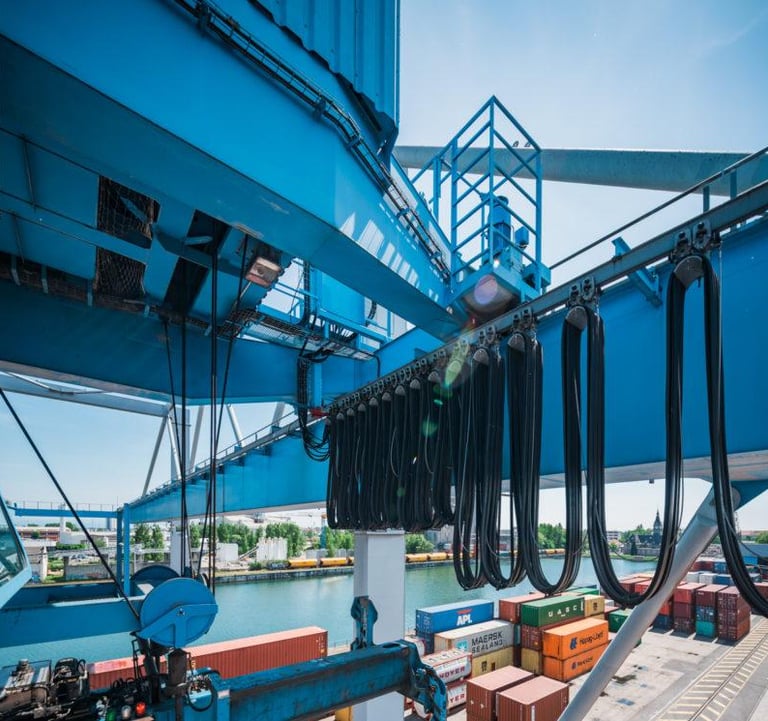
Heavy machinery relies on specialized cable management systems—such as drag chains, festoon systems, or motorized cable reels—to guide cables during linear or rotational travel. Running 4 or 5 separate cables to a moving trolley or boom forces a significant expansion of these systems.
First, cable tray width and height must scale up to accommodate the entire bundle. Because standard cables cannot be packed too tightly without risking heat build-up and mutual mechanical abrasion, generous spacing must be maintained. This increases the structural wind load and the overall weight of the cable trays and supports on the crane boom.
Second, the weight of multiple individual cables, combined with the heavier drag chains or festoon carriers needed to support them, adds deadweight to the crane structure. Every kilogram of extra cable management equipment reduces the active payload capacity of the crane and increases the structural steel requirements of the boom.
Finally, each independent cable has its own minimum bending radius and physical stiffness. When bundled together in a drag chain, these cables slide against one another, causing uneven tension, twisting, and mechanical wear. To prevent binding, engineers are forced to design larger loop depths and wider bending spaces, taking up valuable physical envelope space on highly constrained crane structures.
Termination and Hardware Overhead at the Terminal Ends
The complexity of the traditional approach is not limited to the active cable run. It also creates a massive amount of termination work at both the fixed feed point and the moving machinery ends.
With multiple independent cables, the entry points into junction boxes, motor control centers, and control cabinets become highly congested. Every cable requires its own heavy-duty cable gland to seal the entry point against dust, moisture, and vibration. A system utilizing 5 separate cables instead of 1 integrated run immediately multiplies the required cable glands by 5.
Furthermore, each cable must be individually stripped, prepped, and terminated. This requires separate terminal blocks, distinct grounding clamps for shields, and extensive labeling schemes. The sheer volume of individual connections increases the size and cost of junction boxes and control cabinets, adding cost and weight to the machinery.
Hidden Costs and Limitations of Standard Multi-Cable Solutions
The true financial impact of an engineering decision is rarely captured by the bill of materials alone. While standard off-the-shelf cables have a low initial cost per meter, their installation, hardware, and maintenance overhead make them a highly expensive option over the equipment's lifespan.
The Real Cost of Installation Labor
Installing multiple cables on a large industrial machine is highly labor-intensive. In crane manufacturing and port retrofits, field installation hours represent a major portion of the project budget.
When running multiple individual cables, the mechanical installation team must pull each cable through the drag chain or arrange them along the festoon system. Each cable must be carefully aligned, tensioned, and clamped. Because standard cables from different manufacturers have varying jackets and friction coefficients, dressing them together to prevent twisting during operation requires specialized, time-consuming labor.
[Traditional Pulling & Dressing] ---> [Individual Gland Installation x 5] ---> [Multi-Cable Strip & Terminate] ---> [Complex Multi-Point QA Testing]
Once positioned, the electrical crew must strip, shield, ground, and terminate every single core. In a system with separate power, control, and fiber lines, this process must be repeated for each cable run. The labor hours multiply quickly. Additionally, working at heights on ship-to-shore cranes or in remote mining locations increases safety risks and drives up hourly site-access and insurance costs.
Cumulative Hardware Overheads
Using several individual cables requires a large amount of supporting hardware. Because the combined width and weight of separate cables exceed those of an integrated solution, project managers must procure:
Wider, heavier, and more robust cable trays or high-tensile steel supports.
Heavy-duty drag chains with larger inner cavities and complex internal separators.
An increased number of high-quality, outdoor-rated brass or stainless steel cable glands.
Larger, weather-proof junction boxes with extensive internal din-rail layouts and terminal strip assemblies.
Expanded panel space within the main electrical cabinets to house separate termination fields.
These hardware costs add up quickly. Often, the extra spending on larger drag chains, heavy-duty glands, and massive junction boxes completely wipes out the initial savings gained by purchasing cheap, standard cables.
Long-Term Maintenance and Reliability Risks
The operational phase of a machine is where the weaknesses of a multi-cable approach become most obvious. In high-duty-cycle operations, like port container handling, any downtime can cost thousands of dollars per hour in lost productivity.
Multiplied Failure Points: Every electrical termination, cable gland, shield connection, and wire label is a potential point of failure. Thermal cycling, structural vibration, and environmental moisture can loosen screw terminals, corrode contacts, and degrade seals. By running multiple cables with numerous connection points, you statistically increase the likelihood of an unexpected electrical fault.
Complex Troubleshooting: When a signal or communication link drops in a dense bundle of separate, uncoordinated cables, locating the root cause is highly difficult. Maintenance technicians must trace individual runs through crowded trays, open multiple junction boxes, and check dozens of terminations. This extended diagnostic time keeps critical equipment offline.
Documentation and Spares Complexity: Managing documentation for several different cables from various suppliers is a major administrative burden. Purchasing managers must maintain stock of multiple cable types, different sizes of replacement glands, and a wide variety of termination accessories, which ties up working capital in spare parts inventory.
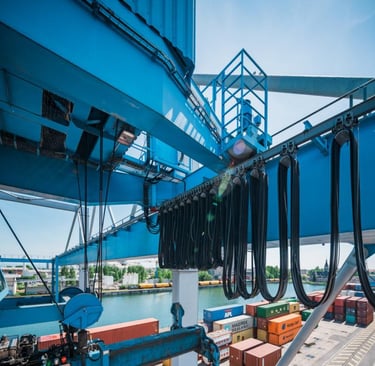
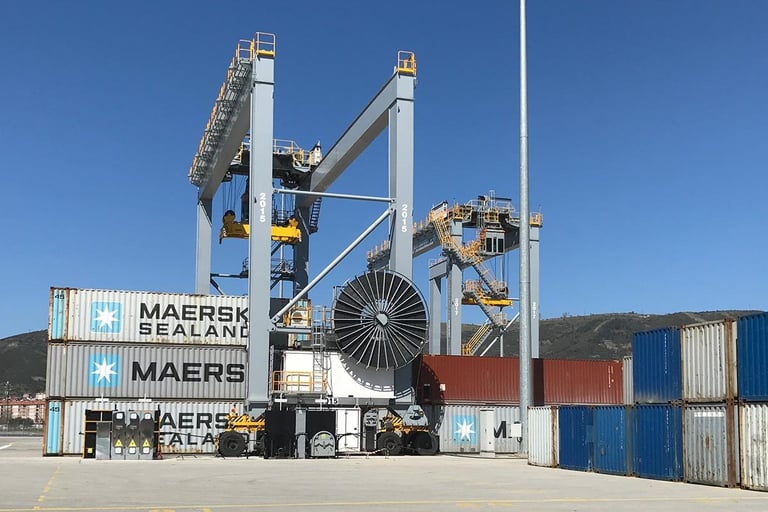
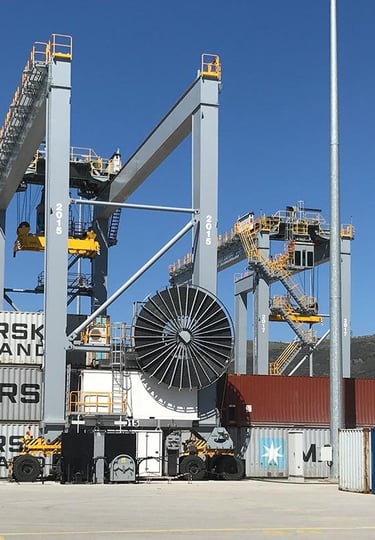
What Is a Custom Hybrid Industrial Cable?
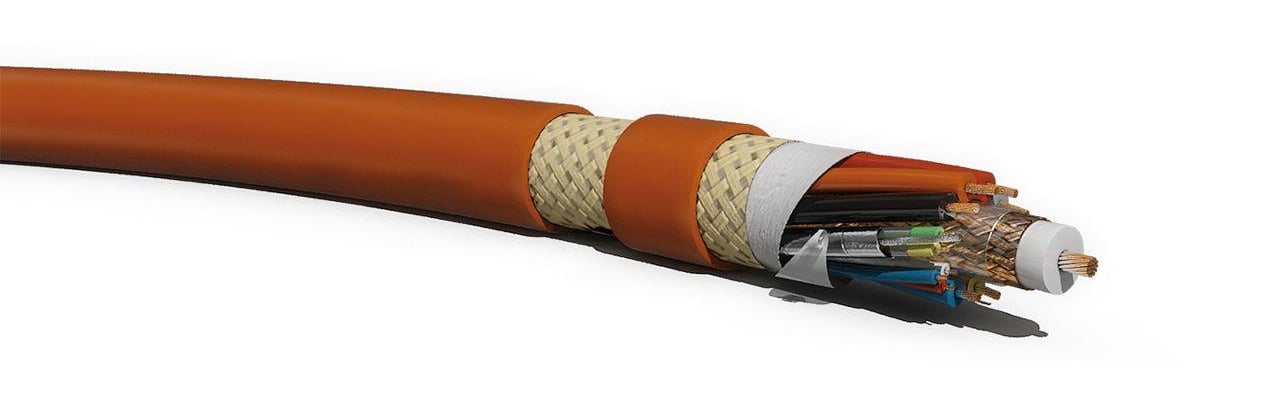
An integrated hybrid industrial cable is a single, highly engineered cable that combines multiple utilities—high-capacity power conductors, low-voltage control pairs, high-speed communication elements, and optical fibers—under a single, high-performance outer protective sheath.
Instead of forcing a machine to adapt to various standard catalog cables, a custom cable manufacturer like Feichun designs and builds a single cable optimized for the specific voltage, signal, communication, and mechanical demands of the application.
This approach represents an integrated cable solution. Rather than managing multiple vendors, tracking several part numbers, and dealing with inconsistent mechanical properties, engineering and procurement teams work with a single specialized partner.
Feichun takes full design responsibility, delivering a single, tested cable under one part number that performs all power, control, and data transmission functions. This integrated cable is optimized for the exact bending radii, tensile forces, speeds, and environmental conditions of the target machinery.
Key Design Elements in Integrated Hybrid Cables
Designing a high-performance hybrid industrial cable requires deep material science expertise and advanced manufacturing capabilities. Each component within the cable must be selected and arranged to ensure peak electrical performance and long mechanical life under continuous flexing, reeling, or trailing.
1. Power Cores: Engineered for Dynamic Flexing
The primary power conductors form the structural foundation of the hybrid cable. Feichun utilizes highly flexible Class 5 or Class 6 tinned copper conductors compliant with IEC 60228. Tinned copper provides excellent electrical conductivity while resisting corrosion in humid, salty marine environments.
To handle the continuous bending and high tensile loads of crane reeling, these power conductors are insulated with high-grade Ethylene Propylene Rubber (EPR) or Cross-Linked Polyethylene (XLPE).
These insulation materials offer excellent dielectric strength, low dielectric losses, and superior thermal properties, allowing a maximum conductor operating temperature of 90°C and short-circuit protection up to 250°C. The core layouts are designed with short lay-lengths to minimize internal stresses during high-speed reeling and trailing operations.
2. Control Cores: Stable Signal Integrity
Integrated control and signal elements are bundled alongside the power cores to handle PLC input/outputs, safety interlocks, limit switches, and encoder signals. To prevent electromagnetic interference (EMI) from the adjacent high-current power conductors, these control elements are typically arranged in twisted pairs or triads, shielded with individual tinned copper braids or high-coverage foil screens.
The control cores feature durable insulation materials with distinct color coding or clear, continuous white numbering on black cores to make termination quick and error-free. The layout of these control elements is chemically and mechanically balanced within the cable cross-section to prevent asymmetry, which could cause corkscrewing or structural warping under high tension.
3. Fiber Optic Elements: High-Speed Data Protection
The integration of fiber optics into a heavy-duty power cable requires advanced structural protection. Because delicate glass fibers cannot tolerate tension or tight bending, they must be completely isolated from the heavy mechanical stresses experienced by the surrounding copper conductors.
Feichun hybrid cables can integrate:
Single-Mode Fibers (E9/125): Ideal for long-distance, high-bandwidth data transmission, conforming to ITU-T G.652 D standards.
Multimode Fibers (G50/125 or G62.5/125): Optimized for short-to-medium distance communication within the machinery network.
[Glass Fiber Core] ---> [Primary Buffer Coating] ---> [Gel-Filled Protective Tube] ---> [Aramid/Kevlar Strain-Relief Braid] ---> [Inner Protective Jacket]
These fibers are housed within a central or interstitial gel-filled loose tube that cushions the fibers and prevents water ingress. This tube is then wrapped in high-tensile aramid yarns (Kevlar) to absorb axial tensile forces during reeling.
Placed strategically in the low-stress zones of the cable's cross-section, these fiber units remain perfectly protected, maintaining low attenuation values even under continuous, high-speed winding and unwinding.
Installation Advantages: From Four Cables to One
The most immediate benefit of upgrading to an integrated hybrid cable is the simplified installation process. Replacing multiple, uncoordinated cable runs with a single Feichun hybrid cable transforms field installation, reducing complexity and saving hours of labor.
Installation PhaseTraditional Multi-Cable ApproachFeichun Integrated Hybrid CableMaterial Handling & PullingMultiple pulls; high risk of tangling; complex tension balancing.Single, coordinated pull; predictable tensioning and simplified routing.Cable Management LayoutLarge, wide drag chains or bulky, multi-tier festoon systems.Compact drag chains or standard single-groove reeling systems.Gland & Entry PointsMultiple glands required; high risk of water/dust ingress.Single, heavy-duty gland; high-integrity seal and minimized cabinet footprint.Termination LaborExtensive prep time; sorting and shielding multiple cables.Consolidated prep; single outer jacket strip, organized routing of cores.
Streamlined Mechanical Routing and Cable Pulling
Pulling multiple separate cables through long, narrow drag chains or arranging them across complex boom structures is a difficult process. The installation crew must carefully manage the layout, ensure the cables do not twist around one another, and adjust clamping tension to prevent binding during operation.
With a Feichun custom hybrid cable, this process is reduced to a single, smooth pull. The cable’s perfectly circular cross-section and balanced design mean it behaves predictably when unreeled and routed.
Because all power, control, and fiber lines are already secured under a single outer jacket, there is no risk of internal binding or uneven wear. This simplicity allows engineering teams to design narrower drag chains, smaller bend radii, and more compact structural supports, reducing both weight and material costs across the machine.
Simplified Termination and Sealing
Once the cable is routed, the termination work is greatly simplified. Instead of drilling multiple entry holes and installing several cable glands into junction boxes or motor control housings, technicians only need to prepare a single entry point.
A single, high-quality cable gland seals the entire hybrid assembly, drastically reducing the risk of moisture, dust, or corrosive salt air entering the sensitive electrical enclosure. Inside the cabinet, the technician strips back one outer jacket to expose the neatly organized power, control, and fiber cores.
These elements are easily separated and routed to their respective terminal blocks, shielding clamps, and optical splice trays. This organized layout reduces installation errors, shortens testing times, and ensures a clean, professional installation.
Maintenance and Reliability Benefits
While installation savings are realized during the construction phase, the mechanical and electrical benefits of a Feichun integrated hybrid cable deliver value over years of operation.
Eliminating Failure Points
In industrial environments, every cable entry point, termination, and connection is a potential failure point. In traditional multi-cable setups, the sheer number of terminations increases the risk of breakdown. Vibration from heavy diesel engines, hydraulic pumps, and high-speed trolley travel can loosen screw terminals over time.
Similarly, temperature swings can cause materials to expand and contract, allowing moisture to seep past worn cable glands and corrode copper conductors.
Consolidating your infrastructure into a single Feichun hybrid cable inherently reduces these risks. By minimizing the number of entry points and connections, you eliminate dozens of potential failure points, creating a highly stable and reliable power and data connection.
Optimized Electromagnetic Compatibility (EMC)
High-voltage power cables generate strong electromagnetic fields that can disrupt nearby low-voltage control and communication signals. In traditional installations, where separate cables are often bundled together without precise separation, EMI can cause intermittent signal drops, communication timeouts, and erratic sensor readings.
Traditional Layout (Ad-hoc proximity = high EMI risk): [ MV Power Cable ] <--- electromagnetic noise ---> [ Unshielded Control Run ] Feichun Hybrid Layout (Controlled geometry = stable EMC): +-------------------------------------------------------------+ | [ Shielded MV Power Cores ] <-- built-in barrier --> [ Shielded Fiber Optic Unit ] | +-------------------------------------------------------------+
Feichun hybrid cables are designed with advanced electromagnetic compatibility in mind. The cable's cross-section is mathematically optimized to isolate high-voltage power cores from sensitive signal and communication elements.
Using high-coverage tinned copper braids, semi-conductive layers, and split ground layouts, the design isolates electrical noise. This ensures clean signal and high-bandwidth data transmission, even when running high-voltage power at maximum duty cycle.
Fast, Simple Troubleshooting
When an electrical fault or signal interruption occurs, every minute of downtime can cost port terminals and mining operations thousands of dollars. Troubleshooting a failure in a dense bundle of separate, unlabeled cables is a difficult, time-consuming task.
With a Feichun integrated hybrid cable, diagnostic work is highly straightforward. Because the system's power, control, and data lines are housed within a single cable, technicians can quickly isolate problems.
The fiber optic lines can be tested in minutes using an Optical Time-Domain Reflectometer (OTDR) to verify structural integrity, while individual copper cores are easily checked at their consolidated terminal strip. This fast, simple diagnostic process helps maintenance teams find the root cause quickly, minimize downtime, and restore operations.
Cost-Benefit View: When Does Custom Beat Standard?
Purchasing managers often focus primarily on the upfront cost per meter, where standard, off-the-shelf cables usually appear to be the cheaper option. However, looking only at the initial purchase price ignores the substantial installation and operational expenses that accumulate over the life of the machine.
To make a truly sound investment decision, project leaders must evaluate the Total Installed Cost (TIC) and the long-term Total Cost of Ownership (TCO).
Total Cost of Ownership (TCO) Comparison: Standard Multi-Cable: [ Low Purchase Price ] + [ HIGH Installation Labor ] + [ HIGH Hardware Cost ] + [ HIGH Maintenance/Downtime Risk ] = HIGH TCO Feichun Custom Hybrid: [ Premium Purchase Price ] + [ LOW Installation Labor ] + [ LOW Hardware Cost ] + [ minimal Downtime/Maintenance ] = LOW TCO
Total Installed Cost (TIC) Analysis
The Total Installed Cost includes the purchase price of the cable plus all materials and labor required to get the system fully operational.
When you evaluate a project using TIC, the financial advantages of custom hybrid cables become clear:
Labor Savings: A single hybrid cable requires only one pull, one stripping process, and one set of terminations. In large-scale port crane installations, this efficiency can reduce electrical installation labor hours by 30% to 50% compared to managing multiple individual runs.
Hardware Savings: Eliminating multiple individual runs allows you to source smaller, lighter drag chains, fewer and smaller cable glands, and more compact junction boxes. These hardware savings often completely offset the higher upfront cost of the custom cable.
Engineering and Design Savings: Working with a single, expert cable manufacturer like Feichun simplifies the engineering process. Your structural and electrical design teams only need to model, space, and document a single cable run, saving valuable engineering hours.
Long-Term Operational Benefits
Over years of continuous operation, the reliability of a custom hybrid cable delivers substantial financial returns:
Minimized Downtime: In high-throughput ports and heavy mining operations, unplanned downtime can cost upwards of $5,000 per hour. Reducing cable-related failures directly improves equipment availability and protects your bottom line.
Simplified Maintenance: With fewer cables and connections to monitor, maintenance teams can perform routine inspections faster and more effectively, reducing ongoing labor costs.
Streamlined Inventory: Standardizing on an integrated hybrid cable reduces the number of spare parts you need to keep in stock. Instead of storing multiple cable types, glands, and terminal accessories, you only need to manage a single, high-reliability spare.
For high-duty-cycle, mission-critical machines, investing in a custom-engineered hybrid cable from Feichun is highly cost-effective, delivering lower total costs and superior reliability over the equipment's lifespan.
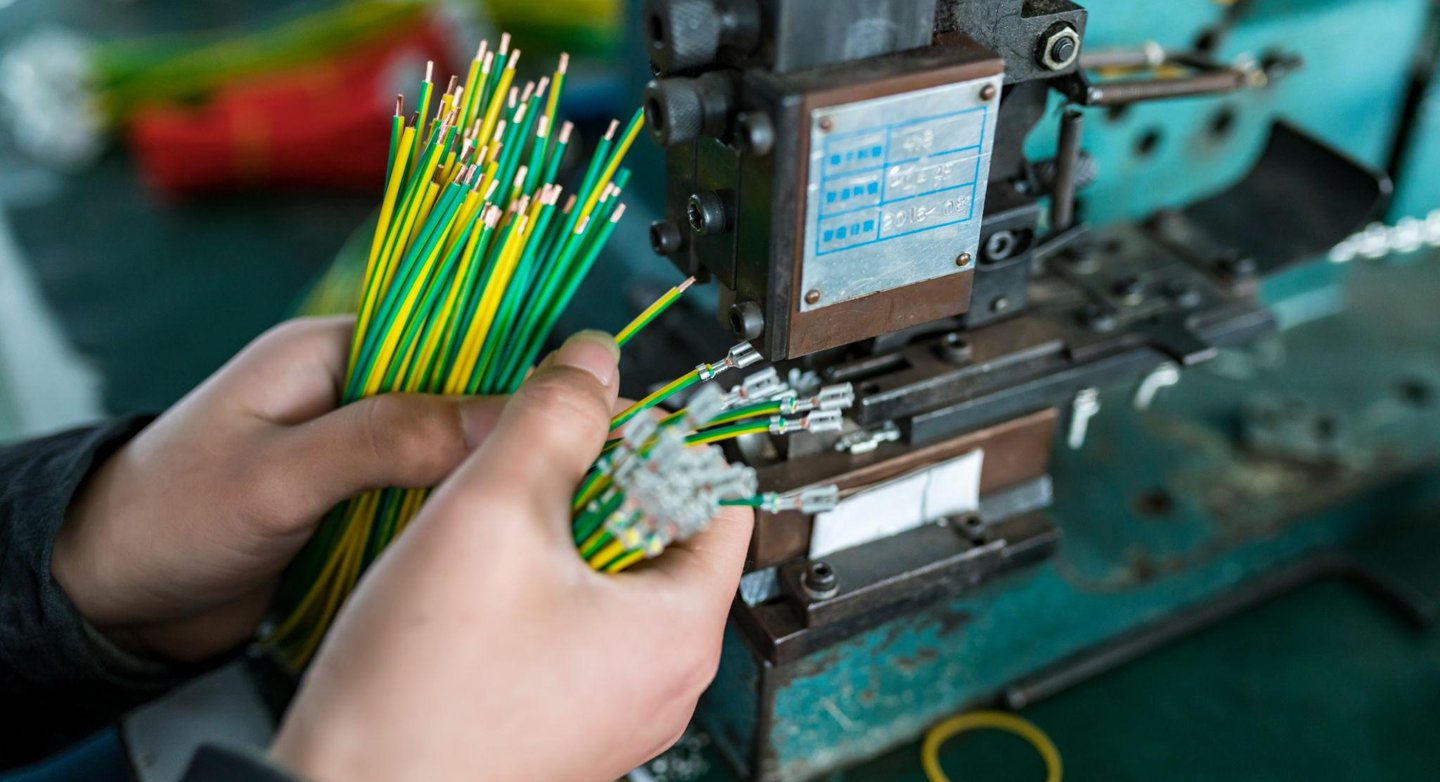
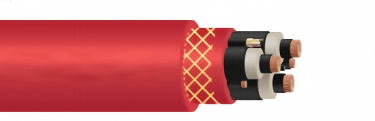
Featured Solution: (N)TSCGEWOEU-SR PLUS FO Hybrid Reeling Cable
For medium-voltage applications under extreme mechanical stress, the Feichun (N)TSCGEWOEU-SR PLUS FO is an exceptional choice. This highly engineered reeling cable combines reliable medium-voltage power, integrated grounding, and high-bandwidth fiber optic communication under a single, exceptionally durable outer jacket.
Technical Design and Construction
This medium-voltage hybrid cable is engineered to withstand continuous tension, high-speed winding, and harsh outdoor environments:
Power Conductors: Flexible Class 5 plain copper wires, finely stranded according to IEC 60228 standards to ensure optimal flexibility and durability.
Conductor Insulation: A high-performance Ethylene Propylene Rubber (EPR) compound with an inner semi-conductive stress control layer and an outer semi-conductive insulation shield. This design ensures uniform electrical stress distribution and excellent dielectric strength.
Optical Fiber Element: Integrates 12 to 24 optical fibers in single-mode (E9/125) or multimode (G50/125 or G62.5/125) configurations. The fibers are protected within gel-filled tubes and reinforced with high-tensile aramid yarns to isolate them from mechanical tension.
Ground Conductors: The ground conductor is split into two parts and positioned in the outer interstices of the cable core layout to maintain a perfectly balanced, symmetrical cross-section.
Inner and Outer Sheath: Constructed from a heavy-duty rubber compound (quality 5GM5 based on DIN VDE 0207-21). An anti-torsion synthetic braid is embedded between the inner and outer sheaths, locking them together to prevent structural twisting under high mechanical loads.
Mechanical and Electrical Performance
Designed for high-speed, demanding operations, the (N)TSCGEWOEU-SR PLUS FO delivers exceptional performance:
Rated Voltages: Available in multiple medium-voltage ratings, including 3.6/6 kV, 6/10 kV, 8.7/15 kV, 12/20 kV, 14/25 kV, and 18/30 kV.
Operating Temperatures: Highly resilient across a wide temperature range, supporting fixed installations from -50°C to 80°C and reeling operations from -30°C to 80°C.
Dynamic Performance: Supports continuous reeling speeds of up to 180 m/min, with a maximum tensile load on the copper conductors of 20 N/mm² and a torsional resistance of ±25°/m.
Environmental Resistance: Offers complete resistance to ozone, ultraviolet light, and moisture, making it ideal for unrestricted use in both indoor and outdoor environments.
Core Applications
The (N)TSCGEWOEU-SR PLUS FO is the ideal choice for heavy industrial machinery operating under extreme dynamic loads:
Ship-to-Shore (STS) Port Cranes: Delivers high-voltage power and high-speed telemetry over a single reeling line on long-travel cranes.
Large Mining Machinery: Powers massive draglines, excavators, and stacker-reclaimers in harsh open-pit mining operations.
Automated Port Systems: Connects automated stacking cranes (ASCs) and bulk material handling equipment where continuous data flow and maximum reliability are essential.

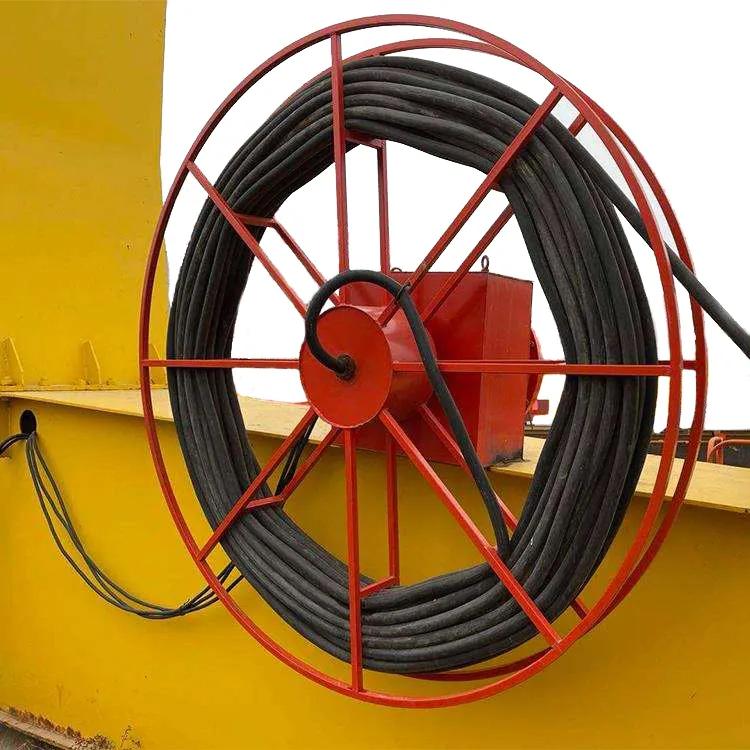
Featured Solution: NSHTÖU-J + FO Custom Hybrid Crane Cable
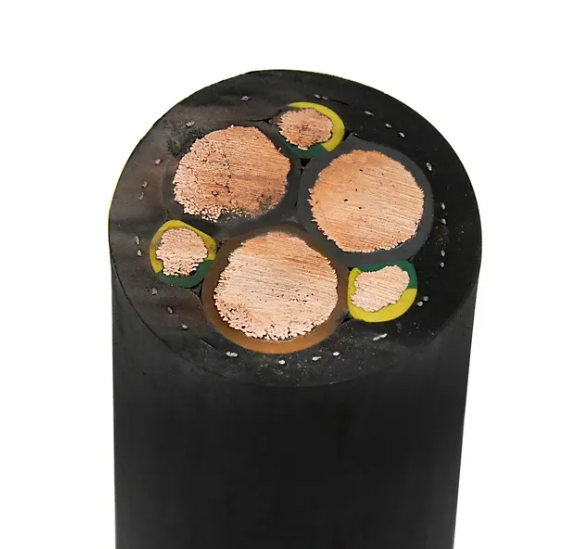
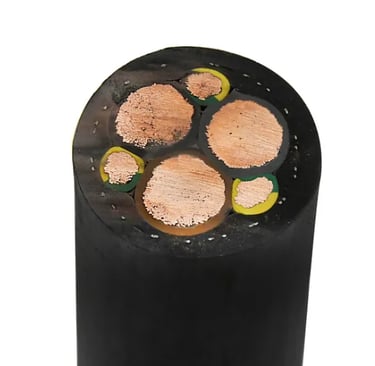
For low-voltage applications that require a combination of power, control, and optical communication, Feichun offers the NSHTÖU-J + FO custom hybrid cable. This cable builds on the reliable design of the standard low-voltage trailing and reeling cable, adding optical fiber elements to deliver an integrated power and data solution.
Technical Design and Construction
The NSHTÖU-J + FO is engineered for low-voltage power distribution and control in dynamic applications:
Power Conductors: High-flexibility Class 5 tinned copper conductors that provide excellent resistance to vibration and oxidation.
Insulation and Inner Sheath: Core insulation is made from a rugged rubber compound, protected by a matching rubber inner sheath to ensure high structural stability.
Integrated Fiber Optic and Control Elements: Customized to include single-mode or multimode fiber elements alongside dedicated copper control pairs. This allows a single cable to handle power delivery, low-voltage control signals, and high-speed data transmission.
Reinforcement: An embedded polyester anti-twisting braid between the inner and outer rubber sheaths prevents twisting and corkscrewing during continuous winding.
Outer Sheath: A robust, weather-resistant rubber compound (available in black or high-visibility yellow) that provides outstanding protection against tearing, impact, abrasion, oils, and UV exposure.
Mechanical and Electrical Performance
Voltage Rating: Rated at 0.6/1 kV, making it the perfect standard for low-voltage mobile power connections.
Temperature Range: Designed to operate in challenging environments, supporting flexing installations from -25°C to 90°C and fixed layouts from -40°C to 90°C.
Dynamic Limits: Supports travel speeds of up to 100 m/min with twist limits of 50/m.
Core Applications
The NSHTÖU-J + FO is highly versatile, making it the perfect fit for low-voltage material handling and port equipment:
Automated Stacking Cranes (RMGs and ERTGs): Consolidates low-voltage power and high-speed Ethernet/fiber backbones into a single cable, simplifying retrofits and new crane builds.
Bulk Ship Loaders and Unloaders: Delivers reliable power and real-time control data over long travel distances on moving booms and hoists.
Industrial Conveyor Systems: Powers and monitors large-scale material handling conveyors in cement plants, steel mills, and mineral processing facilities.
Application Scenarios in Ports and Mining
To understand the practical benefits of Feichun integrated hybrid cables, let's examine how they perform in real-world port and mining applications.
1. Ship-to-Shore (STS) Cranes and Bulk Port Terminals
Ship-to-shore cranes operate along long quay lines, requiring constant, high-speed movement to load and unload container ships. These cranes demand both substantial medium-voltage power and high-bandwidth data connections to support high-definition cameras, operator cab intercoms, PLC networks, and automation systems.
Historically, ports ran separate medium-voltage reeling cables alongside dedicated fiber optic cables. This setup required complex, dual-drum reeling systems, which increased the weight on the crane structure and doubled the risk of mechanical failure.
Quay Wall Power/Data Vault | +---> [Single Feichun (N)TSCGEWOEU-SR PLUS FO Reeling Cable] | v (Spooling smoothly on a single motor-driven reel) STS Crane Main Junction Box | +---> Power (3.6/6 kV to 18/30 kV) +---> Data (12-24 Core Fiber Optic Telemetry)
Upgrading to a single Feichun (N)TSCGEWOEU-SR PLUS FO hybrid reeling cable allows ports to consolidate power and data into one run. This change eliminates the need for a secondary cable reel, reduces the mechanical load on the crane boom, and lowers wind resistance.
By simplifying the cable management system, ports can reduce maintenance requirements, speed up container handling times, and lower overall operating costs.
2. Electrified Rubber-Tired Gantry Cranes (E-RTGs) and Yard Cranes
In modern container yards, operators are transitioning from diesel-powered RTGs to electrified models (E-RTGs) to lower emissions and fuel costs. This transition requires retrofitting existing cranes with reliable power feed systems.
Using standard individual cables for these retrofits is often difficult due to space constraints on older crane structures. The compact design of the Feichun NSHTÖU-J + FO hybrid cable makes it the perfect solution.
By combining 0.6/1 kV low-voltage power, control signals, and fiber optic communication into a single, high-durability cable, terminals can complete retrofits quickly without modifying crane structures. This simplified installation keeps retrofits on schedule and minimizes disruption to yard operations.
3. Large Mining Machines: Stacker-Reclaimers and Draglines
Mining environments present some of the toughest conditions for cable infrastructure. High-vibration machinery, abrasive rock dust, oil exposure, and extreme temperature swings can quickly degrade standard utility cables.
[Stacker-Reclaimer Main Body] ^ | (Continuous flexing and dragging over abrasive ground) | [Feichun Rugged Hybrid Reeling Cable (5GM5 Outer Sheath)] ---> Resistant to Tears, Oils, and UV | v (Maintains stable power and clean diagnostic fiber links) [Mining Power Feed / Substation]
Feichun’s heavy-duty hybrid cables are built with highly durable 5GM5 rubber compounds that resist tears, abrasion, oils, and UV radiation. Integrating power, control, and equipment diagnostics into a single, high-durability cable ensures stable power delivery and clean communication links.
This robust construction prevents cable failures, keeps massive stacker-reclaimers running, and helps mining operations maintain consistent production levels.
Risk and Compliance Considerations
Specifying cabling for heavy industrial machinery requires careful attention to safety, regulatory compliance, and quality control. Because these cables operate under high electrical loads and continuous mechanical stress, they must meet strict international standards to ensure safe, long-term operation.
Compliance with International Standards
Feichun hybrid cables are designed, manufactured, and tested in accordance with recognized international standards:
DIN VDE 0250-813: Governs design and testing standards for medium-voltage reeling cables, ensuring they can withstand continuous winding, high tension, and environmental exposure[cite: 5].
DIN VDE 0250-814: Standardizes low-voltage rubber-insulated reeling cables for heavy-duty applications.
IEC 60228 Class 5/6: Specifies conductor flexibility requirements, ensuring the tinned copper wires can handle continuous bending without work hardening or breaking.
IEC 60793: Establishes standards for optical fiber dimensions, transmission characteristics, and mechanical strength within the cable assembly.
Flame Retardancy & Oil Resistance: Fully compliant with IEC 60332-1-2 for flame propagation and IEC 60811-404 for oil resistance, ensuring safe performance in demanding industrial and marine environments.
Simplifying Project Certification
When building or retrofitting heavy industrial machinery, certifying the complete electrical system can be a complex process. Using multiple individual cables from different manufacturers requires gathering, verifying, and filing separate quality certificates, material safety sheets, and test reports for every component.
Working with Feichun simplifies this process. Because Feichun designs and manufactures the entire integrated cable solution, you receive a single, comprehensive quality file for the cable.
This file includes routine test records, factory acceptance testing (FAT) results, and type test reports covering the power cores, control elements, and fiber optic lines under one unified documentation package. This consolidated approach simplifies your quality assurance process and speeds up the final certification of your machinery.
When Off-the-Shelf Standard Cables Still Make Sense
While custom-engineered hybrid cables offer significant advantages for complex, high-duty-cycle machinery, there are still scenarios where standard off-the-shelf cables are the practical choice. Understanding these cases helps engineering and purchasing teams make the best decision for their specific project needs.
1. Simple, Low-Duty-Cycle Machinery
For small, simple machines with short travel distances, low data requirements, and occasional operation, standard catalog cables are often perfectly adequate.
If a crane or hoist only runs a few hours a week and does not require real-time video feedback or high-speed automation, the upfront premium of a custom-engineered hybrid cable may not be necessary. In these cases, simple, separate runs of standard low-voltage power and control cables are a practical, cost-effective solution.
2. High Design Uncertainty and Prototyping
In the early stages of a machine's development, design configurations can change frequently. If the power requirements, control layouts, or communication protocols are still being refined, purchasing a custom hybrid cable is premature.
During this prototyping phase, using individual off-the-shelf cables allows engineering teams to make quick changes, swap out components, and test different layouts. Once the design is completely stable, the engineering team can work with Feichun to consolidate those separate lines into a single, optimized hybrid cable for the final production model.
3. Emergency Repairs and Urgently Short Lead Times
When a critical cable on an active machine suffers severe mechanical damage, restoring operation quickly is the top priority. Because custom-engineered hybrid cables are manufactured to order based on specific customer requirements, they have a standard production lead time.
If an immediate replacement is required to get a key machine back online, maintenance teams often rely on readily available stock cables from local distributors. This temporary, multi-cable solution keeps the operation running while a permanent, high-performance custom hybrid cable is manufactured and shipped by Feichun.
Choosing and Working with a Custom Cable Manufacturer
Transitioning from standard catalog cabling to an integrated hybrid cable solution requires close collaboration between your engineering team and the manufacturer. Selecting a partner with deep technical expertise, advanced material science capabilities, and a collaborative approach is essential to the success of your project.
Project Phase Collaborative Engineering Milestones with Feichun ------------- -------------------------------------------------- Phase 1: Concept ---> Define mechanical parameters (drum diameter, tension, travel speed) Phase 2: Design ---> Select materials (EPR insulation, 5GM5 sheathing, fiber counts) Phase 3: QA/QC ---> Perform factory acceptance testing (attenuation, tension, electrical) Phase 4: Support ---> Delivery of complete quality files and on-site termination guidance
Key Capabilities to Evaluate
When choosing a custom cable manufacturer, look for these critical capabilities:
In-House Engineering Support: The manufacturer should have an active engineering team capable of analyzing your machine’s mechanical layout, speed, tension, and environmental conditions to design the optimal cable construction.
Advanced Material Selection: Look for a partner with expertise in compounding high-durability rubber sheaths (like 5GM5) that resist abrasion, chemical exposure, and extreme temperatures.
Precision Fiber Integration: Integrating glass fibers into dynamic power cables requires specialized equipment and process controls to ensure the optical elements are perfectly protected against tension and bending[cite: 5].
Comprehensive Testing Facilities: The manufacturer should possess state-of-the-art testing laboratories to conduct rigorous routine, sample, and type testing, including high-voltage, tension, bending, and optical attenuation tests.
Engaging Early for Optimal Design
To get the most value from a custom hybrid cable, engage the manufacturer early in your project's design phase. This collaborative approach allows you to co-design the cable alongside your machine’s mechanical and electrical systems.
By sharing critical parameters—such as drum diameters, minimum bending radii, travel speeds, acceleration rates, and network architectures—our engineering team can optimize the cable's layout, shielding, and sheathing[cite: 4, 5].
This early collaboration ensures the final hybrid cable fits perfectly within your machine's physical space, interfaces seamlessly with your control cabinets, and delivers long-term reliability.
Comprehensive Technical Comparison
To help project engineers and purchasing managers choose the right cabling strategy, this comparison contrasts the physical, electrical, and mechanical characteristics of the traditional multi-cable approach with Feichun’s integrated hybrid cable solutions.
Traditional Multi-Cable Setup: [ MV Power ] + [ Control / IO ] + [ Protocol Comm ] + [ Fiber Optic ] - Footprint: Wide, multi-tier layout - Weight: High (accumulated jackets & heavy drag chains) - Glands & Terminations: High (multiple entry points & complex cabinets) - Mechanical Wear: High (cables sliding, twisting, and rubbing) Feichun Custom Hybrid Cable: [ Integrated Power, Control, and Fiber Optic Run ] - Footprint: Compact, single-cable circular profile - Weight: Low (optimized single-jacket structure & smaller drag chains) - Glands & Terminations: Low (single entry point & clean, organized layout) - Mechanical Wear: Minimal (balanced, torsion-locked structural design)[cite: 4, 5]
This comparison highlights how transitioning to a single, engineered cable simplifies system design, reduces physical wear, and lowers installation and maintenance costs over the life of your equipment.
Key Takeaways for Project Leaders
Upgrading your heavy industrial machinery from traditional, multi-cable setups to integrated hybrid cables is a smart investment that delivers significant technical and financial benefits:
Look Beyond the Purchase Price: While standard cables have a lower per-meter cost, their high installation labor, extra supporting hardware, and maintenance risks make them the more expensive option over the long run.
Streamline Your Installation: Consolidating power, control, and fiber optic lines into a single Feichun hybrid cable reduces cable pulling labor, simplifies cable management routing, and cuts termination time in half[cite: 4, 5].
Improve Equipment Reliability: Minimizing connections and cable entry points reduces potential failure points, protects signal integrity from electromagnetic interference, and simplifies troubleshooting to maximize machine uptime.
Partner with an Industry Expert: Choose a manufacturer with proven experience in heavy-duty hybrid cabling, in-house engineering support, and rigorous quality control to ensure your cable performs reliably in the most demanding environments.
By choosing Feichun’s custom-engineered hybrid cables, port authorities, mining operators, and machinery OEMs can protect their infrastructure, reduce total cost of ownership, and ensure safe, reliable, and continuous operation for years to come.
Port crane cables | Mining cables | Reeling cables | Trailing cables | Festoon cables | Heavy-duty power cables | Medium voltage cables | Offshore crane cables | Underground mining cables | Dragline cables | Shearer cables | Container handling cables | STS crane cables | RTG cables | Mobile equipment cables | Armored cables | Flexible power cables | VFD cables | Submersible cables | Cold resistant cables | Abrasion resistant cables | Flame retardant cables | Marine environment cables | Opencast mining | Underground operations
© 2006 All rights reserved.
[INDUSTRIAL_CABLES]
INDUSTRIAL GRADE CABLE SYSTEMS | PORT & MINING SOLUTIONS
TEL: +86 153 7530 2641 |MAIL: hongjing.Wang@feichuncables.com