Selecting Heavy-Duty Trailing Cables for Mobile Harbour Cranes (MHC): An Australian Engineering Guide to Dynamic Reeling Solutions
Find out how to select heavy-duty trailing cables for mobile harbor cranes, with guidance on anti-twist design, tensile strength, bending radius, and drum use.
hongjing.Wang@Feichun
7/27/202615 min read
1. Why MHC Cable Selection Matters
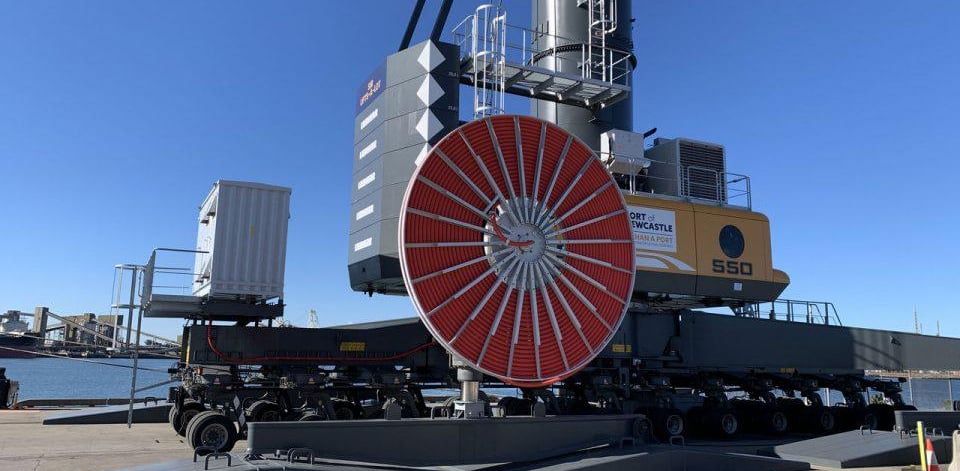
Mobile Harbour Cranes (MHCs) are among the most versatile and hard-working assets operating across modern Australian shipping terminals and bulk materials handling facilities. From the high-volume container berths at Port Botany, the Port of Brisbane, and Fremantle to the mineral export terminals of Port Hedland and Gladstone, MHCs provide rapid quay-side flexibility. Unlike fixed ship-to-shore gantry cranes running on rigid tracks, mobile harbour cranes move across berths, slew across 360-degree working arcs, adjust boom angles through active luffing, and execute continuous hoisting cycles under extreme operational loads.
To maintain continuous operational mobility without relying solely on diesel generators, modern MHCs connect to high-voltage quay-side shore power systems via dynamic trailing or reeling cables. However, field engineers and maintenance teams quickly learn that an MHC cable operates under vastly different conditions than a static power distribution cable or a standard plant lead. The trailing cable powering a mobile harbour crane is repeatedly unwound, dragged across concrete aprons, wound onto high-speed motorized reels, twisted across directional guide sheaves, and exposed to intense atmospheric weathering.
A common point of operational failure on harbour cranes occurs when standard flexible power leads are installed in place of purpose-built crane reeling cables. Selecting the wrong trailing cable can lead to bird-caging, twisting failure, premature jacket damage, and unexpected crane downtime.
When a standard flexible cable is subjected to the multi-axis mechanical forces, continuous tension, and thermal loads of an MHC duty cycle—while simultaneously enduring Australia's extreme solar UV radiation, high ambient temperatures, and corrosive coastal salt mist—the cable degrades rapidly. Structural failure of an MHC trailing cable causes immediate loss of berth productivity, creates significant safety hazards on active quay-sides, and risks costly damage to internal crane drive electronics. For port operators, crane original equipment manufacturers (OEMs), and site maintenance managers, selecting a heavy-duty, purpose-built harbour crane power cable is not a minor procurement detail; it is a fundamental engineering requirement for protecting capital assets and ensuring reliable site throughput.
2. Understanding MHC Motion and Mechanical Stress
To select an appropriate trailing cable for a Mobile Harbour Crane, it is necessary to analyze the physical forces generated during crane operation. An MHC does not move along a single fixed plane. Instead, it performs four distinct primary motions, each exerting specific mechanical stresses on the trailing power cable assembly.
MHC MOTION PROFILE AND CABLE STRESSES CRANE MOTION MECHANICAL ACTION PRIMARY CABLE STRESS -------------- ------------------- ----------------------- 1. Travelling -----> Quay-side Translation -----> Continuous Bending & Dragging 2. Slewing -----> 360° Upper Rotation -----> Severe Torsional Twisting 3. Hoisting -----> Vertical Cargo Lifting -----> High Axial Tensile Pull 4. Luffing -----> Dynamic Boom Angle -----> Multi-Plane Shock Loading
Travelling Motion
Travelling refers to the linear translation of the mobile crane along the quay-side apron, allowing it to position itself alongside ship hatches or reposition across different berths. As the crane travels, the trailing cable is either paid out onto the ground or wound under motorized tension onto a reeling drum. This motion creates continuous reversed bending over guide rollers, surface friction against rough quay concrete, and axial tension.
Slewing Motion
Slewing represents the 360-degree rotation of the crane’s upper superstructure relative to its lower wheel chassis or stabilizer pads. As the crane rotates to transfer containers or bulk cargo from a ship's hold onto quay trucks, the trailing cable feeding up through the central swivel or guide assembly experiences severe torsional stress. If the cable construction cannot absorb or equalize this rotational torque, the internal conductors begin to twist, distorting the internal cable geometry.
Hoisting Motion
Hoisting involves raising and lowering heavy container spreaders, grabs, or hook blocks at high acceleration rates and speeds. Rapid changes in electrical current demand create instantaneous electromagnetic forces within the cable cores. Simultaneously, motorized cable reels adjust winding torque to keep up with crane power demand, subjecting the cable to continuous dynamic pulling forces.
Luffing Motion
Luffing is the vertical angular movement of the crane boom, adjusting the operating radius over the vessel. As the boom moves, changing angles transfer dynamic shock loads and vibration through the crane chassis down to the cable entry and reeling systems.
Because a Mobile Harbour Crane executes these four movements simultaneously during a typical cargo cycle, the trailing cable is subjected to a combination of bending, twisting, pulling, and vibration. A cable engineered for only one type of stress—such as pure tension or simple bending—will rapidly fail under these multi-axis forces.
3. Why Ordinary Flexible Cable Fails
A widespread misconception in industrial electrical maintenance is that any cable labeled "flexible" or "rubber insulated" is suitable for mobile crane operation. While standard Class 5 or Class 6 flexible cables perform adequately in static cable trays, simple festoon systems, or light-duty indoor trailing leads, they are structurally unsuited for the mechanical demands of an MHC reel.
Standard flexible cables are built primarily to achieve physical bendability. Their internal components are arranged to allow easy bending during initial installation or low-duty movement. However, when an ordinary flexible cable is installed on a high-speed motorized reeling drum on a Mobile Harbour Crane, several mechanical failure modes develop over time:
STRUCTURAL DEGRADATION IN STANDARD CABLE [ Unreinforced Core Layout ] ---> Rotational Torque Buildup (Slewing) | Internal Conductor Strand Migration <----+ | Outer Sheath Expansion & Rupture <----+ | [ BIRD-CAGED CABLE DESTRUCTION ] <----+ (Total Mechanical Breakdown)
Accumulation of Torsional Stress and Bird-Caging
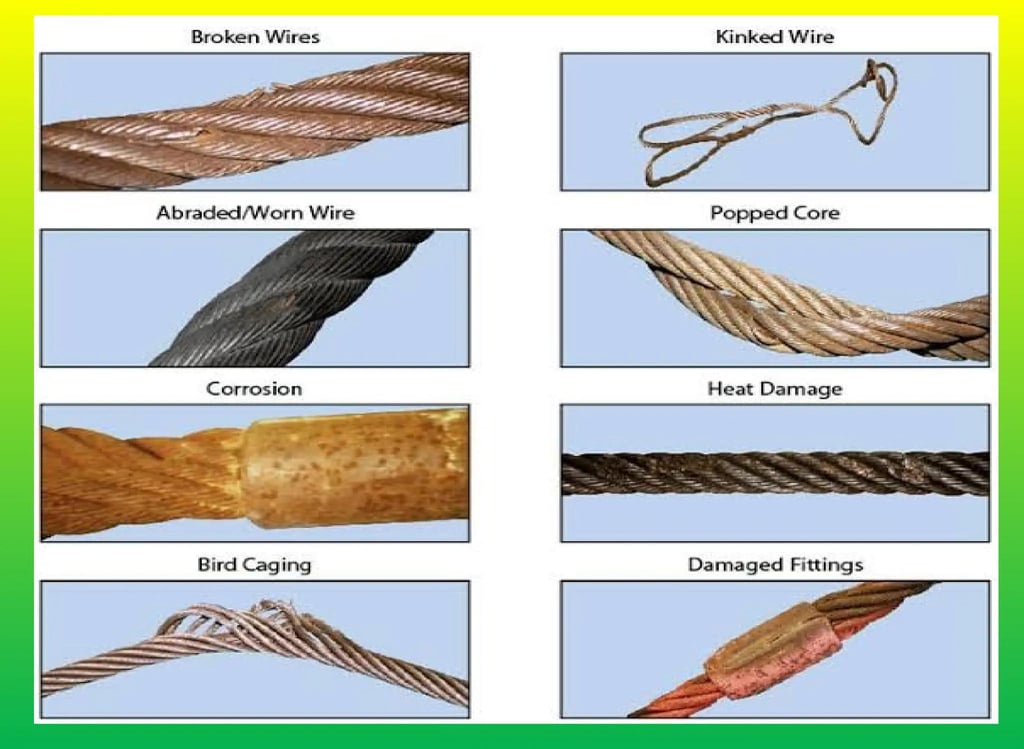
When a standard flexible cable is subjected to slewing motion and continuous winding onto a drum, rotational torque accumulates within the core assembly. Because ordinary cables lack internal anti-twist reinforcement, this rotational energy forces the inner conductor cores to untwist and elongate relative to the outer sheath.
Eventually, the inner copper strands bunch up, breaking through the bedding layer and forcing the outer sheath to bulge outward. This structural failure—known as "bird-caging"—destroys the cable geometry, jams guide rollers, damages outer insulation, and creates immediate short-circuit hazards.
Conductor Strand Fatigue and Open-Circuit Fractures
Standard flexible cables use basic conductor lay lengths designed primarily for static flexibility rather than continuous reeling. Under repeated dynamic tension and high-speed reversed bending, individual tinned copper strands experience severe metal fatigue. Microscopic fractures develop across individual strands, increasing local electrical resistance, generating localized hot spots, and ultimately causing complete conductor open-circuit faults.
Inadequate Tensile Strength and Core Elongation
When an ordinary flexible cable is pulled off a reeling drum over long berth distances, the pulling force is borne entirely by the copper conductors and soft outer rubber sheaths. Copper has relatively low tensile yield strength under continuous mechanical tension. As a result, standard conductors stretch over time, reducing their cross-sectional area, degrading current-carrying capacity, and causing internal insulation layers to thin out and puncture.
Rapid Outer Jacket Abrasion and Environmental Cracking
Standard flexible leads typically use basic rubber or modified plastic outer sheaths designed for indoor industrial plants. When dragged across rough, salt-encrusted quay aprons, exposed to hydraulic oil splashes, and baked under direct Australian UV radiation, these standard sheath materials lose their plasticizers. The outer jacket hardens, cracks, and wears away, exposing internal conductors to moisture ingress and ground faults.
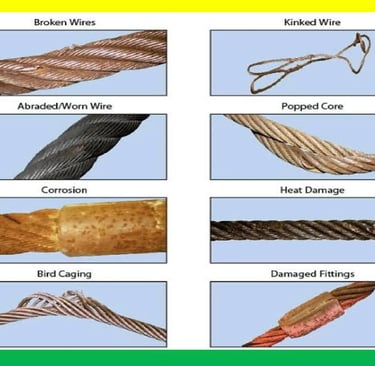
4. Mechanical and Environmental Hazards the Cable Must Resist
To ensure long operational life on a Mobile Harbour Crane, a heavy-duty trailing cable must be engineered as an integrated mechanical and electrical protection system. The cable must resist five distinct physical hazards simultaneously during daily service:
Continuous Dynamic Reversed Bending
As the cable passes from the quay deck, through directional guide rollers, over tensioning sheaves, and onto the spooling drum, it undergoes continuous reversed bending cycles. The cable insulation, internal fillers, and outer sheath must endure millions of flex cycles without delaminating, cracking, or generating internal friction heat.
Torsional Torque Accumulation
Because MHC slewing movements continually twist the cable entry point, the cable structure must incorporate internal mechanical balancing features that dissipate rotational torque along its length, preventing localized structural distortion and corkscrewing.
High Dynamic Tensile Load
During long-travel operations, when the crane pays out or retrieves hundreds of meters of heavy medium-voltage cable at high speed, the cable experiences continuous axial tension along with sudden peak pulling loads during rapid crane acceleration and braking.
Surface Impact, Abrasion, and Compression
Cables lying on active quay aprons face impact from falling debris, compression from terminal support vehicles, and severe surface abrasion as they drag over concrete, steel deck plates, and granite aggregate. The outer jacket material must possess high tear propagation resistance, cut-through strength, and surface hardness.
Severe Coastal Environmental Hazards
In Australian harbour installations, atmospheric exposure often causes cable failure faster than physical wear:
AUSTRALIAN COASTAL ENVIRONMENT HAZARDS [ INTENSE SOLAR UV ] ---> Photolytic Polymer Breakdown & Cracking [ EXTREME HEAT (70°C)] ---> Sheath Softening & Loss of Tear Strength [ SALT SPRAY MIST ] ---> Rapid Metal Corrosion & Insulation Leakage [ HYDRAULIC OILS ] ---> Polymer Swelling & Structural Disintegration
Intense Solar UV Radiation: Australia experiences exceptionally high solar UV levels year-round. Photolytic attack breaks down polymer chains in standard plastics, causing surface chalking, micro-cracking, and embrittlement.
Elevated Ambient and Surface Temperatures: Direct sunlight on dark quay decks and black cable sheaths can raise surface temperatures above 70 degrees Celsius. The cable must maintain mechanical tear strength and electrical insulation performance across these thermal loads.
Corrosive Salt Spray and Marine Moisture: Continuous airborne salt spray introduces salt deposits into any microscopic surface crack. The cable components must remain watertight and corrosion-resistant to prevent ground leakage faults.
Chemical Contamination: Hydraulic oil leaks, gear lubricants, fuel spills, and mineral dusts regularly cover the cable sheath, requiring high chemical resistance to prevent swelling and degradation.
5. Essential Cable Design Features
Engineered harbour crane power cables address these operational hazards through specialized structural design features that distinguish them from standard flexible leads.
PURPOSE-BUILT REELING CABLE ARCHITECTURE [ Outer Sheath ] Extra Heavy-Duty Rubber Compound (5GM3 / 5GM5) [ Anti-Twist Braid] High-Tensile Synthetic Thread Reinforcement [ Inner Bedding] Vulcanized Rubber Compound Filling All Interstices [ Center Element] Semi-Conductive or Textile Stress-Relief Core [ Phase Cores ] Finely Stranded Tinned Copper with EPR Insulation
Integrated Anti-Twist Protection System
One of the most critical structural features of a heavy-duty MHC reeling cable is an anti-twist braid. This layer consists of a high-tensile synthetic thread braid (such as polyester or aramid) embedded between the inner bedding sheath and the outer protective jacket.
This braid binds the inner core assembly to the outer sheath, creating a unified composite structure. When the cable is subjected to torsional torque during crane slewing, the anti-twist braid transfers and distributes these forces evenly along the cable length, preventing core displacement and eliminating bird-caging failures.
High-Tensile Strain Relief Elements
To protect the main copper conductors from dynamic pulling forces, heavy-duty reeling cables incorporate dedicated central tensile strain relief elements. These central cores—made from high-tensile aramid fibers (such as Kevlar) or flexible steel rope elements encased in rubber—absorb the axial pulling load during payout and winding operations, ensuring the copper conductors carry electrical current without taking mechanical stress.
Optimized Short-Lay Conductor Geometry
The individual phase conductors in a heavy-duty crane reeling cable are constructed using finely stranded Class 5 or Class 6 tinned electrolytic copper, wound with short lay lengths. This tight geometric grouping allows individual copper strands to slide smoothly past one another during dynamic bending, preventing strand fatigue and localized buckling.
Compact Bending Radius and Structural Roundness
MHC spools and guide sheaves require compact cable footprints to save weight and space on the crane frame. Purpose-built trailing cables use vulcanized rubber pressure extrusion process to fill all internal interstices between phase conductors. This produces a dense, perfectly round cross-section that maintains its structural shape under high pressure over guide rollers, enabling smaller minimum bending radius values without crushing internal insulation.
Heavy-Duty Vulcanized Elastomeric Sheathing
The exterior protection layer of an MHC cable relies on high-grade thermosetting rubber compounds—such as Polychloroprene (PCP / Neoprene), Chlorosulfonated Polyethylene (CSM), or specialized nitrile-butadiene rubber blends (classified under VDE standards as Type 5GM3 or 5GM5). Unlike thermoplastic materials that melt under heat and embrittle in cold weather, vulcanized elastomeric sheaths maintain their elasticity, tear resistance, UV resistance, and oil resistance across broad temperature swings.
6. Important Selection Parameters for Procurement
When specifying trailing cables for Mobile Harbour Cranes, buyers and engineering specifiers must review key mechanical and thermal parameters against site requirements rather than relying solely on voltage ratings.
CRITICAL SELECTION PARAMETERS PARAMETER ENGINEERING SIGNIFICANCE --------------------------- -------------------------------------------------- 1. Min. Bending Radius Determines compatibility with drum & guide rollers 2. Max. Tensile Strength Prevents conductor stretching under pull-out load 3. Max. Travel Speed Matches crane gantry travel & reel winding speeds 4. Torsional Resistance Measures capability to handle slewing rotation 5. Thermal Operating Window Ensures stability under Australian heat extremes
Minimum Bending Radius
The minimum bending radius dictates how tightly the cable can bend over reels, guide sheaves, and roller trains without suffering structural fatigue. Bending radius values are expressed as a multiple of the cable's overall diameter (O.D.):
Static / Fixed Installation: Typically 4 to 6 times overall diameter.
Dynamic Reeling Operation: Typically 10 to 12.5 times overall diameter.
If a crane drum diameter or guide sheave radius is too small for the chosen cable's rated bending radius, internal insulation degradation accelerates, causing short-circuit failure within a fraction of normal service life.
Permissible Tensile Strength
Tensile strength is expressed in Newtons per square millimeter (N/mm²) of total phase conductor cross-section. Standard industrial flexible cables carry maximum tensile ratings of 15 N/mm² or lower. In contrast, purpose-built heavy-duty crane reeling cables offer tensile ratings of 20 to 30 N/mm² or higher, supported by integrated central strain-relief elements. Underestimating pulling loads leads to conductor elongation, resistance spikes, and physical core separation.
Maximum Permissible Travel Speed and Acceleration
Reeling cables must match the dynamic travel speed of the harbour crane. Standard mobile crane travel speeds range up to 120 meters per minute, while high-speed container handling systems reach up to 240 meters per minute. Specifying a cable rated below the crane's maximum speed results in cable whipping, uneven drum spooling, over-tensioning, and premature sheath failure.
Torsional Stress Rating
Expressed in degrees per meter (e.g., ±25°/m), this value defines the maximum allowable rotational twist the cable can endure without internal displacement. A high torsional stress rating is essential for harbour cranes undergoing continuous slewing operations.
Thermal Operating Range
For Australian installations, the cable must maintain full physical performance across a broad thermal window—typically minus 35 degrees Celsius to plus 90 degrees Celsius for dynamic flexing operations, with short-circuit temperature withstand capacity up to 250 degrees Celsius at the conductor.
7. Recommended Heavy-Duty Cable Solutions
To demonstrate how these structural features are applied in real-world port environments, consider three representative heavy-duty cable families manufactured by Feichun Cable. These product lines show how high-tensile reinforcement, anti-twist protection, and advanced elastomeric compounds are combined for dynamic harbour crane applications.
Feichun PROTOLON (SMK+HS) (N)TSKCGEWOEU Heavy-Duty Reeling Cable
The Feichun PROTOLON (SMK+HS) (N)TSKCGEWOEU series represents a premium solution engineered specifically for high mechanical stresses, high tensile pulling loads, and continuous high-speed reeling on Mobile Harbour Cranes, container stackers, and heavy mining excavators.
FEICHUN PROTOLON (SMK+HS) (N)TSKCGEWOEU DESIGN [ Central Core ] High-Tensile Aramid Strain-Relief Core [ Phase Cores ] Class 5 Finely Stranded Copper + High-Grade EPR [ Interstitial Earth] Symmetrical 3-Part Split Ground Conductor Layout [ Inner Sheath ] Extra Heavy-Duty Rubber Bedding Compound [ Anti-Twist Layer] High-Density Synthetic Thread Braid [ Outer Sheath ] Abrasion & UV-Resistant Red PCP Rubber (5GM5)
Application Profile: Specially engineered for high-speed motorized reels, mono-spiral drums, and cylindrical spooling systems operating on quay-side mobile harbour cranes under extreme dynamic tension.
Electrical Architecture: Rated for medium-voltage distribution (including 3.6/6 kV, 6/10 kV, 8.7/15 kV, up to 12/20 kV). It features finely stranded Class 5 tinned copper phase conductors enclosed by inner and outer semi-conductive stress-control layers over high-dielectric EPR insulation.
High-Tensile & Anti-Twist Construction: Built around a high-tensile central strain-relief element (Kevlar-based) that absorbs heavy dynamic pulling loads up to 30 N/mm². An integrated synthetic anti-twist braid embedded between inner and outer sheaths prevents rotational displacement during high-speed reeling and slewing.
Operational Parameters: Capable of handling reeling travel speeds up to 240 meters per minute and torsional stress up to plus or minus 25 degrees per meter. Protected by a red Type 5GM5 heavy-duty polychloroprene rubber outer sheath, it delivers exceptional resistance to mineral oils, UV radiation, ozone, salt spray, and abrasive wear across an operating temperature range of minus 35 degrees Celsius to plus 90 degrees Celsius.
Feichun (N)TSKCGEWÖU Reeling Cable for Harbour Cranes and Mining Equipment
The Feichun (N)TSKCGEWÖU cable family provides a robust, versatile medium-voltage reeling cable for mobile harbour cranes, rubber-tyred gantry (RTG) cranes, ship loaders, and open-cut mining machinery.
FEICHUN (N)TSKCGEWÖU CABLE ARCHITECTURE [ Phase Cores ] Class 5 Tinned Copper + Semi-Conductive Layers + EPR [ Earth Layout ] Symmetrical 3+3 Split Grounding Configuration [ Core Assembly ] Central Semi-Conductive Rubber Filler Element [ Anti-Twist ] High-Tensile Polyester Braid Protection [ Outer Sheath ] High-Visibility Red PCP Rubber Compound
Application Profile: Widely deployed across port logistics berths, container yards, and bulk export terminals where cables experience repeated bending, guide-roller deflection, and environmental exposure.
EMC & Grounding Geometry: Utilizes a symmetrical 3+3 grounding design, splitting the protective ground conductor into three equal parts positioned in the outer interstices. This geometry balances mutual capacitance, suppresses common-mode noise from variable frequency drives, and limits shaft voltages on crane motors.
Mechanical Strength: Features an embedded polyester anti-twist braid that prevents corkscrewing and handles dynamic tensile loads up to 30 N/mm². Rated for travel speeds up to 240 meters per minute and operating temperatures from minus 30 degrees Celsius to plus 90 degrees Celsius during dynamic flexing.
Feichun TROMMELFLEX NSHTÖU Heavy-Duty Rubber Reeling Cable
The Feichun TROMMELFLEX NSHTÖU series is an industry-standard low-voltage heavy-duty rubber cable engineered specifically for drum reeling, hoisting, festooning, and trailing applications on harbour cranes, material conveyors, and mobile hoists.
FEICHUN TROMMELFLEX NSHTÖU CONSTRUCTION [ Conductors ] Flexible Class 5 Tinned Copper (BS EN 60228) [ Insulation ] Type 3GI3 Rubber Compound (VDE 0207 Part 20) [ Inner Bedding ] Type GM1b Rubber Compound [ Anti-Twist Braid] Polyester Braid Anti-Twist Reinforcement [ Outer Sheath ] Type 5GM3 Heavy-Duty Black PCP Rubber Sheath
Application Profile: Ideal for 600/1000V power and control circuits on mobile harbour crane trailing drums, spreader baskets, festoons, and quay-side auxiliary power units.
Construction Quality: Features Class 5 tinned copper conductors, high-grade Type 3GI3 rubber insulation, and a central polyester anti-twist braid embedded within the dual-layer rubber sheath system.
Environmental & Flexing Performance: Protected by an oil-, UV-, and ozone-resistant Type 5GM3 polychloroprene outer sheath compliant with BS EN/IEC 60811-2-1 standards. Offers a tight dynamic bending radius of 5 times overall diameter, operating in dynamic flexing service from minus 25 degrees Celsius to plus 60 degrees Celsius (and minus 40 degrees Celsius static), making it a reliable solution for harbour crane trailing systems.
8. Failure Risks and Business Costs of Improper Cable Selection
Specifying an inadequate or general-purpose flexible cable for Mobile Harbour Crane service introduces severe operational hazards and direct financial losses to port terminal operations.
FINANCIAL IMPACT OF CABLE FAILURE [ CABLE SELECTION ERROR ] ---> Internal Strand Fatigue & Torsional Distortion | Catastrophic Bird-Caging & Sheath Split <--+ | Quay-Side Power Outage & Crane Shutdown <--+ | [ HIGH FINANCIAL LOSS: BERTH DEMURRAGE & UNPLANNED REPAIRS ]
Unplanned Berth Demurrage and Downtime
Modern harbour terminals operate under tight shipping schedules. If an MHC trailing cable fails during ship unloading, the entire berth comes to a standstill. Unplanned crane downtime leads to heavy demurrage penalties charged by shipping lines, missed rail freight connections, berth congestion, and lost terminal revenue.
High Replacement and Rigging Costs
Replacing a damaged high-voltage harbour crane reeling cable is expensive. Beyond the cost of the replacement cable, the re-cabling process requires specialized rigging crews, elevated work platforms, tension-calibrated winding equipment, and testing technicians. The total cost of an emergency cable replacement often exceeds the original cable purchase price several times over.
Accelerated Motor and Inverter Drive Damage
When a trailing cable suffers internal structural breakdown—such as strand migration, shield tearing, or ground conductor separation—its electrical properties degrade. Unbalanced ground return paths and intermittent shield contact generate high-frequency voltage transients and common-mode current loops. These electrical anomalies travel into crane drive enclosures, causing inverter faults, encoder signal corruption, and motor bearing damage.
Severe Personnel Safety Hazards
A cable structural failure on an active quay apron presents serious safety hazards. Outer sheath rupture on a medium-voltage cable (e.g., 6.6 kV or 11 kV) can cause explosive electrical arcing, exposing quay workers to arc flash, electrical shock, and fire hazards. In addition, a cable that jams in guide rollers or snaps under tension can whip across the deck, threatening personnel and ground support equipment.
9. How to Match Cable Specifications to Your Duty Profile
To ensure long-term reliability on Australian Mobile Harbour Cranes, equipment specifiers should follow a structured step-by-step selection process:
CABLE SPECIFICATION DECISION PATHWAY [ DYNAMIC MOTION & REELING ANALYSIS ] - What is the travel distance & reeling speed? ------> MATCH TENSILE & SPEED RATING - What are the slewing & bending angles? ---------> SELECT ANTI-TWIST BRAIDED DESIGN [ ELECTRICAL DRIVE MATCHING ] - Is the power supply 600/1000V or Medium Voltage? -> MATCH VOLTAGE CLASS (EPR INSULATED) - Is the crane powered by a VFD inverter? ---------> MANDATE SYMMETRICAL 3+3 GROUNDING [ MECHANICAL STRAIN RELIEF ] - Is the cable paid out over long distances? ------> SELECT CENTRAL KEVLAR STRAIN RELIEF [ AUSTRALIAN ENVIRONMENTAL SURVIVAL ] - Is the cable exposed to high UV & heat (70°C)? ---> SPECIFY 5GM3 / 5GM5 RUBBER SHEATH
Step 1: Calculate Total Mechanical Tension and Payout Distance
Measure the total cable payout length along the quay-side apron, taking into account maximum crane travel distance and drum winding tension. Calculate total pulling force under acceleration and select a cable with a central strain-relief element (e.g., Feichun PROTOLON (SMK+HS)) if pulling forces exceed 20 N/mm².
Step 2: Audit Reel Geometry and Guide Roller Diameters
Check the physical diameter of the crane's spooling drum and directional guide sheaves. Multiply the outer diameter of candidate cables by the required dynamic bending multiplier (e.g., 10x or 12.5x O.D.). Confirm that the crane’s physical guide system accommodates this minimum bending radius without pinching or over-stressing the cable core.
Step 3: Evaluate Slewing Frequency and Torsional Requirements
If the crane performs continuous 360-degree slewing during high-duty container handling, mandate an integrated synthetic anti-twist braid layer within the cable construction. Never install an unreinforced flexible cable in an application subject to rotational torque.
Step 4: Verify VFD Compatibility and Symmetrical Grounding
If the harbour crane uses variable frequency drives (VFDs) for travel and hoist control, select a cable with a symmetrical 3+3 split ground conductor layout (such as Feichun (N)TSKCGEWÖU). Symmetrical grounding balances electromagnetic fields, suppresses EMI interference with crane automation networks, and prevents motor bearing fluting.
Step 5: Specify High-Grade Australian UV and Chemical Protection
For cables installed in Australian ports, specify extra heavy-duty vulcanized elastomeric outer sheaths (Type 5GM3 or 5GM5 quality). Confirm that the sheath compound is formulation-tested for extreme solar UV radiation, surface temperatures exceeding 70 degrees Celsius, marine salt spray, and hydraulic oil splash.
10. System Reliability and Harbour Crane Efficiency
Mobile Harbour Cranes are vital assets in Australia's port logistics network. Maintaining their productivity requires reliable power delivery systems engineered to withstand continuous mechanical movement, dynamic tension, and severe coastal weathering.
Standard flexible power leads, while adequate for stationary industrial tasks, lack the structural geometry, anti-twist reinforcement, strain relief elements, and high-grade elastomeric sheathing needed for harbour crane trailing service. Installing standard cables on high-speed crane reels leads to bird-caging, conductor fatigue, outer sheath splitting, and unscheduled berth shutdowns.
Specifying a purpose-built heavy-duty harbour crane power cable—such as the Feichun PROTOLON (SMK+HS) (N)TSKCGEWOEU, (N)TSKCGEWÖU, or TROMMELFLEX NSHTÖU series—provides comprehensive protection against mechanical wear, electrical noise, and environmental degradation.
By matching cable parameters to the crane's motion profile, reeling dynamics, and site environmental conditions, terminal managers and crane engineers ensure long-term operational safety, protect expensive drive systems, and achieve low total cost of ownership.
For demanding harbour crane applications, cable failure is almost always a mechanical design problem rather than a simple electrical fault; selecting a purpose-built, heavy-duty reeling cable is the single most effective step to ensure reliable quay-side performance.
Single Specific Follow-Up Question
Would you like to review specific technical cross-section diagrams or customized core layout options for a particular crane reel installation?
Port crane cables | Mining cables | Reeling cables | Trailing cables | Festoon cables | Heavy-duty power cables | Medium voltage cables | Offshore crane cables | Underground mining cables | Dragline cables | Shearer cables | Container handling cables | STS crane cables | RTG cables | Mobile equipment cables | Armored cables | Flexible power cables | VFD cables | Submersible cables | Cold resistant cables | Abrasion resistant cables | Flame retardant cables | Marine environment cables | Opencast mining | Underground operations
© 2006 All rights reserved.
[INDUSTRIAL_CABLES]
INDUSTRIAL GRADE CABLE SYSTEMS | PORT & MINING SOLUTIONS
TEL: +86 153 7530 2641 |MAIL: hongjing.Wang@feichuncables.com