Sourcing Heavy-Duty Armoured Cables for Oil & Gas Sea Terminals in Dubai and Abu Dhabi
Find heavy-duty armoured cables for Dubai and Abu Dhabi oil & gas sea terminals, with guidance on SWA construction, hazardous-area compliance, marine corrosion, and offshore applications.
hongjing.Wang@Feichun
7/6/202620 min read
1. Introduction
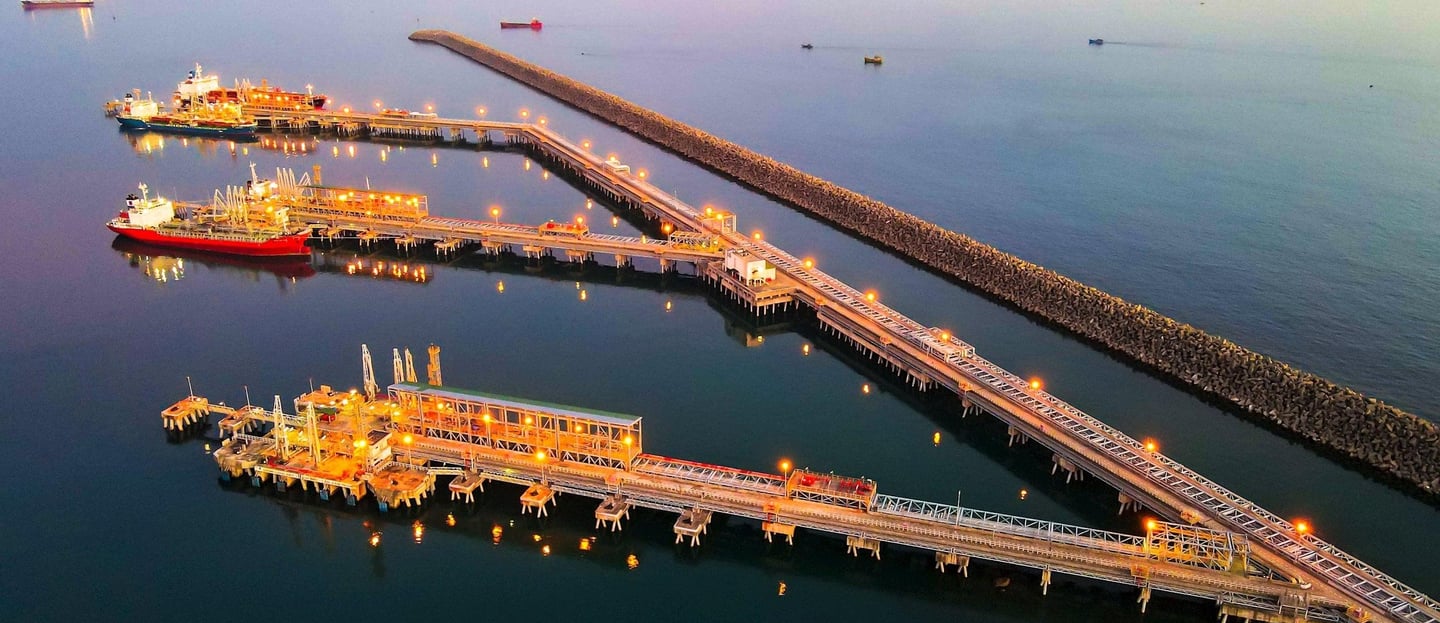
The coastal infrastructure of the United Arab Emirates represents one of the most critical concentrations of energy logistics asset networks anywhere in the global energy market. Across the coastlines of Dubai and Abu Dhabi, massive maritime hubs handle the storage, processing, loading, and distribution of hydrocarbons that fuel international economies. Operating these sea terminals safely requires an uncompromising approach to engineering design, where every individual component must be built to withstand extreme operational conditions. Among these components, heavy-duty electrical power, control, and instrumentation cable systems serve as the primary networks that keep these massive industrial complexes running smoothly.
In an Oil & Gas Terminal environment, cable networks cannot be treated as simple utility lines. They must handle a challenging combination of severe environmental and physical risks. These systems must maintain complete hazardous-area compliance to eliminate ignition risks in explosive atmospheres, resist the aggressive corrosive forces of warm marine salt spray, withstand the mechanical wear caused by continuous industrial operations, and provide verified fire safety performance during a thermal emergency. Whether deployed along the massive offshore loading arms of an oil export terminal, the structural trusses of jetty walkways, or the high-speed reeling drums of port terminal cranes, these cables face a continuous mix of physical and environmental stresses.
For Engineering, Procurement, and Construction (EPC) contractors, lead design consultants, and technical procurement teams operating within the UAE energy sector, specifying and sourcing these materials demands an advanced understanding of material science, international electrotechnical standards, and regional regulatory frameworks. Selecting an inadequate cable construction or a mismatched accessory does not simply lead to a routine maintenance repair; it creates an immediate vulnerability that can result in catastrophic asset loss, environmental contamination, or costly operational downtime. This comprehensive guide outlines the critical factors involved in matching cable construction, certification parameters, and termination practices to the demanding requirements of oil and gas sea terminals in Dubai and Abu Dhabi.
2. Project & Regional Context
Sourcing industrial components in the UAE requires a deep understanding of the unique operating environments and corporate standards that define the energy landscape in Abu Dhabi and Dubai. While both emirates share the same harsh coastal climate, their industrial focus and engineering frameworks feature distinct characteristics that procurement teams must safely navigate.
Abu Dhabi Oil & Gas Terminals
The industrial coastline of Abu Dhabi is shaped by massive, state-governed energy extraction and processing operations managed under the unified framework of the Abu Dhabi National Oil Company (ADNOC). Critical sites—including the extensive refining and petrochemical complexes at Ruwais, the specialized export infrastructure on Das Island and Zirku Island, and the expanding LNG offloading berths at Khalifa Port—operate under some of the most stringent engineering specifications in the world.
In these installations, technical consultants must strictly adhere to the ADNOC Code of Practice (COP) and detailed engineering standards. These specifications govern every aspect of material selection, prioritizing maximum asset longevity, environmental protection, and human safety. Procurement teams working on Abu Dhabi tenders must expect deep technical oversight, where every cable batch must be backed by traceable manufacturing origins and comprehensive independent third-party type-test certifications.
Dubai Offshore Loading Terminals and Industrial Jetties
In Dubai, maritime energy logistics focus heavily on commercial bunkering, regional fuel distribution, and specialized maritime engineering. Operating zones—such as the heavy industrial berths within Jebel Ali Port, the liquid bulk terminals managed by the Emirates National Oil Company (ENOC), and the extensive repair and fabrication facilities at Dubai Drydocks World—face unique operational challenges.
These sites experience high-frequency ship movements, constant mechanical loading operations, and a complex mix of land-based industrial dust and open-ocean salinity. Cable systems deployed on Dubai’s offshore loading arms and coastal supply jetties must handle intense structural vibrations and continuous movement, while operating in a marine environment that accelerates the aging of standard commercial polymers.
Logistic Realities and Long Outdoor Runs
Beyond organizational differences, all maritime terminals in the UAE share a challenging physical layout. Cable routing across modern sea terminals involves exceptionally long runs that span miles from inland substation switchgear rooms out along exposed concrete jetties to offshore loading platforms. These cables are installed in open outdoor cable trays, routing networks underneath catwalks, or direct-burial concrete trenches. This open configuration exposes the outer jackets to relentless solar radiation, high ambient temperatures, and direct salt-water splash.
Furthermore, because regional project execution schedules are demanding, EPC contractors must carefully balance long-term design compliance with practical logistics. This requires building relationships with qualified suppliers who can provide local technical support, manage localized stocking programs for rapid-delivery items, and deliver fully matched cable and accessory systems that can pass strict consultant inspection gates without unexpected delays.
3. Hazardous-Area & Safety Requirements
The primary engineering priority when designing electrical infrastructure for an Oil & Gas Terminal is preventing catastrophic accidents in areas where volatile gases and hydrocarbon vapors are regularly processed. Because these facilities handle highly flammable liquids and gases, electrical systems must be engineered as integrated, explosion-proof installations.
Zone Classification and Engineering Implications
Industrial sea terminals are strictly classified into clear hazardous zones based on the frequency and duration of an explosive atmosphere, in accordance with international electrotechnical standards like IEC 60079:
Zone 1 Areas: Form a perimeter where an explosive gas atmosphere is likely to occur periodically during normal daily operations. This includes areas immediately surrounding offshore loading arm swivels, vessel vapor-recovery connections, sampling points, and primary manifold valves on the jetty deck. Cables in Zone 1 must feature exceptional structural integrity and be paired with certified explosion-proof terminations to prevent any internal electrical arcing from reaching the outside air.
Zone 2 Areas: Cover spaces where an explosive atmosphere is not likely to occur during normal operation, but if it does occur, will exist for a short period only. These zones typically surround storage tank perimeters, secondary pipeline routing trays, and peripheral access walkways. While the risk is lower, the material selection guidelines remain strict, requiring rugged outer jackets and verified mechanical seals to eliminate the risk of vapor migration through the cable structure.
Fire Performance Thresholds
When an industrial fire occurs at a marine terminal, the performance of the electrical wiring system determines whether operators can safely manage the emergency. Cable specifications are strictly categorized based on their behavior under fire conditions, and procurement teams must understand these distinct performance thresholds:
Flame Retardant Cables: Designed to resist the spread of fire along the length of the cable jacket. These cables utilize self-extinguishing polymers that stop burning once the external flame source is removed, preventing the wiring network from acting as a fuse that spreads fire across different rooms.
Fire Resistant (Circuit Integrity) Cables: Engineered to maintain absolute electrical functionality while being directly engulfed in flames. These cables utilize high-performance mineral insulation barriers, such as mica tape wraps, that remain structurally stable at temperatures exceeding 950°C. They are mandatory for critical systems that must remain active during an emergency shutdown, including Emergency Shutdown (ESD) valves, fire detection networks, automated water-deluge control lines, and emergency lighting arrays.
Certification Frameworks
Every cable, gland, and junction box installed in a UAE hazardous zone must carry valid international explosion-protection certifications. The preferred global framework throughout Dubai and Abu Dhabi is the IECEx system, which provides a single, verifiable standard of safety compliance. ATEX certifications are also widely accepted by regional consultants, provided they are accompanied by equivalent documentation and align with local wiring codes, such as the Abu Dhabi Wiring Regulations or specific Dubai Municipality technical addenda.
Procurement teams must ensure that components do not simply stamp an IECEx logo on their data sheets; the specific protection concepts—such as Ex d (flameproof) or Ex e (increased safety)—must precisely match the hazardous zone documentation approved for the site.
Glands, Terminations, and Sealing Practices
A hazardous-area cable installation is only as secure as its weakest link, which is almost always located at the interface where the cable enters a junction box or terminal enclosure. Sourcing a high-quality Hazardous Area Armoured Cable requires pairing it with fully compatible, certified explosion-proof glands.
These accessories must provide a gas-tight flameproof seal around the inner bedding of the cable, preventing flammable hydrocarbon vapors from traveling down the interior air gaps of the cable structure into the electrical enclosure. Furthermore, these glands must feature high Ingress Protection (IP66 or IP67) ratings to exclude marine moisture, while incorporating robust internal mechanical clamping rings that secure the cable armor to establish reliable, high-capacity earth continuity.
4. Cable Armour & Construction Technology
To survive the physical forces found at a coastal industrial site, a cable requires robust internal mechanical reinforcement. Within the framework of British and International standards, this protection is achieved through specialized metallic armoring layers.
Steel Wire Armoured (SWA) Construction
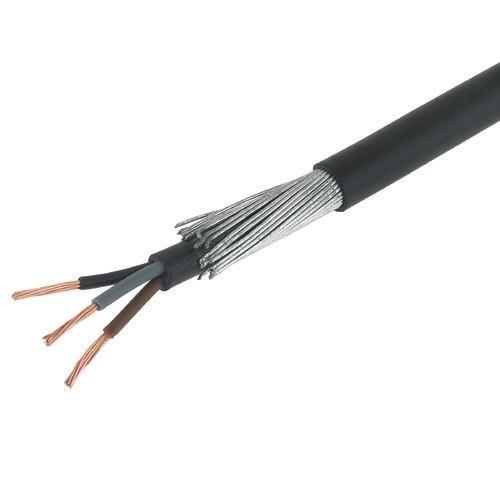
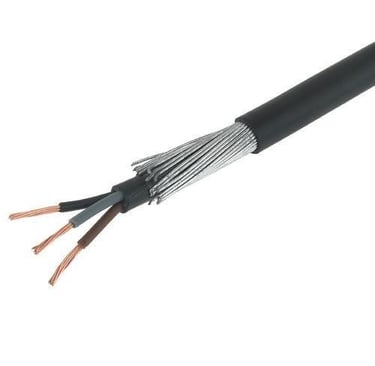
For multi-core power distribution and high-voltage feeder circuits running along terminal jetties, Steel Wire Armoured (SWA) cables serve as the standard engineering choice. An SWA cable utilizes a dense layer of heavy, galvanized steel wires wrapped helically around an internal extruded bedding material. This heavy steel layer provides exceptional physical protection, allowing the cable to withstand direct mechanical impacts, heavy surface compression, and the high longitudinal tensile stresses encountered when pulling long cable lengths through winding structural trays or underground concrete ducts.
Additionally, the substantial cross-sectional area of the galvanized steel wires provides a reliable, low-resistance path for electrical fault currents. In the event of an internal insulation failure, the fault current flows safely through the armor layer back to the main substation grounding matrix, triggering protective circuit breakers before dangerous surface voltages can develop.
Aluminium Wire Armoured (AWA) Construction
When an industrial design requires single-core cables to transmit heavy alternating current (AC) loads, steel armor cannot be utilized due to its magnetic properties. Passing a high-amperage, single-phase AC signal through a magnetic material like galvanized steel induces circulating eddy currents and localized magnetic hysteresis. This effect causes rapid heating within the armor layer, leading to thermal degradation of the adjacent polymer insulation and reducing the current-carrying capacity of the conductor.
To eliminate this risk, single-core AC lines must utilize Aluminium Wire Armoured (AWA) construction. Because aluminum is non-magnetic, it allows alternating magnetic fields to pass through freely without generating parasitic thermal loads. Aluminum wire armor also provides a significant weight reduction benefit, simplifying handling and reducing structural loads on elevated jetty walkways and cantilevered cable trays.
Braided Screen and Composite Armour Technology
For sensitive instrumentation networks, data transmission lines, and automated control systems operating near high-voltage switchgear or large variable-frequency motor drives, standard wire armoring is often supplemented with a braided screen. These designs integrate a high-density tinned copper wire braid (TCWB) or galvanized steel wire braid (GSWB) directly into the cable structure.
The braided matrix fulfills a dual role: it delivers excellent multi-directional mechanical flexibility, which is vital for dynamic installations, while forming a highly effective electromagnetic shield. This shield intercepts high-frequency Electromagnetic Interference (EMI) and Radio Frequency Interference (RFI), preventing electrical noise from corrupting delicate control loops, digital sensor telemetry, or fiber-optic monitoring signals.
The Structural Role of Inner Bedding
A high-quality SWA Armoured Cable UAE specification requires careful attention to the internal bedding layer. The bedding is an extruded layer of unvulcanized rubber or soft PVC compound that completely encloses the insulated core conductors before the armor wires are applied. This layer fulfills two critical functions:
It acts as a protective cushion that prevents the hard, metallic armor wires from pressing into or biting through the soft insulation layers of the internal conductors during bending.
It fills the interior air gaps between the stranded cores, creating a solid, uniform cylindrical profile that allows explosion-proof glands to form an effective, gas-tight mechanical seal around the inner structure of the cable.
Grounding and Earth Continuity Practices
Maintaining reliable, long-term earth continuity through the cable armor is essential for industrial safety at an Oil & Gas Terminal. During installation, the armor layer must be securely bonded to the facility's master grounding grid at both termination points using certified brass or stainless-steel earth tags.
These tags are clamped firmly within the cable gland assembly, ensuring a low-resistance metallic connection that can handle high-amperage short-circuit faults without melting. Once installed, the entire cable run must undergo strict earth loop impedance testing to confirm that the mechanical connections, splices, and terminal interfaces possess the electrical continuity required to safely redirect fault currents.
5. Application Systems & Typical Installations
Industrial sea terminals rely on specialized machinery that requires tailored cable designs based on specific mechanical movement profiles and environmental exposure zones.
Offshore Loading Arms
Offshore loading arms are articulating mechanical structures used to transfer crude oil, refined products, or liquefied gases directly from shore-side storage manifolds onto the manifolds of berthed marine tankers. These structures feature multiple rotating swivel joints that allow the arm to flex and move in response to the constant motion of the ship caused by waves, tides, and changing wind conditions. The electrical cables routed along these arms to power control valves, position sensors, and emergency quick-release couplings must handle continuous structural movement and torsional strain.
Standard rigid SWA cables are unsuitable for these articulating joints. Instead, engineers specify highly flexible braided-screen or composite-armoured cables featuring fine-stranded Class 5 copper conductors. The terminations at these moving joints must utilize flexible cable glands equipped with heavy-duty strain-relief spirals and integrated swivels to prevent mechanical bending stresses from fatiguing the internal electrical connections.
Port Cranes and Material Handling Systems
Modern oil terminals and adjacent chemical logistics hubs utilize large, rail-mounted gantry cranes and specialized material handling systems to position heavy hoses, manage manifold machinery, and move dry containerized cargo. The power supply lines for these large structures involve high-velocity reeling drums or complex festoon loop arrangements that travel along the crane trusses. These cables face severe mechanical wear, including continuous tensile acceleration forces, rapid bending cycles, and surface friction against guide rollers.
For these dynamic installations, procurement teams must source specialized flexible armoured reeling and festoon cables. These designs replace standard steel wire armor with high-tensile textile braids, or utilize highly flexible steel wire braids embedded within a tough, abrasion-resistant polyurethane outer jacket, ensuring the cable can withstand continuous movement without experiencing structural deformation.
Submerged and Splash-Zone Installations
The most chemically aggressive zone within a marine terminal is the splash zone—the structural area of the jetty piling and offshore platforms that is continuously alternated between wet and dry states by breaking waves and changing tides. Cables routed through this zone to power underwater pumps, cathodic protection anodes, or lower platform sensors are exposed to high oxygen levels, intense solar heat, and constant saltwater contact.
Sourcing cables for splash-zone installations requires specifying specialized polymer sheaths, such as fluoropolymers or high-density cross-linked polyolefins, that resist moisture absorption and salt-water degradation. The associated cable glands must be manufactured from marine-grade materials, such as 316L stainless steel or nickel-plated brass, and feature dual-seal chloroprene rings to prevent moisture from bypassing the outer jacket.
Emergency and Critical Control Circuits
Beyond bulk power distribution, an offshore terminal requires dedicated wiring networks to manage its automated emergency systems. These critical safety loops include Emergency Shutdown (ESD) circuits, fire detection sensors, remote-activated foam monitors, and emergency communication systems.
Because these lines must remain operational during an active facility fire, they must utilize certified fire-resistant armoured cable configurations. These designs incorporate specialized mica-tape flame barriers underneath low-smoke, halogen-free insulation compounds. They are routed through dedicated, physically segregated cable trays to protect the safety network from being damaged by failures on adjacent high-voltage power lines.
6. Environmental Stressors
The coastal fringe of the Arabian Gulf presents a combination of environmental factors that can rapidly degrade standard industrial components. Cables operating in Dubai and Abu Dhabi must be engineered to resist these localized environmental stressors over a multi-decade service life.
Salt Fog and Marine Corrosion
The atmosphere surrounding Gulf sea terminals contains high concentrations of airborne sea salt particles, forming a dense, highly corrosive salt fog. This saline mist settles onto exposed industrial machinery, penetrating open cable trays and structural supports.
When moisture evaporates under the intense midday sun, it leaves behind a concentrated crystalline salt deposit that reacts with exposed metals. If a lower-grade, non-galvanized armor wire or an unplated brass cable gland is installed, this salt contamination initiates rapid galvanic corrosion. This oxidative process degrades the metal, reducing its mechanical strength and breaking down the electrical grounding path.
High Humidity and Thermal Aging
The UAE coastal region experiences a combination of high relative humidity and extreme ambient temperatures, which can exceed 50°C during summer months. For an outdoor cable installed in an open tray, direct solar radiation can heat the dark outer jacket to surface temperatures above 70°C.
This continuous thermal loading accelerates the chemical aging of polymer compounds. Lower-quality materials can experience plasticizer migration, where the essential binding agents leach out of the compound, leaving the outer jacket stiff, brittle, and prone to cracking under minor physical impacts. This structural degradation is often accelerated by intense ultraviolet (UV) radiation, which breaks down the molecular bonds of un-stabilized plastics, leading to surface discoloration and deep stress cracking.
Chemical Exposure and Hydrocarbon Vapors
By their very nature, oil and gas sea terminals expose electrical infrastructure to constant contact with chemical hazards. This includes direct liquid splashes during manifold connections, heavy airborne hydrocarbon vapors, and cleaning solvents used during maintenance operations.
Standard outer jackets, such as basic PVC or soft rubbers, can swell, soften, or dissolve when exposed to petroleum-based hydrocarbons. Once the outer polymer jacket is compromised, chemicals can migrate into the cable core, dissolving the conductor insulation and triggering catastrophic short circuits. Sourcing cables for these environments requires specifying specialized oil-resistant jacket compounds that are verified to maintain their structural integrity when continuously exposed to complex hydrocarbon matrices.
7. Key Performance Parameters & Test Evidence
To guarantee long-term performance in a coastal oil and gas terminal, technical submittals must move past basic catalog promises and provide empirical verification against recognized international testing standards. Procurement teams must require comprehensive type-test reports covering a specific matrix of performance parameters.
1. Fire Performance and Circuit Integrity Ratings
For all safety-critical and emergency shutdown circuits, suppliers must present official test certificates verifying compliance with international fire-test standards:
IEC 60332-3-22 (Category A): Verifies the cable's flame-retardant properties by testing its ability to resist vertical flame propagation when installed in a dense bunched configuration within a simulated cable shaft.
IEC 60331-21 / BS 6387 (Category CWZ): Confirms that the cable can maintain complete circuit integrity under the combined stresses of direct flame exposure at 950°C, mechanical shock, and direct water spray, ensuring the wiring system remains operational during an active industrial fire.
2. Mechanical Toughness and Impact Resistance
Because cables are subjected to rough handling during installation and continuous vibration during operation, manufacturers must present verified impact and abrasion test data:
IEC 60811-506: Outlines the laboratory procedures for assessing the low-temperature impact resistance of the outer sheath, ensuring the material does not crack or split if bumped during handling operations.
Armor Breaking Load Data: Verifies the maximum longitudinal tensile force the steel or aluminum wire matrix can handle before experiencing permanent structural elongation, confirming the cable can safely support long vertical runs along offshore loading platforms.
3. Chemical and Oil Resistance Metrics
To ensure compatibility with the chemical environment of a refinery jetty or storage terminal, the outer jacket compound must pass strict chemical aging trials:
IEC 60811-404: Governs the testing of cable sheaths immersed in specific mineral oils or industrial fluids at elevated temperatures for extended durations. A compliant compound must maintain at least 80% of its initial tensile strength and elongation metrics after immersion, proving the polymer matrix will not soften or swell when exposed to hydrocarbon vapors.
4. Environmental Ingress and Durability Ratings
For components installed in open, sun-exposed outdoor trays, suppliers must document excellent long-term weather resistance:
ISO 4892-2 (UV Resistance Testing): Subjects the outer jacket material to accelerated xenon-arc light exposure and moisture cycles, verifying the polymer will not experience premature embrittlement under intense solar radiation.
ASTM B117 (Salt Spray Testing): Requires cable glands, armor terminations, and metallic shielding samples to undergo continuous exposure to a atomized 5% sodium chloride solution for up to 1000 hours, confirming the assembly can withstand decades of exposure to coastal salt fog without experiencing structural corrosion.
Technical procurement teams must ensure that all documentation presented—including material reports, factory production control records, and third-party type-test certificates—is fully traceable to the specific manufacturing facility producing the cable batch, establishing a reliable audit trail for the project consultant.
8. Representative Cable Types / Model Families
To assist engineering teams in aligning their technical submittals with the correct structural nomenclature, this section outlines the primary cable families utilized across Middle Eastern energy terminal projects, paired with their typical application tags:
0.6/1 kV SWA Armoured Power Cable: Designed with rigid Class 2 stranded copper conductors, cross-linked polyethylene (XLPE) insulation, extruded PVC bedding, a heavy layer of galvanized steel wire armor, and a robust outer sheath.
Application Tag: Low-voltage fixed distribution feeders for jetty walkways, terminal yard lighting, and utility power distribution panels.
3.6/6 kV to 19/33 kV MV Armoured Cable (IEC 60502-2 Family): Features high-purity copper or aluminum conductors, triple-extruded semi-conducting conductor shields, high-dielectric XLPE insulation, an insulation screen, a metallic copper tape screen, an inner bedding layer, robust SWA (for multi-core) or AWA (for single-core) mechanical armoring, and a heavy-duty hydrocarbon-resistant outer jacket.
Application Tag: Medium-voltage jetty feeders, master substation interconnects, and main power distribution to large marine transfer pump rooms.
Fire-Resistant Armoured Cable: Incorporates high-conductivity stranded copper conductors wrapped with dual layers of high-purity mineral mica tape, low-smoke zero-halogen (LSZH) cross-linked insulation, an extruded LSZH inner bedding matrix, galvanized steel wire armor, and a certified UV-stabilized, fire-resistant outer sheath.
Application Tag: Emergency Shutdown (ESD) valve actuators, fire detection networks, automated water-deluge control loops, and emergency notification systems.
LSZH SWA Cable for Indoor/Covered Areas: Utilizes standard Class 2 copper conductors, XLPE insulation, an extruded low-smoke zero-halogen bedding layer, galvanized steel wire armor, and an outer polyolefin sheath that releases minimal smoke and zero corrosive acid gases when exposed to fire.
Application Tag: Centralized control rooms, enclosed cable tunnels, underground substation basements, and critical human-occupied spaces.
Braided Screen + Armour Composite Cable Family: Combines stranded control cores with an internal tinned copper wire braid (TCWB) electromagnetic shield, an intermediate bedding layer, and an external layer of galvanized steel wire armor or a secondary steel braid for enhanced physical durability.
Application Tag: Long instrumentation runs, automated remote terminal units (RTU), and delicate sensor data loops operating near high-power variable-frequency drives.
IECEx/ATEX-Compatible Armoured Cable System: Manufactured to tight physical tolerances with gas-tight extruded bedding compounds to eliminate internal air gaps, paired with certified Ex d flameproof or Ex e increased safety materials.
Application Tag: Zone 1 and Zone 2 hazardous process areas, offshore loading manifolds, and vapor-recovery skid systems.
Marine / Splash-Zone Rated Armoured Cable: Features a dense cross-linked outer polyolefin sheath modified with anti-microbial and hydrophobic additives, heavy galvanized SWA reinforcement, and water-blocking internal tapes or compounds.
Application Tag: Submerged jetty structural supports, low-level platform sensors, and fixed sections of marine loading arms exposed to breaking waves.
Flexible Armoured Reeling/Festoon Cable: Utilizes fine-stranded Class 5 flexible copper conductors, highly elastic ethylene propylene rubber (EPR) insulation, an integrated anti-torsion textile or steel wire braid embedded within a tough, high-density polyurethane (PUR) outer jacket.
Application Tag: Port terminal cranes, automated hose-handling gantries, and dynamic materials handling machinery experiencing continuous high-speed movement.
9. Typical Failure Themes & Case Examples
Analyzing historical maintenance logs and engineering non-conformance records from regional projects reveals that most field failures stem from predictable root causes. Understanding these typical failure modes helps engineering teams implement effective preventive measures.
Sheath Cracking and Moisture Ingress
The root-cause investigation revealed the original procurement had used a basic, non-UV-stabilized PVC jacket compound. Exposed to intense solar radiation and summer temperatures above 45°C, the plasticizers within the PVC migrated to the surface and washed away, leaving the jacket brittle.
As the cable expanded and contracted during daily temperature cycles, the brittle material cracked, allowing salt-laden marine moisture to enter the core via capillary action. This moisture initiated rapid galvanic corrosion of the underlying steel wire armor, leading to insulation breakdown and a costly unscheduled power outage.
Armor Corrosion and Termination Failure
Another frequent issue involves the loss of safety grounding paths due to localized corrosion at connection points. In an offshore loading jetty project, an inspection revealed that several instrumentation junction boxes were experiencing intermittent communication dropouts and failing routine earth-loop impedance tests.
When technicians disassembled the terminal enclosures, they found that the internal galvanized steel wire armor had corroded into a brittle, white oxide powder directly inside the cable glands. The investigation showed the installation crew had used standard industrial brass glands without outer weather boots or proper IP-rated sealing rings.
This oversight allowed salt fog to penetrate the gland housing, establishing a localized galvanic cell between the brass gland and the steel armor wires. The resulting corrosion destroyed the physical connection between the armor and the earth tag, breaking the ground path and creating a serious safety hazard for operations personnel.
Incorrect Gland Selection and Structural Pullout
A serious structural failure can occur when installers pair high-quality armoured cables with inadequate or non-compliant glands. During an operational review at a busy marine terminal, engineers found that several heavy power feeds connecting to automated valve actuators on a dynamic loading platform were pulling away from their junction boxes, leaving internal insulated conductors exposed.
The investigation revealed that to save on material costs, the subcontractor had used simple barrier glands designed for non-armoured cables, relying on generic silicone sealant around the outer jacket instead of an integrated mechanical armor clamping ring. Without a proper internal mechanical clamp, the heavy steel wire armor could not redirect the structural weights and pulling forces generated by the movement of the loading platform.
The physical load was transferred directly to the soft copper conductors, causing terminal deformation, wire pullout, and an immediate shutdown of the transfer line. This incident underscores why Middle East Procurement teams must source cables and accessories as fully matched, structurally integrated systems rather than isolated components.
10. Procurement & Consultant Approval Process in the UAE
Navigating the procurement and engineering approval pipeline for a UAE energy project requires a structured approach. Because infrastructure developments involve substantial capital investments and long-term operating horizons, lead consultants enforce rigorous technical reviews before approving materials for installation.
The procurement process begins when the EPC contractor evaluates the project's tender specification documents, which define the required design standards, material properties, and hazardous-area parameters. The procurement team must select a pre-qualified manufacturer who holds valid vendor approvals with regional asset owners, such as being registered on the ADNOC Approved Vendor List or possessing active technical clearances from Dubai port authorities.
Once an approved manufacturer is selected, the contractor generates a comprehensive technical submittal package. This submittal must move past a simple commercial quote, requiring a highly detailed engineering dossier that includes:
Comprehensive product data sheets detailing precise dimensional profiles, conductor stranding metrics, bedding thicknesses, and outer jacket weights.
Complete manufacturing drawings illustrating the cross-sectional layout of the cable layers, armor wire counts, and shield dimensions.
Documented Type-Test Reports issued by recognized, independent third-party laboratories (such as BASEC, KEMA, or Intertek) confirming compliance with relevant IEC, BS, and EN standards.
Valid, verifiable IECEx or ATEX certificates for all hazardous-area components, glands, and termination accessories.
Explicit compliance statements confirming the materials satisfy every clause and addendum specified in the owner's original tender documents.
This complete package is submitted to the lead consultant engineering board for formal evaluation. The consultant review functions as a strict technical gatekeeper.
If the submittal contains incomplete laboratory evidence, outdated certificates, or unverified origin tracking, it is rejected, which can cause project delays and supply chain friction. Conversely, providing a thorough technical submittal backed by verified test data and matched accessory selections builds immediate engineering confidence, accelerating the approval process and allowing the project to move smoothly toward manufacturing, inspection, and site delivery.
11. Specification, Maintenance & Termination Best Practices
Maximizing the service life of heavy-duty armoured cables in a coastal oil and gas terminal requires strict adherence to international installation guidelines and proactive maintenance procedures. Sourcing premium materials is only effective if the components are installed correctly and maintained throughout their operational life.
1. Advanced Termination and Gland Assembly Practices
When terminating an SWA or braided screen cable in a classified hazardous zone, technicians must follow precise installation steps:
Always utilize certified explosion-proof, flameproof (Ex d) or increased safety (Ex e) glands manufactured from corrosion-resistant materials like nickel-plated brass or marine-grade 316L stainless steel.
The gland must feature an internal double-sealing design that compresses around the inner bedding layer to establish a gas-tight barrier, alongside an outer compression seal that seals against the outer jacket to exclude marine moisture.
Ensure the cable armor wires are cut evenly and clamped firmly within the internal mechanical ring of the gland, providing uniform pressure around the perimeter to ensure a high-capacity, low-resistance connection to the ground grid.
Always install high-durability chloroprene or silicone weather boots over exposed outdoor gland assemblies to provide a primary physical barrier against salt fog and direct sun exposure.
2. Physical Routing and Mechanical Protection
Modifying the installation path can significantly reduce the physical wear experienced by exposed cables:
Route long cable runs through heavy-duty, hot-dip galvanized or fiberglass-reinforced plastic (FRP) cable trays equipped with secure, ventilated covers to provide physical shade and minimize ultraviolet degradation.
Maintain generous, sweeping bending radii along all structural corners and elevation shifts, ensuring the cable never bends tighter than the minimum limit specified by the manufacturer, which prevents internal stress accumulation.
Install high-durability sacrificial neoprene wrapping sheets or abrasion-resistant low-friction guards at all physical contact points where cables interface with structural tray edges, crane guides, or moving machine components.
3. Structured Inspection and Maintenance Protocols
To address cumulative mechanical wear and environmental corrosion, terminal maintenance plans should include target inspection steps:
Routine Earth-Loop Impedance Testing: Perform regular electrical resistance testing across all critical armor grounding networks to identify localized termination corrosion before the safety ground path drops out.
Visual Inspection of Glands: Conduct periodic visual checks of all hazardous-area terminations, looking for signs of white galvanized oxidation on steel armor wires or degradation of the outer rubber boots.
Laser Outer Diameter Audits: Use portable laser or ultrasonic thickness gauges to monitor the outer diameter of flexible cables deployed on terminal cranes and loading arms, tracking the rate of sheath thinning to schedule replacements before internal layers are compromised.
Emergency Spare Inventory: Maintain an onshore stock of pre-terminated, pre-tested replacement cable lengths paired with qualified installation crews, ensuring the terminal can rapidly recover from unexpected mechanical impacts or operational incidents without experiencing extended berth downtime.
12. Conclusion & Procurement Call-to-Action
Sourcing heavy-duty armoured cable networks for oil and gas sea terminals in Dubai and Abu Dhabi requires balancing strict hazardous-area safety mandates with the harsh realities of a coastal desert climate. As outlined in this guide, achieving long-term system reliability requires moving past a basic component procurement model. Engineering and procurement teams must treat power, control, and instrumentation networks as fully integrated systems, where the cable core, inner bedding, metallic armor, specialized outer jacket, and certified explosion-proof glands operate together to protect the facility.
Selecting the appropriate material construction—whether that involves high-durability Steel Wire Armoured (SWA) configurations for fixed power infrastructure, single-core Aluminium Wire Armoured (AWA) designs to eliminate parasitic magnetic heating, or high-flexibility braided screens for dynamic loading systems—is essential to protect critical assets from premature failure. When these engineered cable selections are paired with high-performance polyurethane or oil-resistant polyolefin outer jackets, the infrastructure can withstand the combined challenges of intense solar heat, marine salinity, and chemical exposure common across the GCC region.
For EPC contractors and technical procurement managers managing active tenders in the UAE energy sector, the path to minimizing project risk requires early engagement with qualified manufacturing partners. Sourcing teams should prioritize suppliers who can deliver fully matched cable and accessory assemblies backed by traceable third-party type-test data from accredited international laboratories. By establishing a rigorous specification framework and requiring complete verification metrics during the technical submittal phase, procurement teams can accelerate consultant approval cycles, streamline site acceptance testing, and ensure that the critical energy terminals of Dubai and Abu Dhabi are equipped for decades of safe, reliable, and productive operation.
Port crane cables | Mining cables | Reeling cables | Trailing cables | Festoon cables | Heavy-duty power cables | Medium voltage cables | Offshore crane cables | Underground mining cables | Dragline cables | Shearer cables | Container handling cables | STS crane cables | RTG cables | Mobile equipment cables | Armored cables | Flexible power cables | VFD cables | Submersible cables | Cold resistant cables | Abrasion resistant cables | Flame retardant cables | Marine environment cables | Opencast mining | Underground operations
© 2006 All rights reserved.
[INDUSTRIAL_CABLES]
INDUSTRIAL GRADE CABLE SYSTEMS | PORT & MINING SOLUTIONS
TEL: +86 153 7530 2641 |MAIL: hongjing.Wang@feichuncables.com