STN High-Flex Rubber Crane Cable 450/750 V: Technical Features, Applications, and Port Performance
Discover the STN highly flexible rubber crane cable rated 450/750 V, engineered for lifting equipment, outdoor cranes, and harsh port environments with proven UV, oil, and seawater resistance — including real-world deployment in Middle Eastern automated container terminals.
hongjing.Wang@Feichun
3/20/202610 min read
What Is an STN High-Flex Rubber Crane Cable?
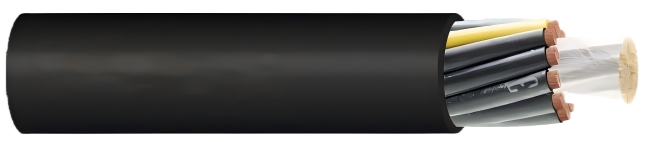
An STN crane cable is a highly flexible rubber-insulated cable with an integrated supporting element, rated at 450/750 V for demanding industrial motion applications. It is purpose-built for environments where cables must endure continuous bending, mechanical stress, and exposure to harsh outdoor conditions — making it the cable of choice for crane systems, port machinery, and heavy transport infrastructure worldwide.
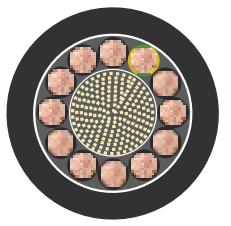
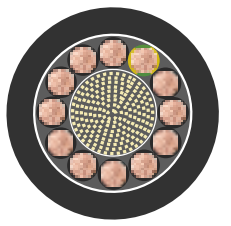
Unlike standard flexible cables, the STN design incorporates a central textile or aramid-based strain relief element that distributes tensile loads along the cable's core. This construction eliminates stress concentration at termination points and dramatically extends service life in free-hanging and dynamic-load installations.
Quick Answer: What Makes STN Cable Suitable for Crane Use?
Featured Snippet: An STN crane cable is rated 450/750 V and is specifically designed for lifting equipment, port cranes, and construction machinery. It uses a Class 6 plain copper conductor, EPR rubber insulation, and a rubber outer sheath resistant to oil, ozone, UV, and seawater. Its central aramid or textile strain relief element allows free-hanging cable lengths of up to 80 metres without mechanical damage, making it one of the most mechanically robust flexible cable designs available for industrial overhead crane applications.
Key Technical Specifications
The STN cable delivers a well-balanced electrical and mechanical specification for demanding crane environments.
On the electrical side, the rated voltage is 450/750 V with an AC test voltage of 3 kV. Insulation resistance reaches 20 MΩxkm, which supports reliable performance even in humid and marine-adjacent installations. The conductor itself is built from plain copper wires to Class 6 in accordance with DIN EN/IEC 60228 — the highest flexibility class in the standard, intended explicitly for applications requiring repeated and continuous movement.
Thermally, the cable is rated for ambient temperatures between -40 °C and +80 °C during fixed installation, and between -30 °C and +80 °C during flexible operation. Maximum conductor operating temperature reaches 90 °C during normal service and 250 °C during a short-circuit event, which gives the cable substantial thermal headroom in industrial switchgear environments.
The minimum bending radius is 10 times the outer cable diameter, a parameter that defines how tightly the cable can be routed around pulleys, festoon systems, and cable carriers without risking insulation damage over time.
Construction and Materials
The conductor is formed from fine plain copper wires in a Class 6 stranded arrangement, chosen specifically because this construction allows the individual filaments to move relative to one another under bending — which is what gives the cable its characteristic flexibility without fatigue cracking.
Core insulation uses EPR (Ethylene Propylene Rubber) compound type 3GI3 in accordance with DIN VDE 0207-20. EPR is selected over PVC or XLPE in this application because it maintains elasticity across a wide temperature range, resists partial discharge at elevated voltages, and retains its mechanical properties after prolonged flexing cycles.
Core identification follows a practical convention: cables with five or fewer cores are colour-coded with a green/yellow protective conductor, while cables with six or more cores use black, numbered cores with a green/yellow protective conductor. All cores are stranded around the central carrier element to form a compact, round cross-section.
The outer sheath is a rubber compound to DIN VDE 0207-21, type 5GM3. This grade of rubber provides resistance to oil, ozone, and UV radiation while remaining flame retardant. The sheath colour is black with white imprint, which offers good contrast for marking and identification on busy port and construction sites.
Environmental Resistance
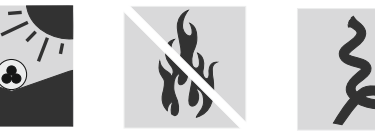
The STN cable is designed for unrestricted use both indoors and outdoors without requiring additional protective conduit or trunking under normal installation conditions.
Oil resistance is tested and certified to DIN EN/IEC 60811-404, which covers resistance to mineral oils and hydraulic fluids commonly present in crane machinery rooms and port equipment maintenance areas. The cable can withstand incidental oil splashing without swelling, cracking, or loss of electrical integrity.
UV resistance is inherent in the rubber compound used for the outer sheath. Continuous outdoor exposure — including high-UV environments such as the Arabian Peninsula and the Persian Gulf coast — does not accelerate surface degradation or cause the sheath to become brittle over time.
The cable also resists moisture, freshwater, polluted water, and seawater. This makes it particularly well-suited for port and shipyard environments where condensation, rain, deck wash, and tidal splash are routine operational conditions rather than exceptional events.
Fire behaviour is classified to DIN EN/IEC 60332-1-2, confirming that the cable does not propagate flame under the standard single-cable vertical flame test conditions.
Typical Applications
The STN cable is used wherever a combination of mechanical flexibility, environmental robustness, and electrical reliability is required in a moving cable installation.
Lifting equipment is the primary application category. Overhead cranes, bridge cranes, gantry cranes, and jib cranes all require cables that can undergo hundreds of thousands of bending cycles without insulation fatigue or conductor breakage. The STN's Class 6 conductor and flexible rubber construction directly address this requirement.
Port and terminal infrastructure represents another major deployment area. Ship-to-shore (STS) cranes, rubber-tyred gantry (RTG) cranes, and rail-mounted gantry (RMG) cranes all use trailing cable systems or festoon arrangements that subject the cable to continuous mechanical cycling. Free-hanging cable runs of up to 80 metres are supported by the central strain relief element without the need for external messenger wires.
Transportation systems including automated guided vehicles (AGVs), cable reels on industrial trucks, and overhead conductor bar feeder systems also benefit from the cable's flexibility and environmental resistance.
Construction equipment such as tower cranes, mobile concrete pumps, and large-format drilling rigs often operate in environments that combine mechanical vibration, UV exposure, and contact with lubricants — a combination that the STN construction handles without special precautions.
Shipyard machinery, including dock levellers, floating dry-dock systems, and heavy marine lifting frames, benefits from the cable's certified seawater resistance and flame-retardant sheath.

Installation Guidance
For fixed installations, the cable operates reliably across the full ambient temperature range of -40 °C to +80 °C. In flexible operation — meaning the cable is subject to regular movement — the low-temperature limit rises to -30 °C, which is still sufficient for crane operations in all but the most extreme Arctic environments.
The 10x outer diameter minimum bending radius must be respected throughout the installation design. This applies not only to the operating bend at cable carrier entry and exit points, but also to any fixed routing bend introduced during installation. Exceeding this radius during installation — for example, forcing the cable around a tight conduit entry — can cause insulation cracking that will not be immediately visible but will shorten the cable's service life significantly.
The cable is suitable for use in festoon systems, cable reels, cable tray, and free-hanging vertical drops. The central aramid or textile carrier element means that for vertical free-hanging applications up to 80 metres, the cable weight is carried by the support element rather than transmitted to the conductor or insulation — an important distinction from standard flexible cables that lack this feature.
Real-World Application: Middle Eastern Port Infrastructure
Khalifa Port, Abu Dhabi — Automated Container Terminal
Khalifa Port in Abu Dhabi, operated by Abu Dhabi Ports and partly managed by CMA Terminals, is one of the most advanced semi-automated container terminals in the Middle East. The terminal uses automated stacking cranes (ASCs) across its container yard, a system that places particularly demanding requirements on trailing and festoon cable installations.
ASCs operate continuously, cycling between stacking positions thousands of times per day in an environment characterised by high ambient temperatures that regularly exceed 45 °C in summer, intense solar UV radiation, and blowing sand. The cables powering the hoist and trolley drives on these cranes must maintain flexibility at both ends of the diurnal temperature swing — cool early mornings and extreme midday heat — without cracking, stiffening, or losing their electrical performance.
Highly flexible rubber crane cables of the STN type are the specified solution for this environment. Their EPR insulation maintains consistent elasticity across the ambient temperature range encountered in the Gulf, and the UV-resistant rubber sheath withstands the sustained high-intensity solar radiation that would rapidly degrade a standard PVC-sheathed cable installed outdoors without additional protection.
The free-hanging capability of up to 80 metres, supported by the central carrier element, is directly relevant to the ASC configuration at Khalifa Port, where crane height above the quay requires cable drops of 40 to 60 metres on the hoist cable system.
Jebel Ali Port, Dubai — RTG Crane Festoon Systems
Jebel Ali Port, operated by DP World and ranked among the top ten busiest container ports globally, operates a large fleet of rubber-tyred gantry cranes across its container yards. RTG cranes present a specific cable challenge: the power and control cable must be carried in a horizontal festoon system mounted along the top of the crane rail, travelling with the crane as it moves along the row.
Festoon systems subject cables to a repetitive catenary cycle — the cable alternately hangs in a loop and is taken up or released — that demands very high flexibility combined with excellent resistance to the lateral loads imposed by wind across the open port yard. Jebel Ali's coastal location on the Arabian Gulf also means the cable encounters salt-laden air and occasional spray, making seawater resistance a practical requirement rather than a theoretical specification.
The combination of Class 6 copper construction, rubber insulation, and a seawater-resistant outer sheath in the STN design addresses each of these operating conditions. The flame-retardant sheath classification additionally satisfies the fire safety requirements that apply to electrical installations in the cargo-handling zones of major international ports, where the consequences of cable-initiated fires are particularly serious.
King Abdulaziz Port, Dammam — Shipyard and Heavy Lift
King Abdulaziz Port in Dammam, Saudi Arabia, includes significant shipyard and heavy marine maintenance infrastructure alongside its commercial container and general cargo operations. Heavy lift cranes in the dry dock area of the port are used for lifting ship sections, propellers, and large machinery packages during vessel repair cycles.
In this environment, the cable must tolerate intermittent contact with hydraulic fluid, lubricating grease, and marine paint solvents — all conditions that the STN's oil-resistant outer sheath is specifically formulated to handle. The flame-retardant requirement is especially stringent in a dry dock setting, where hot-work permits, cutting, and welding operations are routine and the risk of secondary fire from cable failure must be minimised.
The availability of the STN cable in a wide range of conductor cross-sections — from 1.0 mm² to 2.5 mm² across three to 24 cores — allows port electrical engineers to select the appropriate cable for both power supply and control signal circuits within a single cable family, simplifying procurement and stock management.
Performance Benefits in Motion-Heavy Systems
The cumulative performance advantages of the STN cable in crane and port applications can be summarised across four operating dimensions.
In terms of mechanical endurance, the Class 6 conductor construction combined with the rubber insulation system produces a cable that can sustain significantly higher bending cycle counts than PVC-insulated alternatives before the onset of conductor fatigue. This translates directly to longer intervals between scheduled cable replacement and lower unplanned maintenance costs.
The central carrier element provides a form of mechanical insurance that standard flexible cables lack. Even if the cable is overloaded mechanically — for example, during a crane emergency stop that imposes a sudden tensile shock — the aramid or textile element absorbs the load before it reaches the conductor or insulation, preventing immediate electrical failure.
Environmental durability means that the cable does not require protective conduit, armoured trunking, or additional UV-protective sleeving when installed outdoors in harsh climates. This simplifies cable routing and reduces the installed cost relative to solutions that require secondary protection.
The wide operating temperature range means that a single cable specification covers fixed installations in cold storage terminals or winter construction sites as well as the high-temperature outdoor environments of the Gulf and Red Sea coast — reducing the number of cable variants that procurement teams need to evaluate, qualify, and hold in stock.
Frequently Asked Questions
What is an STN crane cable used for? An STN crane cable is a highly flexible rubber cable with a strain relief element, used primarily in lifting equipment, gantry cranes, RTG and ASC crane systems, shipyard machinery, and construction equipment. It is rated 450/750 V and suitable for both indoor and outdoor installation without additional protection.
What is the maximum free-hanging length for an STN cable? The central textile or aramid carrier element in an STN cable supports free-hanging vertical cable drops of up to 80 metres. Beyond this length, the tensile load on the carrier element exceeds its design rating and a separate mechanical support arrangement should be used.
Can STN cable be used in seawater environments? Yes. The STN outer sheath compound provides resistance to seawater and polluted water, making it suitable for port, shipyard, and offshore marine crane applications where the cable may be exposed to spray, condensation, or deck wash.
What conductor class does STN cable use? STN cable uses Class 6 plain copper conductors per DIN EN/IEC 60228. Class 6 is the highest flexibility class defined in the standard, with the finest conductor stranding, specifically designed for cables subject to continuous repeated bending.
What is the minimum bending radius for STN cable? The minimum bending radius is 10 times the outer cable diameter (10 × Ø). This applies to both the operating bend in a cable carrier or festoon system and to any fixed routing bend introduced during installation.
What temperature range does STN cable cover? For fixed installation, the ambient temperature range is -40 °C to +80 °C. For flexible operation (cable in continuous movement), the range is -30 °C to +80 °C. The maximum conductor temperature during normal operation is 90 °C.
Is STN cable flame retardant? Yes. The outer sheath is flame retardant and the cable's fire behaviour is tested to DIN EN/IEC 60332-1-2, the standard single-cable vertical flame test. This satisfies the fire safety requirements for electrical installations in industrial and port environments.
What is the difference between STN cable and standard H07RN-F cable? The primary difference is the central carrier element in STN, which provides mechanical tensile reinforcement for free-hanging and heavily loaded crane applications. Standard H07RN-F cables are flexible and weather-resistant but lack this strain relief feature, making them unsuitable for unsupported vertical drops or applications where significant tensile loads are regularly applied to the cable.
How many cores are available in STN cable? STN cables are available from 3 cores to 24 cores across conductor cross-sections of 1.0 mm², 1.5 mm², and 2.5 mm², covering a wide range of power and combined power-and-control circuit requirements within crane and port machinery installations.
Conclusion
The STN highly flexible rubber crane cable at 450/750 V represents an engineered solution to the specific and demanding requirements of crane, port, and heavy industrial machinery applications. Its Class 6 copper conductor, EPR insulation, oil- and UV-resistant rubber sheath, and central aramid or textile carrier element work together to deliver a cable that is mechanically robust, electrically reliable, and environmentally durable across the full range of conditions encountered in industrial motion applications.
For Middle Eastern port operators working in the high-temperature, high-UV, and salt-air conditions of the Arabian Gulf and Red Sea, the cable's unrestricted outdoor rating, seawater resistance, and free-hanging capability of up to 80 metres make it a practical and proven choice for STS cranes, RTG cranes, ASC systems, and shipyard heavy lift equipment. Its availability across a broad range of core counts and conductor sizes further simplifies procurement for complex port electrical systems where multiple cable circuits must be specified within a single maintenance framework.
Technical data sourced from manufacturer product documentation. Installation parameters should be verified against current project specifications and applicable local electrical codes.
Port crane cables | Mining cables | Reeling cables | Trailing cables | Festoon cables | Heavy-duty power cables | Medium voltage cables | Offshore crane cables | Underground mining cables | Dragline cables | Shearer cables | Container handling cables | STS crane cables | RTG cables | Mobile equipment cables | Armored cables | Flexible power cables | VFD cables | Submersible cables | Cold resistant cables | Abrasion resistant cables | Flame retardant cables | Marine environment cables | Opencast mining | Underground operations
© 2006 All rights reserved.
[INDUSTRIAL_CABLES]
INDUSTRIAL GRADE CABLE SYSTEMS | PORT & MINING SOLUTIONS
TEL: +86 153 7530 2641 |MAIL: hongjing.Wang@feichuncables.com