The Foundation of Desert Mining Reliability: Why VDE-Certified Heavy-Duty Cables Are Essential for Open Pit Operations
Explore why VDE certified mining cables perform better in desert open-pit mining, with superior resistance to heat, UV exposure, abrasion, and crushing in harsh Middle East conditions.
hongjing.Wang@Feichun
7/13/202621 min read
1. Introduction
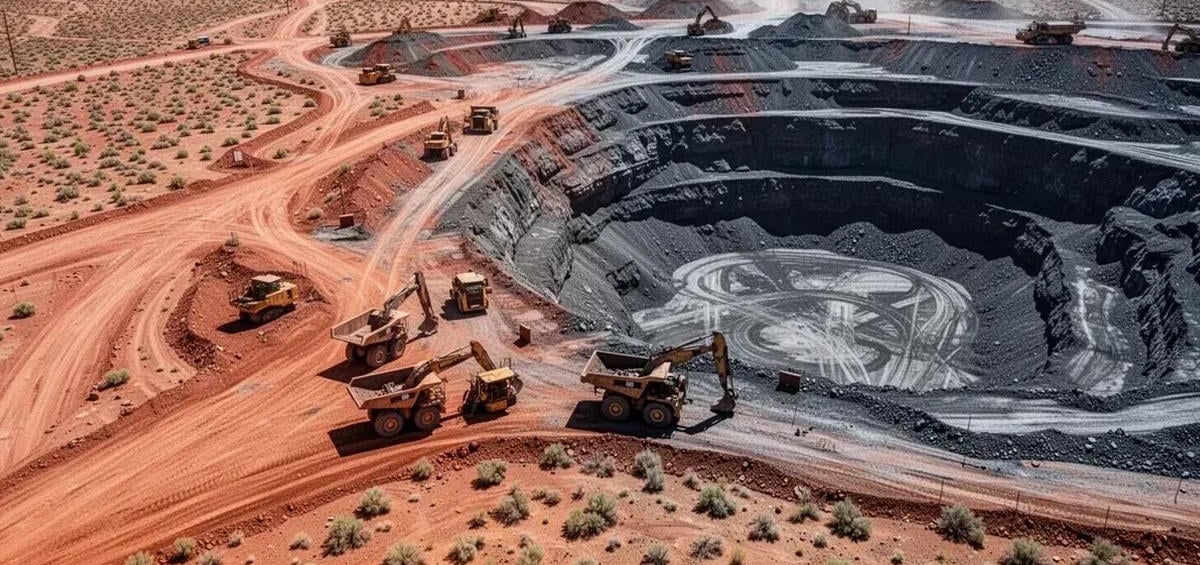
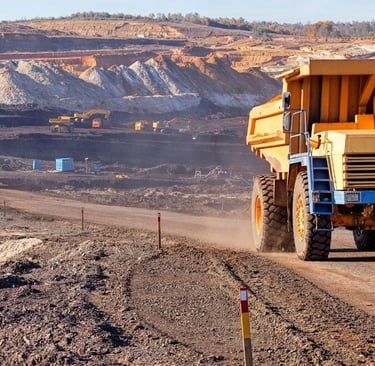
Desert open-cast mines represent some of the most unforgiving, high-stress industrial environments on Earth. In these remote locations, industrial engineering must confront extreme atmospheric conditions and punishing physical demands simultaneously. Across the Gulf Cooperation Council region—most notably within the expanding industrial landscapes of Saudi Arabia, the United Arab Emirates, Oman, and Qatar—the extraction of critical minerals, phosphate, and aggregates has emerged as a cornerstone of long-term economic diversification.
However, extracting these vast resources requires surface operations that run continuously in highly demanding conditions. The infrastructure supporting this machinery must endure constant exposure to intense heat, high ultraviolet radiation, and rough ground conditions.
[Desert Open Pit Infrastructure Topology]
Primary Substation (Medium Voltage Grid Tie)
↓
Fixed Over-Ground Distribution Feeders
↓
VDE-Certified Trailing Cable (Feichun NTSCGEWÖU / NSSHÖU)
↓
Dynamic Mining Assets (Electric Shovels, Haul Trucks, Draglines)
At the core of these multi-billion-dollar operations lies the electrical distribution network. Heavy-duty power cables act as the primary life support lines for massive mobile machinery, including electric shovels, giant draglines, rotary blasthole drills, and tracking crushers. These cables cannot be buried safely out of harm's way; instead, they are laid directly over jagged pit floors, continuously wound onto motorized cable reels, and dragged across abrasive terrain behind tracking equipment.
In this demanding environment, an electrical cable must serve as a complex engineered system capable of resisting severe physical impacts, high tensile loads, continuous vibration, and extreme heat, all while safely conducting thousands of volts.
For engineering teams, procurement directors, and operations managers in the Middle East, selecting the right cable architecture is a critical factor determining project uptime. Standard industrial specifications are simply insufficient for these conditions. Instead, operations require cables built to rigorous international testing frameworks, such as the German VDE standards.
By prioritizing verified electrical safety, material consistency, and mechanical testing, VDE-certified cables—such as the Feichun NSSHÖU low-voltage and NTSCGEWÖU medium-voltage flexible mining cable families—provide the structural durability required to turn electrical infrastructure into a reliable asset rather than a frequent point of failure.
2. What Makes Desert Mining Different
To understand why specialized cable engineering is necessary, one must examine the unique environmental challenges of a desert open-cast mine. Unlike underground mines where temperatures remain relatively stable, surface mines in the Middle East experience extreme environmental shifts that test the limits of polymer science and electrical insulation.
The Thermal Realities of the Desert Pit
During peak summer months in the GCC region, ambient air temperatures frequently exceed 50 deg C in the shade. However, inside an open pit mine, the thermal reality is much more severe. The steep rock faces and heavy sand floors absorb solar radiation, creating a thermal trapping effect. As a result, the surface temperature of the ground where trailing cables are laid can easily reach 75 deg C to 85 deg C.
Furthermore, the heavy equipment operating in these pits generates massive amounts of localized heat from high-horsepower diesel engines, hydraulic pumps, and large electric drives. The steel frames, cable guide rollers, and integrated cable reels on electric shovels or haul trucks can reach temperatures well above 90 deg C under direct sunlight.
When an electrical cable is spooled onto a tight reel or routed along a machine chassis under these conditions, it has virtually no thermal headroom left to dissipate the heat generated by its own high-amperage current load. Standard insulation materials soften and degrade rapidly in these environments, leading to premature electrical breakdown.
The Grinding Action of Silica Sand and Blasted Rock
The physical terrain of a desert mine functions as a massive, highly abrasive grinding machine. The ground surface is composed of fine, highly abrasive silica sand mixed with sharp, jagged fragments of blasted limestone, granite, or hard rock aggregates.
Every time a mobile machine shifts position, its trailing power cable is dragged across these sharp surfaces under heavy tension. The fine sand grains act as an aggressive abrasive paper, constantly wearing away the outer jacket of the cable.
If the outer sheath lacks sufficient tear and abrasion resistance, this continuous friction rapidly thins the protective wall. Once the jacket is worn down, dust and moisture can quickly reach the inner insulation layers, compromising the cable's safety.
The Threat of Heavy Vehicle Crushing
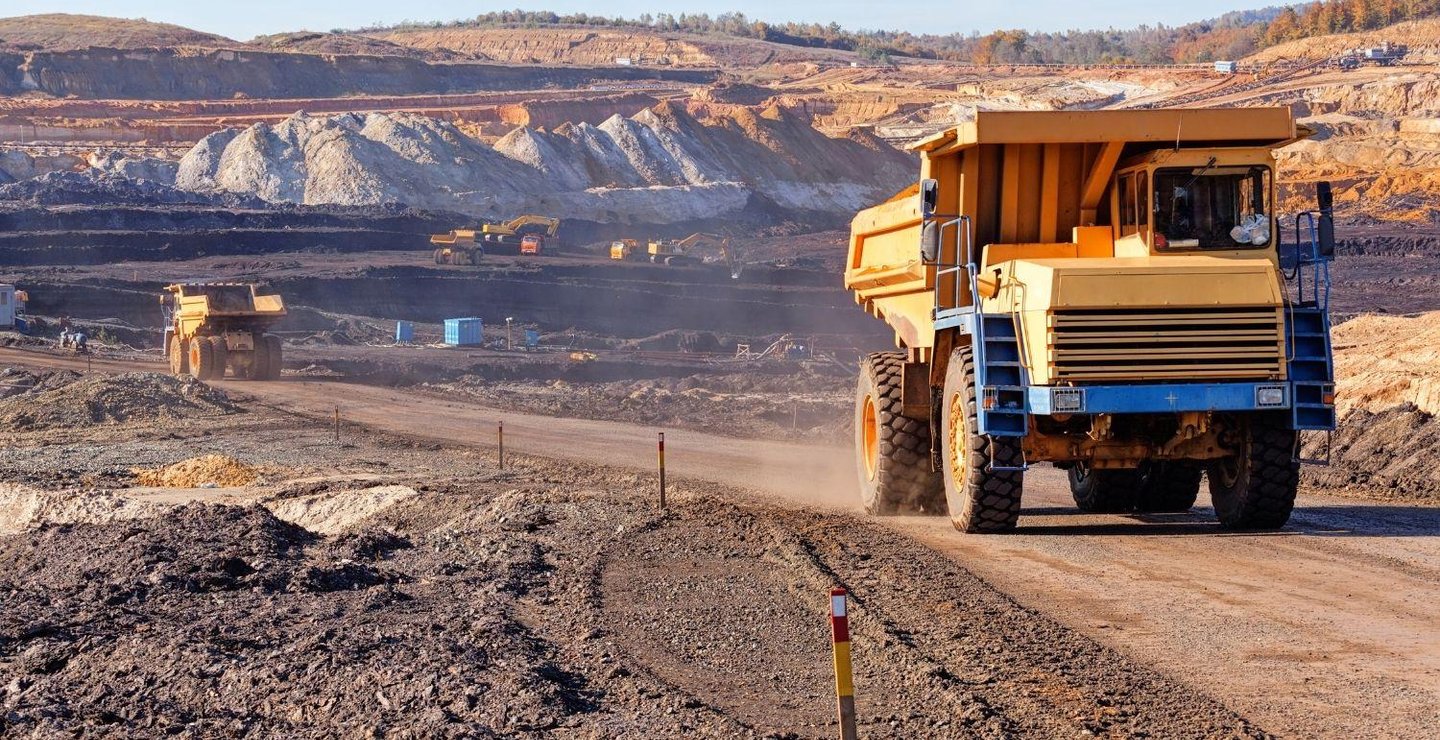
The mechanical abuse in an open pit mine is not limited to friction and dragging. The operational floor of a surface mine is a busy, high-traffic zone where massive vehicles are constantly repositioning. Giant haul trucks with gross operating weights exceeding 400 tons, tracking bulldozers, and mobile service vehicles move continuously around electric shovels and drills.
In the dusty, high-activity environment of a mine site, visibility can be compromised, and trailing power cables are frequently run over or pinched by heavy equipment. When a 400-ton vehicle drives over a cable resting on a hard rock floor, the cable experiences extreme crushing forces.
A standard industrial cable will flatten completely under this weight, forcing the copper conductors to cut through the soft insulation and trigger an immediate phase-to-phase short circuit. A specialized mining cable must possess the internal resilience to absorb these sudden, massive impacts, preserving its shape and insulation integrity to protect the entire electrical system.
3. What VDE Certification Means
Given the severe conditions of desert open pit mining, electrical engineers cannot rely on simple self-declarations of quality. Operations require an independent, globally recognized testing framework to verify that a cable can perform safely under extreme stress. This certainty is provided by VDE certification.
The Strict Standards of the VDE Framework
The VDE (Verband der Elektrotechnik, Elektronik und Informationstechnik) is the German Association for Electrical, Electronic and Information Technologies. The VDE Testing and Certification Institute is an independent, neutral organization that tests and certifies electrical products, components, and systems according to national and international safety standards, environmental regulations, and mechanical performance benchmarks.
A VDE certification mark indicates that a product has undergone rigorous laboratory evaluation and continuous factory auditing to confirm it meets strict engineering criteria.
In the global cable industry, VDE certification represents a premier benchmark for quality. While standard compliance marks often rely on a manufacturer's own internal testing, VDE certification requires independent laboratory validation.
The cable must pass an extensive battery of tests designed to push its electrical, thermal, and mechanical components to their breaking points. Furthermore, VDE inspectors conduct unannounced audits of the manufacturing facilities to verify that raw material quality, production consistency, and quality control processes remain uniform over time.
The Relevance of VDE for Mining Infrastructure
For heavy industries like mining, VDE certification provides vital assurance that a product is fit for service. The VDE engineering standards—such as VDE 0250 Part 812 for low-voltage flexible cables like the NSSHÖU family, and VDE 0250 Part 813 for medium-voltage mining cables like the NTSCGEWÖU family—were developed specifically to address the risks of heavy industrial layouts.
[VDE Certification Testing Matrix]
VDE 0250 Protocol Verification
├── Electrical Testing (Dielectric strength, corona containment, short-circuit survival)
├── Material Verification (Polymer composition, thermal aging, UV/ozone stability)
└── Mechanical Testing (Torsional endurance, dynamic bending, notch/abrasion resistance)
These standards do not assume the cable will sit undisturbed in a clean, temperature-controlled indoor tray. Instead, they assume the cable will spend its operational life exposed to intense sunlight, submerged in corrosive water, dragged over abrasive rock, and subjected to continuous mechanical tension.
When a cable carries the VDE stamp, it proves the design has been independently verified to handle these exact operational stresses. This independent validation gives mining operators in the Middle East the confidence that their critical power lines will perform reliably under the region's intense desert heat.
4. Why VDE Matters in Mining
The value of VDE certification in an open pit mining operation rests on three distinct pillars: verified electrical safety, rigorous material testing, and dynamic mechanical verification. Each of these pillars addresses a specific operational risk, ensuring the final cable assembly functions reliably under severe field conditions.
Pillar 1: Verified Electrical Safety
The primary duty of any power cable is to contain and deliver high-voltage electrical energy safely. In medium-voltage mining applications, such as the 8.7/15 kV or 12/20 kV lines feeding large electric shovels, any insulation failure can be catastrophic. An uncontrolled arc flash can cause massive equipment damage and present an immediate safety hazard to nearby workers.
VDE electrical testing subjects the cable's insulation to high-voltage stresses far beyond its nominal operating ratings. For instance, a VDE-certified 12/20 kV cable must pass rigorous testing at an elevated AC test voltage (typically 29 kV or higher) to verify its dielectric strength.
The testing protocols also measure partial discharge levels to confirm the insulation is completely free of microscopic air voids, moisture pockets, or material impurities. By eliminating these internal flaws, the VDE framework ensures the cable can contain high-voltage fields without suffering internal tracking or premature dielectric breakdown.
Pillar 2: Rigorous Material Verification
The polymers used in a mining cable's insulation and outer jackets must remain stable over years of exposure to heat, chemicals, and sunlight. If a manufacturer uses sub-standard plasticizers or lower-grade synthetic rubber, the outer jacket will quickly dry out, harden, and crack when exposed to desert heat and UV radiation.
VDE Material Testing Protocol:
[Polymer Compound Batch Extraction]
↓
[Accelerated Thermal Aging at +100°C for 168 Hours]
↓
[Elongation and Tensile Strength Verification Metrics]
↓
[Must Retain ≥ 80% of Unaged Baseline Values to Pass]
To prevent this, VDE testing includes comprehensive material verification. Polymer compounds undergo accelerated thermal aging tests, where samples are kept at elevated temperatures (often 100 deg C or higher) for a full week.
After this thermal stress, the material must retain its original tensile strength and elongation metrics within strict tolerances. The VDE standards also mandate verified resistance to industrial oils, hydraulic fluids, and ozone exposure, ensuring the cable sheaths will not soften or swell when exposed to typical mine-site contaminants.
Pillar 3: Dynamic Mechanical Verification
A mining trailing cable is a dynamic component that must bend, twist, and withstand physical impacts continuously during operation. The VDE testing framework addresses these mechanical demands through simulated field testing:
Torsional Testing: The cable is clamped into a mechanical rig that twists it back and forth axially through severe angles for thousands of cycles. This ensures the internal copper conductors, shields, and sheaths can handle rotational stress without buckling or separating.
Dynamic Bending Verification: The cable is repeatedly guided over small-diameter pulleys under tension to simulate the action of motorized cable reels. The cable must complete these bending cycles without showing signs of outer jacket cracking or internal wire breakage.
Notch and Tear Resistance Testing: The outer jacket compound is subjected to controlled mechanical cuts and pulling forces to verify its ability to stop small tears from expanding into large splits.
By combining electrical safety, material verification, and mechanical testing into a single, independent certification process, the VDE framework provides a reliable benchmark for mining cable performance. It ensures every certified cable is built to survive the demanding real-world conditions of an active mine site.
5. Key Cable Performance Factors
To survive the extreme conditions of an open pit desert mine, a cable must balance several critical performance factors within a single, integrated structure. If a cable excels in one area but fails in another—such as having high abrasion resistance but poor UV stability—it will quickly fail in the field. VDE-certified mining cables are designed to deliver balanced performance across four key areas:
Abrasion Resistance
In a desert open pit mine, sand and rock fragments act like coarse sandpaper against the cable jacket. As heavy machinery moves, it drags trailing cables across these abrasive surfaces under tension.
To withstand this wear, the cable's outer jacket must use an exceptionally tough, high-density polymer compound. VDE-certified mining cables use premium materials like Type 5GM5 heavy-duty rubber (found in the low-voltage Feichun NSSHÖU family) or specialized halogen-free polyurethane (used in the medium-voltage NTSCGEWÖU family).
These materials possess excellent molecular density, allowing them to slide over sharp sand grains and rough rock surfaces with minimal material loss. This high wear resistance ensures the outer jacket maintains its full thickness over years of dynamic service.
Impact and Crush Resistance
The operational floor of a surface mine is filled with physical hazards. Falling rocks from excavation faces, dropped tools, and heavy vehicle tires can strike or pinch trailing power lines.
To survive these sudden forces, a cable needs excellent impact and crush resistance. This protection is achieved through a multi-layered design:
[Concentric Impact Deflection Layering]
[Outer Polyurethane Sheath: Resists Sharp Cut Penetration]
↓
[Anti-Torsion Polyester Braid: Transfers and Dissipates Tensile Force]
↓
[Inner Rubber Embedding Layer: Cushions and Absorbs Compressive Shock]
↓
[Insulated Phase Cores: Maintained in Safe Geometric Alignment]
The tough outer jacket resists cutting from sharp stone edges, while the inner embedding sheath—made from shock-absorbing rubber compounds like Type GM1b—acts as a protective cushion.
When a heavy force strikes the cable, this inner layer deforms temporarily to absorb the kinetic energy, distributing the pressure evenly and preventing it from compressing the internal phase insulation. Once the force is removed, the elastomeric compounds spring back to their original round shape, keeping the internal conductors safely aligned.
High Temperature Rating
Desert mining cables must operate reliably in extreme ambient heat. Standard industrial cables are typically limited to maximum conductor temperatures of 70 deg C or 90 deg C.
In a desert pit where ground temperatures can reach 75 deg C, these standard cables have almost no thermal capacity left to handle the heat generated by their own electrical current. VDE-certified mining cables are built with advanced cross-linked rubber or specialized thermoplastic elastomer compounds that allow for continuous operation at conductor temperatures up to 90 deg C, with short-circuit thermal tolerances up to 250 deg C.
This high thermal ceiling gives the cable the headroom needed to operate safely under high electrical loads in hot desert climates.
UV and Ozone Resistance
High solar radiation is a constant challenge in Middle Eastern desert environments. Continuous exposure to intense ultraviolet light can rapidly degrade standard plastics and low-grade rubbers through photo-oxidation.
This chemical breakdown causes the material to lose its flexibility, leading to surface hardening and deep cracking. VDE-certified cables solve this issue by integrating specialized UV stabilizers and high-density carbon blacks or premium color pigments directly into the outer sheath compound.
These additives absorb harmful UV rays and dissipate the energy safely as heat, preventing damage to the polymer chains and keeping the outer jacket flexible and intact over long-term outdoor exposure.
6. Why UV Resistance Is Critical
While mechanical abrasion and high temperatures are obvious threats, ultraviolet radiation is often the most destructive factor for outdoor mining cables over time. In the desert regions of Saudi Arabia, the UAE, Oman, and Qatar, cables are exposed to intense, high-angle sunlight for over 10 to 12 hours a day, year-round. Understanding the chemical degradation caused by UV light highlights why specialized cable sheathing is a necessity.
The Polymer Degradation Chain
When an unshielded or poorly formulated polymer jacket is exposed to intense solar radiation, it undergoes a destructive process called photo-induced oxidation. High-energy UV rays penetrate the surface of the jacket and strike the polymer chains, breaking the molecular bonds between carbon atoms.
[The Photo-Oxidation Failure Mechanism] [Intense Solar UV Radiation Pounding]
↓
[Polymer Carbon-Carbon Bond Cleavage]
↓
[Free Radical Generation & Chain Scission]
↓
[Loss of Plasticizer / Surface Embrittlement]
↓
[Formation of Macroscopic Fractures & Cracks]
↓
[Capillary Ingress of Mineralized Wastewater]
↓
[Internal Insulation Breakdown / Explosive Earth Fault]
This bond cleavage creates highly reactive free radicals within the material. These free radicals attack neighboring polymer chains, triggering a chain reaction that breaks down the molecular weight of the plastic or rubber.
As this degradation continues, the essential plasticizers within the compound are destroyed or bleed out, causing the jacket to lose its elasticity and become brittle.
From Micro-Cracks to Catastrophic Failure
The physical signs of UV degradation start with surface chalking and fading, followed by the appearance of microscopic surface cracks. As the cable continues to bend, twist, and reel during daily operations, these micro-cracks expand into deep macroscopic fractures that cut entirely through the outer sheath.
Once the outer jacket splits open, the cable loses its environmental protection. In a desert mine, flash storms or groundwater pumping can create pools of highly mineralized, corrosive water on the pit floor.
When the cable rests in these pools, water enters the jacket fractures through capillary action, traveling along the inner bedding layers. If the water reaches the inner phase insulation—which may already be stressed by high temperatures—it can quickly cause an insulation breakdown. This leads to a severe earth fault, bringing machinery to an immediate halt and requiring costly cable replacement.
Therefore, verified UV resistance is not a secondary feature; it is a vital requirement for the survival of any outdoor mining cable.
7. High-Temperature Performance
Operating electrical equipment in desert open-cast mines requires a thorough understanding of high-temperature thermodynamics. When a cable operates near its maximum electrical capacity, it generates internal heat ($I2R$ resistive losses) within its copper conductors. This internal heat must escape through the insulation and outer jackets into the surrounding air to prevent the cable from overheating.
The Thermal Limits of Advanced Compounds
VDE-certified mining cables, such as the Feichun NSSHÖU and NTSCGEWÖU families, utilize advanced cross-linked synthetic rubber and high-grade polyurethane compounds designed for stable long-term performance across a broad temperature range, from -40 deg C up to +90 deg C.
The inner phase insulation (such as Type 3GI3 rubber compound) maintains its full dielectric strength even when the copper conductor inside reaches its maximum rated operating temperature of 90 deg C.
[Thermal Gradient Across Cable Cross-Section]
[Class 5 Tinned Copper Conductor Core] → Generates Internal Heat (Max +90°C)
↓
[Type 3GI3 Rubber Insulation Layer] → High Dielectric Stability under Thermal Load
↓
[Type GM1b Inner Embedding Shock Bed] → Maintains Shape, Prevents Conductor Migration
↓
[Type 5GM5 / Polyurethane Outer Jacket] → Dissipates Heat into Ground/Air (Surface up to +85°C)
This high thermal ceiling is essential for maintaining safety margins during electrical faults. In the event of a short circuit, the electrical current spikes instantly, causing conductor temperatures to surge.
The premium rubber compounds used in VDE-certified cables can withstand temporary short-circuit temperatures up to 250 deg C without melting, charring, or separating from the conductor strands. This thermal resilience prevents a localized electrical fault from destroying the entire length of the cable, protecting valuable mining assets from widespread fire damage.
Preventing Internal Conductor Migration
An often-overlooked hazard of high temperatures is a phenomenon known as conductor migration or "creep." When standard, lower-grade plastic insulation is exposed to high ambient heat and continuous current loads, the material softens significantly.
If that softened cable is spooled tightly onto a motorized reel or pulled around a sharp guide roller under tension, the heavy copper conductors will exert constant physical pressure against the soft insulation.
Over time, the copper wire can slowly push through the softened material, drifting toward the outer jacket or adjacent phases. This reduces the effective insulation thickness, leading to premature electrical failure.
VDE-certified cables prevent this by using thermosetting rubber insulation compounds that do not melt or soften at elevated temperatures, keeping the conductors safely centered even under high structural loads.
8. Derating in Desert Heat
For electrical engineers designing power distribution systems for desert mines, calculating cable current-carrying capacity requires careful attention to ambient temperature de-rating. A cable's nominal current rating—the maximum amperage it can carry safely—is typically calculated based on a standard European ambient air temperature of 30 deg C.
In the desert pits of the Middle East, where summer temperatures regularly reach 50 deg C and ground temperatures go higher, cables must be de-rated conservatively to prevent overheating.
The Physics of Derating
The fundamental rule of cable sizing is that the total heat generated by the electrical current plus the ambient heat from the environment must never cause the internal conductor to exceed its maximum safe temperature (typically 90 deg C).
As the ambient temperature rises, the cable's ability to dissipate its internal heat into the surrounding environment decreases significantly. Therefore, the allowable current load must be reduced to keep the internal temperature within safe limits.
[Thermal Capacity Derating Vector] Ambient Air Temp: 30°C
→ Available Thermal Headroom: 60°C (Full Nominal Current Capacity: 100%) Ambient Air Temp: 40°C
→ Available Thermal Headroom: 50°C (De-rated Current Capacity: ~91%) Ambient Air Temp: 50°C
→ Available Thermal Headroom: 40°C (De-rated Current Capacity: ~82%) Ambient Ground Temp: 70°C
→ Available Thermal Headroom: 20°C (De-rated Current Capacity: ~58%)
Consider a high-capacity flexible cable operating in a desert environment:
At an ambient temperature of 30 deg C, the cable has a comfortable 60 deg C of thermal headroom before reaching its 90 deg C limit, allowing it to operate at 100 percent of its nominal rated capacity.
When the ambient air temperature rises to 40 deg C, the available thermal headroom shrinks to 50 deg C. To compensate, the current capacity must be de-rated to approximately 91 percent of its nominal value.
In mid-summer, when ambient temperatures hit 50 deg C, the thermal headroom drops to 40 deg C. The allowable current capacity must now be cut to roughly 82 percent of nominal.
If the cable is laid directly on a dark rock pit floor where surface temperatures reach 70 deg C, the available headroom drops to just 20 deg C. Under these conditions, the usable current capacity falls to around 58 percent of its original rating.
Engineering Sizing for Desert Operations
If an installation team ignores these thermal de-rating factors and sizes a cable based purely on its standard 30 deg C nominal rating, the cable will overheat rapidly under full load in desert conditions. This excessive heat accelerates insulation aging, causes jacket cracking, and can lead to sudden electrical failures.
To avoid this, engineering teams in the Middle East must design their systems conservatively. This involves choosing larger conductor cross-sections (e.g., opting for a 120 mm2 or 150 mm2 conductor instead of a 95 mm2 conductor) to lower electrical resistance and reduce internal heat generation.
By combining conservative conductor sizing with verified VDE de-rating data, operators can ensure their power networks run coolly and safely during the hottest summer months.
9. Open Pit Mining Applications
The combination of high flexibility, electrical shielding, and mechanical toughness makes VDE-certified mining cables essential across a wide range of open pit mining equipment. Each application presents a specific set of physical challenges that require a highly specialized cable design.
Giant Haul Trucks and Towed Trailing Networks
Modern surface mines increasingly utilize electric-drive haul trucks and mobile crushing plants to improve efficiency and reduce emissions. These large machines connect to the main power grid via long trailing cables laid directly on the pit floor.
As these vehicles move around the excavation face, the cable is continuously pulled and dragged over rough terrain. The cable must feature an outer jacket with exceptional tensile strength and tear resistance to handle this continuous trailing action without suffering damage from sharp rocks or debris.
Electric Shovels and Primary Excavators
Electric shovels run on high-voltage power lines (often 6.6 kV to 22 kV) to drive their powerful digging buckets. These massive track-mounted machines are constantly shifting position, swiveling their main chassis, and moving back and forth along the pit face.
[Dynamic Load Stress Vector on Electric Shovel Trailing Cable] Crawler Track Travel
→ Linear Pulling Tension & Ground Dragging Abrasion Swing Chassis Rotation
→ Axial Torsional Stress (Up to ±25°/meter) Boom Maneuvering
→ High-Frequency Structural Vibrations
This operational pattern subjects the trailing cable to complex mechanical forces:
The forward and backward movement of the tracks creates high linear tension and intense ground abrasion.
The continuous rotation of the main shovel chassis generates severe axial twisting forces.
The crushing action of the bucket digging into hard rock sends high-frequency vibrations down the cable.
To survive these conditions, the cable requires an integrated anti-torsion braid (such as the high-tensile polyester braid used in the Feichun NTSCGEWÖU family) to absorb rotational stress, along with Class 5 fine-stranded conductors that handle continuous vibration without experiencing metal fatigue.
Motorized Cable Reels and Spooling Systems
To manage long lengths of power cable safely, many mobile mining machines use automated, motorized cable reels mounted to their chassis. As the machine moves closer to the power substation, the drum winds the cable up tightly; when the machine moves away, the drum reels it out under constant tension.
This continuous spooling action exposes the cable to significant mechanical wear. The cable experiences high friction as it passes through guide rollers, level-wind mechanisms, and entry sheaves.
Once spooled onto the drum, the cable is wrapped tightly in multiple layers, compressing the inner turns and trapping thermal energy. The cable must feature a highly flexible design with a tight minimum bending radius (such as 10 times the overall diameter for flexed applications) and excellent crush resistance to maintain its shape and performance under these demanding operational cycles.
10. Why Not Standard Industrial Cable
When budgeting a new mining project, procurement teams are sometimes tempted to use standard industrial power cables (such as generic PVC or XLPE-insulated armored cables) instead of specialized VDE-certified flexible mining cables. While standard industrial cables are less expensive initially, they are not designed to handle the severe conditions of an open pit mine, leading to rapid failure and high operational costs.
The Failures of Brittle Jackets and Rigid Conductors
Standard industrial cables are built for fixed installations, where they are laid undisturbed in protective steel trays or buried in stable underground conduits. They typically feature rigid Class 1 solid or Class 2 stranded copper conductors, which are highly susceptible to metal fatigue.
If a standard cable is subjected to the continuous bending, twisting, and vibrations of an active mine site, the stiff copper wires will quickly work-harden and snap, causing immediate phase failures.
Furthermore, standard industrial cables often use basic PVC or low-grade XLPE compounds for their outer jackets. These materials soften significantly when exposed to the high surface temperatures of a desert pit, making them highly vulnerable to cuts and tears from sharp stones.
Under direct sunlight, these basic polymers undergo rapid UV degradation, causing the jacket to harden, turn brittle, and split open within months. Without a specialized inner bedding layer or an anti-torsion braid, a standard industrial cable will quickly stretch, twist out of shape, and fail under mechanical tension.
The Real Cost of Unexpected Downtime
When a primary power cable fails in an open pit mine, the financial impact extends far beyond the cost of a replacement cable. A cable failure instantly cuts power to massive production assets, such as an electric shovel or a primary conveyor system.
When a key machine stops working, the entire production chain grinds to a halt: haul trucks sit idle, processing plants run out of feed material, and daily production targets are missed.
[The True Cost of Industrial Cable Failure] [Initial Cost Saving on Non-Certified Cable]
↓ [Premature Jacket Cracking & Insulation Breakdown]
↓ [Unexpected Machine Blackout / Production Line Halt]
↓ [Idle Haul Truck Fleets + Stranded Field Labor Costs]
↓ [Emergency Repair Crews + Expedited Cable Replacement]
↓ [Total Financial Loss Multiplies Initial Component Savings]
In large mining operations, unexpected downtime can cost tens of thousands of dollars per hour in lost productivity. Additionally, emergency cable repairs require deploying specialized technicians into hot, hazardous pit environments, increasing workplace safety risks.
By investing in rugged, VDE-certified mining cables like the Feichun NSSHÖU or NTSCGEWÖU families from the start, operators can avoid these costly failures. These certified cables deliver reliable performance over an extended operational lifespan, ensuring consistent uptime and lower overall maintenance costs.
11. Middle East Market Relevance
The focus on rugged, certified cable specifications is highly relevant to the current transformation of the Middle Eastern mining and infrastructure sectors. Across the Gulf Cooperation Council region, nations are investing heavily to unlock their mineral wealth, requiring heavy industrial equipment that can operate reliably in challenging desert environments.
Powering National Development Strategies
Under comprehensive national development frameworks—most notably Saudi Arabia's Vision 2030—the mining sector is being rapidly expanded into a major economic pillar alongside oil and gas production. Large-scale extraction operations for commodities like gold, copper, zinc, bauxite, and phosphate are expanding across the Arabian Shield.
Similarly, massive infrastructure and transport initiatives, such as the extensive underground tunneling networks for NEOM and the expansion of urban rail systems like the Riyadh and Dubai Metros, require high-capacity material handling layouts and large-scale aggregate production.
These mega-projects utilize heavy, high-voltage machinery that operates on continuous, multi-shift schedules. In these high-output environments, equipment components must handle demanding duty cycles under intense desert sun and abrasive dust conditions.
By selecting cables built to strict VDE standards, regional engineering teams can ensure their critical power distribution infrastructure matches the high quality and performance of their advanced excavation machinery. This focus on certified reliability helps regional operators prevent unexpected project delays, reduce maintenance overheads, and achieve the high productivity targets demanded by modern industrial developments.
12. Technical Specifications Analysis
To assist engineering teams in evaluating cable options for their operations, the following section provides a narrative analysis of the technical configurations and material properties of the two primary VDE-certified cable families designed for heavy mobile applications.
Low-Voltage Flexible Configuration: Feichun NSSHÖU Class (0.6/1 kV)
The NSSHÖU cable family is engineered for low-voltage power supply applications where high mechanical stress and continuous abrasion are expected. Built in strict accordance with the VDE 0250 Part 812 standard, this cable is rated for an operating voltage of 600 Volts between any single conductor and the earth, and 1000 Volts (1 kV) between phase conductors. It features an impressive array of material properties:
Conductor System: Uses Class 5 fine-stranded tinned copper wires, providing exceptional flexibility and preventing work-hardening under continuous vibration.
Core Insulation: Encased in Type 3GI3 high-dielectric rubber compound, which maintains its insulation performance across a wide operating temperature range.
Inner Structural Bedding: Protected by a Type GM1b rubber inner sheath that fills all internal gaps, locking the cores into a stable geometric layout and absorbing external mechanical shocks.
Outer Shield: Encased in a thick, high-visibility yellow Type 5GM5 rubber jacket. This compound is highly resistant to abrasion, tearing, cutting, industrial oils, and grease. It is also certified for permanent water submersion down to a depth of 100 meters, making it highly reliable in wet or flooded environments.
Physical Tolerances: Supports a tight minimum bending radius of just 4 times the overall diameter in fixed setups, and 5 times the overall diameter in flexed dynamic applications, allowing for compact routing in confined spaces.
Medium-Voltage Shielded Configuration: Feichun NTSCGEWÖU Class (up to 12/20 kV)
For high-capacity power distribution requiring medium-voltage lines, the NTSCGEWÖU cable family provides an advanced engineered solution built to the VDE 0250 Part 813 standard. This cable class is designed for voltage levels including 8.7/15 kV and 12/20 kV, making it suitable for feeding large mobile excavators, shovels, and draglines. Its design includes several advanced features:
Conductor System: Utilizes Class 5 flexible tinned copper strands for both primary phase lines and integrated earth conductors, ensuring excellent conductivity and high resistance to bending fatigue.
Electrical Field Control: Features a sophisticated multi-layer screening system. A semi-conductive tape is wrapped directly over the copper conductor, followed by the high-grade rubber insulation, and an outer extruded semi-conductive rubber layer. A high-density copper wire screen is then wrapped individually around each core assembly. This design ensures a uniform radial electric field, eliminating voltage stress points and providing a safe, low-resistance path for fault currents.
Mechanical Reinforcement: Features a high-tensile polyester anti-torsion braid layered between the inner and outer sheaths. This braid handles structural rotational stress, allowing the cable to tolerate axial twisting up to plus or minus 25 degrees per meter without damage.
Outer Protective Jacket: Protected by a tough, yellow, halogen-free polyurethane outer sheath. Polyurethane offers exceptional resistance to severe abrasion, oil exposure, and mechanical impacts. The halogen-free formulation (compliant with IEC/EN 60754-1/2) ensures the jacket will not release toxic or corrosive gases if exposed to fire, protecting onsite personnel and visibility.
Physical Tolerances: Engineered for dynamic installations, supporting a minimum bending radius of 6 times the overall diameter in fixed layouts, and 10 times the overall diameter when flexed on active cable reels. It operates reliably in extreme temperatures, maintaining a fixed ambient range from -50 deg C to +80 deg C and a flexed operating range from -25 deg C to +80 deg C.
13. Summary
Operating a desert open-cast mine successfully requires balancing production efficiency with equipment durability. The environmental conditions of the Middle East—characterized by ambient heat exceeding 50 deg C, ground temperatures reaching 75 deg C, intense UV radiation, and highly abrasive sand terrain—will quickly expose the limitations of standard, non-certified industrial cables. Using under-specified power lines leads to frequent failures, high maintenance costs, and expensive production downtime.
VDE-certified mining cables, such as the Feichun NSSHÖU and NTSCGEWÖU families, offer a robust and reliable solution for these demanding environments. By meeting strict VDE standards, these cables provide independently verified performance across electrical safety, material consistency, and mechanical testing.
Featuring Class 5 flexible tinned copper conductors, advanced shock-absorbing inner sheaths, built-in anti-torsion braids, and rugged outer jackets made from premium rubber or polyurethane, these cables are engineered to survive severe crushing, stretching, abrasion, and intense sunlight.
For mining operators and engineering teams focused on maximizing uptime and maintaining high workplace safety standards, selecting VDE-certified cables is a critical step. These high-performance components provide the structural toughness and reliable shielding needed to keep heavy mobile equipment running smoothly, ensuring your surface mining operations stay productive and efficient in the toughest desert conditions.
Port crane cables | Mining cables | Reeling cables | Trailing cables | Festoon cables | Heavy-duty power cables | Medium voltage cables | Offshore crane cables | Underground mining cables | Dragline cables | Shearer cables | Container handling cables | STS crane cables | RTG cables | Mobile equipment cables | Armored cables | Flexible power cables | VFD cables | Submersible cables | Cold resistant cables | Abrasion resistant cables | Flame retardant cables | Marine environment cables | Opencast mining | Underground operations
© 2006 All rights reserved.
[INDUSTRIAL_CABLES]
INDUSTRIAL GRADE CABLE SYSTEMS | PORT & MINING SOLUTIONS
TEL: +86 153 7530 2641 |MAIL: hongjing.Wang@feichuncables.com