The Hidden Backbone of Vertical Power: Engineering Extra High-Tensile Hanging Cables with Aramid Reinforcement
Explore how aramid (Kevlar) reinforcement transforms crane, mining and deep shaft cables into high‑tensile hanging solutions by taking the mechanical load off copper conductors for safer, longer‑lasting operation.
hongjing.Wang@Feichun
7/17/202618 min read
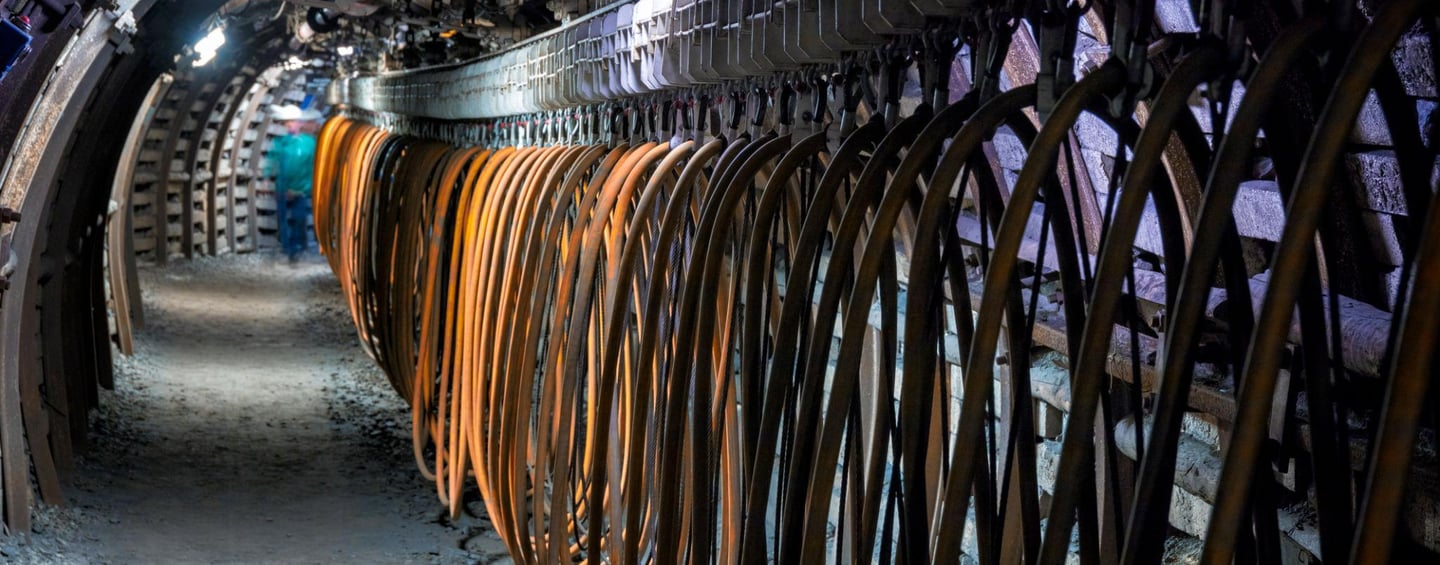
In modern heavy industries—ranging from deep-shaft mining and towering construction projects to massive offshore oil platforms and chemical processing plants—the physical demands placed on electrical infrastructure are extreme. Designers and project managers routinely compute electrical parameters such as current-carrying capacity, voltage drop, and short-circuit ratings. However, in applications where cables hang vertically over long spans, the primary engineering challenge shifts from electrical performance to structural survival.
In deep mine shafts, high-altitude tower cranes, construction hoists, and tall petrochemical process towers, cables must bear massive mechanical loads. When suspended vertically, a cable is subjected to continuous axial stress caused by its own weight, compounded by dynamic forces like wind, structural vibration, sway, and high-speed acceleration.
This guide focuses on the engineering of vertical hanging cables designed to withstand extreme tensile loads. For engineers, project managers, and technical buyers, selecting the right cabling system is a critical safety and operational decision.
When a cable must hang hundreds of meters into a shaft or down the side of a tall structure, relying on standard industrial designs is highly risky. We will examine why conventional copper conductors are structurally unsuited for high axial loads and analyze the physical mechanisms that lead to cable failure. We will then introduce high-performance synthetic aramid fibers (such as DuPont Kevlar) as a load-bearing solution.
By integrating high-tensile aramid braiding into specialized cable designs, manufacturers can separate electrical functionality from mechanical load-bearing capability. This engineering approach ensures that the copper conductors remain unstressed, allowing for safe, continuous power and data transmission in the most demanding vertical environments.
Why Conventional Copper Conductors Cannot Carry the Weight
The fundamental issue with suspending standard cables vertically over long distances is a simple law of physics: gravity. In any vertical suspension, the cable’s mass generates a continuous tensile force T at the top termination point, calculated as:
T = m×g
Where:
T is the tensile force in Newtons (N).
m is the total mass of the hanging cable section in kilograms (kg).
g is the acceleration due to gravity, approximately 9.81 m/s².
This tensile force is cumulative. The stress is relatively low at the bottom of the vertical run, but it increases linearly toward the top, reaching its maximum point at the upper suspension clamp or termination grip.
To understand the scale of these mechanical forces, consider a real-world example:
[Top Suspension Clamp] <--- Peak Tensile Load: 7848 N (Static) + Dynamic Forces | | <--- 100-Meter Hanging Cable Segment | Mass: 800 kg (Linear mass = 8 kg/m) | [Bottom of Vertical Run]
A heavy-duty power or control cable designed for industrial applications can easily have a linear mass of 8 kg/m. When suspended vertically over a 100 m span, the hanging section has a total mass (m) of 800 kg. This mass exerts a continuous static tensile force at the top termination of:
800 kg×9.81m/s² ≈7848 N
This calculation represents only the static load. It does not account for the additional dynamic forces that occur during operation, such as:
Wind Loading: Lateral wind forces acting on cables hanging on tower cranes or offshore platforms, which introduce severe bending and swaying stresses.
Dynamic Acceleration: High-speed hoists and elevators that generate sudden inertial loads during startup and braking.
Seismic and Structural Vibration: Continuous, low-frequency vibrations from nearby heavy machinery that travel through the cable structure.
When these dynamic forces are added to the static load, the total tension at the top support can easily exceed the physical limits of standard cable materials.
Under sustained axial tension, the internal components of a conventional cable begin to degrade:
Sustained Vertical Tension ---> Copper Elongation (Necking) ---> Core Migration ---> Polymer Creep ---> Insulation & Jacket Failure
Copper Conductor Elongation (Necking): Annealed copper is highly ductile. Under continuous tension, the copper strands stretch and narrow, a process known as necking. This reduces the cross-sectional area of the conductor, which increases electrical resistance and causes localized overheating.
Core Migration: As the conductors stretch, they exert lateral pressure on the surrounding insulation. Over time, the copper wires can cut through the soft polymer insulation, leading to short circuits and phase-to-earth faults.
Polymer Jacket Creep: The outer protective sheath and internal fillers are typically made of elastomeric or thermoplastic compounds. These polymers suffer from viscoelastic creep under sustained tension, slowly stretching and thinning. This thinning reduces the jacket's resistance to moisture, oils, and physical wear, eventually exposing the inner cores.
Ultimately, these mechanical deformations concentrate stress at the top termination points, causing conductor pull-out, insulation cracking, and catastrophic system failures.
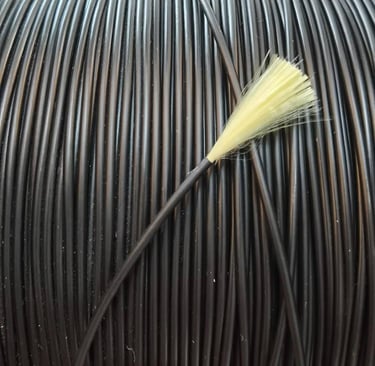
Mechanical Limits of Copper in Hanging Cables
To prevent these failures, engineers must understand the mechanical limitations of the materials used in industrial cables. Annealed copper is widely used in electrical engineering because of its outstanding conductivity, flexibility, and ease of termination. However, these physical properties make it poorly suited for carrying structural loads.
Annealed Copper vs. Hard-Drawn Copper
Annealed copper has a low yield strength, typically between 50 and 70 MPa, and an ultimate tensile strength of around 200 to 220 MPa. While hard-drawn copper offers higher tensile strength, it is far more rigid and brittle. This rigidity makes hard-drawn copper unsuitable for flexible cabling, where continuous movement, winding, and handling require highly flexible, finely stranded conductors (Class 5 or Class 6).
Because of this, vertical hanging cables must use highly flexible annealed copper strands. This flexibility is essential for dynamic applications, but it means the conductors cannot be used to support the weight of the cable over long vertical runs.
Under sustained tension, the finely stranded copper conductors inside a vertical cable experience several destructive mechanical processes:
[Sustained Axial Tension] | +---> Necking & Strain Hardening (reducing electrical cross-section) | +---> Migration & Conductor Lay Distortion (uneven stress at support clamps) | +---> Accelerated Creep (causing micro-fractures in copper strands)
Necking and Strain Hardening: When the tension on an annealed copper strand exceeds its elastic limit, it deforms plastically. The copper wire stretches, reducing its cross-sectional area and causing strain hardening. This makes the copper brittle and highly susceptible to fatigue cracking under vibration or lateral movement.
Conductor Migration and Lay Distortion: In stranded conductors, individual wires are twisted together in a specific lay pattern. Under high axial tension, these strands can unwind slightly or shift within the core bundle. This migration distorts the cable's internal structure, concentrating mechanical stress on a few outer strands rather than distributing it evenly across the entire conductor.
Accelerated Creep at Terminations: These structural deformations are most severe at support clamps and termination points. The combination of compressive force from the clamp and high axial tension from the hanging cable accelerates creep in both the copper and the surrounding insulation. This can loosen the connection, increase contact resistance, and lead to localized thermal runaway.
In deep shafts or tall towers, relying on the copper conductors to support the cable's weight quickly consumes the allowable tensile stress budget. This leaves no margin for dynamic forces, putting the entire system at risk of mechanical and electrical failure.
Introducing Aramid (Kevlar) as a High-Tensile Reinforcement
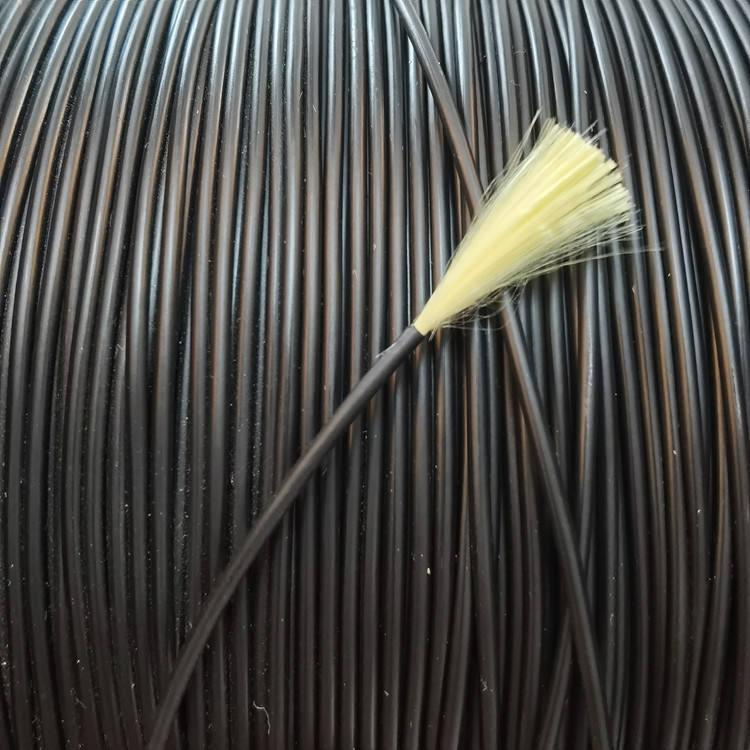
To overcome the physical limitations of copper, high-performance vertical hanging cables must incorporate a dedicated load-bearing material. The most effective material for this application is aramid fiber, commonly known by trade names such as DuPont Kevlar.
Aramid (aromatic polyamide) fibers are high-performance synthetic fibers characterized by long molecular chains that are highly oriented along the fiber axis. This unique molecular structure gives aramid fibers an exceptional strength-to-weight ratio, high chemical resistance, and outstanding thermal stability.
Aramid Molecular Structure: Highly aligned polymer chains ====[ Benzene Ring ]----[ Amide Group ]----[ Benzene Ring ]==== (Excellent axial tensile strength)
The physical and mechanical properties of aramid fibers make them ideal for heavy industrial cable reinforcement, especially when compared to traditional steel wire ropes or high-tensile copper alloys:
Physical PropertyAramid Fiber (Kevlar 29 / 49)Standard Structural SteelAnnealed CopperTensile Strength (GPa)2.8 to 3.60.5 to 1.20.2 to 0.25Elongation at Break (%)2.0 to 4.015.0 to 25.020.0 to 35.0Density (g/cm³)1.44 to 1.457.858.89Strength-to-Weight RatioExceptionally HighModerateLowCorrosion ResistanceExcellent (Immune)Poor (Requires Greasing/Galvanizing)ModerateElectrical ConductivityNone (Dielectric insulator)ConductiveExceptionally High
Why Aramid is Ideal for Vertical Cable Reinforcement
The data reveals three key reasons why aramid is the superior material for high-tensile hanging cables:
High Tensile Strength: With a tensile strength up to 3.6 GPa, aramid is five times stronger than steel on an equal-weight basis, and more than ten times stronger than annealed copper.
Low Elongation at Break: With an elongation limit of only 2 to 4 percent, aramid fibers resist stretching under heavy loads. This low elongation prevents the cable from stretching, protecting the delicate copper conductors and internal components inside the jacket.
Low Density: With a density of just 1.44 g/cm³ (compared to 7.85 g/cm³ for steel), aramid adds almost no extra weight to the cable assembly. This lightweight design is crucial for deep-shaft mining and tall tower cranes, where minimizing the total weight of the suspended cable system is a primary engineering goal.
How Aramid / Kevlar Braiding Works Inside the Cable
Integrating aramid fibers into a heavy-duty power or control cable requires advanced manufacturing techniques and precise structural design. The aramid cannot simply be bundled inside the jacket; it must be woven into a structured, load-bearing layer that functions as the cable's internal "skeleton."
In high-tensile vertical cables manufactured by Feichun, the aramid reinforcement is typically applied as a continuous, tightly woven braid positioned between the inner and outer sheaths, or integrated directly into the core bundle:
Feichun High-Tensile Vertical Cable Cross-Section: +-------------------------------------------------------------+ | [ Heavy-Duty Outer Rubber Jacket ] | | | | +-----------------------------------------------------+ | | | [ Tightly Woven Aramid Braid ] | | | | | | | | +---------------------------------------------+ | | | | | [ Inner Protective Jacket ] | | | | | | | | | | | | +-------------------------------------+ | | | | | | | [ Class 5 Copper Power Core ] | | | | | | | +-------------------------------------+ | | | | | | | | | | | | +-------------------------------------+ | | | | | | | [ Fiber Optic Telemetry Unit ] | | | | | | | +-------------------------------------+ | | | | | +---------------------------------------------+ | | | +-----------------------------------------------------+ | +-------------------------------------------------------------+
This multi-layer construction serves several key purposes:
Double-Sheath Design: The inner jacket holds the copper conductors, control pairs, and optical fibers in a stable, circular configuration. The outer jacket provides protection against abrasion, impacts, moisture, and UV light.
The Torsion-Locked Braid: The aramid braid is positioned between these two sheaths. It is applied in a counter-rotational double-helix pattern, which prevents the cable from twisting (corkscrewing) under high tension. This torsion-locked design is essential for ensuring the cable hangs straight in vertical shafts.
Load Isolation: Because the aramid braid is positioned outside the inner core bundle, it isolates the copper conductors and optical fibers from the high compressive forces generated when the cable is clamped or suspended.
The Role of Specialized Termination Hardware
To protect the internal components, the tensile load must be transferred directly from the aramid braid to the support structure, bypassing the copper conductors completely. This load transfer requires specialized termination hardware:
[Tower or Shaft Support Structure] | [Kellems Grip or Kell Grip Support] ---> Grips the outer jacket & locks onto the internal aramid braid | +===> [Structural Tensile Load Path] (Bypasses the copper cores) | [Stripped Cable Core] ---> Enters Junction Box (Copper conductors carry ONLY electrical current)
At the top termination, the outer jacket is carefully stripped back to expose the internal aramid braid. The braid is then separated from the core bundle, gathered, and anchored directly to a structural wedge clamp or tensioning socket.
This mechanical anchor transfers the entire weight of the hanging cable directly to the support tower or shaft headframe. The copper conductors and optical fibers pass through the clamp unstressed, running into the junction box completely free of axial tension.
Mechanical Load Sharing: From Copper to Kevlar
Using an aramid-reinforced design fundamentally changes how mechanical forces are distributed within a suspended cable.
In a traditional, unreinforced cable, every layer must resist the axial forces caused by the cable's weight and dynamic movement. Because the polymer jacket and fillers are highly flexible, they stretch easily under tension, forcing the copper conductors to carry the majority of the mechanical load. This structural stress leads to conductor stretching, jacket thinning, and eventually, electrical failure.
Traditional Load Path (Unreinforced): Gravity ---> Outer Jacket (stretches) ---> Copper Conductors (carries heavy tensile stress) ---> Failure Risk Feichun Reinforced Load Path: Gravity ---> Outer Jacket ---> Aramid Braid (absorbs 90%+ of tensile load) ---> Structural Anchor | +===> Copper Conductors (remain unstressed and loose)
In an aramid-reinforced cable manufactured by Feichun, the load path is engineered to isolate the electrical components from mechanical stress:
The gravitational pull and dynamic forces act on the cable assembly.
These mechanical forces are transferred through the tough outer jacket directly to the tightly woven aramid braid.
Because the aramid fiber has an exceptionally high tensile modulus and very low elongation, it resists stretching, carrying over 90 percent of the axial load.
The inner core bundle—containing the copper power cores, control wires, and sensitive fiber optic lines—remains loose within the inner jacket.
By isolating the electrical elements from physical tension, this design prevents conductor stretching, eliminates contact movement at terminations, and protects the cable against fatigue caused by vibration or structural sway. This structural separation is the key to ensuring long-term reliability and safety in demanding vertical installations.
Advantages of Aramid-Reinforced Hanging Cables
Upgrading to aramid-reinforced vertical cables provides significant mechanical, operational, and financial advantages for demanding industrial applications.
Aramid-Reinforced Cable Benefits: +---------------------------------------------------------------------------------+ | [ Extreme Tensile Capacity ] --> Supports spans up to 500+ meters vertically | | [ Lightweight Design ] --> Reduces structural load on support towers | | [ Minimal Elongation ] --> Prevents conductor stretching and creep | | [ Non-Corrosive Integrity ] --> Immune to humidity, acid mine water, & salt | +---------------------------------------------------------------------------------+
1. Exceptional Tensile Capacity and Long Vertical Spans
Aramid’s high strength-to-weight ratio allows engineers to design and install cables for exceptionally long vertical runs. Standard copper-only cables are often limited to vertical drops of 50 m or less before requiring intermediate support clamps.
In contrast, Feichun aramid-reinforced cables can hang vertically over spans exceeding 500 m in a single, uninterrupted run without risking damage to the copper conductors.
2. Lightweight Construction Reduces Structural Loads
Because aramid fibers have a density of just 1.44 g/cm³ (five times lighter than steel), they provide high tensile strength without adding deadweight to the cable.
This lightweight design reduces the structural load on support towers, crane booms, and headframes, allowing engineers to design lighter, more cost-effective support structures.
3. High Creep Resistance and Minimal Elongation
Unlike steel, which can suffer from permanent deformation, and polymers, which creep under sustained tension, aramid fibers maintain high dimensional stability under continuous load.
This resistance to stretching ensures the cable retains its original length and diameter over years of service, preventing jacket deformation and protecting terminations against pull-out or loosening.
4. Complete Corrosion Resistance and Chemical Immunity
In deep mine shafts and offshore platforms, cables are continuously exposed to highly corrosive environments, including acidic mine water, high humidity, salt spray, and industrial chemicals.
Unlike steel-reinforced cables, which can rust and lose structural strength over time, aramid fibers are completely immune to electrochemical corrosion. This chemical stability ensures the cable retains its full load-bearing capacity throughout its operational life.
5. Excellent Thermal Stability and Fatigue Resistance
Aramid fibers retain their mechanical properties across a wide temperature range, from -50°C to 150°C, and do not melt or support combustion. Additionally, aramid’s high fatigue resistance allows the cable to withstand continuous swaying, vibration, and cycling without losing structural integrity.
Typical Applications: Vertical Hanging and Deep Shaft Cables
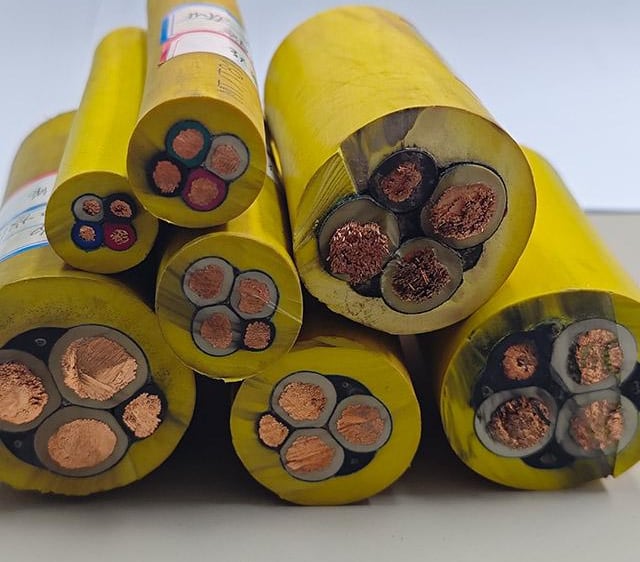
Aramid-reinforced cables are designed for heavy industrial applications where vertical suspension, dynamic movement, and harsh environmental conditions make standard cables impractical.
TYPICAL APPLICATIONS FOR ARAMID CABLES | +---------------------------+---------------------------+ | | | v v v [ Deep Mining ] [ Tower Cranes ] [ Process Towers ] - Vertical power shafts - High-altitude pendants - Tall refinery runs - Deep-level pumps - Dynamic wind sway - Vibration isolation - Telemetry & fiber links - Fast hoist travel - Corrosion immunity
1. Deep-Shaft Mining Operations
In deep underground mines, high-voltage power, control signals, and fiber optic telemetry must be delivered from the surface headframe to substations located hundreds of meters below. These shafts are often highly humid, warm, and corrosive.
Feichun aramid-reinforced vertical shaft cables are engineered for these demanding environments. By consolidating power, control, and fiber optic lines into a single, high-tensile hanging cable, mining operators can:
Eliminate the need for intermediate support clamps along the shaft wall, reducing installation time and costs.
Protect critical power and telemetry systems from damage caused by falling rock debris or structural shifts.
Ensure reliable operation of deep-well pumps, ventilation fans, and emergency hoist systems.
2. Tower Cranes and Construction Hoists
High-altitude tower cranes and construction hoists operate under continuous dynamic loads. The power and control cables hanging from the crane jib or running along the hoist mast are subjected to wind-induced swaying, rotational torque, and rapid acceleration forces.
Using unreinforced cables in these applications can lead to premature failure caused by conductor fatigue and jacket stretching. Aramid-reinforced cables provide the high tensile strength and torsional stability needed to handle these dynamic forces.
The torsion-locked aramid braid prevents the cable from twisting or spinning, ensuring smooth, reliable travel and protecting sensitive control signals from interruption.
3. Tall Process Towers and Offshore Platforms
In oil refineries, chemical plants, and offshore drilling platforms, cables must run vertically along the sides of tall distillation columns, cracking towers, and platform legs. These installations expose cables to high winds, vibration, salt spray, and extreme temperatures.
Feichun aramid-reinforced cables are ideal for these long vertical drops. Their high resistance to creep and environmental corrosion prevents jacket deformation and protects the internal conductors from tension. This robust construction ensures safe, continuous power and data flow, even in the most challenging offshore and industrial environments.
Relating to Known Crane and Mining Cable Families
To help engineers integrate these advanced designs into their projects, it is helpful to look at how high-tensile aramid reinforcement can be applied to standard, globally recognized industrial cable families.
Feichun Specialty Cable Upgrades: Standard baseline designs: [ NSHTÖU ] --------> Low-Voltage Reeling & Pendant (Standard copper/polymer load path) [ NTSKCGEWOEU ] ---> Medium-Voltage Mining Reeling (Standard mechanical baseline) Feichun Custom High-Tensile Upgrades: [ NSHTÖU + FO + Aramid ] -----> High-tensile, lightweight vertical crane cable with integrated fiber [ NTSKCGEWOEU + Aramid ] ----> Deep-shaft medium-voltage power cable with integrated aramid skeleton
1. The NSHTÖU Family: Low-Voltage Reeling and Pendant Cables
The NSHTÖU cable family is a standard for heavy-duty, low-voltage (0.6/1 kV) applications on cranes, hoists, and material handling equipment. Standard NSHTÖU cables are engineered to withstand high mechanical stresses, relying on a robust rubber inner and outer jacket with an embedded anti-torsion braid to handle pulling forces.
However, standard NSHTÖU cables are primarily designed for horizontal reeling or short vertical runs. When used in long vertical suspensions, the weight of the copper conductors can exceed the cable's load-bearing capacity.
To address this, Feichun manufactures custom NSHTÖU-J + FO + Aramid cables. These specialized designs incorporate a heavy-duty aramid braid beneath the outer jacket and integrate single-mode or multimode fiber optic elements within the core bundle. This custom upgrade increases the cable's allowable tensile load, making it ideal for deep-shaft installations and high-altitude tower cranes.
2. The NTSKCGEWOEU Family: Medium-Voltage Mining Cables
The NTSKCGEWOEU and (N)TSCGEWOEU families are heavy-duty, medium-voltage sheathed cables designed for high mechanical stresses in mining and large crane operations. These cables are engineered to handle high tensile forces, twisting, and abrasion during dynamic reeling and trailing.
For vertical applications, such as feeding power down deep mine shafts or running cables along high-voltage crane booms, standard designs can be reinforced with additional aramid braids.
These custom vertical designs protect the medium-voltage copper power cores from structural tension. By transferring the physical load to the high-tensile aramid skeleton, these cables ensure safe, reliable power delivery in the deepest shafts and tallest structures.
Steel-Supported vs. Aramid-Supported Designs
When designing high-tensile vertical cables, engineers often choose between two primary reinforcement materials: high-strength steel or synthetic aramid fibers. Both materials offer distinct physical and operational characteristics that impact cable performance, installation, and long-term reliability.
Steel-Supported Design (External or Central Steel Wire Rope): - High tensile strength - VERY HEAVY (adds significant deadweight to the support structure) - Rigid (large minimum bending radius, prone to memory set) - Susceptible to corrosion (rusts in humid or marine environments) Aramid-Supported Design (Internal Integrated Aramid Braid): - High tensile strength - EXTREMELY LIGHTWEIGHT (minimizes total suspended mass) - Highly flexible (small bending radius, no mechanical memory) - Immune to corrosion (completely unaffected by moisture and chemicals)
1. Weight and Structural Loading
The most significant difference between the two materials is weight. Steel has a density of 7.85 g/cm³, which is more than five times higher than aramid (1.44 g/cm³).
In a deep-shaft installation, a steel-reinforced cable adds substantial deadweight to the suspension system, requiring heavier support clamps and more robust structural steel at the shaft headframe.
An aramid-reinforced cable provides equivalent tensile strength at a fraction of the weight, reducing the load on support structures and simplifying installation.
2. Flexibility and Bending Performance
Steel wire ropes are rigid and have a natural mechanical memory, meaning they resist bending and tend to retain their shape after being coiled or spooled. This rigidity requires larger minimum bending radii and larger sheaves, limiting their use in tight physical spaces.
Aramid fibers are highly flexible and have no mechanical memory. This flexibility allows aramid-reinforced cables to bend easily around smaller sheaves and fit within tight structural envelopes. This makes them ideal for dynamic applications, such as tower cranes and hoists, where space is limited and continuous movement is required.
3. Corrosion and Environmental Resistance
Steel is highly susceptible to corrosion, especially in humid mine shafts, chemical plants, and coastal marine environments. Even galvanized steel can rust over time if the protective zinc coating is scratched or worn away. Once corrosion begins, the steel reinforcement loses structural strength, putting the cable at risk of mechanical failure.
Aramid fibers are completely non-metallic and immune to electrochemical corrosion, rust, and chemical degradation. This environmental stability ensures that aramid-reinforced cables retain their full load-bearing capacity throughout their service life, even in the most corrosive industrial environments.
Design Considerations for Extra High-Tensile Hanging Cables
Designing a reliable, high-tensile vertical cabling system requires a thorough analysis of the application's mechanical and operational requirements. Engineers must evaluate several critical design parameters to ensure the cable and its support hardware can handle the physical forces they will experience in service.
CRITICAL MECHANICAL PARAMETERS FOR VERTICAL DESIGN | +-------------------------+-------------------------+ | | | v v v [ Hanging Length ] [ Dynamic Loads ] [ Safety Factors ] - Total vertical span - Wind load & sway - Typically 5:1 to 7:1 - Linear mass of cable - Hoist acceleration - Prevents fatigue - Static load limit - Vibrational stress - Accounts for wear
1. Total Hanging Length and Linear Mass
The total hanging length and the cable's linear mass determine the baseline static tensile load at the top termination.
Engineers must calculate this static load and verify that the cable's reinforcement layer can support the weight with an appropriate safety margin.
2. Dynamic Forces and Environmental Conditions
In addition to the static weight, the design must account for all dynamic forces, including:
Acceleration and Deceleration: Fast hoists and elevator systems generate sudden inertial forces during startup and braking. These dynamic loads must be calculated and factored into the cable's tensile strength requirements.
Wind and Structural Sway: Lateral wind forces and structural movement generate bending and twisting stresses. The cable design must incorporate anti-torsion braids to prevent the cable from twisting or spinning under tension.
Vibrational Stress: Continuous, high-frequency vibration from nearby machinery can cause material fatigue. The cable jacket and internal filler materials must be selected to cushion and protect the inner cores from vibrational wear.
3. Safety Factors and Regulatory Compliance
Industrial safety standards and site regulations typically require a safety factor of 5:1 to 7:1 for suspended cables. This means the cable's ultimate tensile strength must be at least five to seven times higher than the maximum calculated load (static plus dynamic).
These conservative safety margins help prevent material fatigue, account for unexpected physical forces, and ensure safe, continuous operation over the life of the installation.
4. Termination and Clamping Design
The suspension clamps and termination hardware must be engineered to transfer the cable's tensile load directly from the aramid braid to the support structure.
The clamps must grip the outer jacket firmly enough to prevent slipping, but without crushing the internal conductors or optical fibers. Using specialized split-mesh grips (Kellems grips) or wedge-style tension clamps is essential to ensure the load path works as intended in practice.
Case Example Concepts for Vertical Installations
To illustrate the practical benefits of aramid-reinforced cabling, let's examine two conceptual case studies based on real-world industrial installations.
Case 1: Resolving Cable Elongation on a High-Altitude Tower Crane
The Challenge: A heavy-duty tower crane operating at a high-altitude construction site experienced frequent control signal dropouts and encoder errors. The crane used a standard copper-and-polymer pendant cable suspended vertically over a 120 m span.
Under the continuous dynamic forces of wind sway and rapid hoist movements, the copper control cores stretched and deformed, leading to intermittent connection failures and costly construction delays.
Standard Cable Installation (Failed): 120 m Hanging Span ---> Wind Sway & Acceleration ---> Copper Elongation ---> Intermittent Signal Loss Feichun Custom Hybrid Installation (Resolved): 120 m Hanging Span ---> High-Tensile Aramid Braid ---> ZERO Conductor Tension ---> 100% Signal Stability
The Solution: The project engineering team replaced the damaged cable with a custom Feichun NSHTÖU-J + FO + Aramid hybrid cable. This design integrated a high-tensile aramid braid beneath the outer jacket to carry the mechanical load, while consolidating the control signals and real-time telemetry into protected single-mode optical fibers.
The Result: The high-tensile aramid braid absorbed the physical stress of the hanging run, preventing conductor stretching and eliminating wind-induced strain.
This structural protection resolved the signal dropouts, extended the service life of the cable, and helped the project team maintain their construction schedule.
Case 2: Simplifying Power and Telemetry in a Deep Mine Shaft
The Challenge: A deep underground mining operation needed to run a 6.6 kV medium-voltage power feed and a fiber optic data link down a 350 m vertical ventilation shaft.
The original design relied on separate power and fiber cables, which were clamped to a steel support wire rope running down the shaft wall. Installing this multi-cable system required extensive field labor, and falling rock debris routinely damaged the exposed clamps and cables.
Original Multi-Cable Design (High Risk): [Power Cable] + [Fiber Cable] + [Steel Wire Rope] ---> Clamped along shaft ---> High installation labor & high damage risk Feichun Integrated Hybrid Design (Low Risk): [Single Feichun (N)TSCGEWOEU-SR PLUS FO Cable] ---> Self-supporting via internal aramid skeleton ---> Fast installation & maximum safety
The Solution: The mining company upgraded to a single, integrated Feichun (N)TSCGEWOEU-SR PLUS FO hybrid reeling cable. This self-supporting cable combined the 6.6 kV power cores, split grounding conductors, and 12-core fiber optic telemetry lines under a single, aramid-reinforced outer rubber jacket.
The Result: The integrated aramid braid allowed the cable to hang vertically in a single, uninterrupted run, completely eliminating the need for intermediate support clamps and the separate steel wire rope.
This simplified design reduced installation labor by 60 percent, protected the critical power and telemetry lines within a tough, impact-resistant jacket, and significantly improved operational safety.
Product Positioning and Custom Capability
Feichun is a leading designer and manufacturer of high-performance specialty cables for the most demanding industrial applications. We provide a complete range of standard and custom-engineered cabling solutions optimized for vertical suspension, dynamic movement, and harsh environments.
FEICHUN CUSTOM ENGINEERING PROCESS | +-----------------------------+-----------------------------+ | | | v v v [ Baseline Selection ] [ Fiber Integration ] [ Aramid Customization ] - NSHTÖU Low-Voltage - Single-mode (E9/125) - Density of aramid braid - NTSKCGEWOEU Med-Voltage - Multimode (G50 or G62.5) - Tensile capacity tuning - Rugged rubber compounds - Gel-filled tube casing - Torsion-locked design
1. Robust Baseline Designs
Our standard NSHTÖU low-voltage cables and NTSKCGEWOEU / (N)TSCGEWOEU medium-voltage reeling cables serve as the physical and electrical foundation for our high-tensile designs.
These cables feature high-grade rubber insulation and tough outer sheaths that resist abrasion, impact, oils, and environmental exposure.
2. Tailored Aramid Reinforcement
For vertical installations that exceed the physical limits of standard cables, Feichun can integrate custom aramid reinforcement layers.
We can adjust the density and weaving pattern of the aramid braid to deliver the exact tensile capacity and torsional stability required for your project's vertical span or hoist speed.
3. Integrated Fiber Optic Elements
We can integrate high-speed single-mode or multimode fiber optic units within the cable core bundle, allowing you to consolidate high-voltage power, control signals, and real-time telemetry into a single, high-durability cable run.
The fiber optic lines are housed in protective, gel-filled tubes and cushioned to isolate them from physical tension and mechanical shock.
By choosing Feichun as your custom cable partner, you receive an engineered solution tailored to the exact mechanical, electrical, and environmental demands of your project.
Conclusion and Engineering Call-to-Action
In deep mine shafts, high-altitude tower cranes, and tall process towers, the primary challenge of cable design is physical survival, not just electrical performance. Relying on standard, unreinforced cables in these long vertical suspensions puts your infrastructure at risk of conductor stretching, jacket deformation, and catastrophic failure.
High-performance aramid (Kevlar) reinforcement provides a reliable, lightweight, and non-corrosive solution to these mechanical challenges. By incorporating a tightly woven aramid braid into the cable structure, manufacturers can separate electrical functionality from mechanical load-bearing capability. This engineering approach ensures that the copper conductors remain unstressed, allowing for safe, continuous power and data transmission in the most demanding vertical environments.
Whether you are designing a new deep-shaft mining operation, retrofitting a high-altitude tower crane, or specifying cabling for a tall offshore platform, our technical team is here to help. Contact Feichun today to discuss your project requirements, calculate your vertical tensile loads, and design a custom, high-tensile cabling solution engineered for long-term safety and reliability.
Port crane cables | Mining cables | Reeling cables | Trailing cables | Festoon cables | Heavy-duty power cables | Medium voltage cables | Offshore crane cables | Underground mining cables | Dragline cables | Shearer cables | Container handling cables | STS crane cables | RTG cables | Mobile equipment cables | Armored cables | Flexible power cables | VFD cables | Submersible cables | Cold resistant cables | Abrasion resistant cables | Flame retardant cables | Marine environment cables | Opencast mining | Underground operations
© 2006 All rights reserved.
[INDUSTRIAL_CABLES]
INDUSTRIAL GRADE CABLE SYSTEMS | PORT & MINING SOLUTIONS
TEL: +86 153 7530 2641 |MAIL: hongjing.Wang@feichuncables.com