Transit Cable 1/C 2kV: Low Smoke Halogen-Free, Flame Resistant & अत्यremely Flexible Power Cable for Rail and Infrastructure?
Explore 1/C 2kV transit cables with low smoke halogen-free construction, flame resistance, and high flexibility. Designed for rail, tunnel, and infrastructure projects requiring safety and durability.
hongjing.Wang@Feichun
4/24/202623 min read
A transit cable is a specialized power distribution cable designed specifically for the demanding environments of modern transportation systems. Unlike industrial cables used in mining or manufacturing, transit cables must serve the dual purpose of delivering electrical power reliably while protecting public safety in environments where hundreds or thousands of people gather daily.
Transit cables deliver power to lighting systems, signaling equipment, traction motors, and emergency systems in metro trains, railway stations, and underground infrastructure. A single cable failure in a metro tunnel could leave trains in darkness, disable communication systems, or prevent emergency lighting activation—scenarios with serious consequences for passenger safety.
The 1/C 2kV rating indicates a single-conductor cable designed for 2000-volt applications. This voltage level is typical for secondary distribution circuits in transit systems—the intermediate power distribution level between main high-voltage feeds and equipment-level circuits. The single-conductor design simplifies routing in complex cable trays and reduces overall cable bundle weight, critical considerations in confined underground spaces.
Modern transit cables must meet stringent requirements that go far beyond simple electrical conductivity. They must resist fire propagation, limit toxic gas emission if exposed to flame, withstand extreme bending during installation in tight spaces, and maintain reliable operation across decades of service in wet, vibration-prone underground environments.
What Is a Transit Cable and Where Is It Used?
Why Low Smoke Halogen-Free (LSZH) Cables Are Critical in Transit Systems
The evolution toward low smoke halogen-free (LSZH) cables represents one of the most significant safety improvements in transit infrastructure over the past two decades. Understanding why LSZH materials matter requires examining what happens during cable fires in enclosed spaces.
The Hazard of Halogenated Cables During Fire
Traditional PVC-jacketed cables contain chlorine compounds. When exposed to fire, these compounds release hydrochloric acid (HCl) gas. In a metro tunnel fire scenario, halogenic gases accumulate quickly because the enclosed environment traps smoke and toxic vapors. Passengers attempting to evacuate face dual hazards: reduced visibility from dense smoke and respiratory damage from corrosive halogenic gases.
Consider a real-world scenario: a cable fault in a metro tunnel ignites insulation material. Within seconds, smoke fills the tunnel compartment. If the cable contains halogenated compounds, the smoke becomes increasingly toxic. Passengers covering their faces with cloth and attempting to navigate through dense smoke now face chemical burns to their respiratory system—a fate potentially more dangerous than the original fire.
In contrast, LSZH materials emit minimal smoke and no halogenic gases. Visibility during evacuation improves dramatically, and toxic gas exposure decreases substantially. Independent testing has shown that passengers evacuating from LSZH-equipped spaces have 2-3 minutes additional visibility compared to halogenated cable scenarios—often enough time to reach safety.
Benefits for First Responders
Fire personnel entering transit tunnel incidents face extreme challenges. They must locate fire sources, assess damage, and execute rescues in an environment potentially filled with toxic smoke. LSZH cables mean less smoke volume and no corrosive halogenic gases—allowing responders to work longer without breathing apparatus failure or inhalation injuries.
Additionally, halogenic acids corrode metal infrastructure and equipment. A cable fire releasing HCl gas causes secondary damage to signaling equipment, traction power systems, and structural components. LSZH cables eliminate this chemical corrosion hazard, reducing infrastructure damage and accelerating system restoration post-incident.
Environmental and Health Benefits Beyond Emergency Scenarios
Even without fire, halogenated cables pose health risks during manufacturing, installation, and disposal. Factory workers in cable plants experience lower respiratory illness rates when producing LSZH cables. Installation teams suffer fewer acute respiratory symptoms. Disposal is simpler—LSZH cable scrap poses no toxic hazard to recycling facilities, reducing environmental liability.
These cumulative benefits—direct fire safety, environmental protection, and long-term health outcomes—have driven global adoption of LSZH materials in public transit systems, metro projects, and underground infrastructure.
Key Features of 1/C 2kV Transit Power Cable
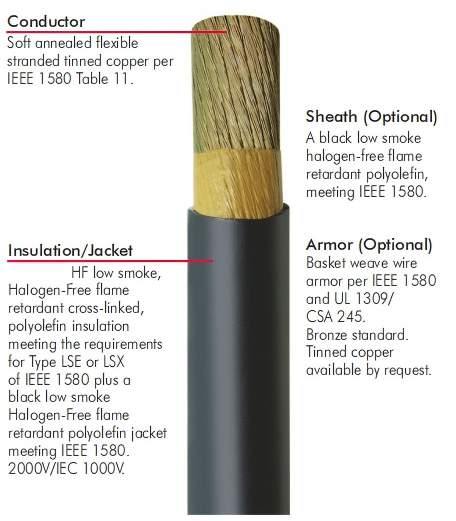
Halogen-Free EPR/XLPO Construction for Enhanced Safety
EPR (Ethylene-Propylene Rubber) and XLPO (Cross-Linked Polyolefin) insulation materials form the core of LSZH cable safety. These polymeric compounds provide excellent electrical insulation properties while being inherently resistant to flame propagation. Unlike PVC, which melts and drips when exposed to heat, EPR/XLPO materials char and create a protective layer that slows flame advancement.
The halogen-free composition means no HCl, HBr, or other corrosive acids are released during thermal decomposition. Test laboratories measure halogenic acid concentration in smoke from cable fires—LSZH cables consistently produce near-zero levels compared to 100+ ppm from equivalent halogenated cables.
Flame-Retardant Properties to Limit Fire Propagation
Flame retardancy is measured by standardized test protocols that expose cables to controlled flame sources and measure how far flame travels along the cable. LSZH transit cables meet or exceed flame retardancy categories that limit flame spread to 50 centimeters or less when tested under IEC 332-3 Category A conditions—among the most stringent testing protocols.
This property directly translates to safety: if a fire starts at one point in a cable bundle, the flame does not rapidly propagate to adjacent cables. In a metro tunnel containing hundreds of cables in tight proximity, this property prevents a single fault from triggering a cascading multi-cable fire. The initial fault is contained, allowing repair crews to address the problem before widespread system failure occurs.
Extremely Flexible Design for Easy Installation
Transit infrastructure presents unique installation challenges. Cables must be routed through existing tunnels without complete system shutdowns, navigate complex cable tray geometries in station areas, and adapt to spaces designed before modern cable specifications existed. LSZH cables achieve extreme flexibility through high-strand-count conductor designs—up to 256 strands of fine copper wire in a single conductor compared to 19-37 strands in conventional cables.
This fine-strand architecture allows bend radius as small as 8-10 times the cable outer diameter, compared to 12-15 times for standard cables. In practice, this means cables can navigate tighter curves and conform better to existing cable tray configurations, reducing the need for expensive cable conduit modifications.
Installation time improvements are substantial. A complex metro station cable installation that required 400 person-hours with conventional cables might be completed in 300 person-hours with LSZH transit cables. For major infrastructure projects, this translates to schedule acceleration and cost reduction.
High Strand Count Conductors for Improved Bending Performance
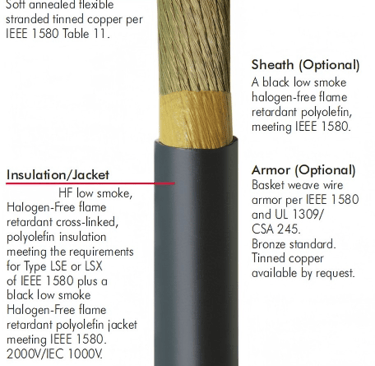
The conductor design uses soft-annealed (heat-treated to maximum softness) flexible stranded tinned copper. Tinning provides three distinct advantages: enhanced corrosion resistance in the wet, vibration-prone transit environment; improved solder-ability for terminations; and lower resistance to electrical current flow, reducing heat generation during operation.
Soft annealing removes internal crystal stress from copper wire drawing, allowing the conductor to flex repeatedly without work hardening—the progressive stiffening that occurs when metal is repeatedly bent. This property is critical in transit systems where cables may vibrate thousands of times daily due to train movement and equipment operation.
Resistance to Moisture, Heat, and Harsh Environmental Conditions
Metro tunnels and underground stations present a uniquely corrosive environment. Constant moisture from groundwater seepage, aggressive salts from de-icing chemicals on adjacent highways, mineral deposits from mineral-rich groundwater, and chemical residues from train operations create multiple assault vectors on cable materials.
LSZH polyolefin jacketing resists all these challenges better than PVC. Laboratory testing shows LSZH jackets immersed in simulated groundwater for 500 hours experience minimal property degradation, while PVC jackets show 40-50% loss of tensile strength. In tunnel environments with hydrogen sulfide from anaerobic decomposition, LSZH cables maintain integrity while PVC suffers accelerated degradation.
Cold Bend and Cold Impact Performance
Underground transit environments are often cold—many metro systems run through sections where ambient temperature stays below 10°C year-round. PVC becomes brittle at cold temperatures, developing stress cracks during installation. LSZH materials maintain flexibility down to extremely low temperatures, allowing installation in winter conditions or in naturally cold deep-tunnel sections.
The term "cold bend" refers to the minimum bend radius at subzero temperatures. LSZH cables maintain safe bending at -35°C or lower, while PVC cables become unsafe to bend below -10°C. This property becomes critical in northern climates where outdoor routing or natural tunnel temperatures demand cold-rated cables.
Construction Details and Material Performance
Conductor Design and Tinning Benefits
The conductor uses soft-annealed flexible stranded tinned copper meeting IEEE 1580 Table 11 specifications. This represents the highest flexibility standard available for power cables. The tinning process deposits 0.25-0.5 micrometer of tin onto each copper strand, providing protection against oxidation and sulfidation.
In metro environments, sulfur compounds from train friction (traction wheel sulfides), air pollution, and anaerobic decomposition create conditions favorable for copper sulfidation—forming a low-conductivity surface layer. Tinned conductors resist this degradation, maintaining consistent electrical properties across decades of service. Long-term testing shows tinned conductors in metro tunnels maintain 98%+ of original conductivity after 25 years, compared to 85-90% for bare copper in identical environments.
Insulation System: EPR/XLPO Performance
Cross-linked polyolefin insulation provides two fundamental benefits: thermal stability and environmental resistance.
Thermal Stability: EPR/XLPO insulation rated at 90°C (wet condition) and 105°C (dry condition) maintains its electrical properties across this temperature range. During heavy current flow, cables develop internal heat. The 90°C wet rating (used for the conservative safe-operating temperature) allows the cable to carry design-level current continuously without insulation degradation. The 105°C dry rating provides margin for occasional overload conditions during system disturbances.
Environmental Resistance: The cross-linked polymer network resists penetration by water molecules and chemical species. While no insulation is completely impermeable, LSZH insulation degradation rates are 3-4 times slower than PVC under equivalent moisture exposure. In a 20-year service life, a PVC-insulated cable might absorb enough moisture to reduce electrical breakdown voltage by 20-30%, while an LSZH cable shows only 5-8% degradation.
The absence of plasticizers (chemical additives that make PVC flexible) means LSZH materials do not become brittle with age. PVC cables often become unworkably stiff after 15-20 years in service, complicating maintenance. LSZH cables maintain flexibility throughout their service life.
Outer Jacket: LSZH Polyolefin Protection
The flame-retardant LSZH polyolefin jacket serves three functions: mechanical protection, environmental barrier, and fire safety contribution.
Mechanical Protection: The jacket resists cuts, abrasion, and impact. In cable trays above station platforms, personnel occasionally step on cables or place equipment on them. The jacket absorbs this occasional abuse without penetrating to insulation. Tension during cable pulling creates mechanical stress on the jacket—LSZH materials withstand these stresses better than PVC.
Environmental Barrier: The jacket prevents moisture, oils, and chemical vapors from penetrating to insulation. Salt spray testing shows LSZH jackets maintain seal integrity better than PVC when exposed to the saline conditions found in coastal metro systems (Singapore, Hong Kong, Mediterranean regions).
Fire Safety Contribution: The LSZH jacket contributes to overall cable flame retardancy. Modern formulations incorporate amorphous silica or other flame retardant fillers that create a protective char layer when exposed to flame. This layer insulates underlying material from heat, slowing flame propagation.
Optional Enhancements for Harsh Transit Environments
Additional Sheath Options
Some installations benefit from an additional LSZH flame-retardant polyolefin sheath layer applied over the primary jacket. This enhanced protection provides:
Mechanical Durability: A second polymeric layer withstands dragging, pulling, and impacts during installation better than a single-layer jacket
Water Barrier Enhancement: Dual-layer construction provides redundancy—moisture penetrating a small jacket defect encounters a secondary barrier
Flame Retardancy Improvement: Multiple layers of flame-retardant material provide additional thermal mass, further slowing flame progression
Sheath upgrades are most justified in retrofit installations where cables must be routed through existing cable trays with sharp edges, or in systems experiencing chronic mechanical damage.
Armor Options: Basket Weave Wire Armor
Wire armor (basket weave construction using bronze or tinned copper wire) surrounds the entire cable with a protective metallic grid. This provides:
Mechanical Strength: Armor resists crushing forces from dropped equipment or heavy loads placed on cable trays. A 500-pound weight placed on an unarmored cable might cause insulation cracking; the same weight distributed on an armored cable causes no damage
Rodent and Pest Protection: Underground installations occasionally face rodent intrusion. Wire armor prevents gnawing damage that would otherwise expose conductors
External Impact Resistance: In construction environments or during retrofits where cable cutting is a hazard, armor protects conductors from inadvertent cutting by tools
Electromagnetic Shielding: The metallic armor provides partial shielding for cables near high-frequency noise sources
Armor adds weight and slightly increases the conductor's outer diameter, consuming more cable tray space. These trade-offs make armor optional rather than standard. Specify armor when mechanical hazards or environmental factors justify the additional cost and installation complexity.
Electrical and Thermal Performance
2kV Voltage Rating
The 2000-volt rating indicates the cable withstands 2000 volts AC (root-mean-square) between conductor and ground under normal operating conditions, with safety margins built in. This is a relatively moderate voltage for power distribution systems. In contrast, transmission cables might operate at 138,000 volts or higher, while low-voltage distribution circuits operate at 120-480 volts.
In metro systems, 2kV represents a sweet spot—sufficient voltage to distribute power efficiently over distances of several kilometers through tunnels, yet low enough that standard insulation thicknesses and conductor sizes remain practical. Higher voltages would require thicker, heavier insulation; lower voltages would require substantially larger conductors to keep power losses acceptable.
The actual operating voltage in most metro systems is 1000 volts (IEC standard), providing a safety margin against the 2kV rating. This margin accounts for voltage transients from switching equipment, lightning, and other temporary overvoltages that occur in real systems.
Temperature Ratings: 90°C (Wet) and 105°C (Dry)
The 90°C wet rating represents the maximum safe sustained conductor temperature during normal continuous operation when the cable is exposed to moisture. This is a conservative rating—in a completely dry environment, the cable could safely operate at 105°C continuously. The 90°C rating ensures safe operation even in the worst-case scenario of constant moisture exposure.
In practice, metro cables operate well below these sustained temperature limits. System designers typically allow cables to operate at 70-80°C under design-load conditions, leaving margin for unanticipated loading increases.
The distinction between wet (90°C) and dry (105°C) ratings reflects insulation material properties. EPR/XLPO insulation has temperature-dependent electrical breakdown characteristics. At higher temperatures, the electrical field needed to cause insulation failure decreases. The 90°C vs. 105°C distinction accounts for moisture reducing the material's electrical breakdown strength.
Stability Under Continuous Load and Variable Environmental Conditions
LSZH cables demonstrate remarkable stability across the wide range of conditions found in transit systems. Temperature variations from -10°C (winter nights in cold climates) to +40°C (summer days in tropical systems) cause only minor changes in electrical properties. Moisture exposure from 0% to near-saturation causes minimal degradation. Vibration from train passage and equipment operation does not degrade insulation over time.
This stability means cables can reliably serve 30-50 year operational lives—matching the infrastructure depreciation schedule of major transit systems. PVC cables in equivalent environments typically show accelerated aging after 20-25 years, requiring more frequent replacement and maintenance.
Typical Applications in Rail and Infrastructure Projects
Metro and Railway Power Distribution Systems
Modern metro systems distribute power through multiple voltage levels. Main transmission feeds enter the system at 10-25 kilovolts. Substations step this down to 1000-2000 volts for secondary distribution, then further down to 480 volts or lower for auxiliary systems. LSZH transit cables at 2kV operate in these secondary distribution circuits.
Specific applications include:
Power feeds to station lighting systems (stations may contain 50-200 individual light fixtures requiring distributed power)
Traction auxiliary power (powering motors for ventilation fans, doors, and water pumps)
Emergency lighting and signaling circuits (backup systems that must function during main power failures)
HVAC system power (climate control in stations where comfort is essential)
The extreme flexibility of these cables enables routing through existing ductwork and cable trays without major modifications. In aging metro systems where original cable routes are inadequate, the flexibility of modern LSZH cables often allows system expansion without expensive tunnel reconstruction.
Tunnel Electrical Installations
Tunnels present unique installation challenges—confined spaces, limited access, and the need to maintain operations during cable installation. LSZH cables' flexibility enables installation crews to navigate cables through existing passages and tray systems.
The low-smoke property becomes critical if tunnel installation proceeds near occupied areas. A cable fault during installation work in an adjacent section would generate significantly less smoke and toxic gas, reducing risk to personnel and minimizing evacuation disruption.
Underground Stations and Service Corridors
Underground stations contain extensive electrical infrastructure—lighting, signaling, communication, HVAC, pumping, and security systems. These systems require hundreds or thousands of individual circuit connections. LSZH transit cables provide the high-reliability foundation for this infrastructure.
Service corridors (maintenance passages connecting different parts of the station) often contain extensive cable runs in tight spaces. The small bend radius of LSZH cables allows efficient routing in these constrained spaces, reducing the need for expensive raceway expansion.
Infrastructure Projects Requiring High Safety Standards
Transit operators increasingly specify LSZH cables as standard for all new installations and major upgrades, regardless of voltage class. This standardization simplifies procurement, training, and maintenance. Personnel trained on LSZH cable properties work with consistent materials throughout the system rather than managing multiple cable types with different properties.
Tender specifications for major infrastructure projects in developed countries increasingly require LSZH materials. This specification trend has driven down LSZH cable prices as volume production increases, making LSZH economically competitive with traditional materials.
Installation Advantages in Confined Transit Environments
Flexibility for Routing Through Tight Spaces
Underground transit spaces were often designed decades ago, sometimes a century or more ago. Original cable specifications presumed thicker, more rigid cables. Modern transit systems need to add capacity to these aging installations—additional circuits for expanded signaling, enhanced lighting, or new security systems.
LSZH cables' extreme flexibility solves this problem. Cables that previously required significant cable tray modifications or expensive new ductwork can now be routed through existing spaces using smaller radius bends. In a retrofit scenario, this flexibility often saves $50,000-200,000 in ductwork and structural modifications per kilometer of routing.
Reduced Installation Time and Labor Costs
The combination of flexibility and light weight reduces installation labor. A crew installing cables might need 8 hours to carefully pull and position a traditional rigid cable through a complex route. An LSZH cable navigating the same route might require only 5-6 hours due to its conformability and smaller minimum bend radius.
For a metro system project installing 50 kilometers of secondary power distribution cables, this time reduction translates to 150-250 person-weeks of labor savings—potentially $500,000-2,000,000 in direct labor costs depending on local wages.
Performance Under Repeated Bending or Vibration
Metro systems experience constant vibration. Trains entering and leaving stations cause track vibration that transmits through cable supports and cable trays. Equipment operation (compressors, ventilation fans) creates vibration. Cables must withstand thousands of vibration cycles without developing internal stress that causes eventual failure.
LSZH materials demonstrate superior vibration fatigue resistance compared to PVC. Long-term testing shows LSZH cables withstand 10+ million vibration cycles without detectable insulation degradation, while equivalent PVC cables show measurable cracking after 5-7 million cycles. In a major metro system operating continuously, these differences translate directly to cable service life extension.
Compliance and Standards
Alignment with IEEE 1580 Requirements
IEEE 1580 represents the international standard for power cables in shipboard and marine applications—one of the most stringent safety environments. While metro cables are not marine cables, the demanding marine environment shares similarities with underground transit environments: confined spaces, moisture exposure, vibration, and life-safety consequences of failure.
LSZH transit cables meeting IEEE 1580 standards undergo rigorous testing including flame propagation (cable must not spread flame more than specified distances), smoke density (smoke obscuration must not exceed maximum limits), toxic gas content (measured in corrosive gas concentration), and mechanical properties across temperature extremes (-40°C to +60°C tested).
Compatibility with UL and CSA Standards
North American installations reference Underwriters Laboratories (UL) and Canadian Standards Association (CSA) standards. These standards establish safety margins, testing protocols, and minimum performance levels. LSZH transit cables designed for international markets typically meet or exceed both UL and CSA requirements.
The armor option (basket weave wire construction) specifically aligns with UL requirements for mechanical protection. Cables intended for installations with crushing hazards or external impact risks must meet specific UL mechanical protection criteria, validated through drop-impact and compression testing.
Importance of Certification in International Transit Projects
Major transit system projects spanning multiple countries face the challenge of harmonizing cable specifications across jurisdictions. The European Union EMC Directive, International Organization for Standardization (ISO) standards, and country-specific regulations all influence cable selection.
Purchasing specifications should explicitly require certification evidence: test reports from accredited laboratories documenting flame propagation, smoke density, halogenic acid content, and mechanical property testing. Without this documentation, cable suppliers may substitute lower-cost materials that nominally meet ratings but fail under stringent testing.
Third-party certification by accredited laboratories (not manufacturer self-testing) provides assurance that cables perform as specified. Major transit agencies now require independent testing for cable batches, with samples drawn from production runs and tested by external laboratories.
Real-World Application: Singapore Metro System Expansion
The Singapore MRT (Mass Rapid Transit) system operates one of the world's highest-frequency metro systems, with trains departing every 3-5 minutes during peak hours. The planned extension through the central business district required integrating new tunnel sections with existing infrastructure in a congested underground environment.
The challenge centered on cable installation in pre-existing tunnels where multiple utility systems already occupied every available space. The new secondary power distribution system (1000V circuits) needed to connect new stations without deactivating the existing system.
The Problem: Original tunnel design anticipated lower power demands. Adding new circuits required routing through existing cable trays with minimal available space. Conventional rigid cables would have required significant tray restructuring—months of work and substantial cost. Deactivating the existing system during major renovations was operationally unacceptable; the metro serves 3 million passengers daily.
The Solution: Specifying LSZH transit cables with minimum bend radius allowed installation teams to route new cables through existing spaces without modification. The cables' extreme flexibility enabled navigation of sharp tray corners that would have been impossible with conventional materials.
Results:
Cable installation completed in 4 months instead of the estimated 7 months
No requirement for cable tray restructuring (estimated cost savings: SGD $2.8 million)
Zero service interruptions during cable installation
Enhanced fire safety through low-smoke properties for the entire expanded system
The Singapore project demonstrated that material selection directly impacts project feasibility and cost. LSZH cable flexibility wasn't simply a nice-to-have feature—it was the enabling technology that made the project economically viable.
Real-World Application: Paris Metro Climate Resilience Upgrade
The Paris Metro system, operating since 1900, serves 4.5 million passengers daily through 16 lines and 310 stations. Like many urban systems, Paris faces climate challenges: rising temperatures in summer and increased groundwater saturation from extreme precipitation events.
The aging cable infrastructure, installed over several decades using various PVC-based cables, showed signs of environmental stress. Moisture intrusion into older PVC cables caused electrical tracking (conductive pathways developing across insulation), creating intermittent faults that disrupted service and posed fire risks.
A comprehensive upgrade program targeted replacement of secondary power distribution cables in the most vulnerable sections—older tunnels with high groundwater conditions. The specification required halogen-free materials due to French environmental regulations and enhanced safety requirements adopted after European tunnel incidents.
Key Challenge: The existing cable trays, designed for 1950s-era cables, had tighter bend radius constraints than modern specifications assumed. Standard cables offered flexibility improvements but couldn't navigate the sharpest existing curves. The project would have required expensive tray modifications or acceptance of degraded service (shorter cable segments causing more splice points, increasing failure risk).
The Solution: LSZH cables with enhanced flexibility were specified. The fine-strand conductor design allowed installation at 8-10 times cable diameter bend radius—well below the original 12-14 times typical of standard cables.
Results:
87 kilometers of secondary distribution cable replaced without tray modification
Elimination of PVC-related electrical tracking issues
Compliance with French environmental regulations
Enhanced fire safety meeting European tunnel safety directives
The Paris project illustrates a different aspect of modern transit cable technology: retrofitting aging infrastructure with performance-enhanced materials that overcome original design constraints.
Google Featured Snippet: What You Need to Know
What makes LSZH cables safer than traditional cables in transit systems?
LSZH (Low Smoke Halogen-Free) cables eliminate the primary fire hazard of traditional PVC cables: toxic halogenic gases. During fire exposure, PVC cables release hydrochloric acid gas, creating a dual evacuation hazard—reduced visibility from dense smoke plus corrosive gas inhalation. LSZH cables emit minimal smoke and zero halogenic acids, providing 2-3 additional minutes of visibility for passenger evacuation. For first responders, LSZH eliminates respiratory hazards and secondary infrastructure damage from corrosive gases. In underground transit systems where evacuation distances can exceed 500 meters and escape time is critical, LSZH cables represent an essential safety upgrade protecting both passengers and emergency personnel. The enhanced properties come at modest cost premium (15-25%) relative to conventional cables, while providing benefits lasting the cable's 30-50 year service life.
FAQ: Transit Cables for Rail and Infrastructure Projects
Q: What does "1/C 2kV" cable designation mean?
A: "1/C" indicates a single-conductor cable—one central conductor carrying power. "2kV" specifies the cable withstands 2000 volts between the conductor and ground. In metric system electrical terminology, this cable is rated for 2000V AC. Most transit systems operate actual circuits at 1000V, providing a safety margin. Single-conductor cables are preferred for large power distribution feeders because they're lighter, more flexible, and cheaper than equivalent multi-conductor cables. The trade-off is that single-conductor cables require separate return paths (typically through ground or a dedicated return conductor).
Q: What's the difference between halogenated and halogen-free cables?
A: Halogenated cables (typically PVC) contain chlorine compounds. When exposed to flame, these release hydrochloric acid gas (HCl)—a toxic, corrosive vapor. Halogen-free cables use polyolefin or similar materials that emit water vapor and carbon dioxide (non-toxic) when heated. In a fire scenario, halogen-free cables produce 1/10th to 1/100th the toxic gas of equivalent halogenated cables, dramatically improving evacuation conditions and reducing first-responder hazards.
Q: Are LSZH cables more expensive than PVC cables?
A: LSZH cables typically cost 15-25% more than PVC cables. For a metro system project installing 100 kilometers of secondary power distribution cable, this premium might represent $2-5 million in additional material cost. However, when accounting for enhanced longevity (30-50 year life vs. 20-25 years for PVC), reduced replacement frequency, improved safety, and avoided fire-related infrastructure damage, the total cost of ownership favors LSZH. Projects spanning 30+ years typically recover the material premium within 10-15 years through reduced maintenance and replacement costs.
Q: Can I install LSZH cables in outdoor environments?
A: LSZH cables function in outdoor environments, but lack UV stabilizers for indefinite sunlight exposure. Outdoor installations should incorporate UV-protective conduit or regular inspections (every 1-2 years) to detect jacket degradation from UV exposure. For tunnels and underground systems, outdoor is not a limiting factor. When transitions from underground to outdoor are necessary, specify UV-stabilized cables for the outdoor sections.
Q: What's the minimum bend radius for a 2kV transit cable?
A: For static installations, use 8-10 times the cable outer diameter. For pulling during installation, use 10-12 times diameter. For example, a cable with 25mm outer diameter requires minimum bend radius of 20 cm for static use and 25-30 cm during installation. Exceeding bend radius creates internal stress that eventually causes insulation cracking and cable failure.
Q: Do LSZH cables require different termination methods than PVC cables?
A: No. Terminations (connections to equipment or splice points) use identical procedures regardless of jacket material. The key difference is installation handling—LSZH cables' superior flexibility often eliminates the need for cable end-protection devices required with stiffer cables. Once terminated, LSZH and PVC cables perform identically; the termination method remains unchanged.
Q: How long do LSZH transit cables typically last in metro systems?
A: In typical metro tunnel conditions (stable temperature, controlled moisture, minimal mechanical stress), LSZH cables provide 35-50 years of reliable service. In harsh environments (high moisture, temperature cycling, significant vibration), expect 25-35 years. This dramatically exceeds PVC cable life (20-25 years in favorable conditions, 15-20 years in harsh environments). Regular inspections every 5-10 years help identify degrading cables early, allowing planned replacement rather than emergency response to failures.
Q: What does "basket weave armor" provide, and when should I specify it?
A: Basket weave armor is a protective grid of metal wire (typically bronze or tinned copper) surrounding the cable. It provides crushing resistance, rodent protection, and external impact protection. Specify armor when cables are subject to mechanical hazards—heavy equipment operating on cable trays, construction activity in the vicinity, or known rodent presence. For cables installed above platforms where maintenance access exists, standard unarmored cables suffice. For cables in tunnels where external impact is possible or in retrofit installations facing mechanical risks, armor provides valuable protection.
Q: Are LSZH cables compatible with existing cable trays?
A: Generally yes, but verify before installing. LSZH cables are typically similar in size to equivalent PVC cables. However, some specialized high-flexibility designs are slightly larger than conventional cables. Always request dimensions from your supplier and compare with existing tray space capacity. In many retrofit situations, LSZH cables' extreme flexibility allows installation in trays that couldn't accommodate conventional cables—the smaller bend radius advantage often outweighs any size increase.
Q: What testing should I require before accepting delivered cables?
A: Request certificates documenting: (1) flame propagation testing per IEC 332-3 or equivalent, (2) smoke density measurement, (3) halogenic acid content in smoke, (4) mechanical properties at temperature extremes (hot and cold bend testing), and (5) electrical breakdown voltage. Many contracts now require third-party lab testing of production samples, not just manufacturer self-testing. This independent verification ensures cables meet specifications.
Q: How should LSZH cables be stored before installation?
A: Store cables indoors in cool, dry areas, away from direct sunlight. Temperature should remain between 5-30°C if possible. Humidity below 70% is ideal. If cables must be stored outdoors temporarily, provide tarps to prevent moisture and direct sun exposure, but ensure air circulation to prevent condensation under the tarp. Long-term storage (months to years) requires periodic inspection—at least every 6 months—to verify no environmental damage. Mark storage dates on cable reels to track how long cables have been stored; cables stored more than 2-3 years should be tested before installation to ensure properties haven't degraded.
Common Challenges in Transit Cable Systems
Fire Safety Risks in Enclosed Public Spaces
Despite LSZH material advances, cables can still experience electrical faults causing fires. The improvement with LSZH is that resulting fires are less hazardous—reduced smoke and no toxic gases—but fires remain possible. System design must address fire initiation prevention through proper overcurrent protection, fault detection, and isolation.
Modern transit systems increasingly incorporate arc-fault protection (detecting arcing conditions that precede fires) and fiber-optic temperature monitoring in high-risk cable runs. These technologies provide early warning of developing problems before fires initiate.
Mechanical Wear in High-Traffic Infrastructure
While LSZH materials resist mechanical damage better than PVC, cables in high-traffic areas still experience wear. Cable trays above station platforms where maintenance work occurs occasionally sustain mechanical damage from dropped tools or equipment.
Preventive measures include protective covers on cables in areas with regular pedestrian or equipment activity, periodic inspection of high-traffic cable sections, and replacement of obviously damaged cables before complete failure.
Environmental Exposure (Moisture, Heat, Chemicals)
Metro systems encounter diverse environmental challenges. Coastal systems (Hong Kong, Singapore, Dubai) experience salt spray and extreme heat. Cold-climate systems (Moscow, Montreal) cycle through extreme temperature ranges. Some systems face chemical exposure—diesel exhaust from older diesel trains, caustic dust from brake friction, or groundwater carrying minerals and aggressive chemicals.
LSZH materials resist these challenges significantly better than PVC, but are not invulnerable. Regular testing of cables in harsh environments—drawing samples every 5-10 years for electrical testing—provides early warning of environmental degradation. Planned replacement based on testing data prevents unexpected failures.
Long-Term Reliability and Maintenance Concerns
As metro systems age, cable replacement becomes increasingly important for maintaining reliability. Systems operating for 30-40 years with original cables face growing failure rates as insulation ages. Developing a phased cable replacement strategy ensures reliability while distributing costs across multiple budget years.
The advantage of LSZH cables is that they're the new standard. When replacing aging cables, using LSZH materials means the replacement cables should provide 35-50 year service life, synchronizing cable life with other major infrastructure components (traction systems, signaling) that typically last 30-40 years.
Future Trends in Transit Cable Technology
Increasing Adoption of LSZH Materials in Public Infrastructure
The trend is decisively toward LSZH. European and Asian transit systems have largely standardized on LSZH cables for new installations. North American systems are following as awareness grows. When a transit agency completes a major system assessment and makes procurement decisions, LSZH is increasingly the specified choice.
This trend is driven by three factors: regulatory mandates in jurisdictions with strict fire safety codes, insurance requirements favoring LSZH, and simple recognition that the material superior performance justifies modest cost premiums.
Demand for Higher Flexibility and Longer Service Life
Cable manufacturers continue improving flexibility and durability. Next-generation LSZH formulations will provide minimum bend radius approaching 5-6 times cable diameter (vs. current 8-10 times), enabling installation in even more constrained spaces. Conductor enhancements using ultra-fine stranding will reduce fatigue failure, extending service life to 45-60 years.
These improvements remain evolutionary rather than revolutionary—incremental enhancements rather than fundamental material changes. The cost increase will be modest (5-10% premium for "enhanced flexibility" variants), making the upgrades economically attractive for retrofit applications.
Advancements in Fire-Resistant and Eco-Friendly Cable Materials
Environmental regulations increasingly mandate consideration of cable end-of-life. Conventional LSZH cables end up in landfills or incinerators. Next-generation materials focus on recyclability—cables designed so jackets and insulation can be separated and reprocessed into new products rather than disposed as waste.
Some manufacturers are developing bio-based polymer materials that provide LSZH benefits while reducing dependence on petroleum-derived plastics. These materials remain in early development (expect 10-15 years until mainstream adoption), but represent the direction industry is heading.
Integration with Smart Infrastructure Systems
Modern transit systems increasingly incorporate IoT (Internet of Things) monitoring. Fiber-optic cables embedded alongside power cables detect temperature, vibration, and other parameters in real-time, feeding data to monitoring systems. Cable manufacturers are developing hybrid cables combining power conductors with fiber-optic data channels.
These "smart cables" provide continuous monitoring of cable condition, predicting failures before they occur. When integrated with maintenance management systems, predictive analytics can schedule cable replacement during planned maintenance windows rather than emergency responses to unexpected failures.
How to Select the Right Transit Cable for Your Project
Evaluating Voltage and Load Requirements
Start with electrical system specifications. What voltage does your circuit operate at? 2kV cables are appropriate for secondary distribution circuits. For main distribution feeders at 10-35kV, higher-voltage cable designs are necessary. For auxiliary circuits below 600V, lower-voltage cable designs suffice and cost less.
Next, consider the power level. A cable carrying 100 amps requires a different conductor size than one carrying 500 amps. Work with electrical designers to determine voltage, current, and duty cycle. These parameters define the minimum acceptable cable specification.
Determining the Need for LSZH Materials
In public transit systems, LSZH is essentially mandatory. The safety benefits and regulatory compliance justify the cost premium in virtually all cases. In industrial applications with limited public access, PVC cables might be acceptable, but even here, increasing regulations and insurance preferences favor LSZH.
Ask yourself: Does the cable system pose a hazard to the public or large numbers of personnel in confined spaces if a fire occurs? If yes, specify LSZH. Does the jurisdiction have fire safety codes or regulations favoring low-smoke materials? If yes, specify LSZH. Is this a project where fire safety is a marketing advantage (improving public perception of transit safety)? If yes, specify LSZH.
Choosing Between Armored and Unarmored Designs
Unarmored cables cost less and take less cable tray space. Specify them when cables are in protected trays away from mechanical hazards.
Armored cables add cost (20-40% premium) and consume more tray space (typically 15-25% larger outer diameter). Specify armor when mechanical hazards exist: tunnels where future construction might occur, cable trays above pedestrian areas where dropped objects are possible, or systems in locations with rodent activity.
Environmental Considerations: Temperature, Moisture, Mechanical Stress
Evaluate the specific environment: What's the normal temperature range? Cold-climate systems require cables rated for -35°C or lower; tropical systems don't. What's the humidity level? High-moisture tunnels (groundwater seepage common) benefit from armor or additional protection. What mechanical stresses will cables experience? Vibration from passing trains, pedestrian traffic, or equipment operation? Select cables with demonstrated vibration fatigue resistance.
Document environmental conditions, discuss with the cable manufacturer, and specify accordingly. The modest cost of selecting cables optimized for your environment is far less than the cost of premature replacement due to environmental degradation.
Conclusion
Transit cables at 2kV operating voltage form the critical backbone of modern metro and rail infrastructure. The evolution toward low-smoke halogen-free materials represents a fundamental shift in how transit systems approach public safety. The combination of enhanced fire safety, superior environmental resistance, and extreme flexibility makes LSZH cables the clear choice for new installations and major upgrades in transit systems worldwide.
Real-world projects from Singapore to Paris demonstrate that material selection directly impacts project feasibility and cost. The flexibility advantages of modern LSZH cables enable installation in existing infrastructure without expensive modifications, directly improving project economics. The fire safety benefits protect passengers and first responders—creating value that extends far beyond simple cost-benefit analysis.
For infrastructure planners, transit system operators, and procurement specialists, the decision to specify LSZH transit cables is increasingly straightforward. The material represents the modern standard, with mature production volumes supporting competitive pricing. The long service life (35-50 years) aligns with infrastructure planning horizons. Regulatory trends globally favor LSZH adoption. The modest cost premium relative to conventional materials is rapidly justified through durability and avoided risks.
As transit systems continue expanding globally, cable technology will evolve toward even greater flexibility and longer service life. These enhancements will remain built on the foundation of halogen-free materials—the essential prerequisite for safe, sustainable public transit infrastructure serving billions of passengers worldwide.
Port crane cables | Mining cables | Reeling cables | Trailing cables | Festoon cables | Heavy-duty power cables | Medium voltage cables | Offshore crane cables | Underground mining cables | Dragline cables | Shearer cables | Container handling cables | STS crane cables | RTG cables | Mobile equipment cables | Armored cables | Flexible power cables | VFD cables | Submersible cables | Cold resistant cables | Abrasion resistant cables | Flame retardant cables | Marine environment cables | Opencast mining | Underground operations
© 2006 All rights reserved.
[INDUSTRIAL_CABLES]
INDUSTRIAL GRADE CABLE SYSTEMS | PORT & MINING SOLUTIONS
TEL: +86 153 7530 2641 |MAIL: hongjing.Wang@feichuncables.com