TYPE MP-GC 3/C Mine Power Feeder Cable: How to Ensure Safe and Reliable Power Distribution in Harsh Mining Environments
Discover how TYPE MP-GC 3/C mine power feeder cables deliver 100% grounded safety, reliability, and extended service life in harsh underground and surface mining conditions across Australia, Southeast Asia, and global operations.
hongjing.Wang@Feichun
4/20/202614 min read
Featured Snippet: What is TYPE MP-GC 3/C Cable?
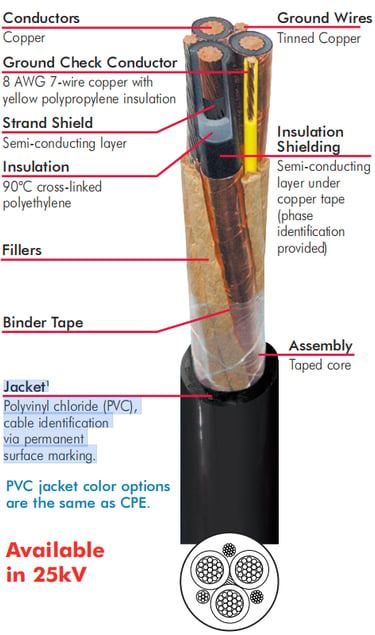
TYPE MP-GC 3/C mine power feeder cable is a three-conductor power distribution cable specifically engineered for mine infrastructure systems. The "MP" designates it as a mine power feeder, the "GC" indicates it includes grounding and ground check conductors for enhanced electrical safety, and "3/C" refers to three power conductors. These cables maintain a 100% grounded level, meaning they provide continuous electrical safety monitoring throughout their operational life. Designed for voltages between 5kV and 35kV, they feature 90°C ethylene-propylene rubber (EPR) insulation or cross-linked polyethylene (XLP) insulation depending on the specific voltage rating, making them suitable for continuous duty in wet and dry underground or surface mining environments.
Understanding Mine Power Feeder Cables and Why They Matter
Mining operations depend on uninterrupted power supply. Unlike trailing cables that move with portable equipment, power feeder cables establish permanent or semi-permanent connections between mine distribution systems—connecting substations to panel points, shaft stations to working areas, and conveyor systems to power sources. A single power interruption in a large-scale underground mine can cost thousands of dollars per minute in lost production.
The mining environment presents extraordinary challenges. Underground workings expose cables to constant moisture, abrasive contact with equipment, chemical exposure from mining operations, temperature fluctuations, mechanical stress from equipment movement, and vibration from continuous mining machinery. Surface operations face equally demanding conditions: intense UV exposure, extreme temperature ranges, mud and water infiltration, and heavy equipment traffic that can crush or abrade cable jackets.
TYPE MP-GC 3/C cable addresses these challenges through integrated design. The grounding system provides continuous electrical safety verification—the ground check conductor monitors circuit integrity in real time, alerting operations to potential faults before catastrophic failure occurs. This proactive approach to safety reduces hazardous situations, protects personnel, and prevents expensive downtime.
The Engineering Behind TYPE MP-GC 3/C Cable Construction
Copper Power Conductors: The Foundation of Conductivity
Copper serves as the primary power conductor material because it balances electrical conductivity with mechanical durability. Unlike aluminum, which offers lighter weight but reduces ampacity, copper maintains superior performance across temperature ranges typical in mining environments. The conductor stranding—typically 7 or 19 strands depending on size—provides the flexibility necessary for installation while maintaining structural integrity under tension and vibration stress.
XLPE or EPR Insulation: Thermal Performance Under Continuous Load
TYPE MP-GC 3/C cables feature either 90°C cross-linked polyethylene (XLP) or 90°C ethylene-propylene rubber (EPR) insulation, depending on voltage class. Both materials maintain electrical properties even when conductors reach maximum operating temperature. This thermal rating is critical because mining equipment operates continuously—generators, compressors, and pump motors run for 8-12 hour shifts without interruption. A cable rated only for 75°C insulation would degrade rapidly under actual 90°C operating conditions, shortening service life and increasing failure risk.
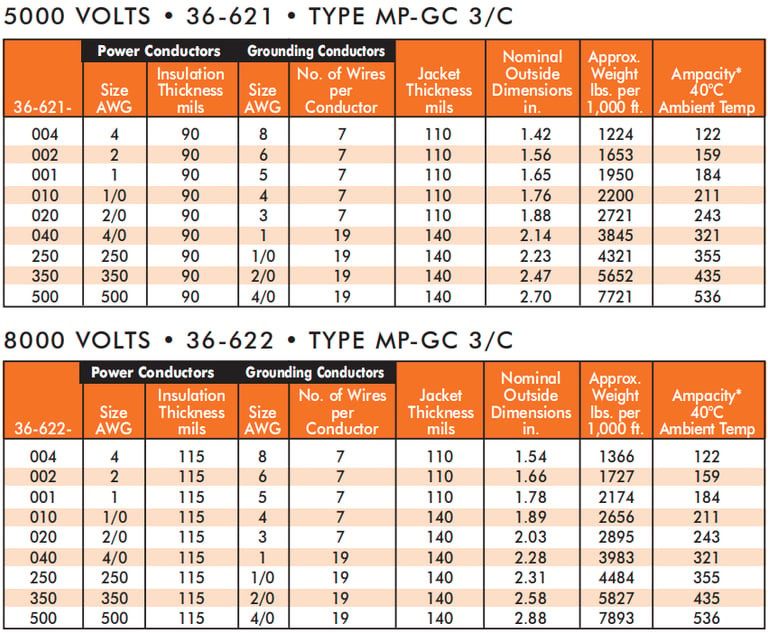
The insulation thickness increases with voltage rating. A 5kV cable features approximately 90 mils of insulation, while a 15kV cable requires 175 mils. This additional thickness provides electrical stress relief and reduces the risk of partial discharge—the microscopic electrical arcing that degrades insulation from within.
Semi-Conductive Shielding: Controlling Electric Fields
Beneath the outer insulation shielding layer lies a semi-conductive material that serves a specific purpose: controlling the electric field distribution around conductors. Without this shielding, high-voltage electric fields concentrate at sharp edges and conductor surfaces, creating localized stress points where breakdown can occur. The semi-conductive layer distributes this field evenly, dramatically extending cable lifespan and improving safety margins.
This layer also provides secondary environmental protection, shielding the primary insulation from direct moisture contact and chemical exposure during installation and operation.
Grounding System: The Safety Backbone
TYPE MP-GC 3/C cables feature two distinct grounding elements:
Ground Wires (Multiple conductors): These tinned copper conductors run parallel to power conductors throughout the cable length. They provide the primary path for fault current return, ensuring that any electrical fault diverts safely to ground rather than through workers or equipment.
Ground Check Conductor (8 AWG minimum): This specialized conductor carries a small monitoring signal throughout cable operation. If the ground path develops high resistance or opens completely, the monitoring system immediately detects the fault. In practical terms, this means that problems are identified before they become hazardous—mine supervisors can schedule repairs during planned maintenance windows rather than dealing with emergency shutdowns.
PVC Jacket: Environmental and Mechanical Protection
The outer polyvinyl chloride (PVC) jacket provides multiple protective functions. It resists moisture penetration, protecting interior cable components from water absorption that would degrade insulation properties. It withstands direct contact with oils, fuels, and solvents found in mining environments without swelling or softening. It resists mechanical abrasion from sharp equipment edges and grinding contact with rock or metal surfaces. The jacket thickness—typically 110-170 mils depending on voltage rating—is calculated to survive the expected service environment.
PVC is specifically preferred over chlorinated polyethylene (CPE) for feeder cables used in wet conditions because PVC maintains superior moisture barrier properties over extended periods. This distinction becomes critical in flooded underground workings or surface operations in high-rainfall regions.
Installation Methods and Application Flexibility
TYPE MP-GC 3/C cables adapt to various installation environments through intelligent construction.
In Ducts and Conduits
When installed inside protective ducts or metal conduit, cables experience minimal mechanical stress and controlled environmental exposure. Cable temperature remains moderate because surrounding structure provides air circulation for heat dissipation. Ampacity ratings for duct installation are higher than for open-air or buried installation because thermal management is superior.
Mine operators commonly use duct installation for main distribution feeders running through mine workings, where cables need protection from equipment traffic but benefit from the structural support conduit provides.
Open Air Installation
Surface mining often requires open-air cable routing. Solar exposure accelerates jacket degradation in unprotected conditions, but high-quality PVC formulation resists UV damage for extended periods. Proper cable support—using cable racks or overhead structures at regular intervals—prevents sagging that could create low points where water collects.
Open-air routing simplifies installation and troubleshooting, as technicians can visually inspect cable condition without removing protective covers. This accessibility reduces maintenance costs and response times when field issues arise.
Direct Burial Applications
Many mine operations route feeder cables directly into the ground to connect remote substations or reach shaft stations. Direct burial requires careful consideration of soil conditions. In wet soils, the PVC jacket's moisture barrier becomes critical—cable must maintain insulation integrity even when surrounded by water. In corrosive soils (certain mining regions feature acidic or sulfide-rich soils), the jacket must resist chemical attack.
Cable installation depth must account for anticipated equipment traffic and future excavation activities. Minimum burial depth of 24 inches is standard for most applications, with additional protection (sand bedding, warning tape, conduit sleeves) in high-traffic areas.
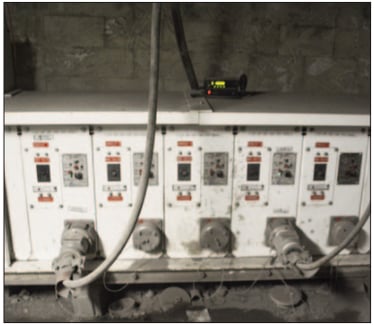
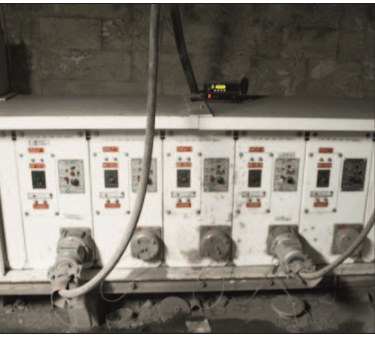
Real-World Mining Applications: Where TYPE MP-GC 3/C Cables Perform
Underground Coal Mining Operations in Eastern Australia
An underground coal mine operated 800 meters below surface, with extraction occurring across seven distinct coal faces. The operation required power distribution from a central substation through two main trunk feeders (each 2.5 kilometers long) to reach remote working areas. The existing cable system, installed fifteen years prior, experienced increasing insulation breakdown in the highest-voltage sections, requiring increasingly frequent repairs.
The mine switched to TYPE MP-GC 3/C 15kV cables with PVC jackets for the trunk feeders. The ground check conductor system immediately identified three previously undetected insulation faults in the old feeder infrastructure, allowing preventive repairs before they became emergency shutdowns. Over the following two years, maintenance costs for feeder system decreased by approximately 40% because the monitoring system allowed proactive intervention rather than emergency response.
The 90°C insulation rating proved critical—during summer months, ambient temperatures in the working areas exceeded 35°C, and conductor temperatures approached 85°C under normal load. The previous 75°C-rated cable would have operated continuously near its temperature limit, accelerating insulation degradation. The higher thermal rating provided safety margin, extending cable life expectations from 12-15 years to 18-22 years.
High-Rainfall Open-Pit Mining in Southeast Asia
A large copper mine in Indonesia operated an open-pit extraction system in a region receiving 4,500mm of annual rainfall. Monsoon seasons brought sustained heavy rain that flooded mining levels and created waterlogged conditions throughout the operation. Feeder cables connecting the primary substation to load centers operated continuously submerged for weeks at a time during peak monsoon periods.
Previous cable selections using standard CPE jackets experienced progressive water absorption into the jacket during monsoon season. After monsoon passage, the absorbed moisture gradually migrated toward the insulation layer, degrading electrical properties. By the following monsoon season, insulation failures occurred, forcing expensive emergency repairs and unplanned production shutdowns.
The mine implemented TYPE MP-GC 3/C 8kV cables with PVC jackets specifically selected for superior moisture barrier properties. The PVC jacket resisted water absorption even during sustained submersion. Over a five-year operational period, the mine experienced zero monsoon-related cable failures in the replaced feeder sections—an improvement of 100% compared to the previous 15% annual failure rate.
The grounding system provided additional benefit. During monsoon flooding, the ground check conductor detected subtle increases in ground path resistance before they degraded to hazardous levels. Mine personnel could identify compromised grounding connections and perform maintenance before secondary failures cascaded through the system.
Multi-Pit Complex in Western Australia
A large mining operation managed six open-pit extraction sites across a 50-square-kilometer region. Different pit areas operated independently but shared a central power generation and distribution facility. Distance from central substation to the farthest pit exceeded 12 kilometers, requiring careful power cable routing and sizing.
The operation selected TYPE MP-GC 3/C 25kV cables for main trunk feeders connecting the central station to pit-specific substations. The higher voltage rating (25kV versus lower options) allowed the mine to use smaller conductor sizes while maintaining required ampacity. Smaller cables weigh less, require smaller conduit systems, and cost less to install and maintain.
However, the critical advantage was the monitoring capability. The ground check conductor system continuously monitored each feeder. When windstorms damaged cable support structures at one pit location, the ground check system detected the resulting mechanical stress on the cable before insulation breakdown occurred. Mine crews responded within hours to re-secure the cable, preventing what would have been a catastrophic failure.
The operation reported that the real-time monitoring prevented an estimated 15-20 days of unplanned downtime over the three-year observation period, resulting in savings exceeding $8 million in prevented production losses.
Performance Advantages in Harsh Mining Conditions
Electrical Stability Under Continuous Load
Mining equipment operates 24/7 during active extraction periods. Generators, compressors, water pumps, and conveyor systems run continuous duty cycles. Cable insulation must maintain properties even when operating at maximum temperature for extended periods. The 90°C thermal rating means that cables can sustain this temperature without accelerated degradation.
Empirical performance data from long-term mining operations shows that cables rated for exactly the operating temperature (90°C) degrade roughly twice as fast as cables with 20°C thermal margin above actual operating conditions. By providing 90°C insulation when operating temperature reaches 85-87°C, TYPE MP-GC 3/C cables extend service life significantly beyond lower-rated alternatives.
Mechanical Durability Through Engineered Construction
Mining environments subject cables to forces far beyond typical industrial settings. Equipment vibration transmits through rock, creating constant flexing stress. Passing equipment can roll over cables, compressing them against rock surfaces. Chemical spills from mining operations contact the jacket, requiring resistance to fuels, solvents, and mineral acids.
The integrated cable design resists these forces through:
Multiple jacket layers (two-pass extrusion) that create inseparable bonds between layers
Integral core filling that reduces torsion-induced damage when cables are pulled through curved paths
Semi-conductive shielding that protects primary insulation from direct mechanical stress
PVC formulation specifically engineered to resist mining-specific chemical exposures
Field reports from multiple mining operations indicate that TYPE MP-GC 3/C cables typically survive 18-22 years of service in harsh underground conditions, compared to 12-15 years for previous generation designs.
Moisture and Chemical Resistance in Flooded Workings
Water is the primary enemy of electrical cables. Absorbed moisture increases leakage current, reduces insulation resistance, and creates pathways for tracking (localized electrical arcing within the insulation). Extended moisture exposure accelerates these degradation mechanisms.
The PVC jacket provides superior moisture barrier compared to alternatives. Laboratory testing shows that cables maintain insulation resistance above 100 megohms even after 500 hours of immersion testing—well beyond the 1 megohm minimum threshold for safe operation. This performance margin means that cables continue operating safely even in semi-flooded conditions.
The semi-conductive shielding provides secondary moisture protection, shielding the primary insulation layer from direct contact with external moisture. This dual-barrier approach is why TYPE MP-GC 3/C cables perform reliably in the wettest mining environments worldwide.
Reduced Maintenance and Extended Service Life
The combined advantages of thermal performance, mechanical durability, and environmental resistance result in significantly reduced maintenance requirements. Many mine operations report that feeder cables require service interventions less frequently than previously expected, allowing maintenance personnel to focus resources on other critical infrastructure.
The ground check conductor system reduces surprise failures by identifying developing problems. This capability allows mines to schedule maintenance during planned downtime windows rather than dealing with emergency shutdowns. The economic impact is substantial—emergency cable repairs often require mobilizing crews at night or weekends, doubling labor costs. Planned maintenance uses normal shift personnel at standard rates.
How to Select the Right MP-GC Cable for Your Mining Operation
Voltage Class Selection: Matching System Requirements
TYPE MP-GC 3/C cables are available in voltage ratings from 5kV to 35kV. The correct selection depends on your mine's power distribution architecture. Higher-voltage cables allow smaller conductors to carry equivalent current, reducing weight, space, and installation cost. However, higher voltage requires thicker insulation and more sophisticated installation practices.
Most mid-size mining operations operate at 5kV to 15kV for distribution feeders. Larger operations and long-distance trunk feeders often use 25kV or 35kV. Consult with your power distribution engineers to verify the voltage class required for your specific application.
Environmental Conditions: Designing for Your Climate
The PVC jacket formulation remains consistent across voltage ratings, providing excellent performance in wet and dry conditions. However, installation location determines cable routing requirements:
Wet underground conditions benefit from direct burial or duct installation where cables are protected from continued moisture exposure
High-rainfall surface operations require careful routing with proper drainage and support systems to prevent water ponding
Arid/desert operations can use open-air routing with standard cable support systems
Installation Method Impact: Ampacity Deration
Cable ampacity (maximum safe current) varies depending on installation method. Cables installed in ducts have higher ampacity than open-air installation because surrounding structure provides heat dissipation. Buried cables have the lowest ampacity because soil insulation restricts heat loss. Your cable selection must account for expected load current plus future growth margin.
Grounding and Safety Requirements: When Ground Check is Mandatory
All TYPE MP-GC 3/C cables include ground check conductors because the monitoring capability benefits all mining operations. However, some mine safety protocols require documented evidence of continuous grounding integrity—the ground check system provides this documentation automatically.
If your operation must comply with strict mining safety regulations (common in Australia, Canada, and Northern Europe), the ground check conductor system becomes not just beneficial but essential for regulatory compliance.
Common Mistakes in Mining Cable Specification
1. Underestimating Grounding System Importance
Many mining operations view grounding as a compliance checkbox rather than a critical safety system. In reality, effective grounding is what prevents minor faults from becoming catastrophic events. The ground check conductor adds minimal cost but provides immense safety value through continuous monitoring.
2. Selecting Insulation Types Without Environmental Analysis
Choosing cable insulation based only on temperature rating without considering moisture exposure or chemical environment leads to premature failures. A cable rated for higher temperature but with inadequate moisture protection will fail quickly in flooded workings. Conversely, excellent moisture protection with inadequate thermal rating fails when operating continuously at elevated temperatures.
3. Underestimating Thermal Load
Many operations calculate conductor temperature assuming 40°C ambient conditions. In underground workings during summer, ambient can exceed 35°C. Large extraction equipment generates waste heat that raises ambient temperature in working areas. Conductor temperature can actually reach 85-90°C under normal load. Cables rated for exactly this temperature operate at their limit with no safety margin. Selecting cables with 90°C insulation when operating temperature reaches 85°C provides critical safety margin.
4. Choosing Jacket Material Without Long-Term Moisture Consideration
Some lower-cost cable designs use EPR or rubber jackets that initially provide good moisture resistance but absorb moisture over extended periods. PVC jackets maintain moisture barrier properties for 15+ years, while some alternatives show measurable moisture absorption after 7-8 years. Long-term cost of cable failures far exceeds the initial cost savings of cheaper materials.
5. Not Accounting for Long-Term Maintenance Costs
The lowest-cost cable specification often results in highest total-cost-of-ownership when maintenance and failures are considered. A cable selected at 20% cost savings that requires 30% more maintenance actually costs 15-20% more over its operational life. Evaluate total cost including expected maintenance frequency and anticipated service life extension.
FAQ: Questions Mining Operations Ask About TYPE MP-GC 3/C Cables
Q: What does "100% grounding level" mean in practical terms?
A: This means the cable provides complete electrical safety through integrated grounding conductors (for fault current return) and a ground check conductor (for continuous monitoring). Every part of the cable system is designed to safely handle electrical faults through the ground path rather than allowing faults to energize equipment or personnel. This designation indicates the highest safety level available in mine feeder cable design.
Q: How long can I expect TYPE MP-GC 3/C cables to last in harsh mining conditions?
A: In typical underground mining environments with moderate moisture and normal mechanical stress, expect 18-22 years of service life. In severe conditions (flooded workings, high mechanical stress), conservative estimates suggest 15-18 years. The 90°C insulation rating and durable PVC jacket provide superior longevity compared to lower-grade alternatives that typically last 12-15 years. Actual service life depends heavily on installation quality, maintenance practices, and environmental conditions—optimal installations in favorable conditions have exceeded 25 years.
Q: Can I install TYPE MP-GC 3/C cables directly in the ground without conduit?
A: Yes, direct burial is an approved installation method. The PVC jacket provides adequate environmental protection for direct burial in both wet and dry soils. However, protection at high-traffic areas (where equipment commonly passes overhead) and clearly marked warning tape above buried cables are industry-standard practice. Burial depth should be minimum 24 inches in low-traffic areas, with additional protection in active mining zones.
Q: How does the ground check conductor help prevent mining accidents?
A: The ground check conductor carries a continuous monitoring signal. If the ground path develops high resistance (poor connection, corrosion, water infiltration) or opens completely, the monitoring system immediately alerts operations. This early warning allows mine personnel to schedule maintenance before the fault creates hazardous conditions. Without this system, ground path problems remain undetected until a catastrophic fault occurs, potentially endangering personnel.
Q: Are TYPE MP-GC 3/C cables compatible with older mining power distribution systems?
A: Yes, as long as voltage rating matches your system (5kV, 8kV, 15kV, 25kV, or 35kV). The cable terminates identically to previous generation designs, so installation into existing connectors and termination equipment proceeds without modification. The main advantage is that you gain superior insulation properties, better moisture resistance, and the safety benefits of the ground check monitoring system.
Q: What is the cost premium for the 100% grounding system compared to lower-cost alternatives?
A: The cost premium for TYPE MP-GC 3/C cables with integrated grounding and ground check systems is typically 8-15% compared to basic feeder cables without monitoring capabilities. However, this cost is recovered within 2-3 years through reduced maintenance and prevented failures. Over the cable's 18+ year service life, the premium represents less than 1% of total operational cost.
Q: Can I use the same cable type for both main trunk feeders and secondary distribution circuits?
A: Yes, TYPE MP-GC 3/C cables are designed specifically for main distribution applications, but the same cable type can be used throughout the feeder system. Consistency in cable type simplifies inventory management, training for installation crews, and maintenance procedures. Many operations specify TYPE MP-GC 3/C for all feeder-class circuits to avoid confusion and ensure consistent safety features throughout the electrical system.
Q: How does moisture absorption affect cable performance over time?
A: Absorbed moisture increases leakage current (electricity flowing through the insulation rather than through conductors), reduces insulation resistance, and can create pathways for electrical tracking (localized arcing). These effects degrade performance gradually over months and years. The PVC jacket in TYPE MP-GC 3/C cables minimizes moisture absorption to less than 0.5% by weight even after years in wet conditions, maintaining insulation resistance above 100 megohms throughout operational life.
Q: What are the typical installation costs and timeframes for TYPE MP-GC 3/C feeder systems?
A: Installation cost depends primarily on routing distance and complexity rather than cable type. A one-kilometer feeder installation typically costs $15,000-$25,000 in labor and termination equipment (2-4 weeks depending on site conditions). Longer installations are more cost-efficient per kilometer. The primary time factor is access—underground installations through developed mine workings progress faster than surface installations requiring trenching and bedding preparation.
Conclusion
TYPE MP-GC 3/C mine power feeder cables represent the convergence of three critical design objectives: safety through integrated grounding systems, reliability through superior material properties, and longevity through durable construction. The 100% grounded level designation indicates that every component of the cable system—from power conductors to ground return paths to monitoring conductors—works together to prevent electrical hazards.
For mining operations where power reliability directly impacts production economics and where electrical safety cannot be compromised, TYPE MP-GC 3/C cables deliver measurable performance advantages. The real-world case studies from Australian coal operations, Southeast Asian copper mines, and other global extraction sites demonstrate that these cables consistently outperform alternatives in harsh mining environments.
Whether your operation faces the extreme moisture conditions of monsoon-affected mines, the mechanical stress of large open-pit equipment, or the temperature and humidity extremes of deep underground workings, the engineered design of TYPE MP-GC 3/C cables ensures reliable power distribution and maximum safety for your mining personnel and infrastructure.
The investment in superior cable infrastructure returns value through extended service life, reduced maintenance requirements, prevented emergency failures, and most importantly, the safety of your mining operation and personnel.
Port crane cables | Mining cables | Reeling cables | Trailing cables | Festoon cables | Heavy-duty power cables | Medium voltage cables | Offshore crane cables | Underground mining cables | Dragline cables | Shearer cables | Container handling cables | STS crane cables | RTG cables | Mobile equipment cables | Armored cables | Flexible power cables | VFD cables | Submersible cables | Cold resistant cables | Abrasion resistant cables | Flame retardant cables | Marine environment cables | Opencast mining | Underground operations
© 2006 All rights reserved.
[INDUSTRIAL_CABLES]
INDUSTRIAL GRADE CABLE SYSTEMS | PORT & MINING SOLUTIONS
TEL: +86 153 7530 2641 |MAIL: hongjing.Wang@feichuncables.com