Type W Round 4/C Mold-Cured Jacket 2000 Volt Cable: Specifications, Construction & Mining Applications
Explore the Type W Round 4/C mold-cured jacket 2000 volt cable — engineered for mobile mining equipment with EPR insulation, CPE jacket, and MSHA compliance. Ideal for continuous miners, shuttle cars, and underground drills in wet, abrasive conditions.
hongjing.Wang@Feichun
4/8/202616 min read
Type W Round 4/C Mold-Cured Jacket 2000 Volt Cable – Built for Demanding Mining Environments
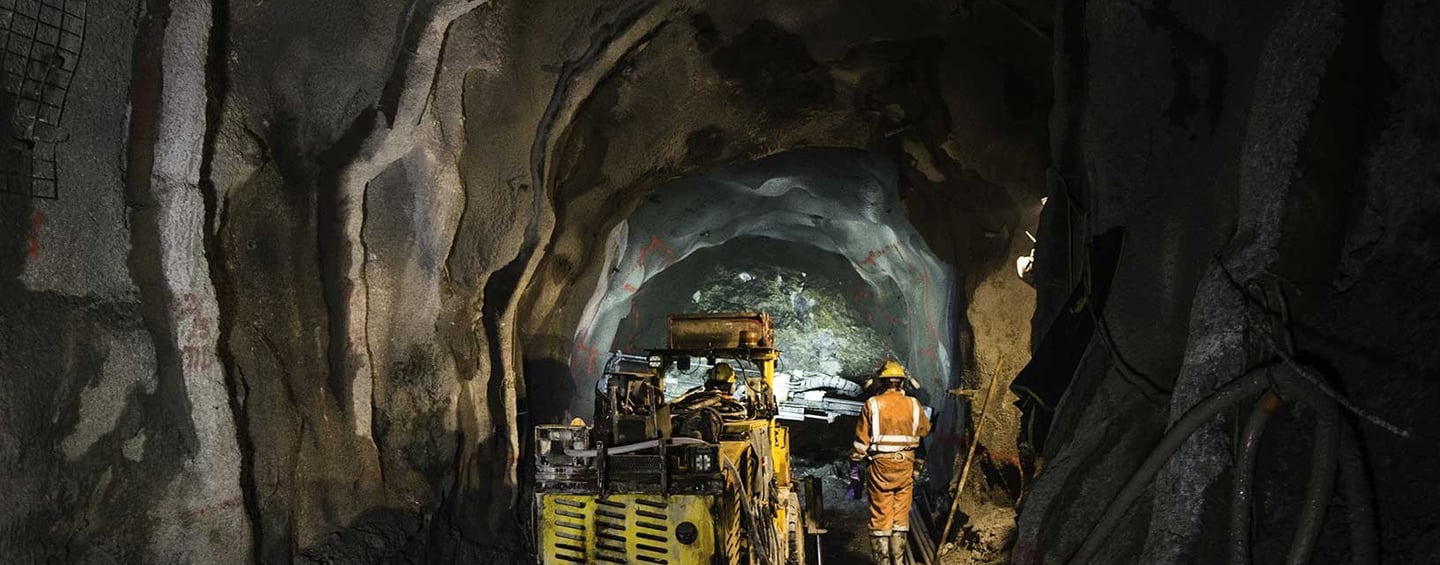
Underground mining is one of the most unforgiving environments on earth for electrical infrastructure. Cables must endure continuous flexing, abrasion against rock faces, exposure to water and mine drainage, mechanical stress from reeling equipment, and the ever-present risk of ignition in gas-laden atmospheres. In these conditions, a poorly specified trailing cable is not just a maintenance liability — it is a safety hazard that can halt production and put workers at risk.
The Type W Round 4/C mold-cured jacket 2000 volt cable is engineered from the ground up for exactly this environment. Designed as a round trailing cable solution for AC-powered mobile mining equipment, it delivers the combination of flexibility, toughness, and regulatory compliance that underground operations demand. Whether powering a continuous miner cutting through a coal seam or energizing a drill rig in a hard-rock heading, this cable class has earned a proven track record across North American and international mining operations.
This article covers everything you need to know: how the cable is constructed, where it performs best, what approvals it carries, and how to select the right configuration for your application.
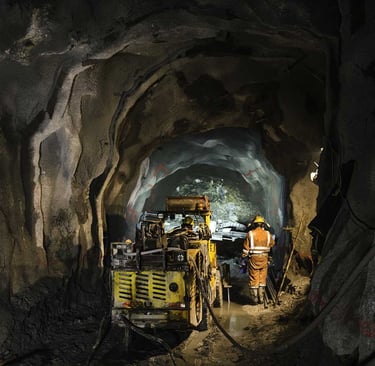
What Is a Type W Round 4/C Mold-Cured Jacket 2000 Volt Cable? (Featured Snippet)
A Type W Round 4/C mold-cured jacket 2000 volt cable is a flexible, round trailing cable designed for powering AC-driven mobile mining equipment at voltages up to 2,000 volts. It features flexible tinned copper conductors, 90°C ethylene-propylene rubber (EPR) insulation, and a mold-cured chlorinated polyethylene (CPE) outer jacket. The round construction provides superior torsional resistance and ease of reeling compared to flat cable designs. The cable is listed by MSHA and the Pennsylvania DEP as flame-resistant and meets ICEA S-75-381 / NEMA WC-58 standards, making it suitable for deployment in underground coal and hard-rock mining environments where bare grounding conductors are not required.
Cable Construction and Materials
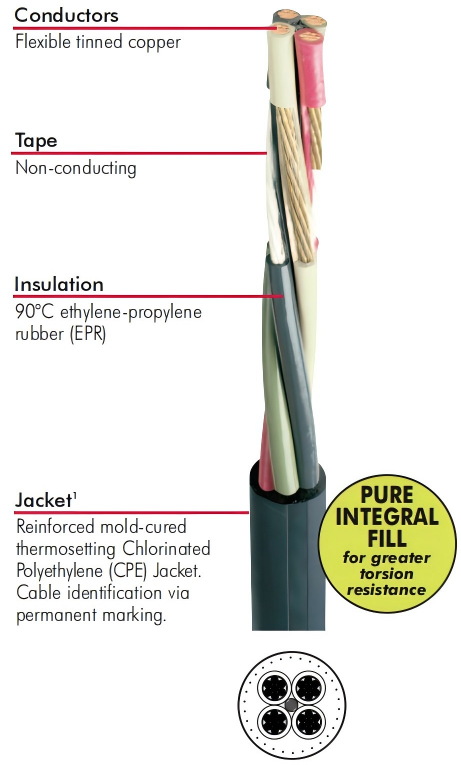
Understanding the construction of a Type W Round 4/C cable is essential for appreciating why it performs reliably in harsh mining environments. Every layer of the cable serves a specific function, and the combination of these materials determines its service life, flexibility, and safety performance.
Conductors
The current-carrying conductors in a Type W Round 4/C cable consist of flexible tinned copper strands. The fine stranding of the copper is a deliberate design choice: it dramatically increases the number of flex cycles the cable can endure before fatigue failure begins to occur. In a continuous miner application, for example, the trailing cable may be reeled and unreeled dozens of times per shift, and each cycle places mechanical stress on the conductor. Fine-stranded tinned copper is robust enough to withstand this punishment over a long service life.
The tinning of the copper strands serves a dual purpose. First, it protects against corrosion from the moisture and acidic water that are common in underground mine environments. Second, it improves solderability and termination quality when cable ends are prepared and connected to mining equipment.
Non-Conducting Tape Layer
Beneath the outer jacket and around the insulated conductors, a non-conducting tape layer is applied. This layer serves as a separator between the insulated conductors and the jacket, making it easier to strip the cable at termination points without damaging the insulation. It also provides a degree of mechanical protection and helps maintain the round cross-section of the cable during reeling and flexing.
Insulation
Each conductor is individually insulated with 90°C ethylene-propylene rubber, universally referred to as EPR insulation. EPR is the insulation of choice for mining trailing cables for several compelling reasons.
EPR offers excellent dielectric properties across a broad voltage range, maintaining reliable electrical performance at 2,000 volts even under conditions of elevated temperature and moisture ingress. Its thermal stability at a maximum continuous conductor temperature of 90°C means the cable can handle the heat generated during periods of sustained high current draw — a common scenario when a continuous miner is operating at full load.
Equally important in underground environments is EPR's resistance to water absorption. Unlike PVC or polyethylene-based insulations, EPR does not appreciably absorb water over time, which is critical in mines where cables may lie in pools of standing water for extended periods. EPR also retains its flexibility at low temperatures, reducing the risk of cracking or damage in cold mine portals and during winter surface handling.
Jacket
The outer jacket of a Type W Round 4/C cable is made from reinforced mold-cured thermosetting chlorinated polyethylene, commonly known as CPE. This is not an extruded jacket applied as a simple coating; it is a mold-cured compound, meaning it is processed under heat and pressure in a mold to achieve a higher degree of crosslinking and toughness than conventional extrusion-applied jackets.
CPE is selected for mining trailing cables because of its outstanding resistance to abrasion, oil, ozone, and flame. In a working section of an underground coal mine, cables are dragged, stepped on, run over by shuttle car wheels, and constantly abraded against rib and floor surfaces. A mold-cured CPE jacket is built to resist this punishment and maintain its integrity even after prolonged mechanical abuse.
The jacket also carries permanent identification markings, typically applied during the mold-cure process, that allow the cable's type, voltage rating, and certification markings to be clearly read throughout the cable's operational life.
Round Design Advantages
The round cross-section of the Type W 4/C cable is not merely a cosmetic feature — it confers significant engineering advantages over flat cable designs in many mining applications. A round cable distributes torsional stress more evenly during reeling and unreeling, reducing the likelihood of internal conductor damage from twisting. It tracks more smoothly on cable reels and in cable handlers, reducing wear at the points where the cable contacts guide rollers and sheaves.
Round cables are also easier to handle in confined spaces and during termination work. When a mine electrician is working in the cramped entry of a continuous miner, being able to easily rotate and position the cable simplifies connection procedures and reduces the risk of wiring errors.
Primary Applications in Underground Mining
The Type W Round 4/C mold-cured jacket 2000 volt cable is specifically engineered for AC-powered mobile mining equipment — machines that must be continuously repositioned as mining advances, with their power supply trailing behind them on a cable reel.
Continuous Miners
Continuous miners are the primary production machines in room-and-pillar underground coal mining. A standard continuous miner draws significant power — often in the range of 300 to 600 horsepower — to drive its cutter head, gathering arms, and conveyor chain simultaneously. The trailing cable connecting the miner to the section power center must handle this load reliably while being continuously reeled and unreeled with every cut cycle.
At the Jim Walter Resources No. 7 Mine in Alabama, for example, longwall and continuous miner sections historically operated in conditions where trailing cables were exposed to significant methane concentrations, high humidity, and abrasive coal dust. Cable selection in environments like this is not a procurement decision made lightly — flame-resistance certification and robust jacket materials are minimum requirements, not optional upgrades.
Shuttle Cars
AC-powered shuttle cars transport run-of-mine coal from the continuous miner to the section conveyor belt. Because shuttle cars travel back and forth repeatedly along the entry, their trailing cables experience a high number of flex cycles per shift. The round construction of the Type W cable is particularly advantageous here, as it minimizes torsional stress during the repeated back-and-forth travel pattern.
Drills, Cutters, and Loading Machines
Beyond continuous miners and shuttle cars, the Type W Round 4/C cable is also well-suited to roof bolters, longhole drills, mobile feeder-breakers, and loading machines. These are all AC-powered machines that operate in dynamic environments where the cable must flex regularly without failure.
In hard-rock mining environments — gold, copper, potash, and trona operations — similar equipment is deployed, and the combination of high humidity, abrasive rock dust, and repeated cable movement creates demand for the same performance characteristics that the Type W Round 4/C cable provides.
Suitability Notes
This cable type is specifically designed for applications where bare grounding conductors are not required. Where regulations or equipment specifications mandate a bare ground, alternative cable constructions should be considered. Always consult the applicable electrical code, the equipment manufacturer's requirements, and qualified mining electrical engineering personnel before finalizing cable selection.
Performance and Operational Benefits
The value proposition of a Type W Round 4/C mold-cured jacket cable extends well beyond its specification sheet. In a mining operation, cable performance directly affects production efficiency, maintenance costs, and worker safety.
Flex Life and Abrasion Resistance
Fine-stranded tinned copper conductors combined with EPR insulation and a mold-cured CPE jacket create a cable with an exceptional balance of flexibility and mechanical toughness. Cables that fail prematurely — through jacket cuts, insulation damage, or conductor breakage — require unscheduled replacement that can idle a production section for several hours. At a large underground coal operation, the lost production value from a single cable change during a shift can easily reach tens of thousands of dollars.
At the Emerald Mine in Greene County, Pennsylvania — a longwall coal operation that operated until 2014 — section electrical personnel reported that cable service life was one of the most watched metrics in their maintenance program. Cables that survived multiple sets of cuts without requiring splicing or replacement were credited with meaningful reductions in their electrical maintenance budget.
Mold-Cured Jacket Technology
The mold-curing process used to produce the CPE jacket results in a product with superior cross-link density compared to conventional extruded jackets. This means greater resistance to mechanical damage, better retention of properties over time at elevated temperatures, and improved performance in the presence of oils, hydraulic fluids, and mine water.
Mold-cured jackets also hold cable identification markings more durably than surface-printed markings on extruded jackets. In a mine environment where cables become coated with coal dust, rock dust, and mud, being able to clean the cable and still read the type marking is an important practical advantage for compliance purposes.
Round Configuration for Reeling and Handling
The round profile of the Type W 4/C cable ensures that it spools cleanly and evenly on cable reels. Flat cables, while advantageous in certain longwall applications, can develop twist and kinking problems on standard drum reels. The round cable's symmetrical profile means that any direction of lay on the reel is equivalent, reducing the risk of damage during reeling operations.
In potash mines in Saskatchewan, for example, where large autonomous and semi-autonomous equipment has been increasingly deployed, cable management systems are engineered around round cable profiles precisely because of their predictable behavior on motorized reels.
Safety Features and Cost of Ownership
The combination of flame-resistance, robust insulation, and durable jacket materials in the Type W Round 4/C cable contributes directly to mine safety by reducing the risk of cable-initiated fires and electrical incidents. This translates to a lower total cost of ownership, measured not just in direct cable replacement costs but in avoided production losses, reduced maintenance labor, and mitigation of regulatory risk.
Safety Standards and Approvals
In underground mining, cables are not a commodity to be purchased on price alone. Regulatory compliance is mandatory, and the approvals carried by a Type W Round 4/C cable are not marketing checkboxes — they represent rigorous testing requirements that must be met before the cable can legally be deployed in U.S. underground mines.
MSHA and Pennsylvania DEP Flame-Resistance Listing
The most important approval for underground coal mining in the United States is the MSHA flame-resistance listing. The Mine Safety and Health Administration requires that trailing cables used in underground coal mines meet its flame-resistance standards, as codified in Title 30 of the Code of Federal Regulations. Type W Round 4/C cables carry an MSHA flame-resistance listing (marked P-7K-184-MSHA on the cable jacket), confirming that the cable has passed the required vertical flame test and is approved for use in the underground coal mining environment.
In addition, the Pennsylvania Department of Environmental Protection (DEP) maintains its own list of approved mining equipment and cables for mines operating under its jurisdiction. Cables listed under both MSHA and Pennsylvania DEP approval meet the requirements for deployment in one of the most heavily regulated coal mining environments in the United States.
ICEA S-75-381 / NEMA WC-58
The performance specifications for the Type W Round 4/C cable are governed by ICEA S-75-381, the standard published by the Insulated Cable Engineers Association for portable and trailing cables for mining and industrial use, jointly published with NEMA as WC-58. This standard covers conductor construction, insulation thickness, jacket thickness, and electrical performance requirements. Cables manufactured to this standard provide a consistent and reliable baseline of performance that procurement engineers and mine electrical personnel can rely on.
ASTM Standards
Material testing for the conductors, insulation, and jacket compounds in the Type W Round 4/C cable is conducted in accordance with relevant ASTM standards. ASTM B-172 governs the tinned copper rope-lay conductor construction. Insulation and jacket compound testing follows applicable ASTM methods for physical and aging performance.
CSA Ratings
For mining operations in Canada — including the extensive potash, gold, nickel, and base metal operations in Saskatchewan, Ontario, and Quebec — the cable may also carry Canadian Standards Association (CSA) ratings covering cold temperature performance and flame testing requirements. Cold temperature ratings are particularly relevant in Canadian mine portals and surface handling environments, where cables may be exposed to sub-zero temperatures during winter months.
Why These Approvals Matter
These approvals are not bureaucratic formalities. MSHA and DEP inspectors conduct regular inspections of underground mines and will issue citations for the use of non-approved or improperly rated cables. Beyond the regulatory risk, using a cable that lacks proper flame-resistance testing in an underground mine creates a genuine fire hazard in an environment where the consequences of a cable fire can be catastrophic.
How to Choose the Right Type W Round 4/C Cable
Selecting the appropriate Type W Round 4/C cable for a specific application involves more than specifying the correct voltage rating. Several additional parameters must be matched to the application requirements.
Conductor Size
Conductor size must be selected to carry the maximum continuous current of the connected equipment without exceeding the rated conductor temperature. This requires knowledge of the equipment's full-load current draw, the cable length between the power center and the equipment, and the number of cable reeling cycles per shift. Undersized conductors run hot and degrade insulation prematurely; oversized conductors add unnecessary weight and cost. ICEA S-75-381 and the National Electrical Code provide ampacity tables for trailing cables that should be used in conjunction with the equipment manufacturer's cable requirements.
Voltage Rating
The 2,000 volt rating of the Type W Round 4/C cable is appropriate for the majority of AC underground mining equipment deployed on medium-voltage section power systems. Where equipment operates at higher voltages — such as longwall power systems at 4,160 volts or above — a different cable class is required.
Jacket Color Options
Type W Round 4/C cables are available in different jacket colors, most commonly black. Color coding can be used as an additional identification tool in operations where multiple cable types are in use simultaneously. Always verify color availability with the cable supplier for the specific conductor size and configuration required.
Environmental Conditions
While the Type W Round 4/C cable is designed for wet, abrasive, and high-flex environments, extreme conditions may require additional considerations. In mines with unusually aggressive water chemistry — high acidity or alkalinity, or high concentrations of dissolved minerals — it is worth consulting with a cable specialist about jacket compound compatibility. In extremely cold environments, cold-rated CSA-approved variants may be more appropriate.
Flat vs. Round Configuration
Flat trailing cables are commonly used on longwall shearers and face equipment, where the flat profile allows the cable to lay flat in the cable handler and accommodates the specific geometry of longwall cable management systems. For the vast majority of other mobile mining equipment — continuous miners, shuttle cars, bolters, and drills — the round configuration of the Type W 4/C cable is the preferred choice for the reasons outlined above.
Installation and Maintenance Best Practices
Proper installation of trailing cables begins with ensuring that the cable reel capacity matches the cable length and diameter, and that the reel motor torque is appropriate for the cable weight. During installation, the cable should not be dragged over sharp edges or kinked, and the minimum bend radius specified by the manufacturer must be respected at all connection points.
In service, regular visual inspection of the cable jacket for cuts, abrasion, oil contamination, and burn marks is essential. Any jacket damage that exposes the insulation or reaches within 3 mm of an insulated conductor should be treated as a cause for immediate cable replacement or professional splicing. All splices should be performed by qualified mine electrical personnel using approved splicing kits, and splice locations should be recorded in the section cable maintenance log.
Real-World Mining Application Case Studies
Case Study 1: Room-and-Pillar Coal Mining in Central Appalachia
A mid-sized underground coal producer operating multiple continuous miner sections in Logan County, West Virginia evaluated trailing cable performance across three years of production data. Their sections ran two-entry development patterns, with continuous miners cutting entries at depths of up to 800 feet. Trailing cables were subjected to approximately 18 to 22 reel cycles per shift, operating in seam heights of 48 to 60 inches with significant water inflow from the overlying strata.
The operation found that cables with mold-cured CPE jackets consistently outlasted those with conventional extruded jackets by a factor of approximately 1.6 to 1 in terms of cuts per cable before replacement was required. The difference was attributed primarily to the superior abrasion resistance of the mold-cured jacket as cables were dragged over the ribside during mining cycles. The reduction in cable change-outs translated to a measurable improvement in section production efficiency, as cable replacements typically required a two-hour section idle time.
Case Study 2: Potash Mining in Saskatchewan
A major potash producer operating a solution mining and conventional mining complex in Saskatchewan deployed round trailing cables on its continuous miners and shuttle cars operating in ore bodies at depths of approximately 1,000 meters. At these depths, mine temperatures are relatively stable but humidity is high, and the potash ore itself — while non-gassy compared to coal — creates a highly abrasive dust environment.
The operation's maintenance team noted that the round cable profile was critical to the reliable operation of their motorized cable reels, which used tension-sensing systems to automatically reel and pay out cable as the continuous miner advanced and retreated. Flat cables tested in this application showed a tendency to develop twist that caused jam events at the reel, while round cables of the same conductor size and length operated without such incidents over an extended trial period.
Case Study 3: Hard-Rock Development in Northern Ontario
A gold mining operation in the Timmins camp of Northern Ontario was expanding its underground workings using twin-boom development drills and load-haul-dump units. The electrical contractor specified Type W Round 4/C cables for the drill jumbos and auxiliary ventilation fans deployed on the active development headings, which operated in wet ground conditions with significant water inflow from drill holes and from the overall mine water table.
In a review conducted after 18 months of service, the electrical maintenance supervisor reported no cable-related downtime incidents attributable to insulation failure or jacket damage in the development section. He attributed this to the EPR insulation's water resistance and the CPE jacket's resistance to the mechanical damage that would otherwise have been caused by cables being dragged across the rough, blasted rock surfaces of the development headings.
Frequently Asked Questions
What does "Type W Round 4/C" mean? Type W is a designation for a class of portable and trailing cables designed for use with mobile industrial and mining equipment. "Round" refers to the overall circular cross-section of the finished cable, as opposed to flat trailing cable configurations. "4/C" means the cable contains four conductors — typically three power-carrying conductors and one ground conductor. The combination of these designations identifies a cable engineered for the power distribution and grounding requirements of AC-powered mobile mining machinery.
Why is EPR insulation preferred over PVC in mining cables? Ethylene-propylene rubber (EPR) insulation offers several properties that make it superior to PVC for underground mining applications. EPR has significantly better resistance to water absorption, which is critical in mines where cables may lie in standing water for extended periods. It retains its flexibility at low temperatures, resisting cracking during cold-weather surface handling. It also offers better thermal stability at the 90°C conductor temperature rating required for mining trailing cables. PVC insulation, while adequate in dry industrial environments, would absorb water and degrade in the conditions typical of an active underground mine.
Why is a mold-cured CPE jacket superior to an extruded jacket? The mold-curing process subjects the chlorinated polyethylene jacket compound to elevated temperature and pressure in a closed mold, producing a higher degree of crosslinking than conventional extrusion. This results in a jacket with superior abrasion resistance, better retention of mechanical properties at elevated temperatures, and greater resistance to oil, ozone, and mine water. The mold-curing process also produces permanent identification markings that remain legible throughout the cable's service life, which is important for regulatory compliance inspections.
Can a Type W Round 4/C 2000 volt cable be used in submerged or wet conditions? This cable is designed for use in the wet, high-humidity environments typical of underground mines, including situations where the cable may lie in pools of water during operation. The EPR insulation and CPE jacket provide good resistance to water ingress. However, "submerged" operation in the sense of permanent immersion in large bodies of water is not the intended application for this cable type. If your application involves sustained submersion, consult a qualified cable engineer and review the applicable standards for submarine or submersible cable constructions.
What is the maximum continuous operating temperature of this cable? The maximum recommended continuous conductor temperature is 90°C. This temperature limit is set by the EPR insulation system and is the basis for the cable's ampacity ratings as published in ICEA S-75-381. Operating the cable at sustained temperatures above this limit will accelerate insulation aging and shorten the cable's service life. Proper cable sizing and periodic ampacity verification are the primary tools for ensuring the cable remains within its thermal limits in service.
How does the round design improve performance over flat cables? Flat cables offer advantages in specific longwall shearer and face-equipment applications where the cable must lay flat in a dedicated cable handler. However, in the majority of mobile mining equipment applications — continuous miners, shuttle cars, drills, and bolters — the round cable configuration provides important performance advantages. Round cables distribute torsional stress more evenly when reeled and unreeled, reducing internal conductor fatigue. They track more smoothly and reliably on standard drum-type cable reels. They are also easier to handle, strip, and terminate in the confined working spaces typical of underground mining environments.
What standards govern the manufacture and testing of Type W Round 4/C cables? The primary standard is ICEA S-75-381 / NEMA WC-58, which covers portable and trailing cables for mining and similar applications. Conductor construction follows ASTM B-172 for tinned copper rope-lay conductors. Flame-resistance testing and listing for underground coal mine use is governed by MSHA regulations under 30 CFR. Cables approved for Canadian operations are tested to CSA standards for cold-temperature performance and flame resistance. These standards collectively define a rigorous performance baseline that ensures cables are fit for purpose before they are installed in a working mine.
When should I consult a mining cable specialist instead of relying on a standard specification? Always consult a qualified mining cable specialist when: the cable must traverse an unusually long distance between the power center and the equipment; the mine water has aggressive chemical properties; the equipment has unusual or high duty-cycle current demand; you are deploying cable on a new equipment type or in a new section geometry; or when regulations in your jurisdiction require specific cable approvals that differ from standard North American certifications. A specialist can review your specific application, cross-check it against applicable regulations, and recommend the correct cable size and configuration to maximize performance and compliance.
Conclusion
The Type W Round 4/C mold-cured jacket 2000 volt cable represents decades of engineering refinement applied to one of the most demanding electrical applications in heavy industry. Its combination of fine-stranded tinned copper conductors, 90°C EPR insulation, and mold-cured CPE jacket creates a cable that delivers reliable performance in the wet, abrasive, high-flex environments of underground mining — whether in a coal seam in Appalachia, a potash mine in Saskatchewan, or a gold development heading in northern Ontario.
The cable's MSHA and Pennsylvania DEP flame-resistance listings, compliance with ICEA S-75-381 / NEMA WC-58, and optional CSA ratings for cold-temperature performance ensure that it meets the regulatory requirements of the major underground mining jurisdictions in North America. Its round cross-section provides practical handling and reeling advantages that translate to reduced downtime and lower maintenance costs over the cable's service life.
For operations looking to reduce cable-related downtime and improve compliance posture in their underground sections, the Type W Round 4/C cable merits serious evaluation. Consult a qualified mining cable specialist to confirm the correct conductor sizing, cable length, and configuration for your specific equipment and application before making a procurement decision.
Related cable types worth considering for other underground mining applications include Type G-GC portable power cables, SHD-GC shielded trailing cables for higher-voltage longwall equipment, and specialized longwall shearer cables designed for face-equipment duty cycles.
Port crane cables | Mining cables | Reeling cables | Trailing cables | Festoon cables | Heavy-duty power cables | Medium voltage cables | Offshore crane cables | Underground mining cables | Dragline cables | Shearer cables | Container handling cables | STS crane cables | RTG cables | Mobile equipment cables | Armored cables | Flexible power cables | VFD cables | Submersible cables | Cold resistant cables | Abrasion resistant cables | Flame retardant cables | Marine environment cables | Opencast mining | Underground operations
© 2006 All rights reserved.
[INDUSTRIAL_CABLES]
INDUSTRIAL GRADE CABLE SYSTEMS | PORT & MINING SOLUTIONS
TEL: +86 153 7530 2641 |MAIL: hongjing.Wang@feichuncables.com