What Is a 2300V Continuous Miner Cable? Applications, Construction, Ampacity & Selection Guide for Mining Operations
Discover 2300V continuous miner cables designed for high-voltage underground mining equipment. Learn about construction, ampacity, temperature ratings, and key selection factors for safe and reliable power distribution.
hongjing.Wang@Feichun
4/13/202612 min read
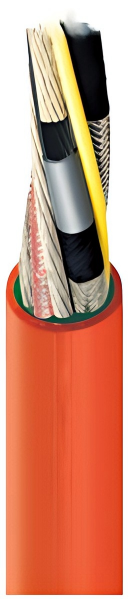
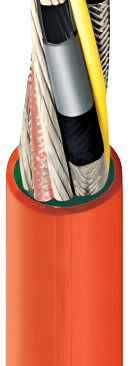
Quick Answer (Featured Snippet): A 2300V continuous miner cable is a heavy-duty, flexible portable power cable engineered specifically for underground mining circuits that exceed 2,000 volts. It features extra-heavy-duty jacketing, flexible stranded copper conductors, metallic shielding over each power conductor, and a dedicated ground check conductor. Rated for a maximum continuous conductor temperature of 90°C, these cables are designed to power continuous miners in coal and hard-rock operations where reliability, mechanical toughness, and electrical safety are non-negotiable.
What Is a 2300V Continuous Miner Cable?
In underground mining, power demands don't follow neat, textbook parameters. When a continuous miner tears through a coal seam or a hard-rock face, it consumes enormous amounts of electrical energy — often in circuits operating above 2,000 volts. Standard 2,000V portable mining cables are not certified for these higher-voltage systems. That's where 2300V continuous miner cables come in.
A 2300V continuous miner cable is a specialized, extra-heavy-duty orange-and-green jacketed portable power cable designed and listed specifically for continuous miner circuits exceeding 2,000 volts. The cable integrates flexible stranded copper conductors, individual metallic shielding over each conductor, and a ground check monitoring system — all wrapped in a robust, flame-resistant jacket built to survive repeated flexing, dragging, and exposure to mine environments.
This cable is not simply a "higher-rated" version of a standard trailing cable. It is a purpose-engineered product that addresses the unique electrical, mechanical, and regulatory demands of high-voltage continuous mining equipment.
Key Applications of 2300V Continuous Miner Cable
Powering Continuous Mining Machines
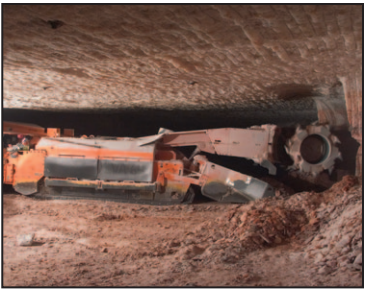
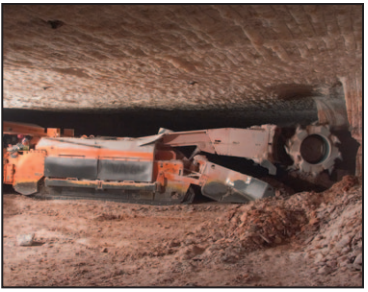
The primary application is exactly what the name says: supplying power to continuous miners operating on circuits that exceed 2,000 volts. These massive machines — which cut, gather, and convey rock or coal in a single continuous process — require substantial, uninterrupted power delivery. A cable failure mid-cycle doesn't just mean downtime; it can trigger dangerous electrical events in a confined underground space.
Mobile and Trailing Cable Systems
Because continuous miners move constantly as they advance through a heading, the cable supplying them must trail behind and flex repeatedly without degrading. 2300V cables are engineered for exactly this dynamic. They are built to be coiled, dragged, and re-deployed on every shift without losing electrical integrity or mechanical resilience.
High-Voltage Underground Power Distribution
Beyond the continuous miner itself, these cables serve as critical links in the broader underground high-voltage distribution chain — connecting substations, power centers, and mining equipment where voltage levels push above the 2kV threshold that governs standard trailing cable design.
Wet and Mechanically Demanding Conditions
Underground mines are routinely wet, dusty, and abrasive. Roof ribs collapse, equipment runs over cables, and water pools in low areas. 2300V continuous miner cables are designed to perform in all of these conditions — a requirement that shapes every aspect of their construction.
Construction and Design Features
Extra-Heavy-Duty Jacket
The outer jacket of a 2300V continuous miner cable is typically a distinctive orange-and-green colored extra-heavy-duty thermoset material. This color combination is not arbitrary: it serves as a visual signal to mine personnel that the cable is rated for high-voltage continuous miner use, distinguishing it from standard 2kV trailing cables in the same working area.
The jacket resists abrasion from rock, coal fines, and equipment contact. It also withstands exposure to hydraulic oils, cutting fluids, and water — substances that are present on virtually every continuous mining section. The jacket is flame-resistant, a mandatory requirement for any cable used in underground coal mines.
Jacket thickness increases with conductor size. For the largest conductor sizes, jacket walls are substantially thicker, providing the mechanical protection needed for cables that carry the heaviest loads in the most demanding positions.
Conductor Design
The power conductors inside a 2300V continuous miner cable are constructed from flexible, finely stranded copper. High strand counts — achieved through rope-lay stranding — give the cable the bending flexibility it needs to trail behind moving equipment without inducing fatigue damage in the individual wires.
This high degree of flexibility is paired with 90°C-rated ethylene-propylene rubber (EPR) insulation over each conductor. EPR is prized in mining cable applications for its combination of electrical insulating performance, heat resistance, moisture resistance, and flexibility in cold conditions. Each insulated conductor is then individually shielded.
The insulation shielding system — typically a tinned copper and color-coded braid — serves a dual purpose: it provides a defined electrical shielding boundary around each phase conductor, and it allows phase identification in the field, which is critical for safe splicing and termination.
A semi-conducting strand shield applied between the conductor and the EPR insulation smooths the electrical stress at the conductor surface, reducing the risk of insulation damage from concentrated electrical stress — a concern that becomes significant at voltages above 2,000V.
Ground Check Conductor
Every 2300V continuous miner cable includes a dedicated ground check conductor, typically sized at 8 AWG for cable sizes from 6 AWG through 4/0 AWG power conductors. For larger cable sizes, a 6 AWG ground check conductor is used.
The ground check conductor is insulated with yellow polypropylene insulation, making it visually distinct from the ground wires. Its purpose is to provide a continuous monitoring circuit that allows the mine's ground fault detection system to verify the integrity of the protective ground path in real time. If the ground check circuit is broken — indicating a potential loss of grounding protection — the system can de-energize the circuit before a dangerous ground fault develops.
This is not an optional feature in high-voltage continuous miner circuits. It is a safety-critical design element mandated by mining electrical safety regulations.
Electrical Performance and Ratings
Voltage Rating
The 2300V rating refers to the circuit voltage for which the cable is specifically listed and tested. While the cable is physically constructed similarly to a 5kV SHD-GC cable, its listing and marking specifically address the continuous miner application — circuits that operate above 2,000V but within a range addressed by mining safety regulations that require specific cable design and listing for these higher-voltage applications.
Temperature Rating
The maximum continuous conductor temperature for 2300V continuous miner cables is 90°C. This is the baseline temperature used to calculate ampacity ratings. In practice, conductor temperatures depend on the load being carried, the ambient temperature of the mine air, and whether the cable is coiled on a reel or fully extended.
When cables are wound on reels — even partially — heat dissipation is significantly reduced. A cable carrying full rated current while partially coiled on a reel can see conductor temperatures far exceeding the 90°C design limit if correction factors are not applied. Reel correction factors must always be used when cables are operated in this configuration.
Ampacity Considerations
Published ampacity values for 2300V continuous miner cables are calculated under specific conditions: continuous duty at 90°C conductor temperature in a 40°C ambient environment. These are conservative reference values, not operating targets.
Real-world ampacity is modified by ambient temperature, installation configuration, and the degree to which the cable can dissipate heat. Correction factors — published in industry standards — allow engineers to adjust the published ampacity for actual operating conditions.
Undersizing conductor capacity is one of the most common and costly mistakes in mining cable selection. A cable that is consistently operated near or above its thermal limit will suffer accelerated insulation degradation, leading to premature failure, unplanned downtime, and potential safety incidents.
Mechanical and Dimensional Characteristics
The outer diameter tolerance for 2300V continuous miner cables is typically expressed as a percentage of the nominal outside diameter — often plus 8% and minus 5%. This tolerance accounts for the variability inherent in the mold-cured jacketing process.
Cable outer diameters increase substantially with conductor size. A 6 AWG power conductor cable is a much more manageable size than a 4/0 AWG cable, which may measure over 2.5 inches in outer diameter. Larger cables are significantly heavier — some exceed 5,000 pounds per 1,000 feet — which affects handling, reel capacity, and the physical demands placed on the cable management system.
Flexibility is a key performance parameter. Cables that will be trailed behind moving equipment must bend repeatedly around the minimum bend radius without cracking the jacket or fatiguing the conductors. The high strand counts in continuous miner cables are designed specifically to enable this performance over the service life of the cable.
Why Ground Check Is Critical in Mining Cables
Underground mining environments concentrate electrical energy, personnel, water, and conductive materials in a small, enclosed space. This combination creates the potential for electrical hazards that are more severe than those found in most surface electrical installations.
The ground check system in a 2300V continuous miner cable provides the electrical system with a real-time indication of grounding continuity. In normal operation, a small monitoring current flows through the ground check conductor. If the cable is cut, severely damaged, or if a connection is lost, the monitoring circuit is interrupted and the electrical system can trip the circuit before a personnel safety hazard develops.
This is particularly important in continuous miner applications because the cable is in constant motion, increasing the probability of mechanical damage to the cable. The ground check system provides a layer of protection that static, fixed installations do not require.
Compliance with ground check requirements is mandated by mining safety authorities in most underground coal mining jurisdictions. Cables without a functioning ground check conductor cannot be legally operated in high-voltage continuous miner circuits.
Advantages of 2300V Continuous Miner Cable
The principal advantages of purpose-built 2300V continuous miner cables over generic high-voltage cables are durability, safety, and regulatory compliance.
Durability comes from the specific combination of extra-heavy-duty jacketing, flexible conductor construction, and robust insulation systems designed for the mechanical abuse of continuous mining applications. These cables are engineered to flex, drag, and survive in environments where standard cables would fail within days.
Safety is built into the design through the grounding system, the metallic conductor shielding, and the ground check monitoring circuit. These features work together to reduce the risk of electrical injury in the event of cable damage or insulation failure.
Regulatory compliance is non-negotiable. Cables used in continuous miner circuits exceeding 2,000V must carry specific listing markings — typically the Mine Safety and Health Administration (MSHA) acceptance marking. Operating unlisted cables in these circuits puts operations at legal and safety risk.
Long service life under demanding conditions reduces cable replacement frequency, lowering the cost per ton of material mined — a metric that mining operations track closely as a measure of cable performance.
Real-World Mining Application Example
In a longwall coal operation in the southern Appalachian coalfields, a mining section was experiencing repeated cable failures on its continuous miner trailing cable. The cables were failing at splices within weeks of installation, causing multiple unplanned maintenance shifts per month.
An investigation found that the operation had been using 2,000V-rated trailing cables — not 2300V-listed cables — on a circuit operating at 2,300 volts. The electrical stress at the splice joints was exceeding the design capability of the lower-rated cable, leading to accelerated insulation breakdown at the splice interfaces.
After switching to properly listed 2300V cables with compatible splice kits rated for the operating voltage, splice life extended dramatically. The operation eliminated the cable-related maintenance shifts entirely within two production months, recovering significant production time. This example illustrates why voltage rating is not a minor specification detail — it is a fundamental design parameter that determines whether a cable can perform reliably in its intended circuit.
In a separate case at a hard-rock operation in Nevada, a mine engineer reviewed their trailing cable reel arrangement and discovered that their 2300V cables were being operated with three layers wound on the reel during tramming moves. Applying the appropriate reel correction factors — which reduce allowable ampacity to 45% of the free-air value for three wound layers — revealed that the cables were being thermally overloaded every time the miner tramped. Switching to a larger conductor size resolved the thermal issue without requiring any changes to the electrical system.
How to Select the Right 2300V Mining Cable
Key Selection Factors
Selecting the correct 2300V continuous miner cable begins with the electrical requirements of the circuit. The operating voltage must match the cable's listing — a 2300V-listed cable for circuits exceeding 2,000V, not a standard 2kV trailing cable.
Conductor size is driven by the connected load. Calculate the full-load current of the mining machine and apply appropriate correction factors for ambient temperature and installation configuration — particularly if the cable will be operated on a reel. Select the conductor size that keeps the operating current within the corrected ampacity limit with an appropriate safety margin.
Environmental conditions drive jacket selection. In highly abrasive formations or areas with heavy equipment traffic over cables, the additional abrasion resistance of advanced jacket materials may justify their higher cost through extended cable life.
Application-Specific Considerations
The frequency and severity of bending — how often the cable is moved, how tightly it bends during repositioning, how much of it is trailed versus coiled — should guide conductor strand count selection. Operations with aggressive cable management demands may benefit from cables with higher strand counts and more flexible conductor constructions.
The installation method matters as well. A cable that spends most of its working life trailing freely behind a miner has different requirements than one that is frequently reeled and unreeled. Reeling applications place cyclic mechanical stress on the cable at the point where it feeds onto and off the reel, and this must be considered in the cable construction selection.
Common Mistakes to Avoid When Choosing Mining Cables
Undersizing conductor capacity is the most common error. Engineers sometimes select conductor size based on published free-air ampacity without applying corrections for ambient temperature or reel configuration. The result is a cable that runs hot, degrades rapidly, and fails well before its expected service life.
Ignoring environmental factors leads to jacket failures. A cable with a standard jacket in a highly abrasive heading, or in an area where equipment repeatedly runs over the cable, will fail far sooner than a properly selected heavy-duty or enhanced-jacket cable.
Overlooking ground check requirements creates regulatory and safety problems. Every 2300V continuous miner cable must have a functioning ground check conductor, and the circuit must be configured to monitor it. Cables that arrive on-site without proper ground check sizing for the application cannot be placed in service.
Misjudging flexibility needs can result in conductor fatigue failures. A cable specified for a relatively static installation may not have the strand count or jacket flexibility to survive in a dynamic trailing application. Match the cable construction to how it will actually be used, not how you hope it will be used.
Frequently Asked Questions
What is the difference between 2000V and 2300V mining cables?
A 2000V mining cable is listed for circuits up to 2,000 volts and is the standard rating for most trailing cables used on underground mining equipment. A 2300V cable is a specifically listed product designed for continuous miner circuits that operate above 2,000 volts but within a range addressed by mining safety regulations for these higher-voltage applications. The 2300V cable typically features heavier insulation wall thickness, individual conductor shielding, a semi-conducting strand shield, and a ground check conductor — design elements specifically required for the higher-voltage, higher-safety-risk continuous miner application. Using a 2000V cable in a circuit operating above 2,000V is a regulatory violation and a serious safety hazard.
Why is a ground check conductor required?
The ground check conductor is the electrical system's way of knowing whether the protective ground path in the cable is intact. In underground high-voltage circuits, the ground check monitoring system continuously tests the ground circuit. If the cable is damaged and the ground path is broken, the monitoring system detects the open circuit and can de-energize the equipment before a personnel safety event occurs. Mining safety regulations require ground check monitoring in continuous miner circuits exceeding 2,000 volts because the consequences of an undetected ground fault in these circuits can be fatal.
Can these cables be used in wet or submerged conditions?
Yes, with appropriate design selection. Many 2300V continuous miner cables are designed to be suitable for use in wet locations, and some constructions are specifically listed for shallow water submersion. The EPR insulation and the thermoset jacket provide good moisture resistance. However, "wet location" capability and "submersion" capability are distinct ratings — not all cables rated for wet locations are rated for submersion. Confirm the specific listing and ratings for the intended application before deploying cables in areas where they may be partially submerged.
How long does a continuous miner cable typically last?
Service life varies enormously depending on operating conditions, cable management practices, and how well the cable is matched to its application. In operations with good cable management discipline — where cables are not repeatedly run over by equipment, are properly spliced when damaged, and are deployed with correct bend radius discipline — service life of a year or more per cable is achievable. In operations with poor cable handling practices, service life can be measured in weeks. The Mine-Cable Safe principle that many cable engineers advocate reflects the reality that most premature cable failures are preventable through better handling and deployment practices.
What MSHA markings should a 2300V continuous miner cable carry?
A properly listed 2300V continuous miner cable should carry an MSHA acceptance marking indicating it has been accepted as flame resistant by the Mine Safety and Health Administration. The specific marking format includes a "P-" prefix followed by the acceptance number. Cables used in underground coal mining circuits exceeding 2,000 volts must carry this listing to be legally operated in U.S. underground coal mines. Always verify that the cable you are purchasing carries the appropriate acceptance marking for your application.
Conclusion
A 2300V continuous miner cable is a purpose-engineered solution to a specific and demanding problem: delivering reliable, safe electrical power to high-voltage continuous mining equipment operating in some of the harshest industrial environments on earth.
The key performance attributes — extra-heavy-duty jacketing, flexible stranded conductors, individual conductor shielding, and a ground check monitoring system — are not marketing features. They are engineering responses to the real hazards and mechanical demands of underground continuous mining operations.
Selecting the right cable begins with understanding the circuit voltage, load current, environmental conditions, and cable management practices of your specific application. Applying appropriate correction factors, respecting installation configuration requirements, and ensuring the cable carries the correct safety listings are all essential steps in making a selection that will deliver safe, reliable performance.
In mining, cable failures are not just a maintenance nuisance — they are a production event and, potentially, a safety event. Getting the cable selection right the first time is always the most economical and the safest choice.
For technical specifications, conductor sizing assistance, and application-specific cable selection support, contact a qualified mining cable engineer or your cable supplier's technical team.
Port crane cables | Mining cables | Reeling cables | Trailing cables | Festoon cables | Heavy-duty power cables | Medium voltage cables | Offshore crane cables | Underground mining cables | Dragline cables | Shearer cables | Container handling cables | STS crane cables | RTG cables | Mobile equipment cables | Armored cables | Flexible power cables | VFD cables | Submersible cables | Cold resistant cables | Abrasion resistant cables | Flame retardant cables | Marine environment cables | Opencast mining | Underground operations
© 2006 All rights reserved.
[INDUSTRIAL_CABLES]
INDUSTRIAL GRADE CABLE SYSTEMS | PORT & MINING SOLUTIONS
TEL: +86 153 7530 2641 |MAIL: hongjing.Wang@feichuncables.com