What Is a 450°F ESP Flat Cable? Lessons from Saudi Aramco's Ghawar Field and Middle East Downhole Power Cable Deployments
Learn how 450°F (232°C) ESP flat cables power downhole oil extraction in Saudi Arabia's Ghawar Field and beyond. Explore construction, materials, real-world performance data, and selection guidance for high-temperature ESP power cables.
hongjing.Wang@Feichun
3/25/202614 min read
What Is a 450°F ESP Flat Cable? Lessons from Saudi Aramco's Ghawar Field and Middle East Downhole Power Cable Deployments
Google Featured Snippet — Quick Answer
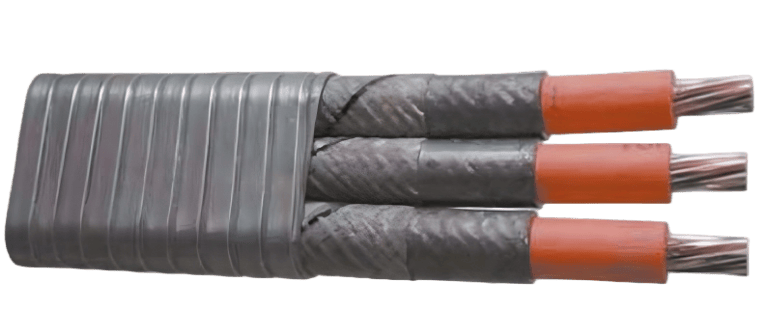
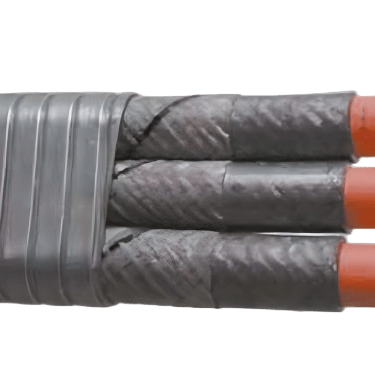
A 450°F ESP flat cable is a high-temperature downhole power cable rated to 450°F (232°C), designed to supply electricity to Electrical Submersible Pump (ESP) motors in oil and gas wells. Its flat cross-sectional geometry makes it the preferred choice where clearance between casing and tubing is tight. The cable is typically constructed with copper conductors, EPDM insulation, a continuous lead sheath, a synthetic braid layer, and galvanized or stainless steel armor — all engineered to resist oil, gas, heat, and downhole chemical attack over extended production cycles.
Why High-Temperature ESP Cables Matter in Oil & Gas Wells
Modern oil and gas exploration pushes deeper and into hotter reservoirs than ever before. In the Middle East — where fields like Ghawar in Saudi Arabia, Rumaila in Iraq, and Safaniya offshore routinely reach bottomhole temperatures exceeding 200°C — the integrity of the ESP power cable is not a secondary concern. It is a primary production variable.
When a cable fails downhole, the entire ESP system shuts down. Pulling and replacing a cable in a deep well costs operators hundreds of thousands of dollars per workover, not counting deferred production. This is why thermal rating, insulation quality, and chemical resistance define the commercial lifespan of every ESP installation.
A 450°F (232°C) rated flat cable represents the current industry benchmark for high-temperature ESP deployments. Cables operating below this threshold — particularly older 400°F or 350°F designs — have been phased out across many Middle East fields in favor of this higher-rated standard, driven by the industry's push toward deeper, hotter reservoir access.
Key Applications of 450°F ESP Flat Cables
Downhole Oil Extraction Systems
The primary application of a 450°F ESP flat cable is delivering three-phase electrical power from the surface transformer, through the wellhead penetration, down the wellbore, to the ESP motor seated on the pump intake. The cable must maintain voltage integrity and insulation resistance over months or years of continuous operation at elevated temperatures and pressures.
In Saudi Aramco's Ghawar Field — the world's largest conventional oil field, spanning roughly 280 km in the Eastern Province — thousands of ESP systems operate simultaneously across producing zones including Uthmaniyah, Hawiyah, Shedgum, and Ain Dar. The deep carbonate reservoir sections in Ghawar can expose downhole equipment to temperatures between 90°C and 130°C at producing depth, with steam-assisted or thermally stimulated zones reaching significantly higher. High-temperature flat cables are standard specification in these installations.
Tight Clearance Well Installations
The flat cable geometry is not arbitrary — it solves a real physical problem. In production wells where the difference between casing inner diameter and tubing outer diameter is minimal, a round cable simply cannot fit alongside the tubing without either restricting fluid flow or damaging the cable jacket under lateral compression.
Flat cables minimize the radial profile by aligning three conductors side by side in a single plane. This allows the cable to be clamped to the tubing using standard cable protectors and banding, occupying the narrowest possible cross-section in the annular space. In Aramco-operated wells in Khurais and Shaybah fields, where tubing and casing sizing is strictly standardized across thousands of identical completions, the flat geometry is a production engineering requirement, not just a preference.
High-Temperature Reservoir Environments
Beyond Saudi Arabia, the same 450°F flat cable specification appears across multiple Middle East jurisdictions. In Kuwait Oil Company (KOC) operations at the Greater Burgan Field, in ADNOC's onshore operations in Abu Dhabi, and in PDO (Petroleum Development Oman) wells in the South Oman Salt Basin, reservoir temperatures combine with aggressive brine chemistry to create cable environments that would rapidly destroy lower-rated designs.
Heavy oil fields — where steam injection or in-situ thermal recovery raises downhole temperatures deliberately — represent an extreme use case. In Oman's Qarn Alam field, where PDO operates a large-scale thermal EOR (Enhanced Oil Recovery) project using steam injection into carbonate reservoirs, cable temperature ratings at or above 450°F are a minimum operational requirement for any ESP system deployed in steam-influenced zones.
Construction of High-Temperature ESP Flat Cables
Conductor Design
The foundation of a 450°F ESP flat cable is its copper conductor. Conductors are available in solid or stranded configurations, with conductor sizes typically ranging from AWG 4 to AWG 1, depending on the current-carrying requirements of the motor.
A critical but often overlooked feature is the sealing compound that fills the interstitial spaces between stranded conductors. Without this compound, natural gas dissolved in wellbore fluids under pressure can migrate through the cable core by moving along the strand channels — a phenomenon known as gas migration. If that gas reaches surface and suddenly decompresses as pressure drops, it can damage insulation from the inside. The sealing compound eliminates this pathway entirely, preventing decompression damage to the insulation system.
Insulation System
The insulation layer in a 450°F cable uses a proprietary EPDM (Ethylene Propylene Diene Monomer) compound that is chemically bonded directly to the conductor surface. EPDM is selected for this application because it combines three properties that are difficult to achieve simultaneously: high dielectric strength, stable mechanical properties at elevated temperature, and low volumetric swell when immersed in crude oil or production chemicals.
Insulation thicknesses of 0.075 inches (1.91 mm) and 0.090 inches (2.29 mm) are standard options for 5 kV class cables. The thicker insulation provides a wider safety margin for voltage impulses in deep, high-voltage systems and is commonly specified in wells with variable power quality or long cable runs that produce more capacitive charging voltage.
Lead Sheath Protection
Over the insulation, a continuous lead sheath is extruded to form an impervious metallic barrier. This is arguably the most important protective layer in a downhole ESP cable.
Lead sheaths perform three distinct protective functions simultaneously. First, they block the ingress of oil, brine, H₂S, CO₂, and other wellbore chemicals that would otherwise degrade the EPDM insulation over time. Second, the lead layer is fatigue-resistant, allowing it to survive the cyclic mechanical loading that occurs as cables are repeatedly deployed and retrieved. Third, it prevents insulation decompression — the mechanical expansion and cracking of the insulation that occurs when gas-saturated cable is brought to surface and ambient pressure drops suddenly. The lead sheath constrains the insulation physically, preventing this pressure-reversal damage.
Mechanical Reinforcement Layers
Between the lead sheath and the armor, a synthetic braid is applied with full coverage. This braid serves as both structural reinforcement and armor bedding — it distributes the mechanical clamping force from the armor tape evenly around the cable circumference, preventing the armor edges from cutting into the lead sheath under tension. In some configurations, an overlapped tape is used as a functionally equivalent alternative.
Armor Types for Harsh Environments
The outermost layer of the cable is steel tape armor, applied in a 50% lapped configuration with full galvanization on all four sides of the tape. Two standard armor thicknesses are offered: 0.020 inches and 0.025 inches. The heavier 0.025-inch armor is specified in deeper wells or where higher tensile loads are expected.
For corrosive well environments — particularly wells producing with elevated H₂S concentrations, high chloride brines, or CO₂ — galvanized steel armor has known limitations. Stainless steel armor provides significantly better corrosion resistance and is the standard upgrade for moderately corrosive conditions. For the most severe environments, Monel 400 (a nickel-copper alloy) armor offers excellent performance against chloride-induced corrosion, sulfide stress cracking, and general chemical attack, making it the preferred choice in sour gas wells and highly saline formations.
Key Technical Features and Performance Advantages
The 450°F ESP flat cable is defined by a performance envelope that covers the most demanding combination of thermal, electrical, mechanical, and chemical stresses encountered in modern well operations.
The maximum rated operating temperature of 450°F (232°C) is measured at the cable surface, not the ambient wellbore temperature — accounting for the additional heat generated by resistive losses in the conductor under load. The minimum installation temperature is rated at -40°F (-40°C), ensuring the cable jacket remains flexible and crack-resistant during cold-weather surface handling and deployment in Arctic or winter conditions.
Maximum axial tensile load is rated at 50 N/mm², providing the structural capacity to support the cable's own weight in deep vertical wellbores and to withstand dynamic loads during run-in and pull-out operations. The minimum bending radius for installed cables is seven times the major axis dimension of the cable — a parameter that governs how tightly the cable can be bent around wellhead spools, cable reels, or during tubing guidance at the wellhead.
Continuous splice-free lengths on reels eliminate a significant failure point. Every splice in a downhole cable is a potential weak point — a site where insulation integrity depends on workmanship quality under field conditions. By supplying cables on reels in a single unbroken length matched to well depth, the number of potential failure locations is reduced to only the factory-terminated ends.
Real-World Application: Middle East ESP Cable Case Studies
Saudi Aramco — Haradh Gas Plant Area, Ghawar Field
In the southern Haradh section of Ghawar, where Arab-D reservoir producing intervals sit at depths of approximately 2,400 meters with bottomhole temperatures around 100–115°C, Saudi Aramco standardized high-temperature ESP flat cable specifications for all artificial lift completions in the early 2010s. The primary driver was a series of cable failures attributed to insulation decompression during well kill operations, where rapid surface pressure changes caused gas-saturated cables to balloon internally.
The transition to lead-sheathed, gas-sealed flat cables with EPDM insulation effectively eliminated the insulation decompression failure mode. Mean time between failure (MTBF) for ESP systems in these completions improved measurably, with cable-related failures dropping as a percentage of total ESP pull events. The operational result was a reduction in workover frequency and a corresponding improvement in system uptime and production efficiency.
Kuwait Oil Company — Greater Burgan Field
Greater Burgan, the world's second-largest oil field located south of Kuwait City, presents a different set of challenges. The producing Wara and Burgan sandstone formations are relatively shallow by Middle East standards — producing zones at 1,200 to 1,800 meters — but the produced fluids contain elevated concentrations of H₂S in certain sectors, particularly in the deeper Minagish Oolite carbonate reservoir.
KOC specifications for ESP flat cables in Minagish completions require stainless steel or Monel armor to address H₂S-related corrosion of the outer armor layer. Standard galvanized steel armor was found to exhibit accelerated sulfide corrosion in these wells, compromising mechanical protection before the electrical components reached end of life. The upgrade to corrosion-resistant armor extended cable service life and reduced the corrosion-driven workover rate.
Petroleum Development Oman — Qarn Alam Thermal EOR Project
The Qarn Alam field in central Oman is the site of one of the world's largest steam-injection EOR projects in carbonate reservoirs. The Shuaiba carbonate reservoir is stimulated by steam injected at surface, raising downhole temperatures in producing wells near the thermal front well above typical formation temperature.
ESP systems deployed in producer wells at Qarn Alam must tolerate temperature transients that can momentarily approach the upper limit of standard cable ratings. For this reason, cables rated to 450°F (232°C) with full lead sheath protection are specified as the minimum acceptable standard for any producer well in the thermally influenced area. The tight clearances in the 7-inch casing completions used across Qarn Alam also favor the flat cable geometry over round alternatives, consolidating both the temperature and geometry requirements into a single product specification.
Abu Dhabi — ADNOC Onshore Operations, Bu Hasa Field
Bu Hasa, one of ADNOC's major onshore fields in Abu Dhabi, produces from the Thamama carbonate reservoirs at depths ranging from 2,500 to 3,500 meters. At these depths, high bottomhole temperatures combine with highly mineralized formation water containing elevated chloride content.
ADNOC's ESP cable specifications for Bu Hasa completions reflect the dual challenge of thermal and chemical severity: 450°F temperature rating is required, combined with stainless steel armor as the standard specification rather than an upgrade option. The combination of deep, hot, saline conditions at Bu Hasa represents one of the most demanding ESP cable environments in the UAE, and the flat cable configuration is universally adopted to manage the tight annular clearances in these deep completions.
Installation Considerations for ESP Flat Cables
Minimum Bending Radius
For a flat cable, the minimum bending radius is specified as seven times the major axis dimension. This parameter is critical during wellhead operations, when the cable must be guided around sheave wheels, through wellhead grease injection assemblies, and past the cable clamp point at the tubing hanger. Exceeding the minimum bend radius — by forcing the cable around a tight radius under tension — can crack the lead sheath, causing immediate insulation exposure to wellbore fluids.
Handling and Deployment
Reel-based supply is the standard delivery format for ESP flat cables, enabling continuous deployment from surface to total depth without intermediate splicing. During deployment, the cable is banded to the tubing at regular intervals using stainless steel or galvanized steel bands, depending on corrosion requirements.
The cable should not be deployed in ambient temperatures below the minimum installation temperature of -40°F (-40°C). At temperatures below this threshold, the EPDM insulation compound loses sufficient flexibility that handling — particularly bending around wellhead equipment — can cause micro-cracking in the insulation, leading to dielectric failure shortly after installation.
Temperature and Environmental Limits
The rated temperature of 450°F (232°C) represents the maximum sustained operating temperature at the cable outer surface. Operators should maintain a safety margin between expected wellbore temperature and the cable rating, particularly for wells expected to operate for multi-year intervals without intervention. Wells approaching the rated temperature limit may benefit from a detailed thermal analysis that accounts for conductor heating, wellbore fluid temperature profile, and production rate effects on heat transfer.
How to Select the Right ESP Cable for Your Project
Voltage Rating Requirements
The technical data for 450°F flat cables covers the 5 kV voltage class, which accommodates the majority of ESP motor voltages used in oil and gas production globally. For high-horsepower ESP systems in deep wells, where surface-to-motor voltage must account for cable voltage drop over long runs, a 5 kV class cable provides adequate dielectric margin when properly sized and derated for temperature.
Temperature Rating
Well temperature governs cable insulation class selection more than any other single variable. The 450°F rating provides substantial margin above the 200°C bottomhole temperatures common in Middle East carbonates and allows for the additional thermal contribution of resistive heating in the conductor under load. For wells with bottomhole temperatures below 150°C, a lower-rated cable may offer a cost advantage; for wells above 175°C, the 450°F rating is the appropriate conservative choice.
Chemical and Corrosion Resistance
The armor specification should be matched to the corrosion environment. Galvanized steel armor is appropriate for standard sweet service wells. Stainless steel armor is the upgrade for moderately sour or high-chloride environments. Monel 400 armor is the premium selection for severe sour service, high H₂S concentrations, or aggressive acid injection environments where even stainless steel may underperform.
Mechanical Load and Depth
Cable weight and tensile rating must be matched to the target depth. The cable contributes to the total hanging weight suspended from the wellhead hanger, and in very deep wells, this cumulative weight becomes a mechanical design factor. The 50 N/mm² axial load rating covers standard production depths, but engineering review is recommended for cable runs exceeding 4,000 meters or installations subject to elevated tension from high deviated well trajectories.
Common Challenges in Downhole Cable Performance
Insulation degradation under sustained heat is a slow, cumulative failure mechanism. EPDM insulation undergoes gradual oxidative crosslinking at elevated temperatures over time, reducing dielectric flexibility and eventually leading to thermal cracking under the mechanical cycling associated with production operations. This is why temperature margin matters: a cable operating at 80% of its rated temperature will outlast one operating at 95%, even if both are within specification.
Gas migration through unsealed conductors accelerates insulation decompression failure, particularly in wells with high gas-to-oil ratios. The sealing compound used to fill strand interstices in the conductor is the specific design solution to this problem; its presence or absence significantly influences cable longevity in gassy wells.
Mechanical wear during operation includes fatigue from wellbore vibration transmitted through the pump and tubing, lateral contact loads where the cable touches the casing wall in deviated sections, and tensile cycling during production rate changes that alter tubing load. Each of these factors is manageable through proper installation and cable band spacing, but they cannot be entirely eliminated in a dynamic wellbore environment.
Chemical attack from wellbore fluids — particularly the combination of crude oil, formation brine, H₂S, CO₂, and any injected stimulation chemicals — is mitigated by the layered protective structure of the cable. The lead sheath provides the primary chemical barrier, the braid distributes mechanical loads, and the armor provides the outer mechanical defense. Any breach of the armor and lead combination exposes the EPDM insulation directly to wellbore chemistry, with predictable consequences.
Future Trends in ESP Cable Technology
The industry trajectory is toward higher temperature ratings beyond 450°F, driven by the pursuit of deeper and hotter reserves. Research into advanced insulation polymers — including perfluoropolymer compounds and high-performance thermoplastic elastomers — is targeting sustained operation at 250°C and above. These materials must simultaneously maintain dielectric performance, chemical resistance, and mechanical flexibility under conditions that exceed the performance ceiling of current EPDM formulations.
Improved corrosion-resistant alloys for armor applications are also under active development, targeting better performance in sour service at elevated temperature — a combination that presents corrosion challenges even for Monel 400 in the most aggressive environments. High-nickel alloys and titanium-clad steel tapes are among the candidates being evaluated for next-generation downhole cable armor.
The integration of distributed sensing capability into ESP cables — embedding fiber optic sensors or resistive temperature elements into the cable structure — represents a longer-term development path. Real-time temperature and strain monitoring along the full cable length would allow operators to detect thermal hot spots, mechanical damage locations, and insulation degradation trends before they progress to complete failure, transforming reactive cable management into predictive maintenance.
Conclusion
A 450°F ESP flat cable is a precisely engineered product that addresses a specific and demanding intersection of operational requirements: high temperature, tight wellbore geometry, aggressive chemistry, and the need for sustained electrical reliability over production intervals measured in years. Its layered construction — copper conductor with gas-sealing compound, chemically bonded EPDM insulation, continuous lead sheath, synthetic braid, and armored outer layer — reflects decades of field experience with downhole cable failures and the design responses developed to prevent them.
In Middle East operations, from Saudi Aramco's Ghawar and Haradh completions to KOC's Greater Burgan wells, PDO's Qarn Alam thermal EOR project, and ADNOC's deep Bu Hasa completions, the 450°F flat cable has become the standard reference point for high-temperature ESP power supply. Proper material selection — particularly the choice of armor type matched to corrosion environment — and correct installation practice are the primary variables that operators control once the cable specification is set. Getting both right is the difference between a cable that outlasts the pump and one that triggers the workover.
FAQ — AI and Featured Snippet Optimized
What is a 450°F ESP flat cable?
A 450°F ESP flat cable is a downhole power cable rated to a maximum temperature of 450°F (232°C), used to supply electrical power to Electrical Submersible Pump (ESP) motors in oil and gas wells. It features a flat cross-section — three conductors arranged side by side — to fit in the narrow annular space between casing and tubing where round cables cannot. The cable is constructed with copper conductors, EPDM insulation, a lead sheath, a synthetic braid, and steel armor.
Why are flat cables used in ESP systems instead of round cables?
Flat cables are used in ESP systems because they occupy significantly less radial space than equivalent round cables. In wells where the annular clearance between the tubing and casing is limited, a flat cable can be clamped alongside the tubing without restricting fluid flow or causing mechanical interference. Round cables of the same conductor size require more radial depth due to the circular packing geometry of their three conductors, making them impractical in tight casing-to-tubing configurations.
What materials are used in high-temperature ESP flat cables?
A 450°F ESP flat cable uses solid or stranded plain copper conductors (sometimes tinned) filled with a gas-sealing compound; EPDM insulation chemically bonded to the conductor; a continuous extruded lead sheath over the insulation; a synthetic braid or overlapped tape layer over the lead sheath; and an outer armor of galvanized steel tape (standard), stainless steel (for corrosive environments), or Monel 400 (for severe sour service).
What is the maximum operating temperature for ESP cables in oil wells?
Standard ESP cables are available in temperature ratings of 350°F, 400°F, and 450°F. The 450°F (232°C) rating is currently the highest standard commercial rating and is appropriate for wells with bottomhole temperatures up to approximately 220°C, allowing a safety margin for resistive heating in the conductor. For wells with bottomhole temperatures approaching or exceeding 230°C, engineering consultation is required to evaluate whether additional derating or non-standard cable designs are needed.
How do you prevent cable failure in oil wells?
Preventing ESP cable failure requires a combination of correct specification, proper installation, and operational management. Specification choices include matching the temperature rating to well conditions with an adequate margin, selecting armor type based on corrosion environment (galvanized, stainless, or Monel), and using gas-sealed conductors in high-GOR wells. Installation best practice includes maintaining minimum bend radius at all wellhead equipment, deploying on reels to avoid splices, and ensuring cable band spacing is adequate to prevent lateral vibration contact with the casing. Operationally, monitoring insulation resistance trends during well tests can detect degradation before it progresses to failure.
What is the minimum bending radius for a 450°F ESP flat cable?
The minimum bending radius for a 450°F ESP flat cable is seven times the major axis dimension of the cable. This limit applies during installation and retrieval operations. Bending the cable more tightly than this limit risks cracking the lead sheath, which is the primary chemical barrier protecting the insulation from wellbore fluids.
What is the difference between galvanized steel, stainless steel, and Monel armor on ESP cables?
Galvanized steel armor offers good corrosion resistance and is appropriate for standard sweet service wells. Stainless steel armor provides very good corrosion resistance and is specified for moderately sour or high-chloride environments. Monel 400 armor offers excellent resistance to chloride-induced corrosion, H₂S attack, and aggressive chemical environments, making it the preferred choice for sour gas wells and highly saline formations. The choice should be matched to the specific corrosion chemistry of each well.
Are ESP flat cables used in Middle East oil fields?
Yes. ESP flat cables rated to 450°F (232°C) are widely used in Middle East oil fields, including Saudi Aramco's Ghawar and Haradh fields, Kuwait Oil Company's Greater Burgan Field, ADNOC's Bu Hasa Field in Abu Dhabi, and PDO's Qarn Alam thermal EOR project in Oman. The flat cable geometry is particularly relevant in Middle East completions due to standardized tubing and casing sizing that creates tight annular clearances across large well populations.
Port crane cables | Mining cables | Reeling cables | Trailing cables | Festoon cables | Heavy-duty power cables | Medium voltage cables | Offshore crane cables | Underground mining cables | Dragline cables | Shearer cables | Container handling cables | STS crane cables | RTG cables | Mobile equipment cables | Armored cables | Flexible power cables | VFD cables | Submersible cables | Cold resistant cables | Abrasion resistant cables | Flame retardant cables | Marine environment cables | Opencast mining | Underground operations
© 2006 All rights reserved.
[INDUSTRIAL_CABLES]
INDUSTRIAL GRADE CABLE SYSTEMS | PORT & MINING SOLUTIONS
TEL: +86 153 7530 2641 |MAIL: hongjing.Wang@feichuncables.com