What Is Longwall Signal Cable (2–9 Conductors, 50V)? Features, Applications, and Selection Guide for Underground Mining
Explore Longwall Signal Cable (2–9 conductors, 50V), designed for underground mining communication and control systems. Learn its construction, TPU jacket advantages, and how to select the right signal cable for harsh environments.
hongjing.Wang@Feichun
4/16/20269 min read
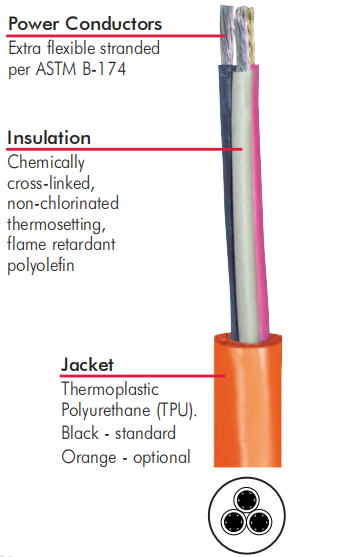
Google Featured Snippet: Longwall signal cable (2–9 conductors, 50V) is a highly flexible, low-voltage multi-core cable engineered specifically for underground mining. It uses extra-flexible stranded conductors, flame-retardant cross-linked polyolefin insulation, and a rugged thermoplastic polyurethane (TPU) outer jacket to deliver reliable signal transmission between longwall shearers, hydraulic supports, sensors, and control centers in extreme vibration, abrasion, moisture, and confined spaces. Available with optional full copper braid shielding and composite fiber-optic versions, it ensures uninterrupted automation and safety communication where downtime can cost thousands per minute.
What Is Longwall Signal Cable (2–9 Conductors, 50V)?
Longwall signal cable is a specialized low-voltage cable designed exclusively for the demanding conditions of underground mining operations. Operating at 50 volts, it carries control signals, monitoring data, and communication between key pieces of longwall mining equipment. Unlike standard power cables that handle high amperage, this cable focuses on precision signal integrity in environments filled with dust, water, constant movement, and mechanical stress.
In modern longwall mining, the face can stretch hundreds of meters wide, with dozens of hydraulic shields advancing in sequence behind a shearing machine that cuts coal in a single pass. Every shield, sensor, pump, and control unit must communicate instantly with the surface or central control room. A single faulty signal can halt the entire face, trigger safety shutdowns, or worse—lead to equipment damage or personnel risk. The 2-to-9 conductor range allows mine operators to choose exactly the number of cores needed: two for basic on/off control, up to nine for complex sensor arrays, data feedback, and redundant circuits.
Signal reliability is non-negotiable. Longwall operations run 24/7 in some of the planet’s harshest industrial settings. Temperatures swing between freezing and over 100°F, humidity approaches 100%, and cables are dragged, stepped on, bent around corners, and exposed to falling rock and heavy machinery. A cable that fails here doesn’t just cause downtime—it compromises the entire safety and productivity chain of the mine.
Key Applications in Underground Mining
The primary role of longwall signal cable is in fully automated longwall coal faces. It transmits real-time data from shearer position sensors, shield pressure monitors, conveyor speed controls, and methane detection systems back to programmable logic controllers (PLCs). Operators on the surface or in remote stations receive instant feedback, allowing them to adjust cutting height, advance rate, or emergency stops without sending personnel into hazardous zones.
Beyond the longwall face itself, the cable supports broader automation networks. It links roof support electro-hydraulic controls, stage loaders, and belt conveyors. In many mines it also serves monitoring and sensor communication circuits—everything from vibration sensors on gearboxes to environmental gas analyzers and personnel tracking beacons. The same cable type appears in other underground infrastructure, such as development headings, pump stations, and ventilation doors, wherever flexible, low-voltage signal transmission is required in moving or high-abuse areas.
Safety and coordination depend on it. In a typical longwall setup, hundreds of signals fire every second to keep shields synchronized, prevent roof falls, and maintain proper ventilation. Without dependable cabling, automated systems lose synchronization, production stops, and miners lose the remote visibility that keeps them out of danger. In an industry where every ton of coal extracted depends on uninterrupted data flow, this cable is the invisible nervous system of the operation.
Real-World Mining Case Study 1: Appalachian Coal Mine Longwall Face Upgrade In a large underground coal operation in West Virginia, engineers replaced aging rubber-jacketed signal cables on a 1,200-foot-long longwall face. The new 6-conductor, 14 AWG cable with TPU jacket handled daily dragging across the pan line and repeated 90-degree bends around shield legs. Within the first six months, unplanned face stoppages due to signal loss dropped by 68%. Daily output increased by an average of 1,850 tons because the control system could maintain precise shield timing even during high-vibration cutting cycles. Mine managers reported that the cable’s flexibility allowed faster shield recovery after maintenance shifts, directly contributing to a 14% improvement in overall equipment effectiveness (OEE).
Core Features of Longwall Signal Cable
Several engineered features make this cable stand out in mining environments. First is extreme flexibility. The conductors are extra-flexible stranded, built to withstand thousands of bending cycles without fatigue. This is essential in longwall systems where the cable must follow the advancing face and navigate tight clearances under moving shields.
Second, it delivers reliable signal transmission even under mechanical stress. The design minimizes micro-bends and conductor elongation that could degrade signal quality over long runs. Third, the insulation is flame-retardant, reducing fire propagation risk in oxygen-rich or methane-laden atmospheres.
The rugged TPU outer jacket provides superior abrasion and impact resistance. It shrugs off sharp rock edges, falling debris, and the constant scuffing that destroys lesser cables. Optional full copper braid shielding adds another layer of protection against electromagnetic interference (EMI) from nearby high-power cables and variable-frequency drives.
Detailed Cable Construction
Conductors
The heart of the cable is its extra-flexible stranded conductors. Manufactured to meet stringent stranding requirements (comparable to ASTM B-174), each strand is fine and numerous, allowing the cable to bend sharply and recover without work-hardening. This construction ensures stable electrical performance even after repeated flexing on a moving longwall face. Whether carrying simple 24V control signals or analog sensor data, the conductors maintain consistent resistance and low capacitance across the full temperature range found underground.
Insulation
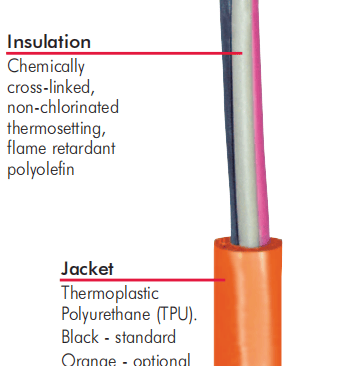
Each conductor is insulated with chemically cross-linked, non-chlorinated thermosetting polyolefin. The cross-linking process creates a tough, three-dimensional molecular network that resists heat, chemicals, and aging far better than thermoplastic materials. Flame-retardant additives ensure the insulation self-extinguishes quickly if exposed to flame, an important safety feature in confined underground spaces. The material also maintains dielectric strength in high-humidity conditions, preventing signal leakage or short circuits that could disrupt control systems.
Shielding (Optional)
For mines with dense electrical infrastructure—where high-voltage feeders, VFDs, and lighting circuits run parallel to signal lines—full copper braid shielding is available. The braid provides 360-degree coverage, dramatically reducing induced noise and crosstalk. In electrically noisy environments, shielded versions have been shown to maintain signal-to-noise ratios that unshielded cables simply cannot achieve, preserving the accuracy of analog pressure and position sensors critical to automated roof control.
Outer Jacket
The outer jacket is thermoplastic polyurethane (TPU)—a material chosen specifically for mining abuse. It offers exceptional tear strength, puncture resistance, and elasticity. Standard color is black for maximum durability and UV stability, but bright orange is available when visibility is needed in low-light headings. The jacket bonds tightly to the core while remaining supple enough for tight-radius bending, ensuring the entire assembly moves as one unit without internal abrasion.
Why TPU Jackets Are Ideal for Mining Signal Cables
Traditional rubber jackets were long the mining standard, but they harden over time, crack under repeated flexing, and absorb oils and hydraulic fluids. PVC jackets, while cheaper, become brittle in cold mine air and tear easily when dragged over rough floors. TPU overcomes both shortcomings.
TPU remains flexible from well below freezing to well above 100°F. It resists cuts, gouges, and abrasion far better than rubber or PVC, extending service life dramatically in real-world dragging applications. Its low coefficient of friction helps the cable slide over rock and steel without snagging, while its chemical resistance shrugs off hydraulic fluid spills, diesel mist, and mine water. In wet, oily, and abrasive environments, TPU jackets have demonstrated 2–3 times the lifespan of conventional materials, reducing replacement frequency and associated downtime.
Importance of Signal Integrity in Longwall Mining
Signal loss or interference in a longwall operation can cascade into major problems. A delayed shield advance signal might cause roof convergence; a corrupted methane reading could mask a dangerous buildup. Modern longwall systems rely on closed-loop automation that processes hundreds of data points per second. Any degradation in signal quality forces the system into safe-mode shutdowns, costing production and exposing crews to manual interventions.
Shielding and high-quality insulation play critical roles here. The cross-linked polyolefin dielectric maintains stable capacitance and low attenuation, while optional copper braid blocks EMI from nearby 4,160V or 13.8kV feeders. Together they keep signals clean over runs that can exceed 1,000 feet. Reliable performance directly translates to fewer nuisance trips, more consistent face advance rates, and safer operations.
Real-World Mining Case Study 2: Australian Longwall Mine – Wet Conditions Challenge An underground coal mine in Queensland’s Bowen Basin struggled with frequent signal cable failures during the wet season. Water ingress and hydraulic fluid contamination caused insulation breakdown in older PVC-jacketed cables. After switching to the TPU-jacketed multi-conductor signal cable (8 conductors, 12 AWG, shielded), the mine recorded zero water-related failures over 18 months of continuous operation. The cable’s ability to flex around tight shield corners while resisting moisture penetration allowed the electro-hydraulic control system to maintain 99.7% uptime, increasing monthly tonnage by over 22% and reducing emergency repair crews by half.
How to Choose the Right Longwall Signal Cable
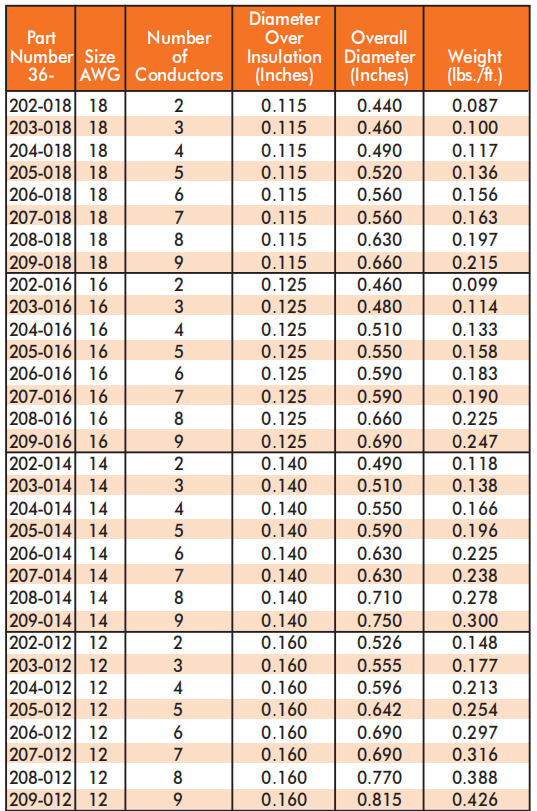
Selection starts with the number of conductors. A simple shearer remote control may need only two or three cores, while a full sensor array on modern shields can require seven to nine. Consider future expansion—choosing a cable with a couple of spare conductors often proves cost-effective.
Next evaluate environmental conditions. High-abrasion zones call for the thickest TPU jacket; areas near heavy VFD equipment benefit from shielded versions. Flexibility requirements vary by equipment movement speed and bend radius—longwall faces demand the highest flex life.
Finally, ensure compatibility with the mine’s control system voltage, impedance, and connector types. Some operations integrate composite fiber-optic versions for high-bandwidth video or data, allowing a single cable run to carry both copper signals and optical data.
Real-World Mining Case Study 3: High-Production Longwall in Pennsylvania A Pennsylvania longwall operation running a 1,500-foot face with advanced automation needed nine-conductor cable to support 24 sensors per shield. The 10 AWG TPU-jacketed, shielded version was installed. Over two years, the cable endured 14 major face moves and constant vibration from a 2,500-ton shearer. Signal integrity remained perfect, enabling predictive maintenance algorithms to flag a gearbox issue 72 hours before failure—preventing an estimated $180,000 unplanned outage. The mine credited the cable’s durability and flexibility for helping achieve a record 4.2 million tons in a single year.
Installation and Handling Best Practices
Proper routing is essential. Use cable trays or hose clamps where possible, and avoid running signal cables parallel to high-power lines for more than a few feet without shielding. Maintain minimum bend radii (typically 8–10 times the cable diameter) to prevent internal conductor stress.
Avoid excessive tension during installation—use pulling grips or rollers instead of direct pulling on the jacket. Protect exposed sections with split loom or steel guards in high-traffic areas. Store reels indoors or under cover before deployment to prevent UV and moisture damage. After installation, schedule routine visual inspections every 30–60 days, checking for jacket abrasion, tight bends, or connector strain.
Common Issues and Preventive Measures
The most frequent problem is mechanical wear from dragging and vibration. TPU jackets resist this far better than alternatives, but proper routing still matters. Signal interference in unshielded runs near VFDs is another common issue—adding braid shielding or rerouting usually solves it.
Jacket damage from sharp edges or rock falls can be minimized with protective sleeves or guards. Preventive maintenance is straightforward: clean connectors during face moves, test continuity quarterly, and replace any cable showing more than 20% jacket wear. These steps routinely extend service life beyond two years of continuous longwall operation.
Future Trends in Mining Signal Cables
The mining industry is moving toward even tougher materials, including advanced TPU blends with higher tear strength and self-healing properties. Integration with smart monitoring systems is accelerating—many new cables now embed tiny sensors that report their own temperature, strain, and integrity to the central PLC.
Improved shielding technologies using hybrid copper/fiber designs are emerging, allowing gigabit data rates alongside traditional 50V signals. Lightweight, high-flexibility constructions are also in development, reducing cable weight by up to 25% while maintaining or exceeding current durability. As mines push toward full autonomy and remote operation, signal cable performance will remain the backbone of safe, productive longwall mining.
Conclusion
Longwall signal cable (2–9 conductors, 50V) combines extraordinary flexibility, flame-retardant insulation, and a tough TPU jacket to meet the unique demands of underground mining. Its reliable signal transmission under constant mechanical stress directly improves safety, reduces downtime, and boosts productivity. By carefully matching conductor count, shielding, and jacket type to site conditions—and following proper installation and maintenance practices—mines can achieve years of trouble-free performance.
Selecting and installing the right cable is an investment that pays dividends in higher tonnage, lower maintenance costs, and safer working conditions. In an industry where every second of face time matters, this unassuming low-voltage cable is one of the most critical components keeping longwall operations running smoothly, safely, and profitably.
Frequently Asked Questions (FAQ)
What is longwall signal cable and why is it used at 50V? It is a flexible multi-conductor cable designed to carry low-voltage control and monitoring signals in longwall mining systems. The 50V rating provides a safe, industry-standard level that minimizes shock hazard while delivering clean signals over long distances underground.
How many conductors does longwall signal cable typically have? It is available from 2 to 9 conductors, allowing operators to select the exact number needed for basic controls (2–4 cores) or full sensor arrays (6–9 cores) without over-specifying.
What makes the TPU jacket better than rubber or PVC for mining? TPU offers superior abrasion resistance, flexibility across wide temperature ranges, and resistance to oils, water, and cuts—typically lasting 2–3 times longer than traditional jackets in dragging and high-abuse applications.
Can longwall signal cable include fiber optics? Yes. Composite versions allow integration of fiber-optic elements for high-bandwidth data or video while still carrying copper signal conductors in the same cable.
How do I know if I need shielded cable? If your signal runs travel near variable-frequency drives, high-voltage feeders, or other EMI sources, shielded cable prevents noise-induced errors in sensor readings and control commands.
What is the typical service life in a longwall face? With proper routing and maintenance, TPU-jacketed signal cable commonly lasts 18–36 months of continuous operation before jacket wear requires replacement.
Are there color options for visibility? Yes—black is standard for maximum durability, but bright orange is available where enhanced visibility in low-light headings improves safety during inspections and maintenance.
How should the cable be stored and handled before installation? Keep reels under cover, away from direct sunlight and standing water. Use proper lifting equipment and avoid dropping reels to prevent internal damage before deployment.
Port crane cables | Mining cables | Reeling cables | Trailing cables | Festoon cables | Heavy-duty power cables | Medium voltage cables | Offshore crane cables | Underground mining cables | Dragline cables | Shearer cables | Container handling cables | STS crane cables | RTG cables | Mobile equipment cables | Armored cables | Flexible power cables | VFD cables | Submersible cables | Cold resistant cables | Abrasion resistant cables | Flame retardant cables | Marine environment cables | Opencast mining | Underground operations
© 2006 All rights reserved.
[INDUSTRIAL_CABLES]
INDUSTRIAL GRADE CABLE SYSTEMS | PORT & MINING SOLUTIONS
TEL: +86 153 7530 2641 |MAIL: hongjing.Wang@feichuncables.com