What Is Neoprene/Polychloroprene (PCP) and Why Is It Essential for Heavy-Duty Cable Jackets?
Discover what PCP (neoprene/polychloroprene) is, why it is used in heavy-duty cable jackets, and how it performs in cranes, mining, and industrial cables.
hongjing.Wang@Feichun
7/27/202616 min read
1. Introduction: Why Cable Jacket Materials Matter
In high-intensity industrial setups, the performance of an electrical system is often judged by the strength of its conductors and the quality of its primary insulation. However, field engineers, asset managers, and electrical contractor teams know that a cable is only as durable as its outer skin. The cable jacket—also known as the outer sheath—serves as the primary line of defense protecting internal conductors, insulations, fillers, and optical elements from an unforgiving environment.
When power and control cables operate in demanding sectors like mining, port logistics, materials handling, and heavy manufacturing, they rarely sit untouched in static trays. They are constantly dragged over rough basalt and concrete, wound onto high-speed reeling drums, twisted across multi-plane pulley systems, baked under intense sunlight, submerged in oily bilge water, and exposed to ozone or reactive chemical vapors. Without a properly engineered outer jacket, physical wear and environmental degradation can quickly breach the outer protection. This leads to moisture ingress, conductor corrosion, insulation breakdown, short circuits, and unscheduled operational downtime.
In heavy-duty applications—such as continuous ship-to-shore container cranes, open-cut mining draglines, underground continuous miners, and overhead hoisting systems—a failure in cable jacketing translates directly to lost productivity. Replacing a damaged reeling cable is not merely a matter of material cost. It involves significant machinery downtime, expensive rigging crews, lost berth or production time, and serious safety hazards for site personnel. Consequently, selecting the appropriate jacket material is a fundamental engineering decision that directly governs operational safety, long-term reliability, and total lifecycle costs.
Among the various elastomeric and thermoplastic materials available today, Polychloroprene (PCP)—commonly known as neoprene—remains one of the most trusted synthetic rubber materials for heavy-duty industrial cable applications worldwide. Developed as one of the earliest successful synthetic elastomers, PCP has earned an unmatched track record in heavy-duty rubber cable designs. Rather than relying on a single exceptional trait, PCP delivers a well-rounded balance of mechanical toughness, chemical stability, flame retardancy, and weather resistance. This makes it an ideal defense layer for industrial machinery operating under demanding, unpredictable conditions.
2. What Is PCP?
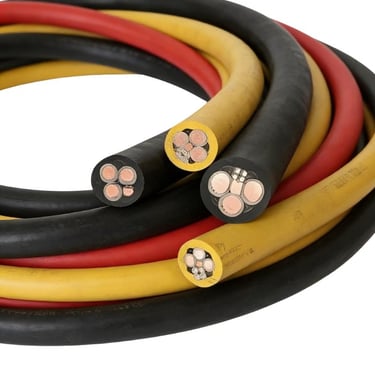
PCP stands for polychloroprene, a synthetic elastomer produced by the polymerization of chloroprene (2-chloro-1,3-butadiene). In commercial and industrial contexts, it is widely referred to by its generic trade name, neoprene, or by the chemical abbreviation CR (chloroprene rubber). In Asian markets and international manufacturing specifications, it is commonly referenced by its Chinese designations, Chloroprene rubber or Polychloroprene rubber.
The molecular architecture of polychloroprene provides its unique physical and chemical characteristics. The inclusion of a chlorine atom along the polymer backbone lowers the overall flammability of the compound compared to purely hydrocarbon-based natural rubbers, while simultaneously enhancing its resistance to non-polar solvents, mineral oils, grease, and environmental weathering.
Historically, natural rubber was the main elastomer used for flexible cable insulation and jacketing. However, natural rubber degrades rapidly when exposed to petroleum oils, ozone, UV radiation, and elevated temperatures. The development of polychloroprene bridged this gap by delivering a tough, flexible compound capable of withstanding severe industrial exposure without suffering premature embrittlement, swelling, or cracking.
In modern cable manufacturing, raw polychloroprene polymer is blended with specialized vulcanizing agents, reinforcing fillers (such as carbon black), plasticizers, antioxidants, and antiozonants to produce a optimized cable jacket compound. Classified under various international standards—such as Type 5GM3 according to German VDE 0207 Part 21 standards—PCP-based rubber compounds are specifically formulated to handle high mechanical stresses, continuous flexure, and aggressive chemical exposure. Whether used in a heavy-duty mining reel or a flexible crane haulage cable, PCP provides a stable, resilient protective barrier that maintains structural integrity across years of continuous mechanical service.
3. Key Performance Features of PCP
To understand why polychloroprene remains a preferred material for heavy-duty rubber cable designs, it is helpful to look at its core technical properties. While specialized materials may outperform PCP in one isolated attribute—such as pure tensile strength or extreme heat endurance—PCP excels due to its balanced combination of essential protective properties.
Flame Resistance
Because chlorine is inherently present within its molecular chain, PCP exhibits strong self-extinguishing characteristics. When exposed to an open flame, PCP liberates chlorine radicals that inhibit the combustion process, forming a protective char layer that slows down flame propagation. Unlike many standard thermoplastics that melt, drip, and spread flames along cable trays or dynamic track systems, PCP-jacketed cables maintain structural stability and resist flame spread. This inherent fire retardancy makes PCP an excellent choice for underground mining operations, enclosed industrial plants, and port facilities where fire safety standards are strictly enforced.
Oil and Grease Resistance
Industrial equipment rarely operates in pristine environments. Hydraulic fluids, lubricating oils, gear greases, and diesel fuel spills are common across mining pits, port berths, and processing plants. Standard rubber compounds and general-purpose plastics rapidly absorb hydrocarbons, causing the material to swell, soften, lose tensile strength, and eventually disintegrate. PCP displays excellent resistance to mineral oils, greases, hydraulic fluids, and aliphatic hydrocarbons. It maintains its structural integrity, dimensional stability, and mechanical toughness even when subjected to prolonged chemical splash or continuous oil contact.
Ozone and Environmental Resistance
Ozone is a highly reactive form of oxygen present in atmospheric air, particularly near high-voltage electrical equipment, arcing motors, and coastal environments exposed to strong solar radiation. Standard natural rubber and basic synthetic elastomers are highly susceptible to ozone cracking, where reactive molecules attack double bonds along the polymer chain, causing deep structural fissures under surface tension. PCP possesses inherent resistance to ozone attack. It prevents microscopic surface cracking and preserves the watertight integrity of the cable jacket over long operational periods.
Weathering and UV Resistance
Outdoor cables face relentless exposure to solar ultraviolet (UV) radiation, atmospheric oxygen, rain, and thermal cycling. Sunlight breaks down polymer chains in lower-grade jacket materials, leading to surface chalking, discoloration, hardening, and deep embrittlement. PCP compounds, particularly when reinforced with carbon black and UV-stabilized additive packages, resist UV degradation exceptionally well. They tolerate decades of direct outdoor solar exposure without showing structural degradation or loss of flexibility.
Mechanical Strength and Tear Resistance
Dynamic rubber cables undergo constant physical stress. As cables are reeled, unreeled, dragged, or suspended, their outer jackets experience high tensile forces and tear stresses. PCP exhibits high inherent tensile strength and superior tear propagation resistance. If a PCP jacket suffers a minor local cut or nick from a sharp rock or metal edge, the material resists tearing further along the cable length under dynamic tension. This tear resistance prevents minor localized damage from turning into catastrophic jacket failure.
Abrasion and Mechanical Wear Resistance
Abrasion is one of the leading causes of cable failure in heavy-duty dynamic applications. Dragging a cable across rough concrete aprons, crushed rock in open-cut mining pits, or sharp steel guide rollers severely wears down the outer sheath. PCP delivers high abrasion resistance, effectively protecting internal conductors and shielding layers from exposure, even after thousands of reeling cycles under heavy surface friction.
Wide Operational Temperature Range
Industrial applications demand consistent performance across fluctuating thermal conditions. PCP rubber compounds remain flexible at sub-zero temperatures while maintaining mechanical stability at elevated operating levels. Standard PCP jacketing compounds easily handle continuous operational conductor temperatures up to 90 degrees Celsius, while remaining flexible in sub-zero ambient conditions down to minus 25 or minus 40 degrees Celsius depending on whether the installation is static or dynamically flexed. This broad operational window prevents winter cracking while avoiding heat-induced softening during summer peak loads.
The principal advantage of PCP lies in the balanced integration of these technical capabilities. A cable jacket does not operate in a vacuum where only oil or only abrasion exists; it faces all of these environmental stresses simultaneously. PCP fulfills these requirements in a single, cost-effective compound.
4. Why PCP Is Used in Heavy-Duty Cable Jackets
In practical industrial operations, equipment rarely subjects cables to a single isolated stress. A cable installed on an automated container crane or a mobile mining shuttle car does not merely experience bending; it simultaneously endures high-speed reeling, high tensile loads, abrasive ground friction, direct solar radiation, ambient heat, oil mist from hydraulic lines, and moisture exposure.
If a jacket material excels only in abrasion resistance but breaks down under UV light, it will harden and crack after a few months of outdoor exposure. Once cracked, moisture enters the cable core, compromising insulation and leading to internal electrical faults. Similarly, if a jacket material offers excellent flexibility but dissolves when exposed to gear lubricants, oil splash will quickly degrade the sheath, exposing the internal cores to mechanical damage.
This real-world environment is precisely why PCP remains a dominant material choice for heavy-duty rubber cable jackets. It functions as a complete protective barrier, simultaneously resisting:
Mechanical wear, cut-through, and tear propagation
Chemical degradation from industrial oils and solvents
Environmental breakdown caused by sunlight, ozone, and weather exposure
Thermal degradation from electrical conductor heating and warm ambient air
Fire hazards through built-in self-extinguishing properties
Consider a high-speed gantry crane operating at an automated container terminal. The power cable must reel and unreel from a motorized drum hundreds of times each day at high speeds. During this process, the cable undergoes continuous reverse bending, high axial tension, compression over guide rollers, exposure to marine salt spray, intense UV radiation, and occasional hydraulic oil drips from upper machinery decks. A material that degrades under any single one of these conditions will fail prematurely.
By delivering reliable, balanced performance across every threat category, PCP provides a predictable service life. This consistency allows asset managers to schedule routine maintenance based on planned operating hours rather than dealing with unexpected line stoppages caused by jacket failures.
5. PCP vs PVC vs PUR
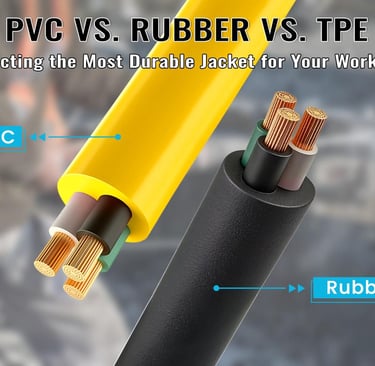
To understand PCP’s unique value, it is helpful to compare it directly against two other common cable jacketing materials: Polyvinyl Chloride (PVC) and Polyurethane (PUR). Each material occupies a specific segment in cable engineering, offering distinct advantages and trade-offs.
CABLE JACKET MATERIAL PROFILE POLYVINYL CHLORIDE (PVC) POLYCHLOROPRENE (PCP / NEOPRENE) POLYURETHANE (PUR) +------------------------+ +--------------------------------+ +-------------------+ | - Low Initial Cost | | - Excellent Overall Balance | | - High Abrasion | | - Light Duty / Static | | - Tough, Flexible Elastomer | | & Tear Strength | | - Stiff in Cold Weather| | - Superior Weathering & Oil Res| | - Premium Dynamic | | - Limited Flex Life | | - Heavy-Duty Industrial Standard| | Performance | +------------------------+ +--------------------------------+ +-------------------+
Polyvinyl Chloride (PVC)
Polyvinyl Chloride is a widely used thermoplastic material valued for its low cost, easy processing, and good basic flame resistance. It is the standard choice for building wires, fixed industrial wiring, domestic appliances, and light-duty control cables.
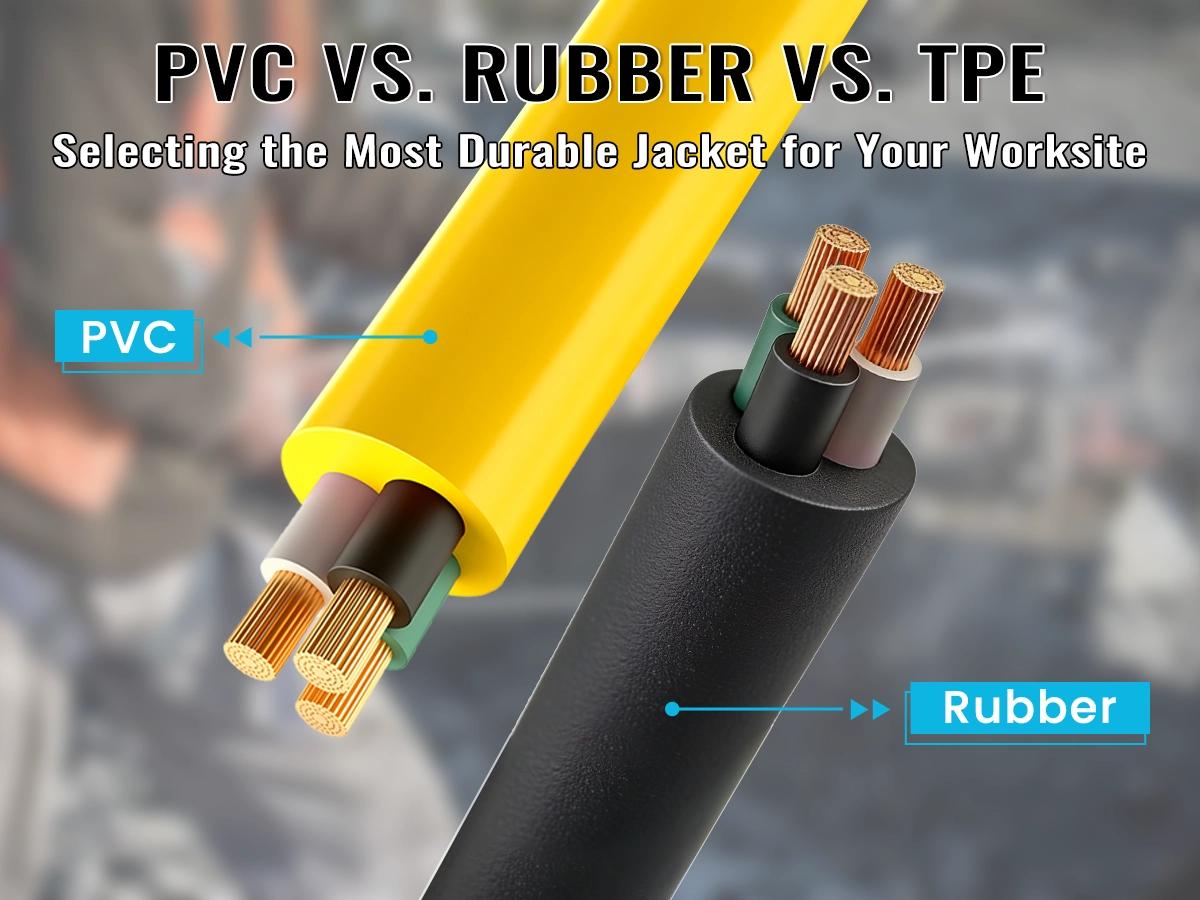
However, standard PVC has clear limitations when applied to dynamic heavy-duty applications. As a thermoplastic material, PVC relies on chemical plasticizers to achieve flexibility. Over time—especially when exposed to outdoor solar heat, oil, or continuous mechanical stress—these plasticizers migrate out of the material. As a result, the PVC jacket becomes brittle, hardens, and cracks easily. Furthermore, PVC stiffens significantly in cold outdoor temperatures, leading to jacket cracking when bent or reeled during winter. While modified or heavy-duty PVC formulations exist, standard PVC lacks the high tear resistance, dynamic flex life, and thermal elasticity required for heavy-duty rubber cables operating on cranes, draglines, or mining equipment.
Polyurethane (PUR)
Polyurethane is a high-performance thermoplastic elastomer known for its exceptional mechanical toughness. In terms of pure tensile strength, tear propagation resistance, and surface abrasion resistance, PUR outperforms almost every other jacketing material. It is lightweight, exceptionally tough, and offers outstanding resistance to mechanical cut-through. Consequently, PUR is widely used in high-flex robotic cables, small dynamic automation tracks, and specialized lightweight mining leads where small outer diameters and maximum abrasion resistance are required.
Despite these impressive mechanical strengths, PUR presents operational trade-offs in heavy-duty applications. First, PUR is generally more expensive than PCP, raising the initial capital cost for long, large-cross-section power cables. Second, certain formulations of PUR can be susceptible to hydrolysis—a chemical degradation process caused by prolonged exposure to hot, humid environments or warm water, which breaks down the polymer chains over time. Third, PUR can be stiffer than vulcanized rubber compounds, making large-scale cable management on heavy reeling drums more challenging compared to suppler, fully vulcanized PCP elastomeric compounds.
Polychloroprene (PCP)
PCP sits effectively between PVC and PUR, serving as a reliable, balanced solution for heavy-duty industrial cables. Unlike thermoplastic PVC, PCP is a fully vulcanized thermosetting elastomer. Once cured, its cross-linked molecular network will not melt, flow, or soften under heat, maintaining its elasticity and structural form across extreme temperature variations.
While PUR may offer higher pure abrasion resistance, PCP provides a more complete, balanced property profile for heavy-duty rubber cables. It delivers far superior flexibility, cold-temperature compliance, weather resistance, and flame retardancy compared to PVC, while matching or exceeding PUR in overall chemical stability, hydrolysis resistance, and cost-efficiency for large-diameter dynamic cables. This makes PCP an ideal, dependable jacketing material for heavy-duty mining, port, and industrial reeling cables operating in harsh, unpredictable environments.
6. Recommended Heavy-Duty Cable Types
To see how polychloroprene compounds are used in modern engineering, let us look at three representative heavy-duty cable types. Manufactured by specialized cable producers like Feichun Cable, these designs demonstrate how PCP outer sheaths protect power, control, and optical elements in demanding field operations.
(N)SHTÖU / (N)SHTOEU Drum Reeling Cable
The (N)SHTÖU cable family (often designated as (N)SHTOEU in international standards) is designed for high mechanical stress in dynamic reeling, festoon, and hoisting systems. These cables are widely deployed on overhead gantry cranes, container stackers, material conveyors, hoists, transport machinery, and motorized spring-driven cable drums.
(N)SHTÖU DRUM REELING CABLE CONSTRUCTION [ + ] Flexible Class 5 Tinned Copper Conductor (( * )) Rubber Compound Insulation (Type 3GI3) ((( ))) EPR Filler Sheath on Textile Polyester Support (((( )))) Inner Bedding Sheath (Type GM1b) ((((( S ))))) Anti-Twist Polyester Braid Shield ((((((( PCP ))))))) Heavy-Duty Outer PCP Rubber Sheath (Type 5GM3)
Engineered for continuous reeling and unreeling, the construction of the (N)SHTÖU highlights the protective role of the PCP outer sheath:
Conductors: Flexible Class 5 tinned copper conductors conforming to BS EN 60228 standards provide excellent electrical conductivity and flex fatigue resistance.
Insulation: High-grade Type 3GI3 ethylene propylene rubber (EPR) insulation according to VDE 0207 Part 20 ensures electrical performance and thermal stability.
Core Layout & Bedding: Cores are cabled around a central filler support and enclosed in a Type GM1b rubber bedding compound.
Anti-Twist Reinforcement: An integrated polyester braid anti-twist shield is embedded between the inner bedding and outer sheath. This braid prevents torsional twisting and structural distortion during high-speed reeling and direction changes.
Outer Sheath: A heavy-duty, weather- and oil-resistant Type 5GM3 PCP rubber compound forms the exterior sheath.
The (N)SHTÖU features a voltage rating of 600/1000V. It operates in fixed installations from minus 40 degrees Celsius to plus 60 degrees Celsius, and in dynamic flexing applications from minus 25 degrees Celsius to plus 60 degrees Celsius. With a tight bending radius—4 times the overall diameter for fixed installations and 5 times for dynamic flexing—it handles repeated bending over guide rollers and compact drum diameters without suffering structural fatigue. The oil- and UV-resistant PCP outer sheath, fully compliant with BS EN/IEC 60811-2-1 standards, protects the internal assembly against oil splash, solar radiation, and surface abrasion.
NSHTÖU-J Heavy-Duty Flexible Crane Cable
The NSHTÖU-J cable is a specialized variant within the NSHTÖU family that includes a dedicated green/yellow protective earth conductor. It is widely used across harbor cranes, container handling equipment, mobile hoists, and heavy industrial machinery where reliable earthing, extreme flexibility, and mechanical durability are required.
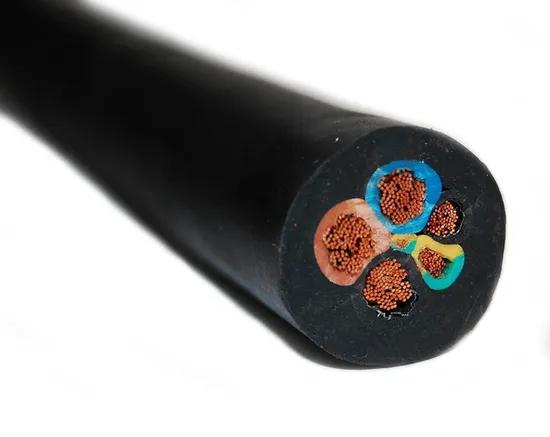
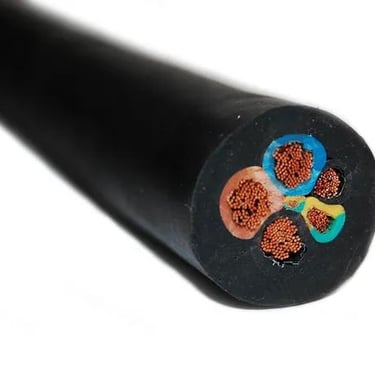
Available in multi-core configurations (such as 4-core with Green/Yellow, Black, Grey, Brown; or 5-core with Green/Yellow, Black, Blue, Brown, Grey), the NSHTÖU-J uses a tough, high-density black PCP outer compound. This sheath keeps the cable flexible across long deployment lengths while protecting it from oil contamination, ozone degradation, moisture ingress, and continuous surface wear during dynamic operation.
(N)TSKCGEWÖU High-Voltage Mining Reeling Cable
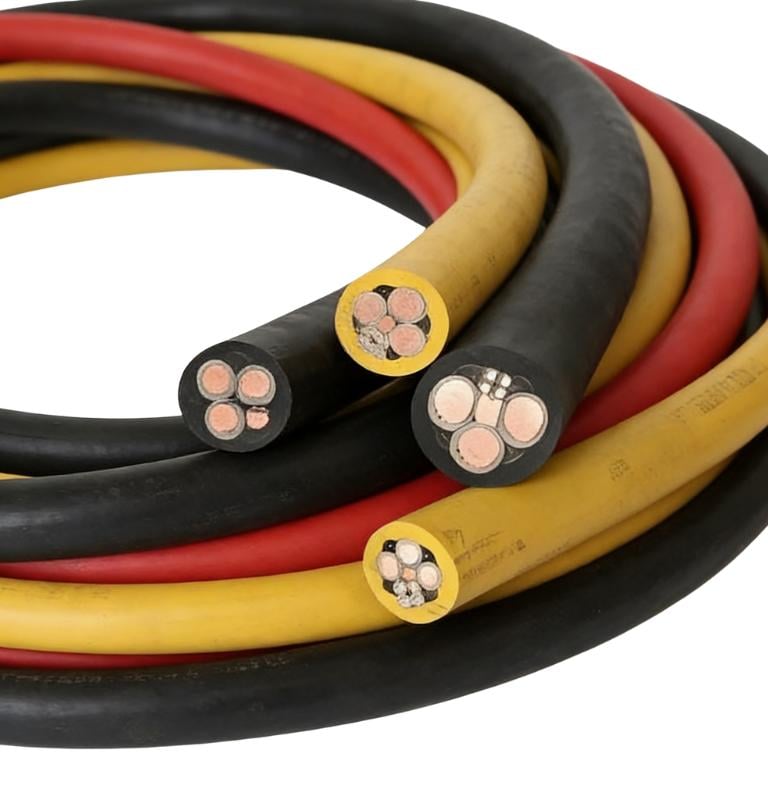
For extreme mechanical stress in heavy industrial and mining operations, the (N)TSKCGEWÖU represents an advanced, high-voltage flexible reeling cable design. Rated for medium- and high-voltage distribution—including 3.6/6kV, 6/10kV, 8.7/15kV, and up to 12/20kV—this cable powers massive mobile equipment in open-cut and underground mining, such as continuous miners, electric shovels, draglines, and heavy mobile crushing plants.
(N)TSKCGEWÖU HIGH-VOLTAGE REELING CABLE [ Phase Cores ] Class 5 Tinned Copper + Semi-Conductive Layers + EPR [ Earth Cores ] Class 5 Flexible Tinned Copper Conductors [ Fibre Optics ] Integrated Multimode / Singlemode Fibre Bundles [ Inner Sheath] Heavy-Duty Vulcanized Rubber Bedding [ Anti-Twist ] High-Tensile Polyester Braid Layer [ Outer Sheath] Abrasion & Tear-Resistant Red PCP Rubber Compound
Operating under extreme mechanical stress, the (N)TSKCGEWÖU is built to withstand high torsional forces (up to plus or minus 25 degrees per meter), tensile loads up to 30 Newtons per square millimeter, and high reeling speeds up to 240 meters per minute. Its internal design incorporates:
Class 5 flexible tinned copper phase and earth conductors
Internal and external semi-conductive rubber layers over high-grade EPR insulation to manage electrical stress fields
Optional integrated singlemode or multimode fiber optic bundles (50/125, 62.5/125, or 9/125) for high-speed site data and control communications
A central semi-conductive filler and inner rubber bedding sheath
An embedded polyester anti-twist braid to absorb torsional loads during rapid reeling
A thick, high-visibility red PCP outer rubber sheath engineered to resist severe abrasion, tearing, chemical attack, and weather exposure
With an operating temperature range extending from minus 30 degrees Celsius to plus 90 degrees Celsius during dynamic flexing (and down to minus 50 degrees Celsius in static installations), and a short-circuit withstand temperature of 250 degrees Celsius, the (N)TSKCGEWÖU demonstrates the performance capability of PCP-based jacketing compounds under heavy industrial stresses.
7. Typical Applications
PCP-jacketed cables are engineered specifically for demanding industrial applications where standard cables quickly fail. The unique combination of flexibility, chemical resistance, tear strength, and weatherproofing makes PCP-sheathed cables essential across several key sectors:
Port Facilities and Harbor Machinery
Modern container terminals rely on continuous automated operations. Ship-to-shore (STS) cranes, rail-mounted gantry (RMG) cranes, rubber-tired gantry (RTG) cranes, and straddle carriers use dynamic reeling cables for power and control. These cables undergo continuous high-speed reeling while exposed to saltwater spray, marine oil contamination, intense sunlight, and wind. PCP jacketing prevents saltwater penetration, resists UV degradation, and withstands constant bending over sheaves and guide rollers.
Open-Cut and Underground Mining Operations
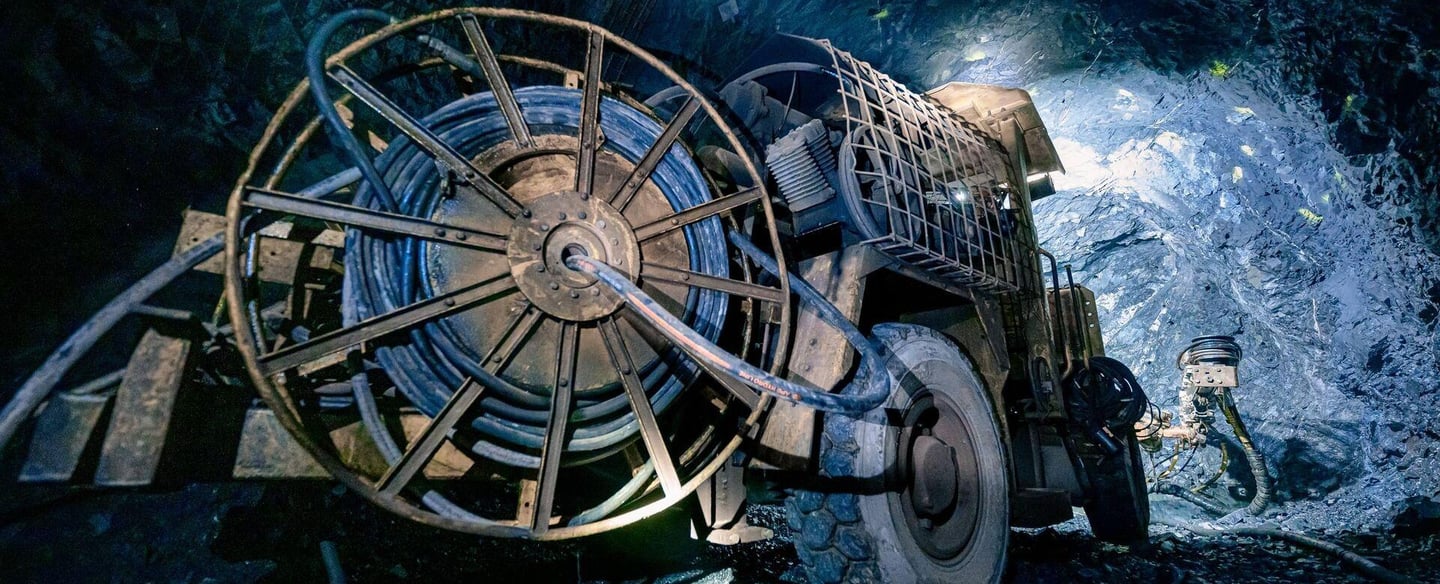
Mining is one of the toughest environments for electrical infrastructure. In open-cut coal, iron ore, and gold mines, power cables are pulled over jagged basalt, crushed granite, and mud, while exposed to heavy vehicles and continuous solar heat. In underground mines, cables face tight bending radii, damp atmospheric conditions, oil drips, and rockfall risks. PCP-sheathed reeling cables—such as the Feichun Cable (N)TSKCGEWÖU series—deliver the cut-through resistance, tear strength, and flame-retardant properties needed to maintain safe, continuous power under these conditions.
Materials Handling, Logistics, and Conveyor Systems
Large-scale bulk handling facilities—including coal terminals, grain export hubs, mineral processing plants, and cement works—utilize stackers, reclaimers, tripper cars, and mobile conveyor systems that move continuously back and forth along long tracks. PCP-jacketed festoon and trailing cables deliver long flex life and chemical resistance, resisting wear despite continuous motion and exposure to dust and industrial lubricants.
Industrial Manufacturing, Hoists, and Overhead Cranes
Inside steel mills, foundries, heavy fabrication facilities, and automated assembly plants, overhead traveling cranes and hoists move heavy loads through high-ambient-temperature, chemical-laden environments. PCP cables provide reliable flame retardancy, oil resistance, and mechanical toughness, standing up to hot metal sparks, hydraulic splashes, and continuous flexing.
Outdoor Infrastructure and Mobile Equipment
Mobile generator sets, temporary site power distribution units, pump stations, and outdoor staging systems require rugged power cords that can be repeatedly deployed, coiled, dragged across concrete, and exposed to all weather conditions. PCP-jacketed rubber cables provide the durability needed to keep site power safe and reliable.
8. When PCP Is the Right Choice
With many cable jacketing compounds on the market—including standard PVC, cross-linked polyethylene (XLPE), thermoplastic elastomers (TPE), polyurethane (PUR), and ethylene propylene rubber (EPR)—selecting the right sheath material requires matching cable properties to field conditions.
JACKET SELECTION MATRIX ENVIRONMENTAL / MECHANICAL HAZARDS RECOMMENDED MATERIAL ---------------------------------- -------------------- Light Duty, Fixed Indoor Wiring, Low Cost ---> Polyvinyl Chloride (PVC) Extreme Micro-Abrasion, Small Diameter ---> Polyurethane (PUR) Combined Mechanical, Oil, UV, & Flexing ---> Polychloroprene (PCP / Neoprene)
PCP is the ideal jacketing choice when an application involves a combination of the following operational factors:
Multifactorial Environmental Hazards: PCP excels when a cable must simultaneously resist oil splash, solar UV radiation, ozone exposure, rain, and mechanical friction. If the environment presents multiple hazards, PCP offers better all-around protection than materials tailored for only one specific threat.
Continuous Dynamic Movement and Reeling: When cables are subjected to continuous flexing, bending, winding on motorized drums, or running through festoon tracks, PCP’s elastomeric vulcanized structure prevents flex fatigue, micro-cracking, and mechanical distortion.
Demanding Safety and Flame Retardancy Standards: In enclosed plants, underground mines, port facilities, and public infrastructure, fire safety is critical. PCP’s natural self-extinguishing behavior helps limit flame spread in the event of an external fire or electrical fault.
Variable Temperature Range: When cables operate outdoors—experiencing freezing winter conditions as well as hot summer sun—PCP maintains its physical flexibility and structural strength without softening or becoming brittle.
Balanced Lifecycle Economics: While simple PVC is cheaper up front, it degrades quickly in heavy-duty service, leading to frequent replacements and costly operational downtime. Conversely, specialized materials like PUR can carry higher material costs without always providing better overall weather and chemical resistance for large-diameter rubber cables. PCP offers an ideal balance of durability, reliability, and cost-effectiveness.
By choosing a high-grade PCP-jacketed cable from a trusted manufacturer like Feichun Cable, plant managers and project engineers secure dependable, long-term performance that minimizes maintenance costs and protects critical assets.
9. Specialized Operational Considerations for Harsh Australian Environments
When installing heavy-duty rubber cables in Australia, cable jacket materials face some of the demanding environmental conditions anywhere in the world. Australia’s climate presents severe challenges to outdoor electrical infrastructure, requiring jacket compounds designed to handle these specific stress factors.
AUSTRALIAN OPERATIONAL HAZARDS FOR CABLES [ SOLAR RADIATION ] Extreme UV Index & Photolytic Attack [ THERMAL CYCLING ] Surface Temps Reaching 70°C+ [ ABRASIVE GROUND ] Sharp Basalt, Iron Ore, & Quartz Silica [ COASTAL EXPOSURE ] High Humidity & Airborne Salt Spray
Extreme Solar Radiation and UV Levels
Australia experiences some of the highest solar UV radiation levels globally. In northern and central regions—such as the Pilbara in Western Australia or Queensland’s Bowen Basin—unshielded cable jackets are exposed to intense UV rays for over 10 to 12 hours daily. Photolytic degradation from UV exposure breaks down weak molecular bonds in lower-grade plastics, leading to surface chalking, discoloration, micro-fractures, and rapid embrittlement.
PCP formulations specifically engineered with high carbon black loading and specialized antioxidant/antiozonant systems resist intense UV exposure. They maintain surface integrity and elasticity even after years of direct exposure under the Australian sun.
Thermal Extremes and Surface Temperature Spikes
Ambient temperatures in Australian mining pits and outdoor industrial sites frequently exceed 40 to 45 degrees Celsius in summer. Dark cable jackets lying on exposed ground, red dust, or concrete aprons can reach surface temperatures of 70 degrees Celsius or higher.
Under these conditions, standard thermoplastic jackets (such as standard PVC) soften, lose dimensional stability, and become highly susceptible to surface scuffing and cut-through. Conversely, vulcanized thermosetting PCP rubber compounds maintain their physical form, mechanical strength, and tear resistance across these high surface temperatures. Furthermore, during cold desert nights where temperatures drop rapidly, PCP stays flexible, preventing thermal shock cracking during morning startup and cable reeling.
Highly Abrasive Iron Ore, Basalt, and Quartz Environments
Australia’s vast mining and materials handling infrastructure—including iron ore operations, gold fields, coal ports, and hard-rock quarries—subjects cables to highly abrasive crushed rock, quartz silica dust, and sharp iron ore particles. As dynamic cables are reeled, unreeled, or dragged across port berths and pit floors, this abrasive grit grinds against the outer sheath.
The high tensile strength, elasticity, and tear-propagation resistance of PCP rubber compounds allow the sheath to absorb surface impact and resist abrasive wear. This resilience protects the internal bedding, anti-twist braiding, and power conductors from mechanical exposure.
Coastal Marine Exposure and High-Humidity Port Infrastructure
Major bulk export terminals across Australia—such as Port Hedland, Dampier, Newcastle, Hay Point, and Gladstone—operate directly on salt-water coastlines. In these environments, cables face a combination of high humidity, salt spray, marine airborne pollutants, and intense solar heat.
PCP provides outstanding protection against marine corrosion, preventing moisture and salt ingress into the inner core, while resisting atmospheric ozone cracking near high-voltage port machinery.
For Australian site engineers, asset managers, and electrical contractors operating across mining, port logistics, and heavy manufacturing, specifying PCP-jacketed rubber cables—such as those produced by Feichun Cable—ensures compliance with demanding local site requirements and reliable long-term service under harsh operating conditions.
10. Conclusion
A cable jacket is much more than a simple outer wrapper; it is a critical engineering component that determines the operating life, safety, and reliability of heavy-duty power and control systems. In demanding industrial environments—where cables face relentless abrasion, mechanical flexing, oil splash, intense solar heat, ozone exposure, and fire risks—selecting the right jacket material is essential to preventing unscheduled downtime and costly repairs.
Polychloroprene (PCP), commonly known as neoprene, remains a industry standard for heavy-duty rubber cable jackets. Its strength lies in its exceptional balance of properties. Rather than excelling in just one area at the expense of others, PCP delivers strong, consistent performance across every major threat category:
Exceptional mechanical strength, cut resistance, and abrasion durability
Proven resistance to industrial mineral oils, greases, and hydraulic fluids
Superior protection against solar UV radiation, ozone cracking, and atmospheric weathering
Built-in flame retardancy and self-extinguishing behavior
Outstanding flexibility and structural stability across a broad operating temperature range
Whether deployed on automated ship-to-shore container cranes, high-speed material handling hoists, or massive open-cut mining draglines, PCP-jacketed cables—such as the Feichun Cable (N)SHTÖU and (N)TSKCGEWÖU series—provide reliable, long-term performance in demanding field environments. When a cable must perform reliably under continuous movement, harsh weather, and heavy mechanical stress, PCP remains one of the most dependable, practical, and cost-effective jacket materials available.
For demanding crane and mining applications, PCP remains one of the most dependable jacketing materials because it balances durability, flexibility, and environmental resistance.
Port crane cables | Mining cables | Reeling cables | Trailing cables | Festoon cables | Heavy-duty power cables | Medium voltage cables | Offshore crane cables | Underground mining cables | Dragline cables | Shearer cables | Container handling cables | STS crane cables | RTG cables | Mobile equipment cables | Armored cables | Flexible power cables | VFD cables | Submersible cables | Cold resistant cables | Abrasion resistant cables | Flame retardant cables | Marine environment cables | Opencast mining | Underground operations
© 2006 All rights reserved.
[INDUSTRIAL_CABLES]
INDUSTRIAL GRADE CABLE SYSTEMS | PORT & MINING SOLUTIONS
TEL: +86 153 7530 2641 |MAIL: hongjing.Wang@feichuncables.com