What Is TYPE SHD-CGC 3/C 2000V Cable? Structure, Applications & Selection Guide for Mining Power Systems
Explore the TYPE SHD-CGC 3/C 2000V heavy-duty mining cable, including its construction, shielding design, and key applications in longwall systems and mobile equipment. Learn how to select the right cable for harsh industrial environments.
hongjing.Wang@Feichun
4/15/20268 min read
What Is TYPE SHD-CGC 3/C 2000V Cable?
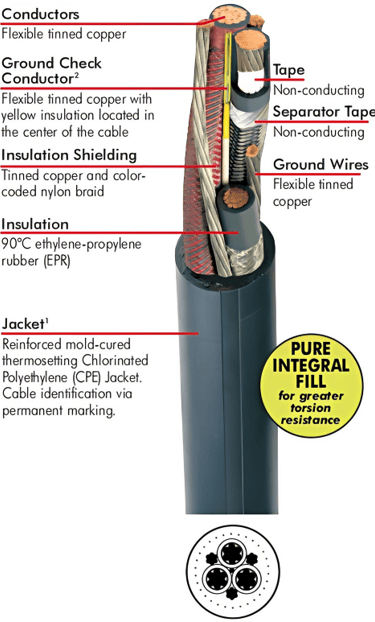
TYPE SHD-CGC 3/C 2000V cable is a heavy-duty portable power cable engineered specifically for underground mining circuits that do not exceed 2,000 volts. The designation “3/C” indicates three power conductors, while “SHD-CGC” refers to its shielded design combined with a dedicated ground-check conductor. This cable delivers reliable power to mobile mining equipment while incorporating multiple layers of safety and durability features essential for the extreme conditions found deep underground.
In mining power systems, where equipment must withstand constant flexing, abrasion, moisture, oil, and mechanical stress, this cable stands out because it integrates flexible conductors, ethylene-propylene rubber (EPR) insulation, metallic shielding, a central ground-check conductor, and a tough chlorinated polyethylene (CPE) outer jacket. These elements work together to maintain electrical integrity, reduce downtime, and protect workers in some of the world’s most demanding environments.
Where Is TYPE SHD-CGC Cable Used? (Primary Applications)
TYPE SHD-CGC 3/C 2000V cable is built for the toughest mobile and semi-mobile mining operations. It powers longwall shearers that slice through coal seams, armored face conveyors that move material continuously, and continuous miners that cut and load ore in one pass. Loaders, shuttle cars, drills, conveyors, and pumping systems also rely on this cable when they require grounding conductors, a ground-check conductor, and metallic shielding for safety and performance.
In longwall mining setups, the cable trails behind massive shearers that move back and forth along the face, enduring thousands of bending cycles per shift. In room-and-pillar operations, continuous miners and shuttle cars drag the cable across rough mine floors littered with rock and water. Pumps in sumps and conveyor drives in haulage ways use it where water splash, oil from machinery, and falling debris are constant threats. Any application demanding three-phase power up to 2,000 volts in a portable, high-flex environment benefits from its design.
Real-World Mining Case Study – Longwall Coal Operation in Appalachia A large underground coal mine in West Virginia replaced standard trailing cables on its longwall shearer after repeated failures caused 4–6 hours of downtime per incident. The new 3/C 2000V SHD-CGC cable, installed in 4/0 size to match the shearer’s 1,500 hp drive, survived 18 months of continuous operation with zero electrical faults. The central ground-check conductor detected a minor insulation nick early during a weekly inspection, allowing the crew to splice the cable during a scheduled maintenance window instead of facing an unplanned outage. Production increased by an estimated 12 % over the previous year because the cable’s reinforced jacket resisted abrasion from sharp slate and its shielding prevented EMI from affecting the shearer’s control system.
Real-World Mining Case Study – Continuous Miner in a Potash Mine, Saskatchewan In a Canadian potash operation, continuous miners operated in high-humidity conditions where salt-laden moisture accelerated corrosion. Switching to the SHD-CGC cable eliminated nuisance tripping of ground-fault relays that had plagued older unshielded designs. The yellow-insulated ground-check conductor in the cable center provided instant feedback to the monitoring system, and the tinned-copper shielding maintained signal integrity for the miner’s remote controls. After 14 months, the mine reported a 28 % reduction in cable-related delays and extended the service life of the cable reels by nearly 40 %.
Key Design Features of TYPE SHD-CGC Cable
2000V Voltage Rating and Thermal Performance
The cable is rated for continuous operation at up to 2,000 volts, making it ideal for medium-voltage portable equipment common in modern mining fleets. Its recommended maximum conductor temperature is 90 °C, providing a safety margin under heavy loads and in warm mine airways. This thermal stability prevents insulation softening or premature aging even when equipment runs at full capacity for extended shifts.
Flexible Tinned Copper Conductors
Each power conductor uses finely stranded tinned copper. The tinning protects against corrosion in humid, sulfur-rich, or chemically aggressive mine atmospheres while maintaining excellent conductivity. The high strand count delivers the flexibility required for cables that are reeled, dragged, and bent thousands of times per day without fatigue cracking.
Ground Check Conductor Design
A dedicated ground-check conductor sits at the center of the cable assembly. It consists of flexible tinned copper, insulated with bright yellow polypropylene, and engineered to withstand extreme flexing while remaining extensible. This conductor continuously monitors the integrity of the grounding circuit. If the cable is crushed, cut, or damaged, the monitoring system detects the change instantly and can shut down power before a dangerous fault occurs—critical in confined underground spaces.
Metallic Shielding System
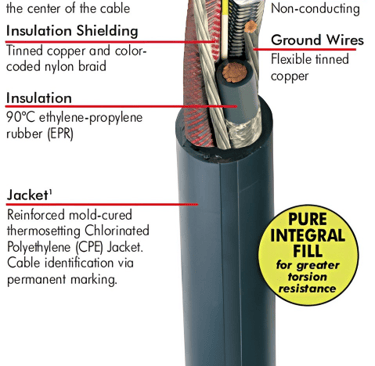
Each power conductor is individually shielded with tinned copper and a color-coded nylon braid. The shielding reduces electromagnetic interference (EMI) that could disrupt sensitive control electronics on modern mining machines. It also provides an additional barrier against mechanical damage and helps contain electrical faults, directing fault current safely to ground.
EPR Insulation (Ethylene-Propylene Rubber)
The insulation surrounding each conductor is high-grade ethylene-propylene rubber rated for 90 °C. EPR offers outstanding dielectric strength, flexibility under repeated bending, and resistance to moisture, heat aging, and ozone. In wet mine conditions, it prevents water ingress that could lead to insulation breakdown.
Reinforced CPE Jacket Construction
The outer jacket is a reinforced, mold-cured thermosetting chlorinated polyethylene (CPE). This material is engineered for extreme toughness: it resists abrasion from rock and machinery, stands up to oils and chemicals, and maintains flexibility across a wide temperature range. The mold-cured process creates a dense, uniform jacket that seals the internal components against the harsh mining environment.
Grounding System Integration
Multiple flexible tinned-copper ground wires are included alongside the power conductors. They ensure low-impedance fault-current paths so that protective relays operate quickly, limiting damage and protecting personnel.
Why TYPE SHD-CGC Cable Is Critical for Mining Safety
Underground mining is inherently hazardous. Electrical faults can ignite methane or coal dust, cause arc flashes, or electrify equipment frames. The SHD-CGC design addresses these risks directly. The ground-check conductor provides real-time monitoring of the safety ground path. Metallic shielding contains stray currents and reduces EMI that could interfere with proximity sensors or communication systems. The robust CPE jacket protects against physical damage that might otherwise expose live conductors. Together, these features create multiple layers of defense that help mines meet stringent safety expectations while keeping production running.
Advantages Compared to Standard Mining Cables
Compared with basic Type W or Type G cables, the SHD-CGC offers superior shielding, integrated ground-check monitoring, and a more rugged jacket. Standard cables often lack individual conductor shielding, making them more susceptible to EMI and external damage. Without a dedicated ground-check conductor, fault detection relies solely on ground-fault relays, which may not catch partial damage until it becomes critical. The SHD-CGC’s EPR insulation and CPE jacket also deliver longer flex life and better chemical resistance, reducing replacement frequency and associated labor costs.
In high-flex applications such as longwall shearers, the cable’s central ground-check design and extensible construction prevent internal wire breakage that plagues simpler cables. Mines using this cable typically report fewer unscheduled stops and lower overall cable consumption per ton of material mined.

How to Select the Right TYPE SHD-CGC Cable
Consider Voltage and Load Requirements
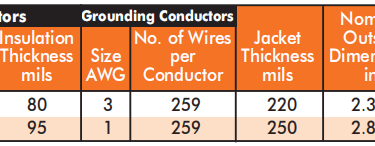
Verify that the system voltage stays at or below 2,000 volts. Calculate the expected current draw of the equipment and choose a conductor size (such as 4/0 AWG or 350 kcmil) that provides adequate ampacity at 90 °C while allowing for voltage drop over the cable run length.
Evaluate Environmental Conditions
Assess exposure to water, oil, chemicals, and mechanical abuse. Mines with high rock-fall risk or heavy equipment traffic benefit from the thicker, more abrasion-resistant CPE jacket. In very wet sumps or areas with standing water, the cable’s sealed construction and moisture-resistant insulation are essential.
Shielding and Safety Requirements
If the equipment uses sensitive electronic controls or operates near variable-frequency drives, individual conductor shielding is non-negotiable to prevent EMI-induced malfunctions. A ground-check conductor is mandatory wherever continuous monitoring of the safety ground is required by site safety protocols.
Flexibility and Installation Constraints
Measure the minimum bending radius of the cable reels and cable-handling systems. The high strand count and flexible jacket allow tighter bends than stiffer power cables, making routing through tight entries and around corners easier. Consider reel capacity and trailing length to avoid excessive tension.
Common Installation and Handling Practices
Proper handling extends cable life dramatically. Route the cable to minimize dragging over sharp edges or through standing water when possible. Use cable guides or rollers at transfer points. Maintain the manufacturer’s recommended minimum bending radius during storage and deployment to prevent internal conductor damage. Inspect the jacket daily for cuts, gouges, or abrasion; repair or replace damaged sections promptly. Train operators to avoid running equipment over the cable and to reel it evenly to prevent crossovers that cause crushing.
Typical Challenges in Mining Cable Applications
Mining cables face relentless abrasion from rock and equipment, chemical attack from hydraulic fluids and mine water, electrical stress from frequent starts and stops, and mechanical fatigue from constant flexing. Poor cable management leads to premature jacket failure, water ingress, and eventual conductor damage. Overheating from undersized conductors or blocked ventilation can soften insulation. The SHD-CGC design mitigates many of these issues through its material choices and layered construction, but correct installation and maintenance remain essential.
Future Trends in Heavy-Duty Mining Cables
Mines are pushing for even greater flexibility and durability as equipment becomes more powerful and automated. Manufacturers are exploring advanced polymer blends that maintain flexibility at lower temperatures while increasing cut and tear resistance. Integration of embedded sensors for real-time temperature, tension, and partial-discharge monitoring is becoming more common, allowing predictive maintenance. The drive toward reduced downtime and higher productivity continues to favor cables that combine safety, longevity, and performance in a single robust package.
Conclusion
The TYPE SHD-CGC 3/C 2000V cable is a purpose-built solution for the most demanding portable power needs in underground mining. Its combination of flexible tinned-copper conductors, EPR insulation, metallic shielding, central ground-check conductor, and reinforced CPE jacket delivers the reliability, safety, and longevity required to keep longwall shearers, continuous miners, and other critical equipment operating without interruption. By matching the cable to voltage, load, and environmental demands—and by following proper installation and inspection practices—mine operators can significantly reduce electrical downtime, enhance worker safety, and lower total cost of ownership. Whether powering a 1,500 hp shearer in a coal seam or driving a continuous miner in potash, this cable has proven itself as a critical component of modern, productive, and safe mining operations.
FAQ
What does SHD-CGC stand for in mining cables? SHD refers to the shielded construction of the power conductors, and CGC indicates the inclusion of a dedicated ground-check conductor. Together they provide both electromagnetic shielding and continuous monitoring of the grounding circuit.
What voltage is the TYPE SHD-CGC 3/C cable rated for? It is rated for circuits up to 2,000 volts, making it suitable for most medium-voltage portable mining equipment.
Why is a ground-check conductor important? The ground-check conductor, usually yellow-insulated and located centrally, allows real-time monitoring of ground continuity. If the cable is damaged, the system can detect the fault immediately and shut down power before an unsafe condition develops.
What is the maximum operating temperature of the cable? The recommended maximum continuous conductor temperature is 90 °C, providing thermal headroom for heavy-load operation in warm underground environments.
Can this cable be used underwater or in very wet conditions? Yes. Its sealed EPR insulation and robust CPE jacket make it suitable for shallow water submersion and areas with frequent water splash or high humidity.
How does the metallic shielding help in mining? The tinned-copper and nylon-braid shielding on each power conductor reduces electromagnetic interference with control systems and contains fault currents, improving both equipment reliability and personnel safety.
What jacket material is used and why? The outer jacket is reinforced mold-cured chlorinated polyethylene (CPE). It offers superior resistance to abrasion, oil, chemicals, and impact while remaining flexible enough for constant reeling and trailing.
How often should mining cables be inspected? Daily visual checks for jacket damage are standard, with more thorough electrical testing and ground-check verification performed weekly or according to the mine’s safety plan.
What conductor sizes are commonly available? Typical sizes for this cable family include 4/0 AWG and 350 kcmil, chosen based on the equipment’s current requirements and allowable voltage drop.
Is the cable suitable for longwall shearers? Absolutely. Its high flex life, central ground-check conductor, and rugged jacket are specifically designed for the extreme bending and mechanical abuse experienced by longwall shearer trailing cables.
Port crane cables | Mining cables | Reeling cables | Trailing cables | Festoon cables | Heavy-duty power cables | Medium voltage cables | Offshore crane cables | Underground mining cables | Dragline cables | Shearer cables | Container handling cables | STS crane cables | RTG cables | Mobile equipment cables | Armored cables | Flexible power cables | VFD cables | Submersible cables | Cold resistant cables | Abrasion resistant cables | Flame retardant cables | Marine environment cables | Opencast mining | Underground operations
© 2006 All rights reserved.
[INDUSTRIAL_CABLES]
INDUSTRIAL GRADE CABLE SYSTEMS | PORT & MINING SOLUTIONS
TEL: +86 153 7530 2641 |MAIL: hongjing.Wang@feichuncables.com