Why Underground Mines Need Flame-Retardant Rubber Cables: Safety Features, IEC 60332-1 Testing, and Cable Structure
Explore why underground mines need flame-retardant rubber cables, how IEC 60332-1 testing works, and how fire-resistant compounds improve mining safety.
hongjing.Wang@Feichun
7/15/202616 min read
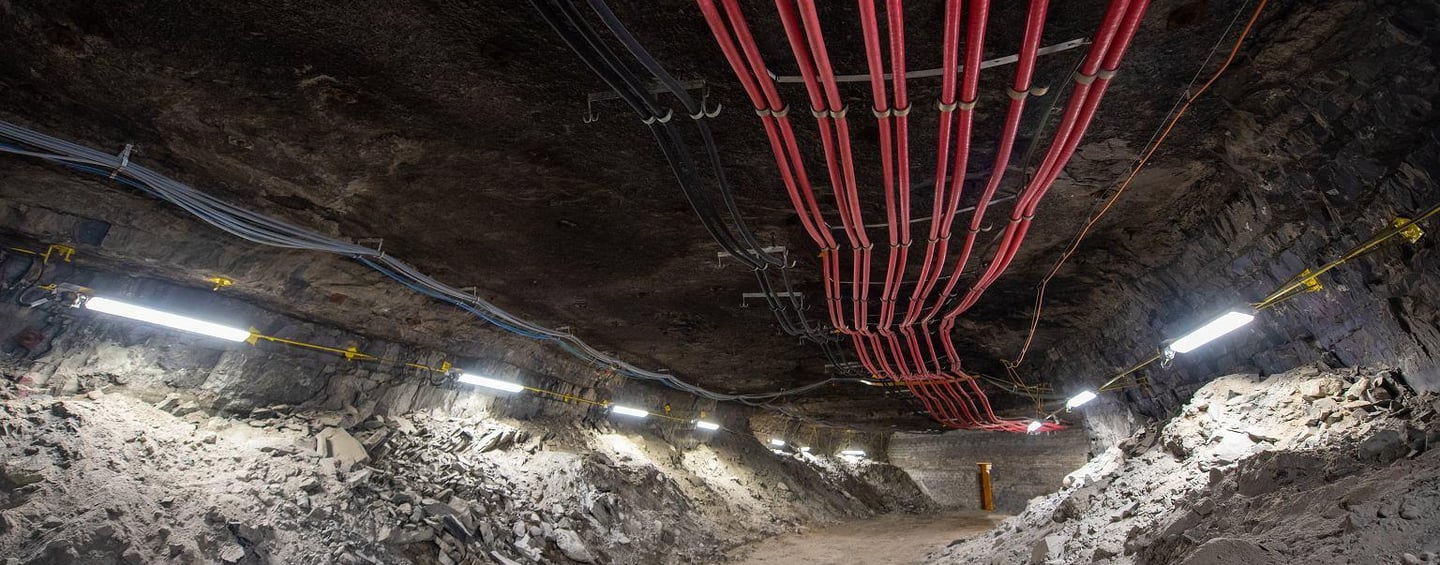
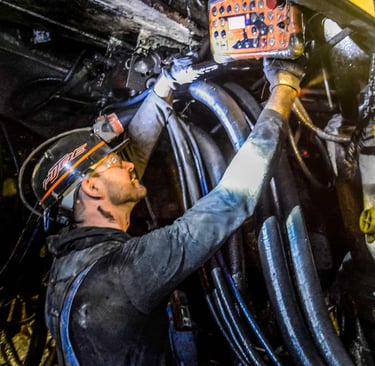
In the deep, dark, and confined corridors of an underground mine, safety is not just a regulatory checklist. It is the absolute line between an ordinary shift and a catastrophic disaster. Underground mining environments are among the most punishing work environments in the entire industrial world. Teams of miners operate heavy, high-voltage machinery thousands of meters beneath the surface of the earth. In these tight spaces, power must be delivered continuously, reliably, and safely.
Every single machine, from massive continuous miners and longwall shearers to shuttle cars and submersible pumps, relies on heavy-duty electrical cables to keep running. However, these cables represent a unique danger. Because they carry massive electrical loads through tight tunnels packed with dust, moisture, and mechanical hazards, they can easily become a major fire risk if they are not designed correctly.
For decades, ordinary rubber-sheathed cables were the industry standard for flexible power delivery. They are tough, flexible, and relatively cheap. But in an underground mine, relying on ordinary rubber is a gamble that no operator should ever take. When a fire breaks out underground, the situation escalates much faster than it would in an open-pit mine or a factory on the surface.
This detailed guide will explain why underground mines must completely abandon ordinary rubber cables in favor of specialized flame-retardant rubber compounds. We will look closely at the international safety benchmarks, specifically the IEC 60332-1 flame propagation test, analyze the physical structure of a high-performance mining cable, and see how leading global cable manufacturers are addressing this critical safety challenge.
1. Introduction: Why Cable Fire Safety Matters in Underground Mines
To understand why specialized cabling is so important, you must first understand the unique environment of an underground mine. Unlike an industrial facility on the surface, an underground mine is a completely closed environment. There are no windows, no open skies, and very few escape routes. The air supply is entirely dependent on mechanical ventilation systems that pump oxygen down from the surface through a network of shafts and tunnels.
In this type of environment, a fire is an absolute nightmare. When something catches fire underground, three major crises happen at the same exact time:
Toxic Smoke Accumulation
In an open space, smoke rises and disperses into the atmosphere. In an underground mine, the ceiling of the rock tunnel traps the smoke. The mine's ventilation system, which is designed to bring in fresh air, can accidentally push toxic smoke and carbon monoxide through the entire network of tunnels, blinding and choking miners who are miles away from the actual fire.
Intense Heat Trapping
The thick rock walls of a mine act like a giant oven. They absorb very little heat, reflecting it right back into the tunnel. A small fire that would burn out quietly on the surface can quickly create a flashover environment underground, where the ambient temperature skyrockets and ignites everything nearby.
Complicated Evacuation Risks
Evacuating an underground mine is a slow, difficult process. Miners might have to travel several kilometers through dark, smoky, and uneven tunnels, or wait for slow mine lifts to bring them back up to the surface.
Because evacuation is so difficult, the ultimate goal of underground mine safety is prevention. You must stop fires from starting, and if they do start, you must prevent them from spreading.
The Cable as an Ignition Source
Electrical cables run through every single part of a mine. They are woven along the roofs, dragged behind heavy vehicles, and laid through damp walkways. This widespread use means they are exposed to many different fire hazards:
Electrical Faults: High-voltage short circuits can create electric arcs that reach temperatures above 3000°C instantly melting metal and igniting nearby insulation.
Cable Overheating: Continuous heavy loads, especially when cables are coiled up on a reel and cannot dissipate heat, can cause the insulation to slowly bake, degrade, and catch fire.
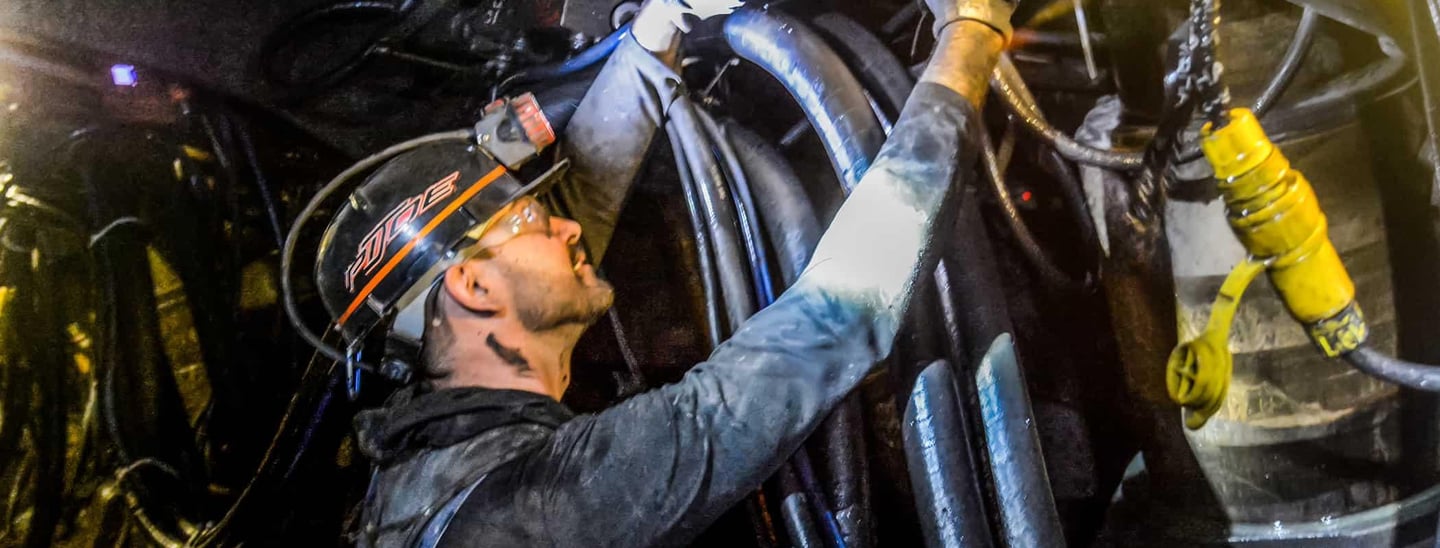
Mechanical Damage: Heavy mining vehicles frequently run over trailing cables. Sharp rocks can crush them, cutting the internal insulation and causing hidden internal short circuits.
Hydraulic Oil Ignition: Mining machines use massive amounts of highly pressurized hydraulic fluid. If a hydraulic line ruptures, it sprays a fine mist of flammable oil everywhere. If this oil hits an overheated cable or an electrical spark, it creates a massive torch fire.
Conveyor Belt Friction: Friction from stuck conveyor rollers can generate intense heat, igniting coal dust and quickly spreading to the cable trays running alongside the conveyor system.
This brings us to the core rule of mining cable design: A mining cable must never act as fuel for a fire. If a fire starts because of an external source, like a hydraulic oil leak or a coal dust explosion, the cable will inevitably be exposed to the flames. An ordinary cable will catch fire and carry that flame along its entire length, acting like a fuse on a stick of dynamite to spread the fire into other parts of the mine.
A flame-retardant rubber cable is engineered to do the exact opposite. It is designed to resist catching fire, and most importantly, to stop burning completely once the external flame source is removed or consumed. By self-extinguishing, the cable breaks the chain reaction of the fire, keeping the damage localized and giving miners valuable time to safely evacuate.
2. What IEC 60332-1 Actually Tests
When engineers and safety procurement managers look for safe mining cables, they do not rely on vague promises. They look for specific, standardized international certifications. The most important baseline standard for single cable fire safety is the IEC 60332-1 standard, published by the International Electrotechnical Commission.
This standard is divided into distinct parts that work together to create a reliable testing process:
IEC 60332-1-1: Specifies the exact design, dimensions, and setup of the test apparatus itself (the chamber, the burner, and the gas supply).
IEC 60332-1-2: Defines the exact testing procedure, including how long the flame must be applied based on the cable's weight, and the precise performance requirements the cable must meet to pass.
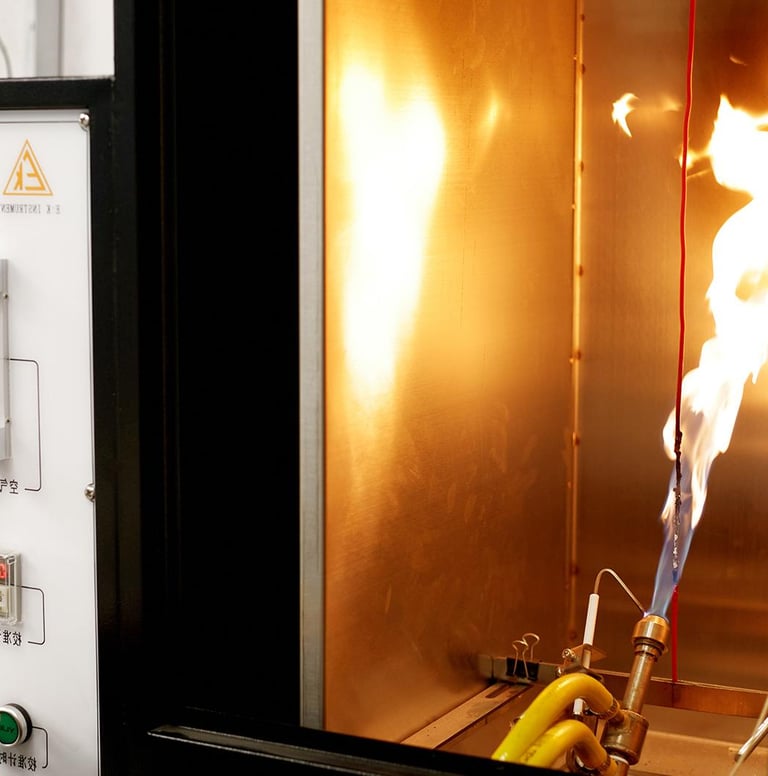
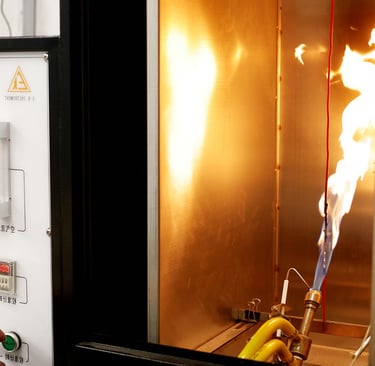
The IEC 60332-1 test is a vertical flame propagation test performed on a single insulated wire or cable. The logic behind testing a cable vertically is simple: fire naturally travels upward much faster than it travels horizontally because the rising heat preheats the materials above it. Testing a cable vertically represents the absolute worst-case scenario for fire spread.
The Detailed Step-by-Step Test Procedure
Specimen Preparation: A single sample of the mining cable, exactly 600 mm long, is cut from the production line.
Vertical Mounting: The cable sample is mounted vertically inside a three-sided metal chamber that protects the test from accidental air drafts but allows oxygen to flow in naturally from the front.
Burner Alignment: A specialized gas burner, fueled by propane gas to generate a precise thermal output of 1 kW, is positioned at the base of the chamber. The burner is tilted at an angle of 45° relative to the vertical axis of the cable.
Controlled Flame Application: The burner is lit, and the flame is applied directly to the surface of the cable at a distance of 475 mm from the top support. The duration of the flame application is not random; it is calculated based on the total weight of the cable sample. For standard mining cables, this flame exposure usually lasts between 60 seconds and 480 seconds.
Extinguishment and Inspection: Once the required time is up, the test operator removes the burner flame. The cable is then closely observed to see how its materials react.
The Performance Passing Criteria
To pass the strict IEC 60332-1-2 certification, the cable must prove that it can actively resist the spread of fire. The test inspectors look for three critical performance metrics:
Self-Extinguishing Behavior: Once the 1 kW test flame is removed, any flame on the cable itself must die out naturally. It cannot continue to burn or smolder indefinitely.
Limited Flame Propagation Damage: The inspector measures the distance from the lower edge of the top support down to the onset of charring. The cable fails the test completely if the charring extends to within 50 mm of the top support, or if it burns all the way down to a point more than 540 mm from the top. In short, the fire must stay confined to the direct impact area of the burner.
No Flaming Droplets: For certain specific variants of the test, the cable material must not melt and drop burning chunks of plastic or rubber onto the floor of the test chamber, as these flaming droplets could easily ignite other materials underneath the cable in a real mine setting.
3. Test Logic in Plain Language
To really understand what an IEC 60332-1 certification means, we need to clear up a very common misunderstanding in the industrial market: There is a huge difference between a "flame-retardant" cable and a "fireproof" (or fire-resistant) cable.
Many people assume that if a cable passes an international fire test, it can be thrown directly into a blazing furnace and continue working perfectly. This is completely wrong.
Let us break down the plain English logic of these engineering terms:
Cable Fire Rating ClassPractical Meaning during a FirePrimary Engineering GoalFire-Resistant / Fireproof (e.g., IEC 60331)The cable will keep carrying electricity even while actively engulfed in direct flames.Keeps critical systems running (emergency pumps, fans, alarms) during a fire.Flame-Retardant (e.g., IEC 60332-1)The cable will burn when exposed to fire, but it will stop burning and put itself out the moment the fire source goes away.Prevents the cable from spreading the fire to other parts of the facility.
The IEC 60332-1 standard is fundamentally a flame propagation test. Its goal is to answer one practical question for a safety manager: If a short circuit or an external fire ignites a single meter of this cable, will the cable act as a pathway that carries the fire along the entire tunnel system?
When a cable passes this test, it proves that its outer rubber compound possesses active chemistry that fights against the combustion process. It tells the mine operator that if a piece of mobile machinery catches fire and scorches a trailing cable, the fire will stay right there at the machine. The cable will not carry the flame up into the overhead cable trays, preventing a small, localized mechanical accident from turning into a devastating, mine-wide disaster.
4. Why Ordinary Rubber Cables Are Risky
Standard, non-flame-retardant rubber cables are excellent products for everyday industrial use. They are usually made from basic hydrocarbon-based rubber polymers, such as natural rubber or standard styrene-butadiene rubber formulations. In an open-air warehouse or a standard workshop, they offer fantastic flexibility, excellent water resistance, and great durability against mechanical wear.
However, when you place these ordinary rubber compounds into the extreme environment of an underground mine, they turn into a major safety liability.
[Image comparing ordinary rubber cable vs flame-retardant rubber cable under fire exposure]
The Chemistry of Ordinary Rubber Combustion
Ordinary rubber is made up of long chains of hydrogen and carbon atoms. When these polymers are exposed to intense heat from an electrical short circuit or an external fire, they undergo a chemical process called thermal degradation.
Instead of resisting the heat, the molecular chains of ordinary rubber quickly break down. As they decompose, they release a highly flammable mix of volatile hydrocarbon gases, including methane, ethylene, and hydrogen.
These gases rise directly into the fire zone, mixing with oxygen and acting as excellent fuel for the fire. The ordinary rubber sheath essentially turns into a solid oil slick, fueling the fire and causing it to burn hotter, faster, and longer.
The Closed-Space Danger Factor
In a wide-open surface factory, a burning rubber cable is bad, but the heat and gases can escape into the air. In an underground mine tunnel, the situation becomes dangerous instantly due to several compounding physical factors:
Thermal Feedback Loops: The solid rock walls of a mine tunnel trap the radiant heat from the burning cable. This trapped heat raises the temperature around the rest of the cable, causing the unburnt sections ahead of the fire to decompose and release flammable gases even before the visible flame reaches them.
Rapid Oxygen Depletion: As an ordinary rubber cable burns aggressively down a tunnel, it consumes vast amounts of oxygen from the limited air supply, replacing it with deadly carbon monoxide gas.
Thick, Pitch-Black Smoke: Burning ordinary hydrocarbons produces huge amounts of dense, black soot. This soot quickly fills the narrow mine shafts, reducing visibility to zero. Miners cannot see their escape routes, and rescue teams cannot see to find them.
A standard rubber cable might be mechanically strong enough to pull a mining shuttle back and forth for months, but if its compound is not explicitly engineered to be flame-retardant, it remains a dangerous vulnerability waiting for an ignition source.
5. How Flame-Retardant Rubber Works
To prevent the dangerous combustion cycle of ordinary rubber, cable chemists formulate specialized flame-retardant rubber compounds. These materials are specifically designed to change how the rubber reacts when it is exposed to extreme heat and open flames.
The most common rubber compound families used in the manufacturing of high-performance mining cables include:
Chlorosulfonated Polyethylene (CSP)
Highly resistant to weathering, chemicals, oil, and high temperatures, CSP exhibits excellent inherent flame retardancy due to the chlorine atoms built directly into its chemical structure.
Chlorinated Polyethylene (CPE)
A very tough, cost-effective polymer widely used for heavy-duty mining cable jackets. Like CSP, its high chlorine content gives it superb natural resistance to catching fire and spreading flames.
Ethylene Propylene Diene Monomer (EPDM)
While standard EPDM burns relatively easily, it can be heavily modified by compounding chemists with massive amounts of mineral flame-retardant additives. This creates an extremely flexible, high-voltage insulation material that performs beautifully in cold, wet mining conditions.
Neoprene (Polychloroprene)
One of the oldest and most reliable flame-retardant rubbers available. Neoprene is naturally tough, highly resistant to tearing and mechanical scraping, and possesses excellent self-extinguishing properties when exposed to fire.
Ordinary Rubber Structure:
[Heat] ──> [Polymer Breaks Down] ──> [Releases Flammable Gases] ──> [Feeds the Fire]
Flame-Retardant Rubber Structure:
[Heat] ──> [Chemical Additives Activate] ──> [Forms Solid Char / Releases Water Vapor] ──> [Smothers Flame]
The Chemical Defense Mechanism
How do these specialized compounds actually stop a fire from spreading under the IEC 60332-1 testing method? They rely on three clever chemical defense mechanisms:
The Condensed-Phase Char Layer: When a flame hits a flame-retardant rubber jacket containing compounds like CPE or Neoprene, the material does not melt into a liquid fuel pool. Instead, it undergoes a chemical cross-linking reaction that turns the outer layer into a thick, solid, carbon-rich char crust. This char layer acts as a physical heat shield, blocking the intense heat of the fire from reaching the inner layers of the cable, and stopping the release of flammable gases.
The Radical Scavenging Effect: Polymers like chloroprene and chlorinated polyethylene contain halogen atoms (chlorine). When these materials catch fire, they release specific chlorine radicals into the flame zone. These radicals quickly hook up with the highly reactive hydrogen and hydroxyl radicals driving the fire forward. By neutralizing these fire radicals, the chemical reaction of the flame stalls out, causing the fire to naturally die out and self-extinguish.
Endothermic Water Release: Many high-performance mining cables use halogen-free compounds packed with mineral fillers like Aluminum Trihydroxide (ATH) or Magnesium Hydroxide (MDH). When these minerals hit temperatures above 200°C, they undergo an endothermic reaction—meaning they actively absorb heat from the fire. As they absorb this heat, they release chemically bound water molecules as harmless water vapor. This vapor cools down the surface of the cable and dilutes the oxygen right around the flame, smothering the fire.
6. Typical Mining Cable Structure
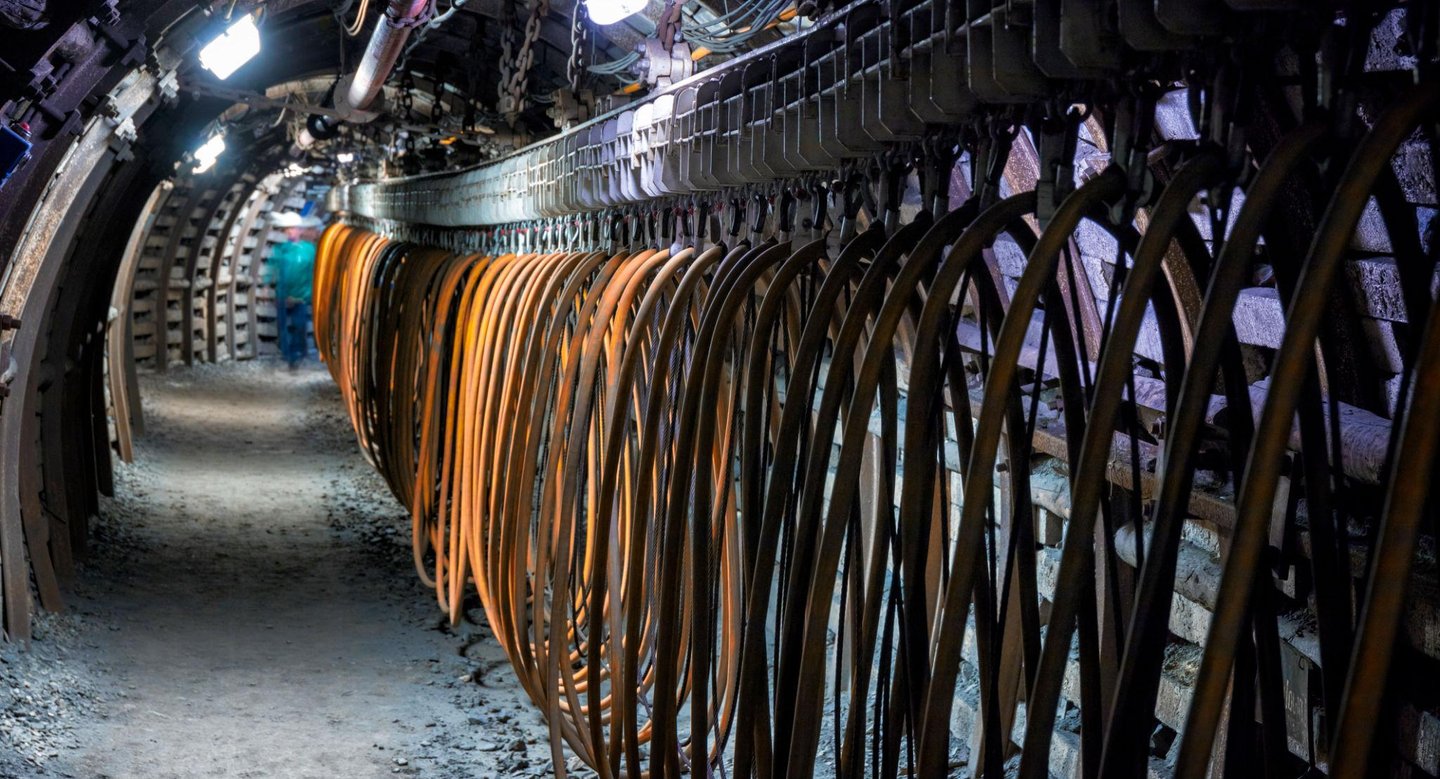
A mining cable cannot rely on its chemistry alone. To survive the brutal daily conditions of an underground mine, it must feature a highly engineered, layered physical structure. Every single layer, from the inside out, has a specific job to do to maintain both electrical performance and fire safety.
Let us look closely at the typical internal architecture of a heavy-duty, flame-retardant mining trailing cable:
The Copper Conductors
At the very center of the cable are the electrical conductors, made from hundreds of tiny, ultra-fine strands of pure, annealed copper. Mining cables must twist, bend, and flex thousands of times as heavy machines move around the mine. Using a few thick, solid metal wires would cause the cable to snap within days. The fine stranding gives the cable incredible flexibility and allows it to bend smoothly around tight curves without breaking.
The Rubber Insulation Layer
Each individual copper conductor core is wrapped in a thick layer of high-dielectric rubber insulation, usually made from high-grade EPDM rubber. This insulation layer keeps the massive electrical voltages contained within the copper strands. In top-tier mining cables, this insulation compound is formulated to resist high operating temperatures (often up to 90°C under continuous load), preventing the insulation from breaking down over years of hard service.
The Inner Sheath (Bedding Layer)
Once the individual insulated phase conductors and ground wires are twisted together, they are bound together by an extruded inner rubber sheath. This layer cushions the insulated cores, holding them firmly in place and protecting them from rubbing against each other when the cable is pulled tight or twisted.
The Open-Braid Reinforcement Layer
Wrapped tightly over the inner sheath is a high-strength textile reinforcement layer, typically made from a heavy-duty braid of synthetic aramid fibers (like Kevlar) or high-tensile nylon. This braid acts like a supportive skeleton for the cable. When a heavy shuttle car drags a trailing cable across the rough rock floor of a mine, this reinforcement layer absorbs the intense pulling tension, preventing the delicate copper conductors inside from being stretched or broken.
The Outer Flame-Retardant Sheath
The final, outermost layer is the heavy-duty flame-retardant rubber jacket, usually made from premium CPE, CSP, or Neoprene compounds. This layer is the cable's first line of defense against the harsh realities of the mine environment. It is engineered to be exceptionally thick, giving it the physical strength to resist cutting by sharp rocks, withstand chemical attacks from acidic mine water, repel oil and grease spills, and successfully pass the strict IEC 60332-1 vertical flame propagation test.
7. Why Underground Mines Need This Specific Construction
In industrial design, engineers often face a tough choice: do you design a product to be incredibly physically durable, or do you design it to be highly fire-safe? In the underground mining world, you do not have the luxury of choosing one over the other. A mining cable must achieve both goals perfectly at the same time.
The Balancing Act Between Fire Safety and Durability
Consider the daily life of a flexible trailing cable feeding a continuous mining machine at the rock face:
[Daily Mechanical Abuse] ───┐
├───> [The Universal Cable Solution]
[Extreme Fire Exposure] ────┘ Must satisfy BOTH simultaneously!
Constant Bending and Flexing: The cable is continuously wound onto reels and pulled off again, twisting and turning along the uneven floor of the mine tunnel.
Severe Abrasion and Impacts: The cable is dragged over sharp, jagged edges of blasted rock, squeezed against hard steel roof pillars, and occasionally run over by heavy rubber-tired support vehicles.
Constant Chemical Exposure: The cable sits in pools of stagnant, highly corrosive, acidic mine water and gets covered in heavy hydraulic oils and lubricating greases.
If a cable manufacturer focuses only on fire safety by making a jacket out of a brittle, highly flame-retardant plastic, that jacket will quickly crack open under the physical stress of the mine. Once the outer jacket splits open, moisture and dirt will seep inside, causing internal short circuits and creating the exact electrical fire you were trying to avoid in the first place.
Conversely, if the manufacturer focuses only on physical durability by using a standard, ultra-tough natural rubber jacket, the cable will handle the mechanical wear perfectly, but it will turn into a dangerous safety hazard the second a fire breaks out.
This is why the layered construction described above is absolutely essential. The internal layers—the fine copper stranding, the flexible EPDM insulation, and the high-strength textile reinforcement braid—work together to handle the daily mechanical abuse. They absorb the pulling tension, resist the constant twisting, and protect the internal electrical connections.
At the exact same time, the specialized outer rubber sheath acts as a protective shield, handling both the external physical scrapes and providing the vital chemical defense needed to pass the IEC 60332-1 flame test. This smart combination gives underground mine operators a cable that can survive years of hard physical labor while maintaining the highest level of fire safety.
8. Market Language Used by Major Brands
To understand how these safety concepts work in the commercial market, it is highly useful to examine how the world's leading cable manufacturers talk about fire safety and material performance in their technical catalogs and marketing materials.
Prysmian Group
As a massive global leader in the cable industry, Prysmian manufactures highly specialized mining cable lines, including their well-known PROTOLON and TENAX brands. In their technical literature, Prysmian focuses heavily on verifying their fire safety performance through clear, standardized testing numbers.
They do not just say their cables are safe; they explicitly state that their mining products comply fully with IEC 60332-1-2 for single-cable fire testing. Furthermore, for installations where many cables are bundled together in high-risk zones, Prysmian highlights compliance with the much tougher IEC 60332-3 series, which tests vertical flame spread on large bundles of cables.
Prysmian’s marketing connects structural durability directly with fire prevention, showing that a long-lasting jacket keeps out the moisture and grease that could cause electrical fires over time.
Nexans
Nexans is another major global player with a massive footprint in the heavy industrial mining sector, particularly through their high-end RHEYFLEX and FLAMEX cable lines. In their engineering brochures, Nexans explicitly groups underground mines into a high-risk category alongside passenger railway tunnels and offshore oil rigs.
Nexans structures its product documentation by separating fire performance into clear, distinct safety categories:
Flame Retardancy: Tested via IEC 60332 standards to ensure a fire will not travel down the cable line.
Fire Resistance: Tested via IEC 60331 standards to guarantee that critical emergency safety systems stay powered on during an ongoing evacuation.
Low Smoke and Toxicity: Highlighting specialized halogen-free compounds that maintain clear visibility and clean air in enclosed underground tunnels during a crisis.
Southwire Company
Based in North America, Southwire is a dominant supplier of heavy-duty industrial cables, including their rugged Royal Mining Cable product line. Southwire takes a very practical, educational approach in its engineering documents, explaining the real-world purpose behind various standardized fire tests.
Southwire’s technical papers break down cable fire performance into four critical metrics that safety engineers must evaluate:
Flammability: How easily does the cable jacket catch fire when exposed to a spark or heat source?
Fire Spread: How quickly and how far will the flame travel along a vertical installation of the cable?
Smoke Behavior: How thick and dark is the smoke produced by the cable when it is forced to burn?
Corrosive Combustion Gases: Does the burning material release dangerous acid vapors (like hydrogen chloride gas) that can ruin expensive mine electronics and burn miners' lungs?
By using this structured testing language, these major global brands show that modern cable value is no longer judged solely by how efficiently a cable carries electricity. True value lies in the cable’s ability to survive the harsh mechanical reality of the mine while providing absolute safety during a fire emergency.
For mine managers, electrical engineers, and safety procurement teams, selecting the right cable is a major responsibility. To ensure your underground operations are fully protected, always use this simple five-point technical checklist before approving any cable purchase:
Verify the Explicit Certification: Ensure the cable documentation explicitly lists IEC 60332-1-2 compliance, confirming it has passed the independent vertical flame propagation test.
Inspect the Sheath Compound Type: Avoid generic rubber descriptions. Demand high-performance, flame-retardant rubber compounds such as CPE, CSP, or Polychloroprene (Neoprene) for the outer jacket.
Confirm Layered Construction: Ensure the cable features a distinct inner sheath and a synthetic textile reinforcement braid to handle mechanical pulling tension without damaging the internal conductors.
Match the Application Environment: Choose high-flexibility trailing cables with ultra-fine copper stranding for mobile equipment, and armored, flame-retardant cables for permanent overhead installations.
Trust Proven Global Standards: Look for major manufacturers who provide clear, transparent data sheets covering flammability, smoke density, and toxic gas emission levels.
Investing in high-performance, flame-retardant rubber cables is the best way to keep your operations running smoothly, protect your expensive equipment, and most importantly, ensure that every miner returns home safely at the end of every shift.
Summary: The Procurement Safety Checklist
Port crane cables | Mining cables | Reeling cables | Trailing cables | Festoon cables | Heavy-duty power cables | Medium voltage cables | Offshore crane cables | Underground mining cables | Dragline cables | Shearer cables | Container handling cables | STS crane cables | RTG cables | Mobile equipment cables | Armored cables | Flexible power cables | VFD cables | Submersible cables | Cold resistant cables | Abrasion resistant cables | Flame retardant cables | Marine environment cables | Opencast mining | Underground operations
© 2006 All rights reserved.
[INDUSTRIAL_CABLES]
INDUSTRIAL GRADE CABLE SYSTEMS | PORT & MINING SOLUTIONS
TEL: +86 153 7530 2641 |MAIL: hongjing.Wang@feichuncables.com